
Canggu Surf Guide: Breaks, Season, Lessons and Tips
Where to surf in Canggu: how to match breaks to your level, read tide and season, choose lessons or board hire, and stay safe on the reef.
On this page
Last updated November 2026: Canggu surf is a cluster of several breaks, not one spot, so choose by skill level and tide. Batu Bolong is the mellow, longboard-friendly option, while Echo Beach is the heavier reef and beach break. Season, crowds and your board matter as much as the wave, and the sections below sort them out.
Featured image: Kingofthedead, CC BY-SA 4.0, via Wikimedia Commons.
Canggu Surf at a Glance
Start with your level, then check the tide. Pick one break and learn its habits before you move along the coast. Most Canggu breaks mix sand and reef, so the bottom changes the risk. Treat the table as a starting point and confirm tide fit with a local surf school or lifeguard on the day.
| Break | Wave character | Best for | Main watch-outs |
|---|---|---|---|
| Batu Bolong | Mellow, longboard-friendly | Beginners with a lesson, longboarders | Crowds, reef sections, tide-dependent |
| Old Man's | Check on site before paddling out | Confident beginners to intermediates | Crowds, board control in the lineup |
| Echo Beach | Heavier reef and beach break | Intermediates and above | Shallow reef, power, rips |
| Berawa | Check on site before paddling out | Intermediates | Verify bottom type and tide locally |
| Pererenan | Check on site before paddling out | Surfers who want to move past the busiest lineups | Verify access, bottom type and tide locally |
Canggu Surf Breaks Compared
Each break has its own personality. Ask at the beach or your surf school which one fits that morning's tide and swell. For sand, sunset and beach-day context beyond the lineup, see our guide to sand and sunset spots.
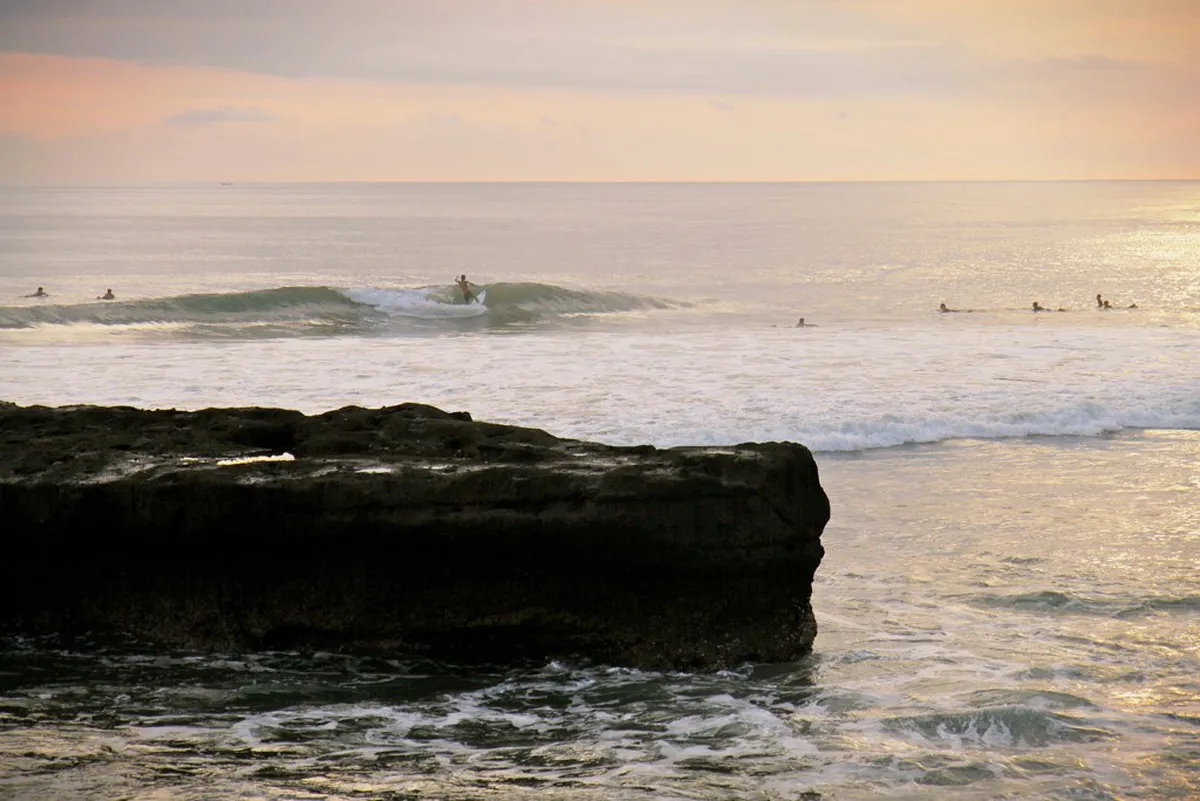
- Batu Bolong: the mellow, longboard-friendly wave. It suits learners and log riders, but a gentle wave also draws the biggest crowds. Tide changes how it breaks, so check before you go out.
- Old Man's: a short paddle from the same stretch of coast. Expect a busy lineup, so board control matters more than wave size here.
- Echo Beach: the heavier reef and beach break. Beginners should watch from the sand first. Intermediates should respect the shallow reef and the rips.
- Berawa: listed alongside Echo Beach and Old Man's in surf directories. Verify local conditions, bottom type and tide before paddling out.
- Pererenan: further along the coast from the main cluster. Confirm access, bottom type and tide with a local before you commit.
Best Time to Surf Canggu: Season, Tide and Time of Day
Surf sources commonly point to roughly May to October as the peak season, though you should confirm that window yourself. Dry-season mornings tend to be the cleanest bet because wind is usually lighter early. Water temperature is often listed between 26 and 29 °C, so a rash vest is usually enough. Check the national forecast from BMKG for wind and sea state before you leave. For month-by-month patterns, read our month-by-month weather guide.
- Dry season: expect more consistent swell and more surfers in the water.
- Wet season: wind and rain can roughen the surface, and quieter days may suit confident surfers.
- Tide: shape, speed and suitability shift with it. Ask locally which stage suits your level at each break.
- Time of day: dawn sessions usually mean lighter crowds and tidier conditions. Midday brings sun, wind and a packed lineup.
Lessons, Board Hire and Surf Schools
You have three realistic options. Group lessons are the cheapest way to learn the basics and the etiquette. Private lessons give more feedback, which helps if you are nervous about reef and crowds. Board-only hire suits people who already catch unbroken waves. One source notes you can hire a board straight from the beach, but confirm current availability with the vendor.
- Take a lesson if you have never stood up, feel unsure in rips, or have never surfed reef.
- Hire a board only if you can paddle out, turn and catch waves on your own.
- Skip lessons if you already surf confidently and know right-of-way rules.
- Self-guided surfing suits intermediates who can read tide and judge a reef bottom.
Costs and What to Budget
No verified current rates were available when this guide was written, so no figures appear here. Check each operator's own page for its published lesson, hire and policy details. Budget by category instead: a lesson, board hire, a leash, a rash vest, reef boots if you want them, transport to the break and travel insurance that covers surfing.
Getting There and Where to Stay for Surf
Staying within a short ride of your chosen break makes dawn sessions realistic. Scooters give you flexibility, but carrying a board is awkward and parking near popular lineups is tight. Read our notes on renting a scooter before you commit. Ride-hail with a board can be hit or miss, so ask your surf school about transfers. For routes and traffic habits, see getting around the area.
Safety, Etiquette and Common Mistakes
Reef and rips are the main hazards in a Canggu lineup. Watch the water for ten minutes before you paddle out and note where other surfers enter and exit. The official Bali tourism authority is a useful starting point for visitor information, but local lifeguards know the day's conditions best. Complete non-swimmers, anyone uneasy in crowds and families seeking calm water may prefer a softer beach or a lesson.
Sea temperatures often sit between 26 and 29 °C, so one rash vest can cover both the water and midday sun.

- Right-of-way: the surfer closest to the breaking part of the wave has priority. Never drop in.
- Board control: hold your board or bail safely when a wave is about to hit someone behind you.
- Rips: do not fight them. Paddle sideways across the current, then return to shore.
- Reef: pick your entry and exit point carefully, and wear reef boots if the bottom worries you.
- Sun: reapply protection and wear a rash vest.
- Common beginner mistake: paddling into a heavy break like Echo Beach because the lineup looks fun from the sand.
Beyond the Lineup
On flat or rest days, book a post-surf massage for tired shoulders. Refuel at one of the breakfast cafes after a dawn session. If swell disappears, try day trips out of town. Not sure the area fits your trip? Read whether the area suits you. For everything else nearby, browse the wider Canggu activity list.
Notes for your Indonesia trip
Optional updates when we add or change a town or island guide.
You might also like


Continue reading
More guides you'll find useful