
Dago, Bandung: A Neighborhood Guide to Jalan Dago and Dago Atas

Dago is a district in North Bandung that runs along Jalan Ir. H. Juanda, the official name for the road everyone calls Jalan Dago, and then climbs into the hills as Dago Atas and Dago Pakar. Give it a half day for the street's cafes and factory outlets, or a full day if you add the upper district. This guide covers what the area is, who it suits, how each half is laid out, where to eat and stay, and how to move between them.
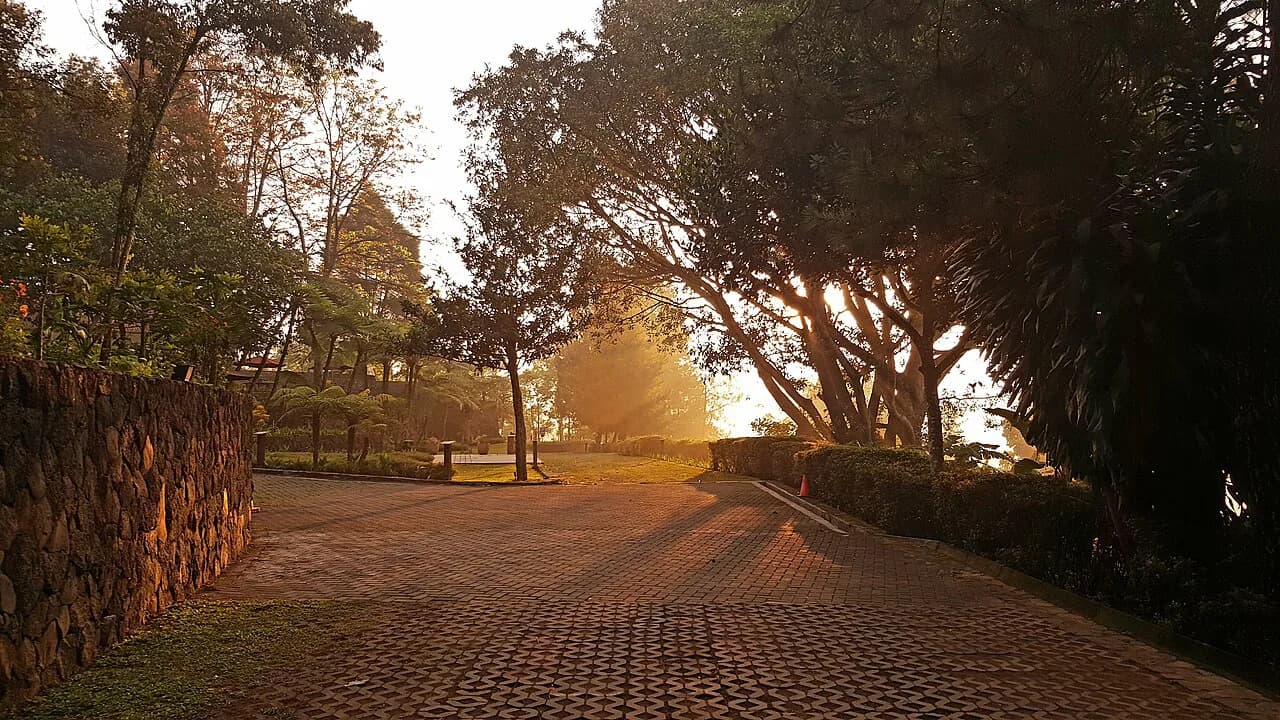
The district's defining quality is its elevation. Dago sits in the cooler northern part of the city, with tree-lined stretches and, from the upper reaches, views back over Bandung, a setting that shaped it first as a Dutch colonial retreat area and later as a lifestyle and shopping strip, according to Rumah123. That history explains the mix you find today: old villas, outlet stores, and cafes stacked up the hillside.
Where Dago sits in Bandung
Dago is in North Bandung, and locals treat it as two connected zones rather than one place. The lower zone is the Jalan Ir. H. Juanda corridor, a long commercial street; the upper zone is Dago Atas and Dago Pakar, where the road bends upward toward forest and viewpoints. Almost every decision about a Dago visit, from hotel choice to transport, depends on which of these two zones you are dealing with.
If you are comparing districts before booking, it helps to know that Dago's identity is hill-and-street rather than old-town square. The historic core around Braga and the alun alun is a different experience, closer to the city's colonial center and train station. Read those guides alongside this one if your trip mixes shopping, heritage and cool air.
Who Dago suits, and who it does not
Dago works well for travelers who want cafes, factory outlets and souvenir shops within a short stretch, plus cooler air than the city floor. It also suits anyone willing to take a car or ride-hailing trip up to the Dago Pakar side for a meal with a view or an afternoon at an art space. Families and couples who plan to move by vehicle most of the day will find the district easy to like.
It suits less if you want to walk out of your hotel and reach everything on foot, or if you plan to spend your days around the station and the old center. The hillside portion is not a stroll from the commercial strip, so a hotel in Dago Atas means a car ride for almost every meal and errand. Travelers who dislike traffic should weigh that against the views and the cooler nights.
How the district is laid out
Think of Jalan Ir. H. Juanda as the spine. Outlets, shops, cafes and restaurants line it for a long run, and the sidewalk portions closest to each other are the part where walking actually makes sense. Pick a stretch, park or get dropped once, and cover it on foot rather than trying to walk the entire street in one go.
Above the spine, Dago Atas and Dago Pakar climb into hill country. This is where you find the view cafes, the forest-edge attractions and the art spaces, spread out along winding roads. Distances look short on a map but take longer than expected because of the gradient and the narrow lanes, so plan each stop as a separate vehicle hop.
For orientation, the commercial stretch is a straightforward corridor, while the upper district is a scatter of destinations connected by road. Note that some attractions sit toward the Dago Pakar side rather than on Jalan Dago itself. If you are building a wider Bandung itinerary, cross-check with the Bandung Neighborhoods: 7 Area Guides and the city's attraction listings before locking a base.
Shopping on Jalan Dago
The factory outlet strip is the district's best-known draw, with clothing, accessories and Bandung souvenirs sold along Jalan Dago. Rumah123 describes the outlets as offering casual to formal fashion at accessible prices, alongside accessory shops and gift stores. Treat it as a browsing exercise: pick two or three shops that match what you actually need rather than working the whole street.
Pacing matters more than stamina here. Outlet shopping eats time quickly, and an hour spent in one store is an hour not spent at a hillside cafe or an art space, so set a budget of shops before you start. If apparel is your priority, the nearby Jalan Riau strip is another option worth comparing, and it is a short vehicle ride from Dago.
Cafes and restaurants in Dago
Food and coffee are the other half of the Dago appeal. Rumah123 notes a spread that runs from Sundanese cooking to Asian and Western menus, with many cafes designed around views of the city or the surrounding hills. Traveloka's Dago roundup names specific spots, including Mercusuar Cafe & Resto, One Eighty Coffee and Dago Pakar, so you can match a venue to the kind of view or menu you want.
The practical split is lower versus upper. Street-level cafes on Jalan Dago are easy to reach on foot from the shopping strip, while the view cafes sit up in Dago Pakar and require a car. Evenings at the hillside places are popular for city lights, so decide whether you want convenience or the panorama before you book a table. Menus and hours change; confirm by phone or the venue's own channels before you go.
For Sundanese food specifically, the district's cafes are only one option, and many travelers pair a Dago coffee stop with a meal elsewhere in the city. If you want to compare dining areas, the Cihampelas corridor is a short ride away and has its own cluster of places to eat and shop.
Beyond the street: the Dago Pakar attractions
Upper Dago gives the district its second identity. Taman Hutan Raya Ir. H. Djuanda, the forest park reached from the Dago Pakar side, is the anchor attraction, and Traveloka lists it together with Lawangwangi Creative Space and Selasar Sunaryo Art Space among the area's destinations. Budget travel time between each rather than assuming they sit side by side.
Lawangwangi combines a gallery with a cafe and hill views, while Selasar Sunaryo is a base for modern and contemporary art, according to Traveloka's roundup. Both fit travelers who want a slower afternoon with art and coffee rather than a checklist of photo stops. Check each venue's current exhibition and opening schedule directly, since programming changes and no single source tracks it for you.
Other upper-Dago names such as Dago Dream Park, Tebing Keraton and Bukit Moko come up in roundups, but they belong to the broader Bandung attraction list and can pull a Dago day off course. If you include one, slot it as a single late-afternoon stop and keep the rest of the day on the street and in the cafes.
Where to stay in Dago
Booking sources place several properties in or around the district, and where each sits matters. Expedia lists Sheraton Bandung Hotel & Towers on Jalan Ir. Haji Juanda and The Jayakarta Suites Bandung on the same road, both near the lower commercial stretch; House Sangkuriang on Jalan Sangkuriang sits closer to the Bandung Zoo and Cihampelas side. Rehat at Dago Sky, on Jalan Dago Asri, is a small budget option up in the residential lanes.
Rates on booking sites move with the season and the day of the week, so treat any figure you see as a snapshot and recheck your dates before committing. For a Dago stay, the key trade-off is street convenience versus hillside quiet: the Jalan Juanda hotels put outlets and cafes at your door, while the smaller hillside places trade walkability for cooler air and views.
Getting to Dago and around it
Dago is reached by road from the rest of Bandung, and a private car or ride-hailing app is the simplest way in. Once you are on Jalan Dago, the commercial stretch is walkable in sections; the Dago Pakar side is not, and each hop between the forest park, the galleries and the view cafes needs a vehicle. If you are crossing the city, expect traffic on the main corridors and build slack into your timing.
For a wider base, Setiabudi sits north of Dago toward the Lembang road and can work if your plans lean toward the hills. Travelers whose priority is the station and the old center should look at Braga or the alun alun instead, since commuting into Dago from there adds time in both directions.
How long Dago needs
Half a day covers the essentials of the lower district: a walk along a stretch of Jalan Dago, a couple of outlet stops and a cafe. A full day lets you add the Dago Pakar loop with the forest park and one art space, plus a hillside meal. Two nights in the district suits travelers who want to shop, eat and see the views without rushing, especially if they plan to explore other parts of Bandung by day.
If you are squeezing Dago into a single Bandung day, put the street in the morning when the outlets are quieter, then move uphill for the afternoon and stay for an early dinner with the city lights below. Confirm opening days for the galleries and the forest park before you commit to that sequence.
Practical constraints: traffic and crowding
The Jalan Dago corridor carries a lot of traffic, and the bottleneck is worst where the street narrows and where cars stop for the outlets. Weekends bring heavier crowds from Jakarta and the surrounding cities, so weekday visits give you more room in the shops and shorter waits at cafes. If you are visiting on a Saturday, start early and treat the upper district as the calmer half of the day.
The one habit worth building into any Dago plan is a quick check the day before: confirm the venue or gallery you are targeting is open, and confirm your driver or app pickup point, since the hillside lanes make some spots awkward for larger cars. The Trip.com Dago guide is a reasonable starting point for a current overview of what is on offer in the district.
Should you base yourself in Dago?
Base in Dago if you want cafes, outlet shopping and cool northern air within a short drive, and if you are comfortable moving by car or ride-hailing app for the hillside half. Choose a hotel on Jalan Ir. H. Juanda for walkable convenience, or a smaller place up in Dago Atas for quiet and views.
Skip it as a base if your Bandung plans center on the station, the old town or heavy walking, since Dago rewards travelers with wheels. For those trips, the historic core around Jalan Braga is the better fit.
Explore more Bandung guides
Frequently Asked Questions
Is Dago in West or East Bandung?
Dago is in North Bandung, not the western or eastern districts. It runs along Jalan Ir. H. Juanda and climbs into the hills as Dago Atas and Dago Pakar, so it sits at the cooler, higher edge of the city.
Can you walk around Dago without a car?
You can walk sections of the Jalan Dago commercial strip, where outlets and cafes sit close together. The upper Dago Pakar attractions, including the forest park and the art spaces, are spread along hilly roads and are much easier to reach by car or ride-hailing app.
How far is Dago from Bandung's old town?
It is a road trip across the northern part of the city rather than a walk, and the time depends heavily on traffic on the main corridors. Plan it as a vehicle journey and allow extra time during weekend peak hours.