
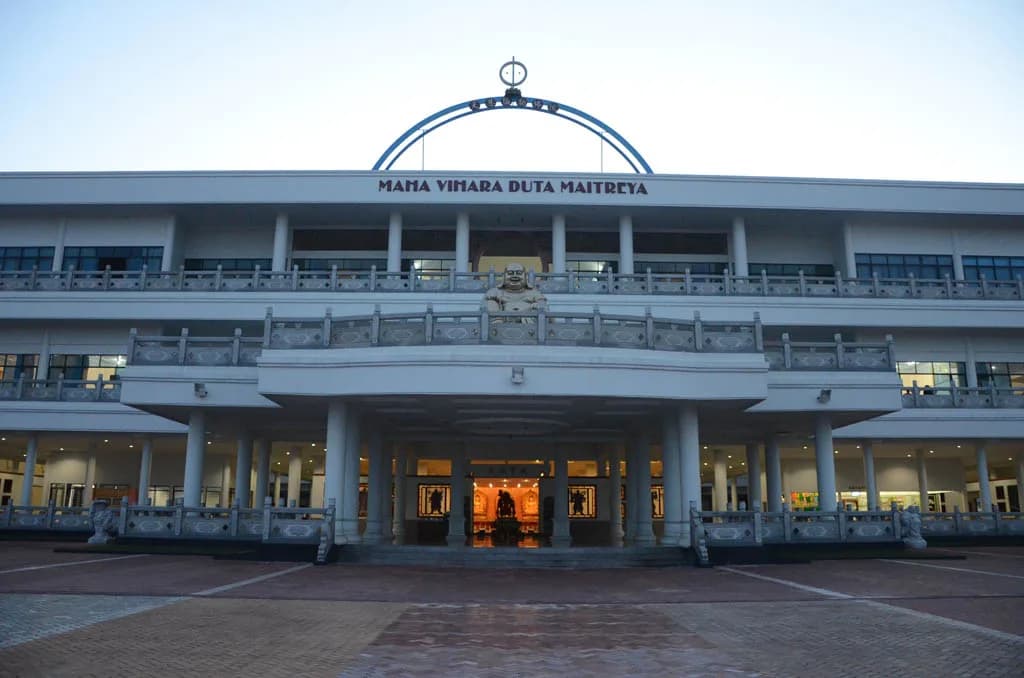
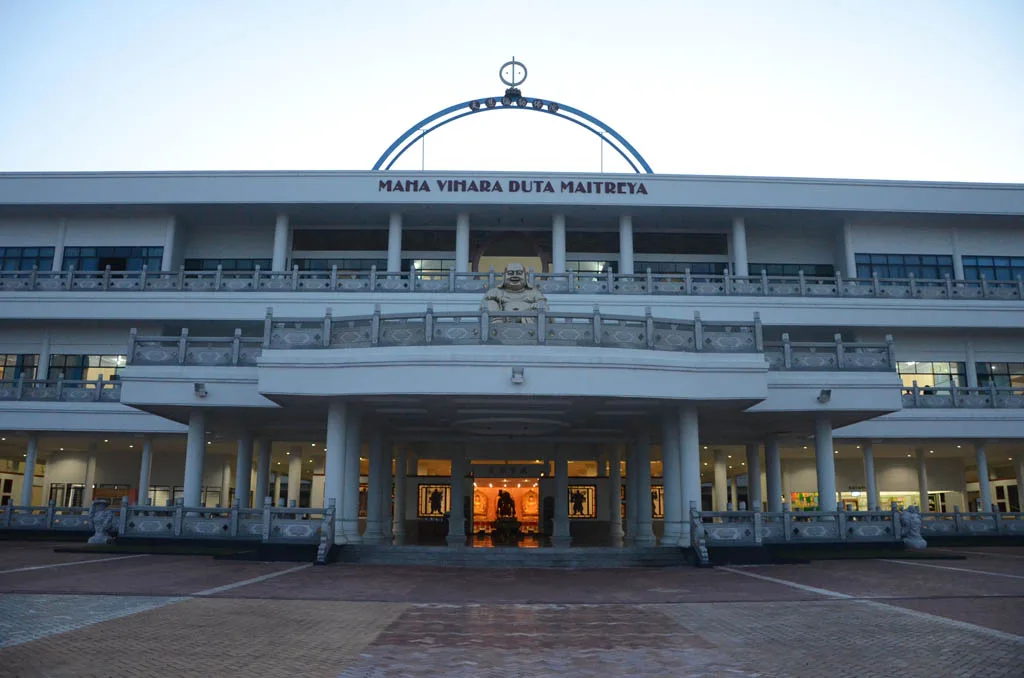
Maha Vihara Duta Maitreya Batam: A Visitor Guide to the Temple Complex

Maha Vihara Duta Maitreya is worth roughly an hour to 90 minutes of your Batam trip, and it fits neatly into a Batam Centre half-day rather than a standalone excursion. The complex is bigger than a single shrine: three separate prayer halls, ceramic relief panels, a vegetarian restaurant and a cafe sit inside one walled grounds. This guide covers where the temple sits, how to reach it, what each hall holds, and how to slot it into a day alongside the malls and waterfront nearby.
The temple is often described as among the largest Buddhist temples in Southeast Asia, a claim repeated by local tourism listings rather than by a single authoritative body. Treat that as context, not a verified ranking, and go for the scale of the halls and the detail of the ceramics instead.
Where the temple sits in Batam Centre
The temple stands in the Batam Centre area of Batam Kota, within the Komplek Maha Vihara Duta Maitreya on Bukit Beruntung in Sungai Panas, Kepulauan Riau. The address circulates widely among visitors and is the one to give a driver. It is set slightly off the main road, so the entrance comes up quickly once you turn in.
Its practical advantage is the location: it sits close to Jalan Raja H. Fisabilillah, the main artery through Batam Centre, and within easy reach of landmarks such as Batam Centre Park, Monumen Selamat Datang, Mega Mall Batam Centre and One Batam Mall. That cluster is what makes a combined half-day sensible.
If you are still deciding how the temple fits against the island's other stops, the wider set of Batam Attractions: 6 Visitor Guides puts the bridges, beaches and waterfront in one place. The temple is a cultural stop, not a beach day, so plan it for the middle of the day when heat makes an indoor visit welcome.

How to get there from the ferry terminal, Nagoya and the airport
From Batam Centre ferry terminal, the temple is the closest major sight on this side of the island; the ride is short enough that a metered taxi or ride-hailing car is the simplest option with luggage. Confirm the fare in the app before you accept, and have the full Komplek address ready because drivers know the complex by name.
From Nagoya, where most budget hotels and the Nagoya Hill shopping area sit, expect a cross-town drive through Batam's busy traffic rather than a quick hop. Allow generous time and avoid scheduling the temple immediately before a ferry departure.
From Hang Nadim airport the temple is on the Batam Centre side, which makes it a reasonable first or last stop if your flight timing cooperates. Fares vary with traffic and app pricing, so check the estimate in the app at the moment you travel rather than budgeting from older figures.
If you are building a loop around the island, the Barelang Bridge in Batam lies well to the south and makes a natural separate outing, while Nongsa Beach sits on the opposite northeast coast near the resorts and ferry point. Neither pairs neatly with the temple in a single short window, so pick one per half-day.
The three prayer halls and what each one holds
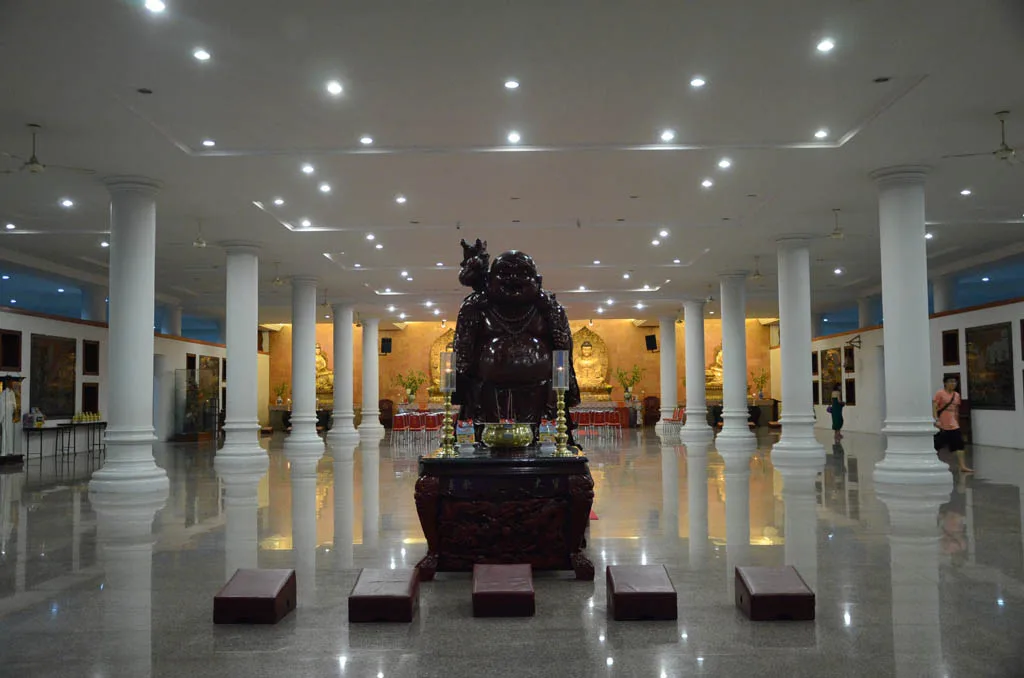
The complex is organized around three main worship halls, and knowing their names helps you move through the site deliberately rather than wandering. They are Graha Buddha Sakyamuni, Graha Bodhisatwa Avalokitesvara and Graha Bodhisatwa Satyakalama. Each is a large room used for prayer, so expect worshippers and keep your voice down and your camera discreet.
The main Mahavira Hall is the anchor of the site, and older visitor accounts describe a side hall added later that houses a large statue of Guan Yu, the Chinese figure associated with loyalty and war. A separate chamber to the right of the main hall holds Guanyin, the Bodhisattva of Compassion. If a hall is in use for a ceremony, step back and wait rather than walking through.
Visitors who have been coming for years note that the core halls have not changed dramatically, which is part of the appeal: this is a working temple, not a staged attraction. Plan your route as a slow loop through the halls, then out to the courtyard and food areas.
Ceramic reliefs and the details worth slowing down for
The walls carry ceramic relief panels illustrating episodes from the lives of the Buddha and the Bodhisattvas, with Chinese inscriptions accompanying the scenes. These panels reward a slow pass rather than a photo stop; they are the closest thing here to a narrative gallery.
Statuary is spread across the halls rather than concentrated in one room, so look for the Guanyin chamber and the Guan Yu figure as separate stops on your loop. Divination slips are used at the temple, a practice familiar to visitors from Chinese temples elsewhere in the region.
Photography is generally accepted, but the etiquette is straightforward: no flash in prayer rooms, no posing in front of people mid-prayer, and no climbing on ledges for a better angle. Keep phones silenced and hats off indoors.
The vegetarian restaurant, Loving Nature Fortunate Coffee and the souvenir shop
Food is part of the visit here rather than an afterthought. A vegetarian restaurant on site serves meat-free home-style dishes and local specialties, and at certain times the menu widens to include items such as pempek and fried snacks. If you are traveling with a vegetarian in your group, this is one of the easiest reliable meals in Batam Centre.
The cafe, Loving Nature Fortunate Coffee, is known for a bread baked without yeast and for brewed coffee, which makes it a calm sit-down break between the halls and the shop. Seating is casual and the pace is slow, so it suits a mid-visit pause rather than a rushed stop.
A souvenir shop sells small items such as keychains, bracelets and necklaces, along with frozen vegetarian buns that are popular with returning visitors and can sell out. Menu prices and shop stock change, so check the board or ask staff on the day rather than relying on older reports.
Hours and entry: what is published and what to confirm
One published destination guide lists the temple as open daily from 07:00 to 17:00 Western Indonesia Time and reports no entry ticket, while also noting that hours can be adjusted for major religious observances. That is the clearest schedule available, and it is the one to plan around.
A user-generated Instagram location tag for the temple lists it as open 24 hours, which conflicts with the published daytime schedule. Treat the daytime window as the safe assumption and confirm on the day if you intend to arrive early or late.
Guided tours sold on travel platforms bundle the temple with other Batam stops and massages across a full day, and their prices reflect the whole itinerary rather than admission to the temple. Entry itself is reported as free, so there is no ticket to pre-book.
How long to allow and the best time of day
Budget about an hour to 90 minutes if you want to see all three halls, read some of the ceramic panels and stop for coffee; trim it to 45 minutes if you are only walking the main hall. Adding a full meal at the vegetarian restaurant pushes the visit closer to two hours.
Mornings are the quietest and coolest window, and arriving near opening also means the prayer halls are likely to be free of ceremony crowds. Midday heat makes the air-conditioned cafe and shop a sensible finish, and weekends and major Buddhist observances bring far more worshippers, so choose a weekday morning if quiet matters.
What is nearby in Batam Centre
Mega Mall Batam Centre, One Batam Mall, Batam Centre Park and Monumen Selamat Datang all sit within a short drive, so the temple works as the cultural half of a Batam Centre afternoon. A ferry-terminal drop-off afterward is straightforward from this cluster.
If you want a second architecture stop, the Masjid Raya Batam (Masjid Agung Raja Hamidah) is a landmark mosque in the same part of the island, and the Alun-Alun Engku Putri Batam gives you an open square nearby for an evening walk. Both pair naturally with the temple on a Batam Centre loop, and the museum Batam Raja Ali Haji is another indoor option if the weather turns; check its published hours before committing.
Etiquette inside an active place of worship
This is a working temple, so the basics apply: dress modestly with shoulders and knees covered, remove shoes where signage asks, and keep voices low in the prayer halls. Ask before photographing people, and never step in front of someone who is praying.
If a hall is closed off or in use, respect the barrier and move on to another part of the complex. The route through the ceramics, courtyard and food areas is generous enough that a closed hall does not spoil the visit.
Should you build the temple into your Batam Centre day?
Yes, if you want one calm cultural stop with food and coffee attached rather than a ticketed attraction. It is free to enter per published reports, close to the ferry terminal and the Batam Centre malls, and an hour to 90 minutes is enough to see the three halls and the ceramics properly.
Skip it if your only Batam window is a frantic ferry-to-ferry dash, since the value here is in the unhurried loop through the halls and the cafe. Confirm the day's opening hours before you go, then pair the visit with Mega Mall or Batam Centre Park for a complete half-day.
Explore more Batam guides
Frequently Asked Questions
Is Maha Vihara Duta Maitreya the largest Buddhist temple in Southeast Asia?
Local tourism listings describe it as one of the largest Buddhist temples in Southeast Asia, but no single authority confirms a ranking. Treat the claim as promotional context and judge the site on its three halls, ceramic reliefs and food areas instead.
Do I need to book ahead to visit the temple?
No booking is needed for entry, which published sources report as free. Tours sold on travel platforms bundle the temple with other Batam stops and are optional; those prices cover the whole itinerary, not admission.
Can I eat at the temple if I am not Buddhist?
Yes. The on-site vegetarian restaurant and the Loving Nature Fortunate Coffee cafe serve visitors generally, and both are open to anyone walking the complex. Check the day's menu and prices at the counter.