
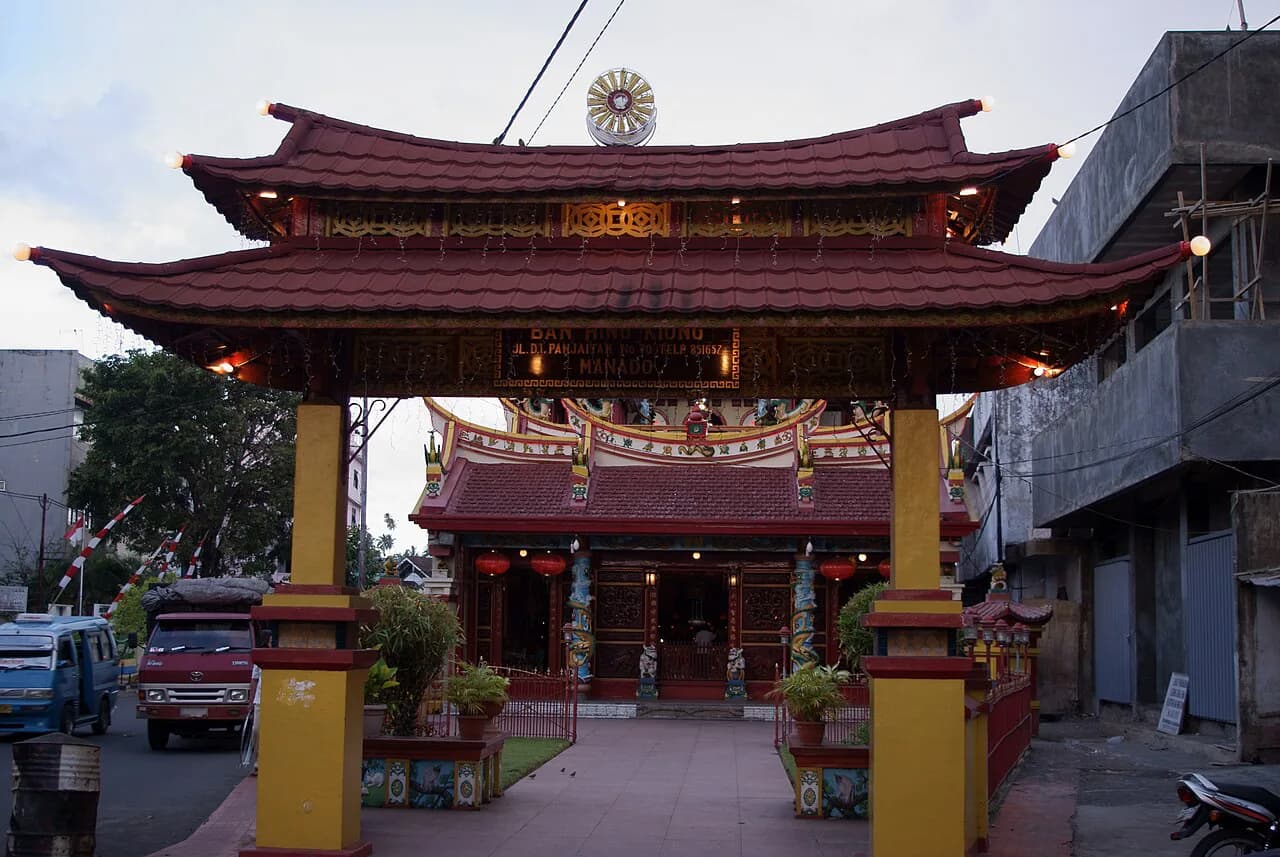
Ban Hin Kiong Temple in Manado: What to See and How Long to Stay

Ban Hin Kiong Temple is worth 15 to 30 minutes of a central Manado morning, not a half day. It is the city's oldest Chinese temple, founded in 1819 and rebuilt after two destructions, so expect a compact, active place of worship rather than a museum. This page covers where it sits on Jl. D.I. Panjaitan, how to arrive, what to look for inside, and what pairs well nearby.
One reviewer describes it as a temple that can be seen in under a minute, a fair warning against building a whole day around it. Use it as a cultural anchor in a walk through Manado's older streets, with markets or the waterfront filling out the rest of the outing.
What Ban Hin Kiong Temple is
Ban Hin Kiong, also written Klenteng Ban Hin Kiong, is a Chinese temple in Manado, North Sulawesi, routinely called the oldest in the city. Sources place it on Jl. D.I. Panjaitan and date its establishment to 1819. Wikipedia's English entry calls it Taoist, while others describe it as a Buddhist monastery, which reflects how Chinese temples in Indonesia blend traditions rather than split them.
Treat it as both a heritage site and a working temple. CGTN calls it a symbol of tolerance and harmony in Manado, a city with a long Christian majority where the Chinese community has established roots. You are stepping into an operating house of worship that happens to be a known visitor stop, not a curated attraction with a ticket window.
For broader context on how this stop fits a city visit, see our collection of Manado Attractions. The temple's position at a busy central junction helps explain why such an old site now sits amid modern traffic rather than on the outskirts.

Where it is and how to orient yourself
The address is Jl. D.I. Panjaitan, and CGTN describes the building as sitting in the middle of a busy intersection. You will likely spot it from the road before you find a place to stop. Give your driver the street name rather than relying on a street number alone.
Build your route around Jl. D.I. Panjaitan and walk outward rather than crossing town repeatedly. Gereja Sentrum Manado is a separate central sight you can sequence into the same outing; details are in our guide to Gereja Sentrum Manado.

How to get there
Grab and Gojek both operate in Manado, as do metered Bluebird taxis, and a private driver is straightforward if you are chaining several stops. Because the temple fronts a busy road, ask to be dropped at the nearest safe curb rather than mid-block. Central distances are short in kilometers but slower in traffic, so treat any travel time as an estimate.
Having the destination typed in Indonesian helps drivers who may not recognize the English name. Use Klenteng Ban Hin Kiong, the term used in Indonesian-language references such as the id.wikipedia entry, which also covers the temple's history.
What you actually see inside
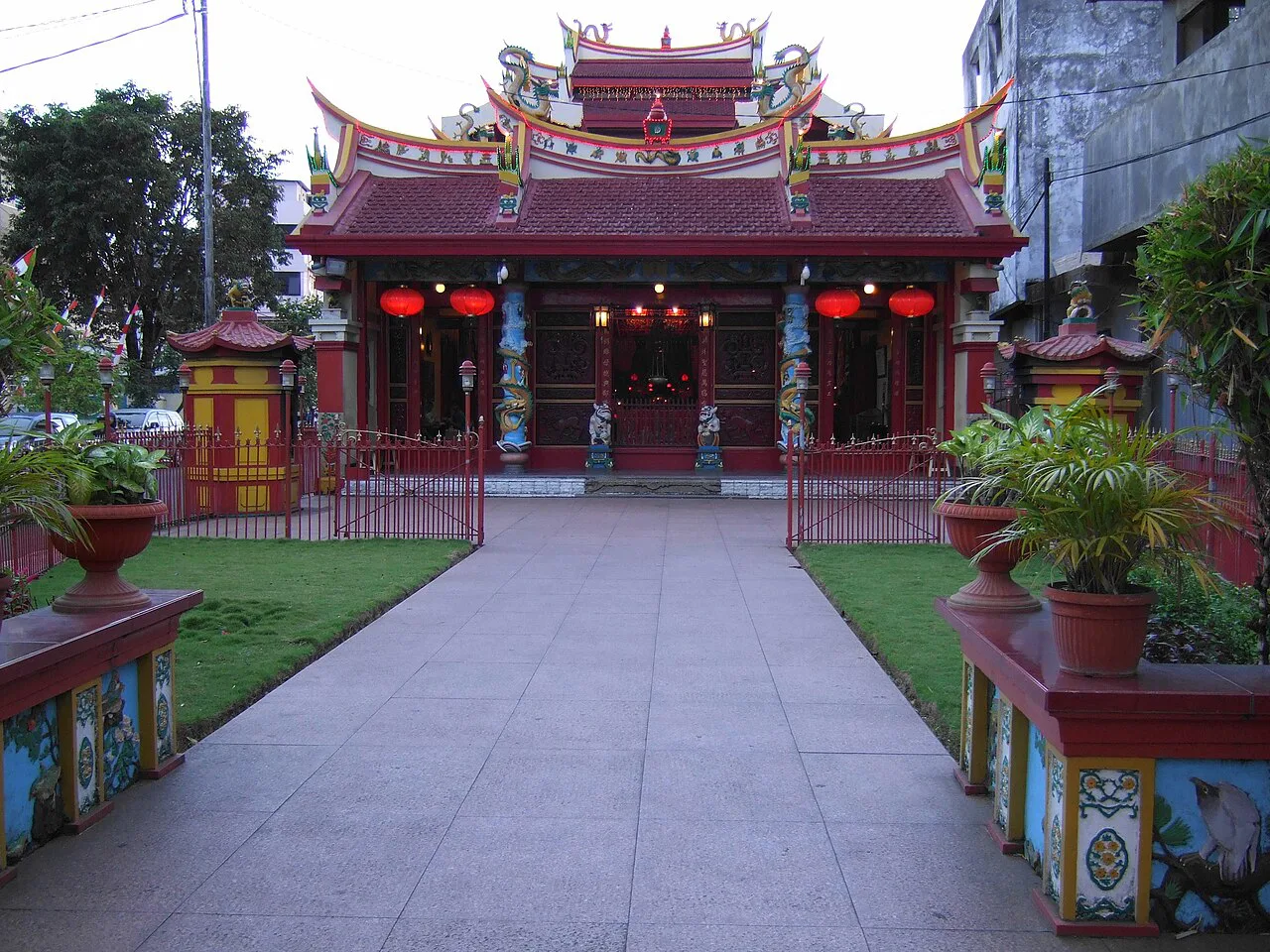
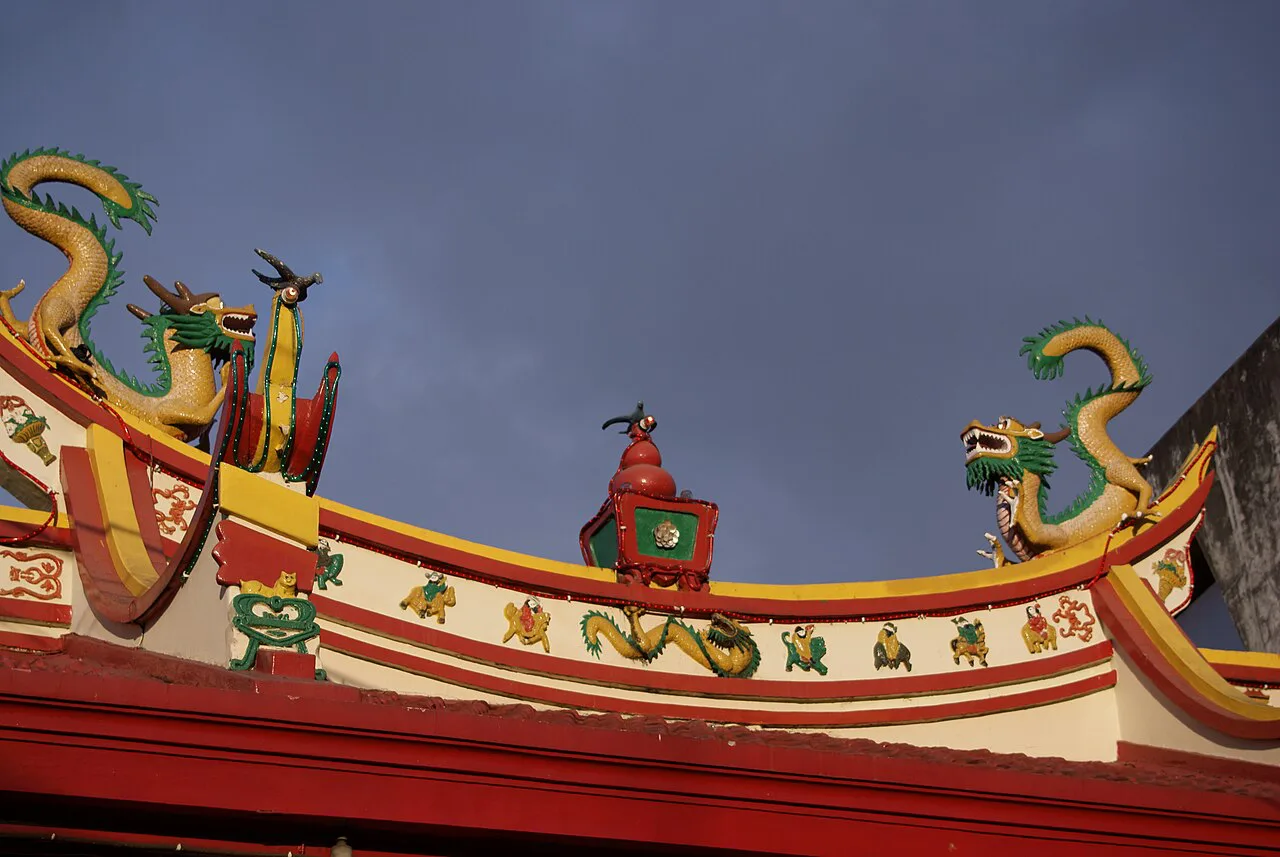
CGTN describes the interior as a walk into the past, with Chinese ornaments, paintings and carvings surrounding the structure. Look up as well as forward, because the decorative detail is the reason to linger rather than photograph the facade and leave. The building is compact, so an attentive pass takes minutes.
The relic worth specifically seeking out is the statue of the God of Longevity, reported by CGTN as the only statue that survived the 1970 fire and still stands in the temple. That makes it more than another figure on the altar: it is the one object linking the current building to the earlier temple.
Why the rebuilt interior reads newer than 1819
The temple's age and its appearance do not match, and there is a reason. CGTN records that the original structure was mostly wood and bamboo and has been destroyed twice, in 1944 and again in 1970, when it burned down. Locals rebuilt it after the second disaster, which is why most ornament and carving you see are restorations in an older style.
The rebuild kept Chinese detailing where it could, but many relics and documents were lost. Wikipedia's English entry gives the founding year as 1819, and the Indonesian entry adds that a rumah abu, or ash house, was built in 1839. Read the layers together and the site makes sense: a founding-era temple, a separate 19th-century structure, a 20th-century reconstruction.
Kong Tek Su, the ash house on the grounds
The Kong Tek Su ash house is part of the temple complex and dates to 1839, roughly two decades after the founding, according to the id.wikipedia entry. Many visitors fold it into the same stop without realizing it belongs to a different building phase. If the site's chronology interests you, this is the piece that predates the reconstructed temple.
Because the ash house is tied to memorial practice, give it the same quiet you would give the main shrine rather than treating it as a photo backdrop. If you are unsure whether a secondary area is open, ask locally, since access can change with daily temple activity.
How long to allow
Plan on 15 to 30 minutes. One review puts a quick look at the main hall at under a minute, which is fair if you only glance, but the carvings, paintings and the God of Longevity statue reward a slower pass. The difference between the two visits is attention, not distance.
What slows you down is your own pace: reading the detail, waiting for worshippers to finish at the altar, and finding the ash house. What does not slow you down is square footage, because the building is small. Pair it with a longer stop nearby rather than stretching the temple visit itself.
Quiet versus busy times
Chinese New Year is the one period sources flag for crowds. CGTN quotes the temple chairman describing 32 prayer ceremonies that begin early and run to night, starting three days before the New Year, with mass prayers and parades at the temple. Exact dates shift each year, so confirm them locally rather than booking around a fixed date.
On ordinary days the temple functions as a neighborhood place of worship with social activity around it. CGTN notes that Chinese tourists visit by the hundreds each month, so expect a steady trickle rather than silence. Go early in the day for a calmer visit, and accept that ceremony schedules cannot be predicted.
Tickets and opening hours
No reliable source gives opening hours, entry fees or closing days for Ban Hin Kiong, and this page will not invent them. Ask at your hotel or a local guide and confirm on arrival, since access can shift with religious activity. Do not assume an hour listed on a crowd-sourced site is current.
If a donation is expected in practice, the amount is set locally rather than published. Carry small rupiah notes so you can respond without hunting for change, and ask before photographing people at prayer.
Nearby options in central Manado
Pasar 45 sits in the central shopping district and makes an easy follow-on for a snack or a look at local goods, extending a temple visit into a half day without much travel. Details are in our guide to Pasar 45 Manado, and the Taman Kesatuan Bangsa open space works as a place to sit afterward; see Taman Kesatuan bangsa Manado.
For a bigger market stop, Pasar Bersehati is a traditional market that pairs well with a central Manado morning; our Pasar Bersehati Manado guide covers what is there. Benteng Moraya is a separate sight best treated as its own half-day rather than an add-on, and Pantai Malalayang suits a beach stop after a city walk.
Is Ban Hin Kiong worth the stop?
Yes, if you frame it as a 15- to 30-minute cultural stop woven into a central Manado walk, not a destination in itself. The carvings, the God of Longevity statue and the 1839 ash house give the visit substance, while the rebuilt interior and small footprint keep it short. Pair it with a market or the waterfront and the morning works.
Before you go, confirm access hours and any donation practice with your hotel or a local guide, since no published source covers them. Carry small rupiah notes, keep voices low around worshippers, and leave room in your schedule for traffic on the way in.
Frequently Asked Questions
Is Ban Hin Kiong Temple Taoist or Buddhist?
Sources describe it both ways, which is typical of Chinese temples in Indonesia that blend Taoist, Buddhist and ancestral practices. Wikipedia's English entry calls it a Taoist temple, while a reviewer notes it is officially positioned as a Buddhist monastery. Go expecting a working temple rather than a single-tradition institution.
Do you need tickets for Ban Hin Kiong Temple?
No published source confirms an entry fee or ticket system. Ask your hotel or a local guide before you go, and carry small rupiah notes in case a donation is expected at the temple.
How was the temple affected by fire?
CGTN reports the temple was destroyed in 1944 and burned down again in 1970, then rebuilt by locals. Most relics and documents were lost, but the God of Longevity statue survived the 1970 fire and still stands in the temple.
Can you combine Ban Hin Kiong with other Manado sights?
Yes. The temple is a short stop on Jl. D.I. Panjaitan, so pair it with a central market or a waterfront open space in the same morning rather than making a separate trip.