
Cape Kri, Raja Ampat: What to Expect at the Reef and How to Get There
Cape Kri is a reef and cape on the southern coast of Kri Island, in the Dampier Strait of North Raja Ampat, and it is best understood as a boat-access dive site rather than a beach you walk into. Plan on a guided boat dive, most realistically through a Kri-area resort or a liveaboard, and budget a half day once transfers are counted. This page covers where the site sits, how the access chain works, what the reef profile looks like, and which nearby sites pair with it.
Where Cape Kri is and what it is
Cape Kri stretches along the southern coastline of Kri Island, a few kilometres of wall and slope that culminate in an eastern tip. PADI publishes coordinates for the site at 0.55627 degrees south and 130.69074 degrees east, which put it in the Dampier Strait between Waigeo and the Kri island group. Kri itself is the nearest land base, which is why the dive resorts on the island treat the site as their house reef.
That position in the Strait matters more than the map pin. Kri sits in the middle of the Dampier Strait, where tidal water moves hard between islands and feeds the reefs on all sides of the landmass. The southern coast is where the cape forms, and the eastern end is the part divers talk about. If you are building a wider Raja Ampat itinerary, the Raja Ampat Attractions: 10 Visitor Guides page maps how the northern, central and southern zones fit together.

Why Cape Kri is famous: the 374-species dive
Cape Kri's reputation rests on a fish count. Marine biologist Dr. Gerald R. Allen recorded 374 distinct fish species on a single 90-minute dive at the site, after an earlier count of 327, and that figure is what turned a local reef into an internationally known name. The resort that publishes the account notes surveys of more than 100 fish species per 50-metre transect as well.
Treat the number as context, not a promise. A record count reflects one surveyor's trained eye, a long bottom time and a good day on a very rich reef; an ordinary recreational dive will not tally anything close to it, and no operator guarantees particular species. What the count does tell you is that the biomass here is exceptional, so even a routine dive tends to feel busy with fish.
The shape of the site and the current that drives it
The eastern tip is the heart of the dive. Two prevailing currents intersect there, and that convergence is what makes the point a funnel for marine life rather than a quiet coral garden. Diving it usually means entering west of the point and drifting toward the tip as the current builds, then using the sloping reef for cover when it peaks.
The profile is a sloping wall rather than a shallow flat. One account describes a wall dropping at least 40 feet below the top of the reef, and PADI lists a maximum depth of 131 feet, or 40 metres, for the site. Above the drop-off sit shallow coral gardens broken by sandy patches, which is where you finish a dive once the current eases.
Because the fish density and the difficulty come from the same current, you cannot separate them. A guide will read the tide and time your entry so the drift carries you along the reef and deposits you near the point as the flow slackens. Carry a surface signalling device and follow the briefing; the site rewards divers who let the current do the work instead of fighting it.
How to get to Cape Kri
The access chain runs through Sorong. Fly into Sorong, take the ferry across to Waisai, the main town on Waigeo Island, then arrange a private speedboat onward to Kri Island. There is no public boat serving the dive site itself, so confirm the ferry and onward boat arrangements with your operator rather than assuming a fixed timetable.
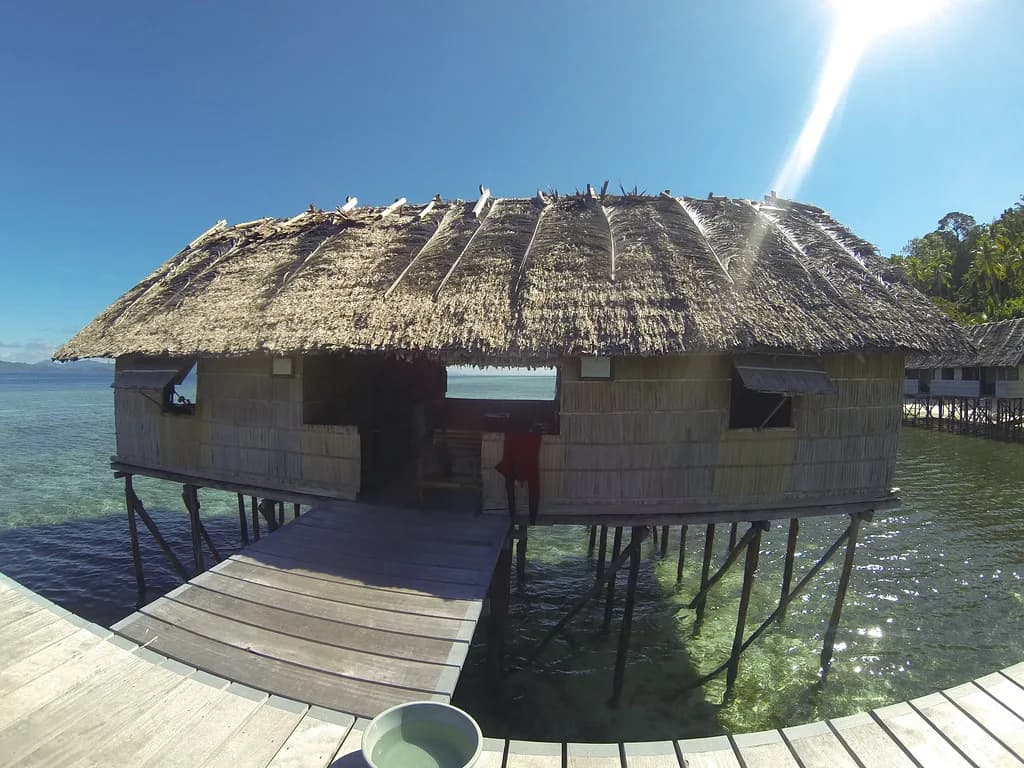
The most practical version is a stay at one of the Kri-area dive resorts, where transfers are bundled into a package. Papua Diving Resorts, which runs Sorido Bay Resort and Kri Eco Resort on the island, collects guests from Sorong airport and includes boat transfers on select days within a standard seven-night minimum package. If you go this route, check the transfer days against your flight before you book.
Liveaboards are the other realistic option, since northern Raja Ampat itineraries routinely include Cape Kri among their Dampier Strait stops. A liveaboard removes the daily boat commute and the transfer logistics, at the cost of a fixed schedule that may put you at the site in whatever current the day delivers. Neither route involves an entry ticket for the reef itself; costs sit inside dive packages, park fees and boat charges, so ask the operator for a full breakdown.
Diving versus snorkeling at Cape Kri
Diving is the point of the site. The reef is not shallow, and Papua Diving Resorts states plainly that surface currents can be strong and does not recommend snorkeling here. That is an honest trade-off rather than a marketing hedge: a snorkeler at the surface sits above a wall, in the flow, with none of the cover a diver has on the slope.
If you are in the water but not diving, the better plan is to snorkel elsewhere in the Dampier Strait and ride along while your group dives. Raja Ampat's shallow reef and jetty sites are far more rewarding at surface level; the Yenbuba jetty is a well-known example, and Arborek Village sits close to its own jetty reef. Keep Cape Kri on the dive list and give the surface hours to sites built for them.
When to dive it and what you will see
Timing within the day matters more than the month. Dawn and dusk are described as feeding windows when fish are most active, and the current peak at the eastern point is the moment the site is at its best. Visibility is reported as good all year round, with water temperatures between 27 and 30 degrees Celsius, so the real variable is the tide rather than the season.
Expect large schools before individual rarities. Jacks, snappers, batfish, spadefish, fusiliers, surgeonfish, triggerfish and sweetlips mass along the reef, with Spanish mackerel, giant trevally and tuna working the edges. Predators follow the schools, so barracuda and reef sharks are commonly seen, and turtles or manta rays can appear depending on the day and the current.
The macro life is a genuine second act if you can pull your eyes off the schools. Nudibranchs, shrimp, pygmy seahorses, scorpionfish, flatworms and octopus all turn up in the coral and rubble. If you carry a camera, decide before the dive whether you are shooting wide or macro, because the current will not let you do both.
How long to allow for a Cape Kri dive
Think in half days, not hours. The record dive ran 90 minutes, but a recreational profile at this depth runs shorter once you account for the deeper section and a safety stop. Add the boat ride from your resort or liveaboard, the briefing, and the run back, and a single Cape Kri dive comfortably fills a morning or afternoon.
If you are staying on Kri, the site is minutes away by boat, which one resort puts at roughly a one-minute ride from its jetty. From a liveaboard anchored elsewhere in the Dampier Strait, allow more travel time and expect the schedule to revolve around the tide rather than a clock. Two dives in a day usually means pairing Cape Kri with a second, shallower site nearby.
Nearby reef sites to pair with Cape Kri
The Dampier Strait cluster around Kri and Arborek gives you plenty of second-dive options. Blue Magic, a seamount known for pelagics, and Chicken Reef, a current-swept reef, sit in the same northern Raja Ampat group, as do Manta Sandy and Melissa's Garden. Which of them you actually reach depends on your operator's itinerary and the day's conditions.
For time off the boat, Kri sits within reach of several land-based stops that break up a dive schedule. Sawinggrai village on Gam Island and the Kabui bay channel are both in the northern part of the archipelago, and Sorido bay itself is on Kri's doorstep. Farther afield, the Misool Islands, Raja Ampat in the south and Wayag Islands (Pulau Wayag) in the north-west are separate trips rather than day add-ons.
Who Cape Kri suits
The site is generally pitched at intermediate to advanced divers because of the current, though an easy drift is possible when the flow is moderate and your guide times it well. Newly certified divers should be honest with their dive Centre about experience and bottom time, and expect to be steered toward gentler sites if the day's current looks strong. What a guide does here is manage the entry point, the drift line and the exit so the current works for you.
There is no certification requirement specific to Cape Kri beyond what your operator sets, and no published entry ticket for the reef. Park fees, dive package rates and boat costs are set by operators and the marine park authority, and they change, so confirm the current figures directly with the resort or liveaboard before you commit.
Should Cape Kri be your first Raja Ampat dive?
Yes, if you are a certified diver comfortable in current and you are already basing yourself in the Dampier Strait. It delivers the fish density Raja Ampat is known for within a short boat ride of Kri, and it pairs naturally with Blue Magic, Chicken Reef and the Arborek jetty reefs. It is not a snorkel stop and it does not suit a diver who wants a still, shallow reef on day one.
The decision that matters most is your base, not the dive itself. A Kri-area resort package solves the Sorong-to-Waisai-to-Kri chain in one booking, while a liveaboard trades flexibility for a fixed northern itinerary. Whichever you pick, confirm transfer days, current park fees and the operator's experience policy before paying, and treat the 374-species story as the reason to go rather than the standard your dive will be measured against.