
Glodok, Jakarta: How to See the City's Chinatown District

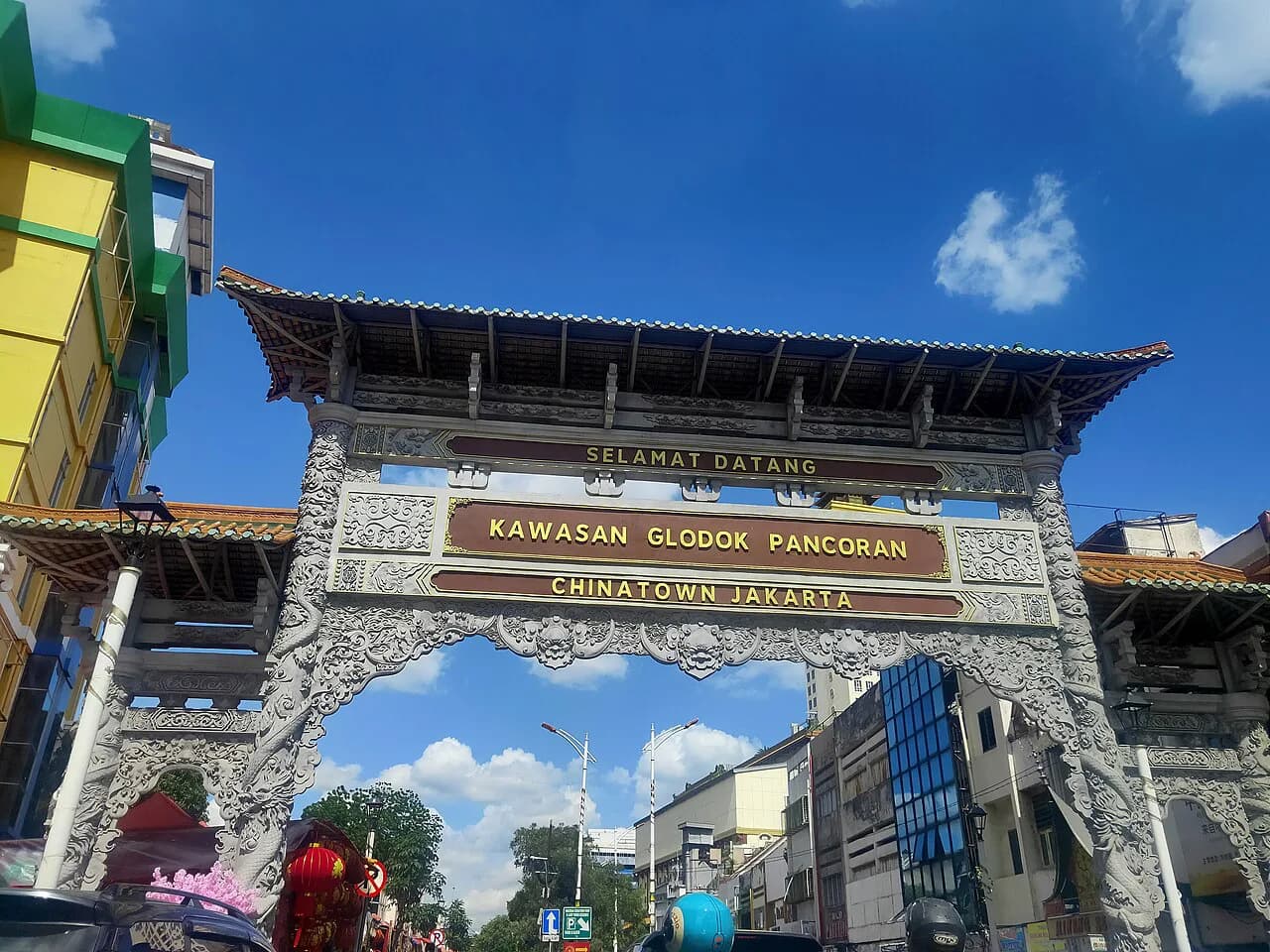
Glodok is worth a half-day if you want food and old streets rather than polished sightseeing, and it pairs naturally with Kota Tua because the two sit side by side in West Jakarta. The historic Chinatown, often called Pecinan, spreads around Pancoran Street and the lanes behind it, within walking distance of Jakarta Kota station. This guide covers what sits where, which streets to walk, what to eat, and how to plan Glodok as one outing rather than a separate trip across the city.
Where Glodok sits and who it suits
Glodok lies in West Jakarta, and travelers arriving on the commuter network can reach it on foot from Jakarta Kota station, a few minutes away according to one visitor's account. The district runs into Kota Tua, the old colonial quarter, so the two are easy to combine in a single morning or afternoon. That closeness is the main practical reason to put Glodok on an itinerary rather than treating it as a far-flung detour.
This is a place for travelers who like walking through busy commercial streets, ducking into temples and eating at long-established shops. It rewards curiosity more than efficiency. If you want air-conditioned sightseeing, tidy signage and a clear visitor circuit, Glodok will frustrate you: much of its appeal is in lanes that look ordinary until you notice the shopfronts.
Think of it as a working neighborhood first. Traders in the area speak Betawi, Madurese and Javanese alongside Chinese-Indonesian communities, and the food shops often pass down through generations rather than catering to tourists. That mix is the point, and it is also why the district does not present itself as a curated attraction with a single entrance.
How the district is laid out
Start with Pancoran Street, the main spine, where shops and street vendors line the road and the Pancoran Chinatown Point mall gives you an indoor anchor. From there, the Chinatown market lanes sit off the main road, which is exactly why first-timers walk past them; one visitor needed bystanders and a phone map to find the traditional market area. Look behind the frontage rather than assuming the main street is the whole district.
Jalan Toko Tiga is the other street to seek out, lined with shophouses carrying Chinese-style roofs. The stretch can look tired, with some buildings converted into simpler stalls, but it holds the architectural character that makes the walk worthwhile. Go slowly here; the details are in the facades and the old signage rather than in any single sight.
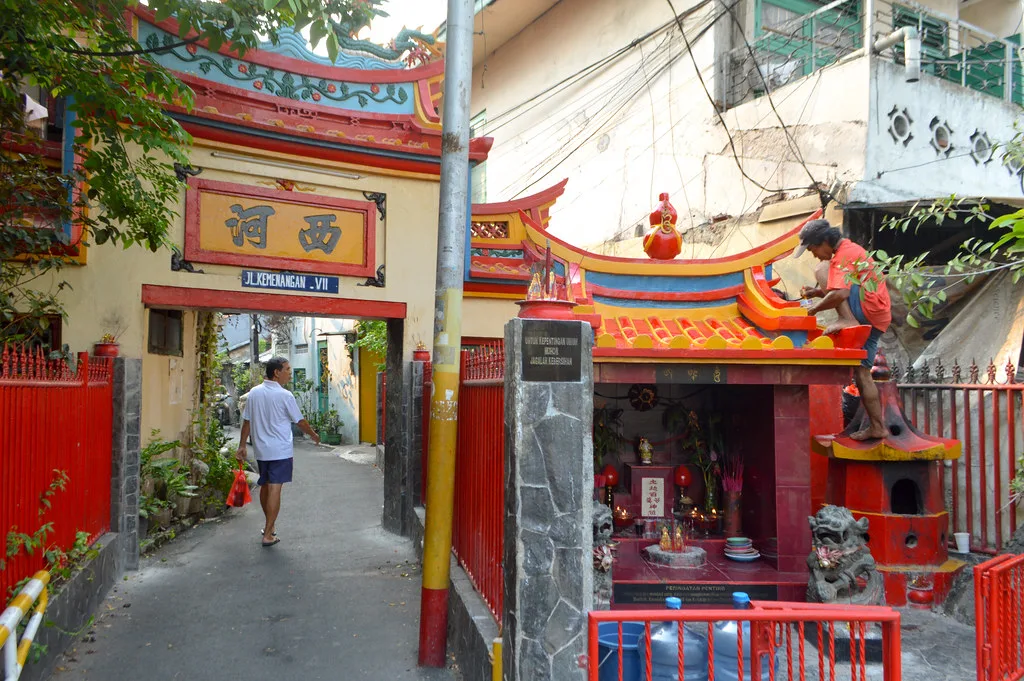
Behind the main streets, small lanes connect the market area to the temples and the church. Distances are short but the heat is real, and one visitor cut a temple hunt short because of it. Plan a loop that returns to Pancoran Street rather than trying to cover every lane.

What to see: temples, a church and old shophouses
Vihara Dharma Jaya, also known as Toasebio, is one of the oldest temples in Jakarta and sits on Jalan Kemenangan III. Visitors describe large candles and burning incense inside, and it functions as an active place of worship, so keep visits brief and quiet when people are praying. The same street holds Santa Maria de Fatima church, a Catholic church whose congregation includes many Chinese-Indonesian families, making the lane a compact lesson in the district's layered religious life.
Access to both sites is informal rather than ticketed, so confirm how to enter when you arrive and treat any gate that looks closed as closed. The draw is the cluster rather than any one monument: temple, church, shophouses and market within a few minutes of each other.
The market and shophouse shopping
Pancoran Chinatown Point mall holds stalls selling Chinese goods, clothing and food, and it works as a cool pause between street walks. Outside, the traditional market lanes and the shopfronts along Pancoran Street sell housewares, snacks and imported goods. This is browsing rather than destination retail; come for the texture of the trade, not for a specific purchase list.
Chinese medicine shops are part of the streetscape, and one of them, Seng Seng Tong on the route toward Jalan Toko Tiga, still makes traditional remedies including arak gosok, a liniment used for aches. Its owner describes himself as the third generation in the business, and he notes that many neighboring shops have closed for lack of a successor. Drop in as a customer, buy something small if you are interested, and do not treat the shop as a museum.
Where to eat in Glodok
Food is the strongest reason to come. Expect bakso, the springy meatball soup, ayam penyet with sambal, and noodle shops, with market snacks such as klepon sold from street stalls. One account describes the evening trade as the moment the district comes alive, with neon signs and street food aromas along the shophouse rows.
Many of the culinary shops have operated for decades and are run by families rather than trained for visitors, so service is brisk and menus may be short. Pick a busy stall, order one thing, and eat where the turnover is high. Prices are modest by Jakarta standards but change often, so confirm at the counter rather than relying on any figure quoted online.
Note that Sunday can be quiet, with many shops shuttered; one visitor found Jalan Toko Tiga unusually still on a Sunday, though this is a single account rather than a rule. If shopfront browsing matters more to you than eating, a weekday gives you a better chance of finding everything open.
How long Glodok needs, with Kota Tua
Give Glodok two to three hours on foot, then add Kota Tua next door for the rest of a half-day. The pair works because the walking distances are short and the contrast is sharp: commercial Chinatown lanes followed by the old colonial square. Trying to do both in an hour means rushing past the parts that make Glodok distinct.
If food is your priority, eat lunch in Glodok and walk off the meal in Kota Tua in the afternoon. If heritage is the priority, reverse it so you arrive in Glodok when the streets are busiest and the shops are open. Either order keeps you within one neighborhood cluster instead of crossing the city twice.
Getting to Glodok and getting around it
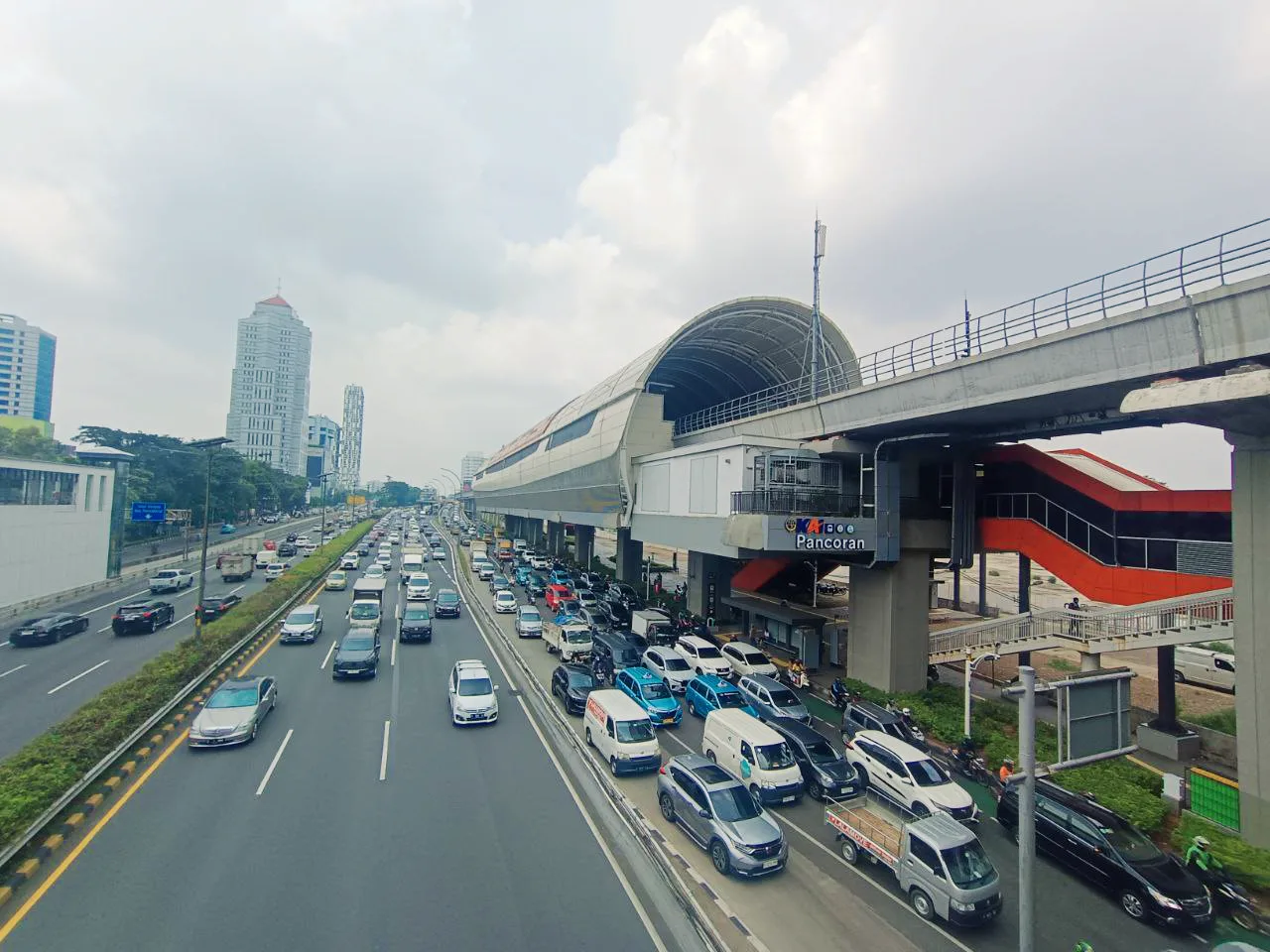
The simplest arrival is the KRL commuter train to Jakarta Kota station, then a walk of a few minutes into the district; one visitor found the train clean and inexpensive. Ride-hailing apps and taxis also work, with Pancoran Street as the drop-off, though traffic in this part of West Jakarta can slow the last stretch. Ask the driver for Pancoran or Glodok rather than a specific stall, which may be hard to find.
Once there, everything is on foot, and the distances are small but the pavements are uneven and the heat is draining at midday. Plan a route that keeps returning to Pancoran Street so you always have a landmark. Carry water and take shade breaks in the mall rather than powering through.
Where to stay for a Glodok visit
Few travelers base themselves inside the market district; it is a daytime and early-evening destination rather than a hotel quarter. Most visitors stay in Jakarta's main hotel areas and come here for a half-day, which is the more comfortable choice. If you want a calmer neighborhood base with restaurants and cafes, Menteng, Jakarta is a reasonable alternative, and Kemang, Jakarta suits travelers who want a lively dining scene outside the old town.
Staying near Kota Tua puts you within walking distance of Glodok and gives you the old town at quieter hours, though this area is not a resort-style base. Check recent reviews for any specific hotel and confirm its current condition and rates directly, since this guide does not recommend individual properties here.
Should Glodok make your Jakarta itinerary?
Yes, if you want food, old shophouses and a working Chinatown, and you are happy to wander without a formal circuit. Pair it with Kota Tua, arrive via Jakarta Kota station, and aim for a weekday if you want the shops open. Skip it if your priority is polished, air-conditioned sightseeing.
Before you go, confirm the current state of the temples and the market lanes locally, since no reliable schedule is published for them. Then build the day around Pancoran Street, Jalan Toko Tiga and Jalan Kemenangan III, and leave room for an unplanned bowl of bakso.
Explore more Jakarta guides
Frequently Asked Questions
Is Glodok the same as Jakarta's Chinatown?
Glodok is the name most people use for Jakarta's Chinatown, also called Pecinan. It sits in West Jakarta around Pancoran Street and the lanes behind it, within walking distance of Jakarta Kota station and next to Kota Tua.
How do I get to Glodok without a car?
Take the KRL commuter train to Jakarta Kota station and walk into the district, which one visitor describes as a few minutes on foot. Ride-hailing apps and taxis also work, with Pancoran Street as a practical drop-off. Confirm current train service and fares through the operator.
Are the temples in Glodok open to visitors?
They are active places of worship rather than ticketed sights, and no reliable visitor hours are published. Check at the entrance and keep visits short and quiet when people are praying.
What should I eat in Glodok?
Look for bakso, ayam penyet with sambal, noodle shops and market snacks such as klepon, sold from stalls and long-running family shops. Prices change often, so confirm at the counter.