
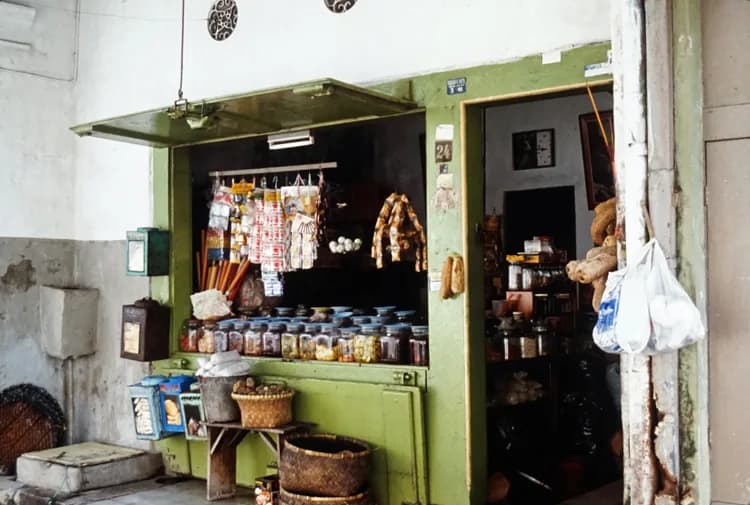
Pecinan Semarang: Walking Semarang's Chinatown District

Pecinan Semarang is worth a half day, not a full one: a compact Chinatown of temple lanes, old shophouses and evening food stalls in Kauman, Semarang Tengah. Come for the klenteng cluster around Gang Lombok and Gang Pinggir, then stay for the food. This guide covers where the district begins and ends, which temples sit in which lane, what to eat, where to sleep nearby, and a walking order that keeps you off the long, hot connector roads.
It suits travelers who like wandering narrow streets without a checklist, and who are happy to let a temple visit take twenty minutes rather than an hour. It does not suit anyone wanting one headline sight with a ticket booth and a fixed route. If that is your day, the colonial streets of Kota Lama Semarang are the better fit.
Where Pecinan Semarang is and how the district is bounded
The district sits in Kauman, Kecamatan Semarang Tengah, and the boundaries are unusually tidy for a historic quarter. A guide to the area lists Jalan Gang Lombok at the northern edge, Kali Semarang on the east and south, Jalan Sebandaran I to the south, and Jalan Beteng on the west, which gives you a walkable box rather than open-ended sprawl. Use those four streets as your mental map: almost everything named here falls inside them.
Treat the boundary as a rough frame rather than a fence. Kali Semarang is not a scenic promenade, and traffic on Jalan Beteng moves faster than you expect. Enter on foot from a lane, not from the river side, and plan your exit before dark.
What the area feels like, and who should skip it
Expect narrow lanes, shophouses with horse-saddle roofs that city tourism sources single out, and a temple roughly every few minutes of walking. A frequently repeated local tag calls this the 'district of a thousand temples,' a nickname that overstates the reality but captures how dense the shrines feel. Reading the lanes is the attraction; no single building justifies the trip alone.
Skip Pecinan if uneven alleys and doorsteps are hard for you or a companion, or if you only have an hour and want guaranteed open doors. The lanes reward unhurried walkers who can change plans when a shrine is busy with worshippers. The provincial tourism office frames Semarang Chinatown as a cultural and culinary draw rather than a monument, which sets the right expectations.
How to get into Pecinan and move around on foot
Four main approaches lead into the district, and which one you use depends on where you are sleeping. From Jalan KH. Agus Salim near Jurnatan, enter via Jalan Pekojan to Jalan Gang Pinggir. From Jalan Jagalan, take Jalan Ki Mangunsarkoro through to Gang Pinggir. From Jalan Gajahmada, head to Jalan Wahid Hasyim in Kranggan and enter past Jalan Beteng, or take Jalan Wotgandul to Wotgandul Timur.
Ride-hailing apps are the simplest way to reach an entry lane, since you drop at a named junction instead of asking a driver to find an address inside the alleys. Once in, walking is the only sensible mode: lanes are short and junctions confusing. Wear shoes you can walk in for two or three hours.
Distances between lanes are short in meters but long in time, because Gang Pinggir and Gang Lombok run parallel rather than connecting at every point. Plan a loop rather than an out-and-back so you are not retracing the same crowded stretch twice. Staying south near Simpang Lima puts you a short ride from the district's edge.
The Gapura and the district's role in the city
The Gapura Pecinan Semarang, also called San Bao Long Tang Ren Jie, was inaugurated on 3 January 2005 at the junction of Jalan Beteng, Jalan Gang Warung, Jalan Pedamaran and Jalan Wahid Hasyim. It is the district's formal gateway and the easiest landmark to give a driver. The city had already flagged the area for revitalization as a Chinese cultural tourism center through a 2005 mayoral decree.
The quarter's history as a Chinese district is tied to colonial-era relocation: sources describe residents being moved here from Gedung Batu, partly so the Dutch could keep watch from a nearby garrison. Older founding dates conflict, so take any single year with caution and read the lanes instead of chasing a date.
Temples along the walk
Start with Klenteng Tay Kak Sie at Jalan Gang Lombok No. 62, the anchor of any Pecinan walk. The Kong Tik Soe shrine shares the same address and is described as part of Tay Kak Sie, so you see both in one stop. Opening hours, tickets and ceremony closures are not published, so check with the klenteng directly before planning around a visit.
Then work across the parallel lanes. Klenteng Siu Hok Bio sits at Jalan Wotgandul Timur No. 38, Klenteng Tek Hay Bio faces Jalan Sebandaran from Gang Pinggir No. 105-107, and Klenteng Tong Pek Bio is at Gang Pinggir No. 70. Add Klenteng Hoo Hok Bio at Gang Cilik No. 7 and Klenteng Wie Hwie Kiong at Jalan Sebandaran I No. 26 if you are still walking; a district source lists a dozen or so klenteng, and stringing four or five small shrines together is the realistic plan for one morning.
Behave as you would in any active house of worship: some klenteng are working shrines, not museums, and no visitor protocol or ticketing is published. Look for a caretaker before entering an inner hall, and accept a closed door as part of the visit rather than a failed itinerary.
Klenteng Agung Sam Poo Kong is often bundled into Pecinan itineraries, but it sits in Gedung Batu, Simongan, roughly four kilometers away. Treat it as a separate trip with its own transport and ticketing rather than a stop on the lane walk.
Waroeng Semawis night market: which nights it runs
Waroeng Semawis is the district's evening food market, a strip of stalls that a Semarang source describes as busy with food vendors and street snacks at night. It is the reason many visitors return after dark rather than seeing the area only in daylight. The draw is the mix: Chinese-Indonesian dishes alongside Semarang specialties such as lumpia.
Traveloka's guide gives the market's operating window as Saturday and Sunday, 18.00 to 22.00, the only schedule published here. Do not assume a weekday night will work, and confirm the current schedule before building an evening around it. Arriving near the start gives you the widest choice before popular stalls thin out.
What to eat in and around the district
Lumpia is the dish the city is known for, and Loenpia Mbak Lien in Pecinan is regularly listed among the area's essential stops. Nasi ayam is the other everyday order, and Nasi Ayam Bu Pini at Gang Pinggir No. 75, Kranggan, sits inside the walk. Neither is listed with hours or prices, so treat both as daytime walk-in stops and confirm on arrival.
For a sit-down Chinese meal, Kedai Beringin at Jalan Imam Bonjol No. 114A, Sekayu, is the long-running name cited in food round-ups, though its address puts it a short ride from the district's western edge rather than inside the lanes. Toko Oen keeps a colonial-era dining room if you want an air-conditioned break after the alleys. Check prices at the table as you order.
A workable plan: a lane snack mid-morning, a proper lunch of nasi ayam or Chinese food, an air-conditioned break in the afternoon, and Semawis stalls if your visit lands on a Saturday or Sunday evening. Spreading the food across the day beats queueing once at peak. Staying out near Gajahmungkur works if you eat lunch in the district and ride back.
Where to stay in or near Pecinan
Hotel names inside the district are not documented, so choose by walking distance to an entry lane and by whether you want the evening market on foot. Staying within the Pecinan box buys atmosphere and short walks but not quiet; the lanes are lively and the buildings old. Staying a short ride away buys comfort and easier parking.
Compare districts on that trade-off. Kota Lama, the colonial quarter often called Oude Stad, gives you restored streets and easier evening strolling, while Simpang Lima, built around Lapangan Pancasila, gives city-center convenience and more night dining choice. Pecinan's advantage is walking to temples and street food within minutes of your bed.
Before booking, ask any property how far it is from Jalan Beteng or Gang Lombok in walking time, not kilometers, since alleys make distance deceptive. Check whether the room faces a lane, because market nights are loud, and confirm the property can receive a ride-hailing drop-off.
A practical half-day walking plan
Begin late morning at the Gapura Pecinan Semarang on Jalan Beteng, take a photo at the gate and walk east into the lanes rather than along the main road. A short detour into Gang Cilik for Hoo Hok Bio warms you up before the bigger shrines. Keep the first hour loose.
Then move to Gang Lombok for Klenteng Tay Kak Sie and Kong Tik Soe, the center of the walk, and break for lunch at Nasi Ayam Bu Pini or one of Gang Pinggir's food stops. In the afternoon, cross to Gang Pinggir for Tek Hay Bio and Tong Pek Bio, then Wotgandul Timur for Siu Hok Bio. Allow roughly three hours of walking plus meals, and finish by mid-afternoon since no visiting hours are published.
If your day is a Saturday or Sunday, return to Waroeng Semawis after 18.00 for dinner; on other nights, eat earlier and move on. You can also link the route to the old town the same day, since the two districts are close enough to combine by a short ride. Candi, Semarang, is the district to look at if you would rather base yourself in the hills and come in for a day.
Mistakes that spoil a Pecinan visit
The common errors are scheduling ones. Do not assume klenteng stay open all hours or admit visitors during a ceremony; no hours or closures are published, so treat worship as the priority. Do not plan a weekday evening around the night market when the cited schedule is Saturday and Sunday only.
Two more: do not underestimate walking time between the parallel lanes, which look close on a map but require going around blocks, and do not treat Sam Poo Kong as part of the same stroll, because it is about four kilometers away in Simongan. Both mistakes turn an easy half day into a rushed one.
Should you build Pecinan into your Semarang days?
Yes, if you want an unhurried wander through temple lanes rather than a single ticketed attraction. Build it around a late-morning start, lunch in the district, and an evening return only if your dates land on a Saturday or Sunday for Waroeng Semawis. Budget three hours of walking and confirm the temple doors when you arrive.
If your group prefers paved, restored and signposted streets, put Kota Lama first and treat Pecinan as an optional food stop. Tembalang, Semarang, is campus-adjacent and a different kind of base if you are in town for university business rather than sightseeing.
Explore more Semarang guides
Frequently Asked Questions
How long does it take to walk through Pecinan Semarang?
Plan about three hours of walking to see the main lanes and four or five klenteng, plus time for a meal. Distances look short on a map, but parallel alleys and the gate area slow you down. Add an hour if you stop for a sit-down lunch.
Is Waroeng Semawis open every night?
The published schedule lists it on Saturday and Sunday from 18.00 to 22.00. Do not assume a weekday evening will work, and confirm the current schedule before you build a trip around it, because market nights can change.
Do I need a ticket for the temples in Pecinan Semarang?
No ticket details are published for the klenteng in the district. They are working shrines, so ask on arrival and defer to worshippers if a hall is in use. Treat any donation as voluntary and separate from admission.