
Kota Lama Semarang: Walking the Old Dutch Town
Kota Lama Semarang is the city's Dutch-era old town, and the right way to see it is on foot over roughly two to four hours, starting near Gereja Blenduk and Taman Srigunting and letting the surrounding streets set the pace. It suits travelers who read a place through its buildings and street life, not anyone hunting a single ticketed attraction with a clear queue and exit. This guide covers where the district sits, how to walk it, which named buildings to look for, where to eat inside it, and how it fits into the rest of your Semarang time.
What Kota Lama Semarang actually is
Kota Lama, also written Oude Stad and nicknamed Little Netherland, is the historic trade quarter of Semarang, laid out by the Dutch to serve the colonial economy. A 2018 Kompas planning report described the area as about 40 hectares with 245 buildings, of which 105 were identified as probable heritage structures, so treat those numbers as a reported snapshot rather than a current count. What you feel on the ground is a grid of old offices, banks and warehouses rather than a museum campus.
The Semarang Neighborhoods: 6 Area Guides overview places Kota Lama among the districts that make up modern Semarang, alongside the government and commercial zones to the south, so read the old town as one chapter of the city rather than a summary of it. Lawang Sewu is not inside Kota Lama proper, so do not fold it into your old-town loop. The district also sits next to other historic quarters, including Kauman and Pecinan, which have their own separate character and streets.
Where it sits and how the streets run
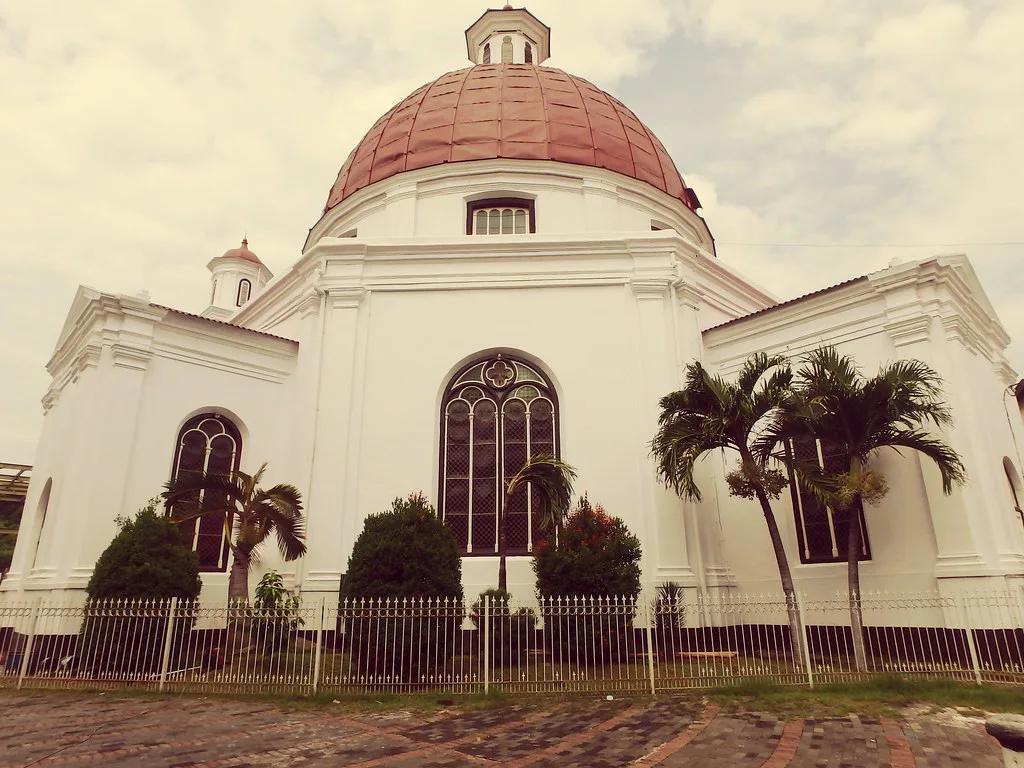
Jalan Letjen Suprapto threads through the district's best-known stretch and is the address most tour listings attach to Kota Lama. The heart of the walk is the pairing of Gereja Blenduk, the domed colonial church, with Taman Srigunting, the small garden nearby; from that garden, a few parallel and cross streets reveal most of the historic facades within a compact area.
On the map, the quarter occupies low ground near the coast and the Kali Semarang river system, spanning parts of North Semarang and Central Semarang. Jembatan Berok, the bridge over the old waterway, marks a useful edge for orientation when you arrive from the south. If you are coming from the Simpang Lima area, expect a short ride rather than a long transfer.
You do not need turn-by-turn directions: the blocks around Taman Srigunting are small enough that wandering two or three lanes in each direction from the garden covers the core. Use the church dome as your landmark whenever you lose your bearings. That single compass point makes a self-guided walk here genuinely easy.
A walking route that keeps the visit on foot
Start at Taman Srigunting, walk the garden edge, and look up at Gereja Blenduk before moving into the surrounding streets. From there, follow one block east, one block north, and loop back so you compare neighbouring facades rather than darting between photo spots. The route is short; the value is in slowing down.
A 2018 Kompas report described a guided history walk, the sugar-trade route linked to Oei Tiong Ham, offered as a bicycle package and a walking package with different lengths; the same article listed per-person prices at the time. Do not assume those prices or schedules still apply. If you want a guided version, ask at the district's visitor or heritage office, or check with your hotel, and confirm both price and current availability before committing.
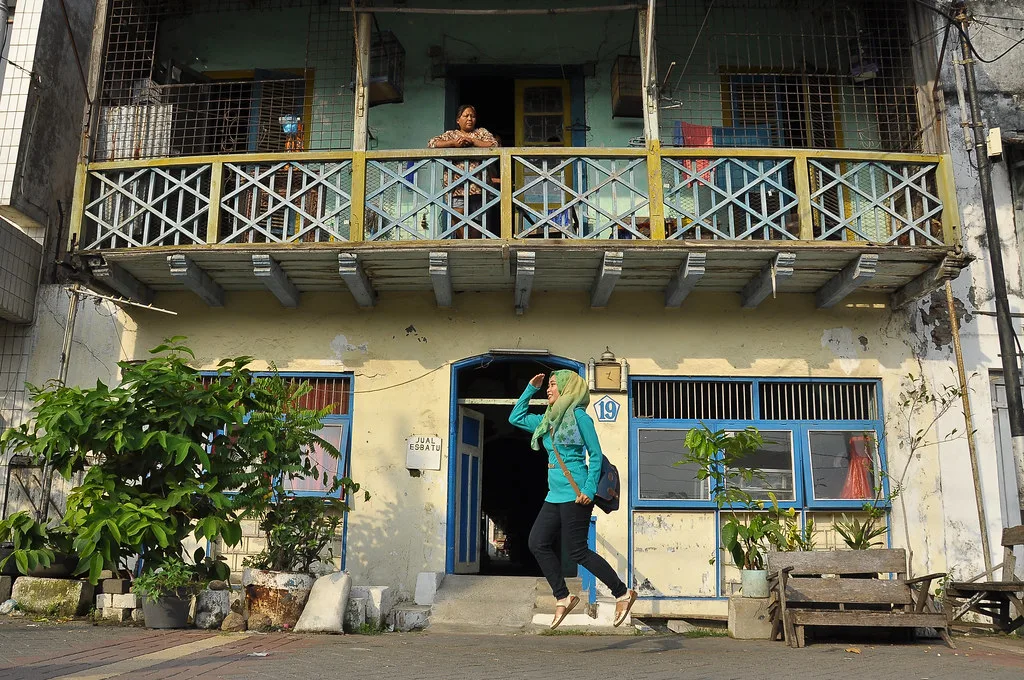
On foot you will pass bank buildings, trading offices and warehouses now reused as cafes, galleries or workspaces. Treat those as part of the streetscape rather than guaranteed stops: step inside only where a business is visibly open to the public. That approach keeps the walk honest and avoids pushing into private offices.
What to look at in the architecture
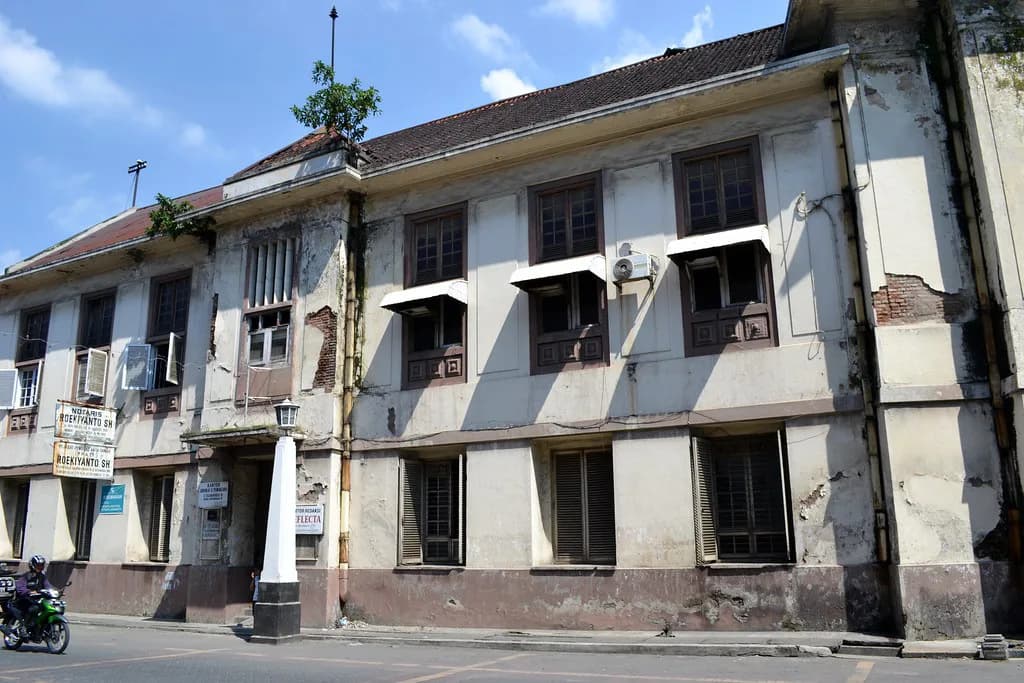
The buildings follow a European vocabulary brought over in the 1700s, and the semarangcityheritage notes single out oversized doors and windows, colored glass, unusual roof shapes and even basement spaces. Those repeated proportions are what make the streetscape cohere, so compare several neighboring fronts instead of photographing one. Differences in detail become obvious once you have two or three examples in view at once.
Watch for how a facade has been adapted: some structures keep original stonework and joinery, while others have been refitted for modern use behind a preserved front. The mix is part of the story, since the district is a working quarter as much as a heritage site. Look at doorways, shutters, signage and ironwork as your comparison points.
Landmarks and buildings to seek out
The named buildings that anchored the documented guided-walk itinerary include Gereja Blenduk, the former Netherlandsche Indische Handelsbank, Soesman Kantoor, Cultuur Maatschappij, McNeill and Co, Borsumij, Der Spiegel, Marabunta and Taman Sri Gunting. You will not find a single signposted trail linking them, so treat the list as a checklist to spot while walking. Some houses businesses today, so your view may be from the street.
Der Spiegel and Marabunta are among the better-known stops, and a revived building can host a cafe or bistro rather than a museum. Monod Huis, associated with the sugar-trade story, appears in the same reporting as a community space in a restored building. Go expecting to read the exteriors and peer into whatever is publicly open, not to tour every interior.
How much time Kota Lama needs
For a quick pass over the central landmarks, ninety minutes to two hours around the church and garden is enough to see the core. For a slower half-day, budget three to four hours and add a cafe break plus any gallery or small museum that happens to be open when you visit. The difference is not distance; it is how long you linger.
Build in slack rather than a strict schedule: individual buildings keep their own opening arrangements, and what is open in the morning may not be open later. A short visit can still feel satisfying if you accept that some doors will be shut. A longer visit rewards anyone willing to sit still and watch the street.
Where to eat and drink inside the district
Cafes and eateries have moved into old buildings around the district, and several of the named heritage structures now house food and drink businesses. That changes the visit: you can pause mid-walk with a coffee or a meal inside a colonial-era shell rather than leaving for a mall. Pick a place with visible street frontage so you can see what you are walking into.
Expect a modest range rather than a food district; for a wider spread, restaurants cluster around Jalan Pandanaran and the Simpang Lima area. Many visitors pair an old-town coffee stop with a fuller meal elsewhere.
Who it suits and who should skip it
Kota Lama suits travelers who enjoy architecture, street photography and the layered feel of a working historic quarter. It also works for a low-key afternoon with a coffee and an aimless wander. It suits anyone who likes reading a city through its buildings rather than checking off a headline sight.
It does not suit anyone wanting one compact, ticketed attraction with fixed hours and a defined experience, and it is a weak fit if you have a single afternoon in Semarang and want the biggest single sight. If your priorities lie elsewhere, the wider Semarang Attractions: 12 Visitor Guides overview helps you weigh alternatives. Travelers staying near Candi Semarang may also prefer to base their sightseeing there and treat Kota Lama as a side trip.
Getting to Kota Lama and getting around it
Kota Lama sits in the northern part of the city, a short ride from the central commercial areas. Ride-hailing apps such as Grab and Gojek work normally for a drop-off near Taman Srigunting, and drivers will know Gereja Blenduk as a landmark. From the Simpang Lima area, expect a drive measured in minutes rather than a long transfer.
Once you arrive, the district is walkable and parking is tight, so plan to walk from your drop-off rather than circle for a space. If you are coming from Tembalang or another outlying district, allow extra time for traffic and treat the old town as part of a broader day. If you are staying in the Candi, Semarang area, the ride north is straightforward.
Entrance tickets, gates and opening hours
There is no single ticket gate or admission counter for Kota Lama as a district, and individual buildings inside it may charge separately or keep their own hours. Avoid relying on the widely repeated free-entry and open-24-hours claims from tour listings; verify current details with the official Semarang city tourism channels or with a hotel before you plan around them. Your main check before going: is the specific building you care about open?
If a guided heritage walk is running, ask whether a fee applies and what it covers; the 2018 Kompas article recorded per-person prices for bicycle and walking packages at that time, but those can change. Never assume a published rate from years ago is what you will pay today. Confirm price, start point and duration directly with the operator before booking.
Timing your visit: morning or evening
Mornings are quieter and cooler, which suits anyone wanting unobstructed views of the facades and easy photography. Evenings bring a livelier mood as public spaces fill, though individual businesses may close earlier than you expect. Pick morning for looking and evening for atmosphere.
A midweek morning gives you the calmest walk; weekends and holiday periods bring more visitors around the garden and church. Because building interiors follow their own schedules, an afternoon visit may leave you outside closed doors. If you care about specific interiors, plan around them, not around a general opening time.
What Kota Lama is not
Large parts of the district are simply public streets, which means you share the space with traffic, shopfronts, and daily life, not a curated exhibit. It is not a compact ticketed attraction with a defined beginning and end. It is also not a stand-in for all of Semarang's historic quarters: the Kauman, Pecinan and Malay kampung areas have their own stories and architecture.
The UNESCO world-heritage recognition that was reported in 2018 was an ambition, not a designation. Do not describe the district as a UNESCO site. Check with official heritage channels if that status matters to your visit.
Finally, treat older reporting on road works, flood conditions and revitalization as history. The district is a living place where infrastructure changes, so check current local sources before planning around any specific access point. Practical, current information from your hotel or a local source will beat any outdated write-up.
Should you put Kota Lama on your Semarang itinerary?
Yes, if you want an architectural walk with a coffee stop rather than a big-ticket attraction. Budget two to four hours, start at Taman Srigunting and Gereja Blenduk, and keep a short list of named buildings to spot along the way. Confirm current arrangements with official sources for anything you specifically want to go inside.
If you decide to include it, pair it with the Simpang Lima area for food and the broader Semarang guide for the rest of the city. That combination gives you a full half-day without stretching the visit. If it does not fit, skip it cleanly and spend your time elsewhere rather than rushing through.