
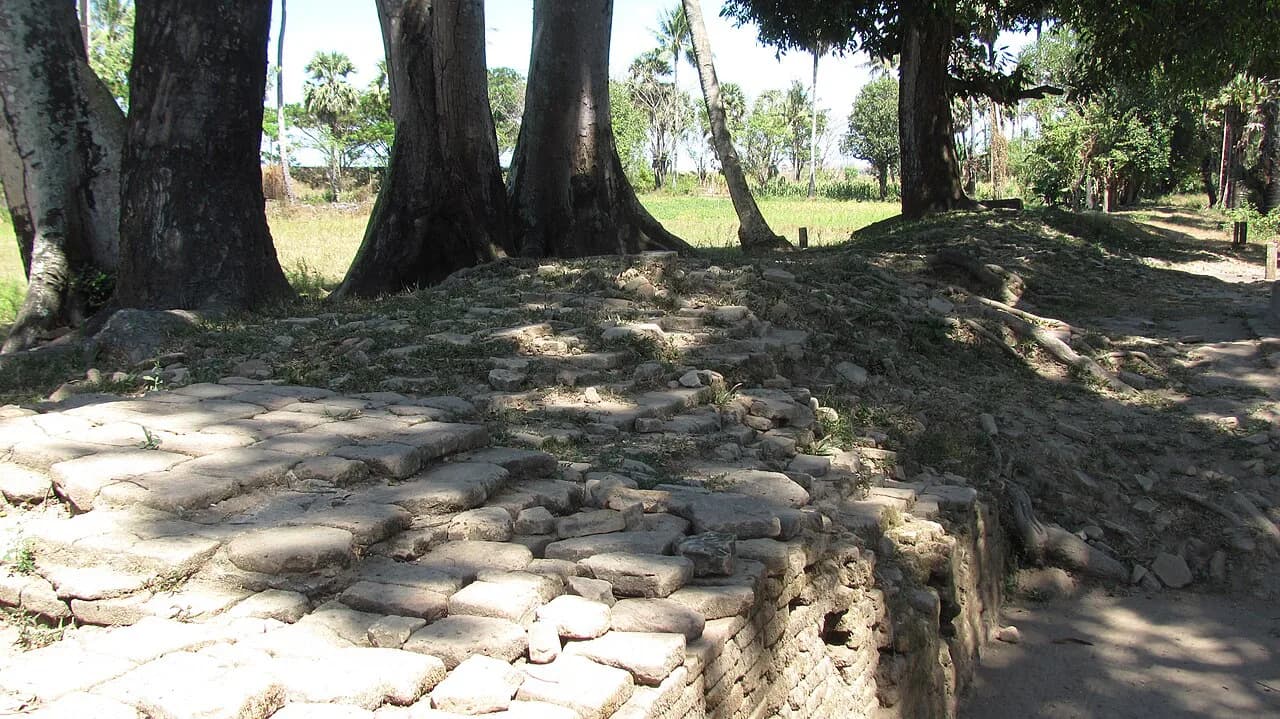
Benteng Somba Opu: What to See at the Old Gowa Fort Site in Makassar

Benteng Somba Opu is worth a half-day if you want the Gowa Sultanate's story told through ground-level ruins rather than a restored building. The site is the old main fort of the Gowa kingdom, now a heritage park south of Makassar that holds low brick wall lines, a cluster of traditional South Sulawesi houses and a small museum. This guide covers where the site sits, how to reach it from Makassar, what the fort and museum actually contain, and how to split your time between the two.
Plan it as two stops in one footprint: the fort perimeter and the interior park with the museum and rumah adat. Because the grounds are flat and compact, the walking itself is quick, but the museum cases and the individual houses reward a slower pass. Ticket and hour details are not published in the sources checked here, so confirm them locally before you set a departure time.
What Benteng Somba Opu is
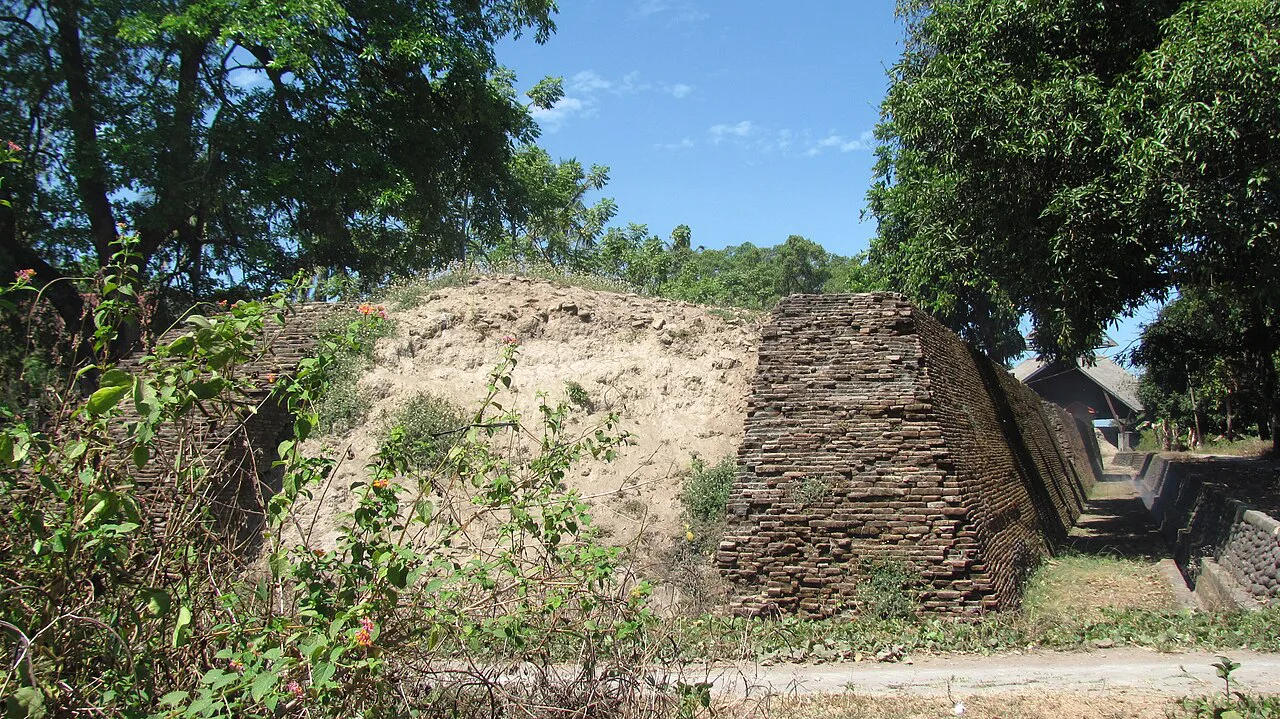
Benteng Somba Opu was the principal fort of the Gowa Sultanate, built to shield the royal town of Somba Opu from attack and later associated with Dutch campaigns against Gowa. The Indonesian Kaya heritage account describes it as a square fort of roughly 15 hectares, with sides about 2 kilometers long, walls 7 to 8 meters high and around 12 feet thick, and tall earthen-clay ramparts at the corners. Treat those figures as the source's description of the historical fort rather than a measurement of what stands today, because much of what a visitor walks past is ruin and reconstruction.
Construction is credited to Raja Gowa IX, Karaeng Tu Mapa'risi Kallonna, and continued under Sultan Alauddin and the rulers who followed. That lineage matters on site because the signage and museum labels frame the place as a kingdom capital rather than a single battlefield monument. The English-language overview of Fort Somba Opu is a useful short primer on the Sultanate's commercial role before you arrive.
What remains is not a complete circuit of standing walls. Expect fragments, rebuilt sections and open ground, with the fort's outline read as much from the layout as from masonry. Go in expecting an archaeological park with a museum attached, not a fully restored castle.

Where it is: Kabupaten Gowa, not Makassar city
The site stands in Kelurahan Somba Opu, Kecamatan Barombong, in Kabupaten Gowa, the regency that takes its name from the old kingdom and lies south of Makassar. That distinction is practical, not pedantic: you are leaving Makassar city proper, so a driver who hears "Makassar" may not have the right end point in mind. Some listings file the fort under Makassar because that is the nearest city travelers know, which is exactly how confusion starts.
One visitor review reports that the map location was off by about a kilometer, which sent them astray before they found the entrance. That is a single report, not a survey, but it points to the most common practical mistake here, so confirm the pin before you leave and again when your driver approaches. If you are browsing more Makassar Attractions, keep this site mentally in the Gowa column rather than the city-center column.
Because the sources place the fort outside the city, do not copy a downtown Makassar address onto your notes. Ask your accommodation or driver to confirm the regency and village name, and search for the site by its Indonesian name, Benteng Somba Opu, rather than an English translation.

How to get there from Makassar
The straightforward approach is a private car or a ride-hailing trip south from Makassar, which suits a group and lets you wait out the return leg without hunting for another vehicle. No source here gives a reliable drive time or distance, so check a live map at the hour you plan to travel and allow for Makassar traffic, which can stretch a short hop considerably. Agree on the return pickup before you are dropped, since the site is not on a busy tourist strip where cars circle.
If you use a ride-hailing app, set the destination before departure and compare the pin against the entrance description. A driver who knows the area is worth the small premium over the cheapest fare, particularly on the return when you are tired and the light is going.
A walking route around the site is short: one mapping entry describes a roughly half-mile out-and-back with minimal elevation, taking somewhere between half an hour and an hour. That estimate covers the route only, not the museum or the houses, so treat it as the floor for your visit rather than the whole plan.
The fort itself: walls, ground and the cannon
Start with the perimeter so the scale registers before the museum pulls you indoors. The source's figures, 2-kilometer sides and 7 to 8-meter walls, describe a fortification far larger than the fragmentary brickwork now visible, which is why the layout reads best as an outline on the ground. Look for the corner ramparts made of earthen clay that the heritage account mentions, since they mark where the square shape turns.
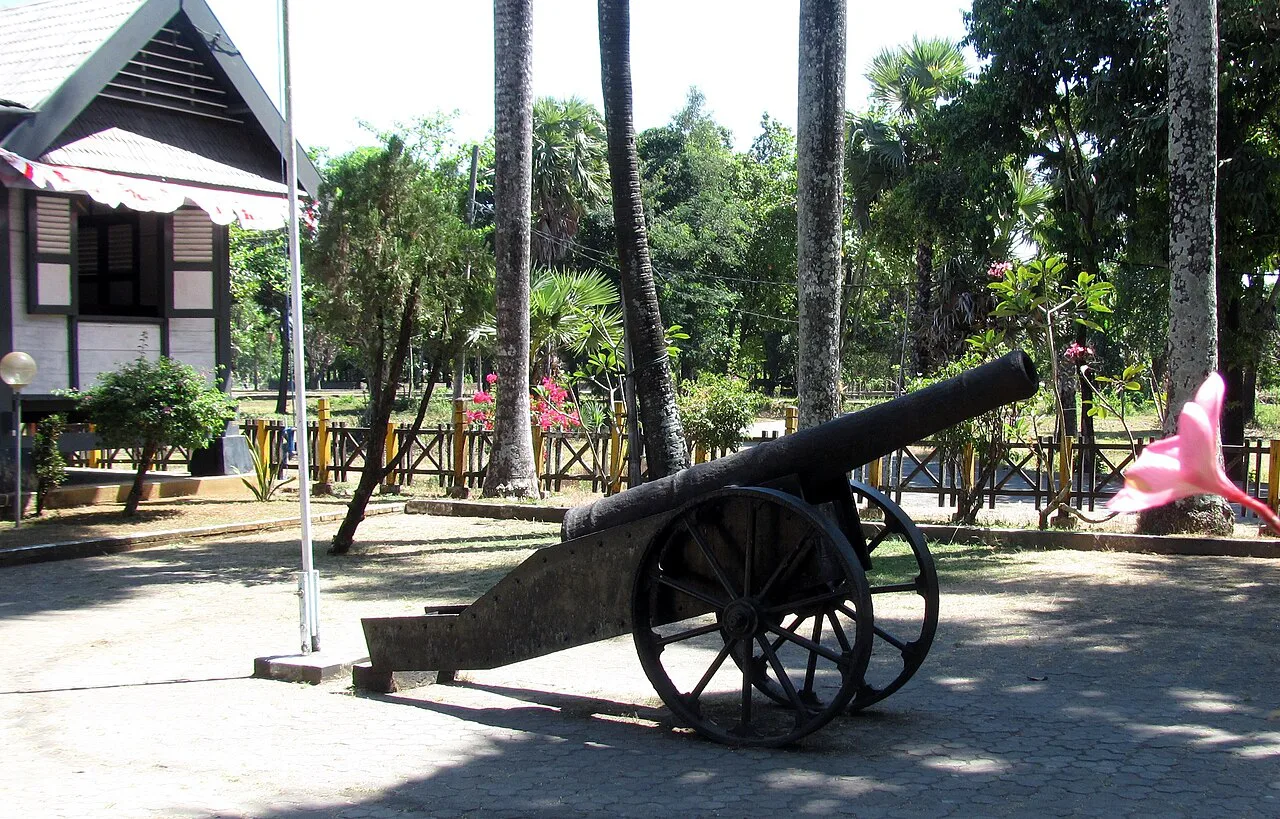
At the museum entrance a cannon stands as a greeting piece, but it is a reconstruction of the original weapon that once guarded the fort, so do not photograph it as an antique. The same caution applies to other hardware around the grounds. Read the labels rather than assuming age.
Museum Karaeng Pattingalloang
The museum is named for Karaeng Pattingalloang, a Gowa scholar and statesman honored for his role in building the kingdom, and it holds finds largely recovered in a 1989 excavation before the area was redeveloped as a visitor site. The collection includes bricks used in the fort's construction, cannon and pistol shot, porcelain, earthenware, ceremonial objects, traditional dress, replica weapons and currency. Knowing the 1989 date explains why the displays feel like an archaeological assemblage rather than a curated royal treasury.
Give the cases real time even though the room is small. Costumes from Bugis and Toraja traditions, ceremonial gear and the currency tell the trading-kingdom story better than any single object, and the labels reward slow reading. If you are traveling with someone who reads Indonesian, bring them along; the context lands more easily in the original language.
Museum access and any separate fee are not confirmed in the sources checked, so ask at the entrance rather than budgeting from a blog. A quick question at the gate about whether the museum is included with site entry settles it in seconds.
Traditional houses in the grounds
Inside the fort grounds, a gathering of rumah adat from across South Sulawesi turns the site into a compact architecture exhibit. The heritage account names the Bugis Balla Labbirina and a Kajang house among them, alongside houses representing other areas of the province. For a traveler who will not reach Toraja or Kajang country on this trip, this is the easiest place to see the building types side by side.
Walk the houses after the museum, when you have the labels and history in mind. The stilt forms and roof shapes differ enough between groups that the walk is genuinely comparative rather than decorative. Keep an eye on whether individual houses are open to enter, since access can vary by building and day.
How much time to allow
Budget a half-day from central Makassar, including the drive each way, and expect the on-site portion to run longer than the half-mile walking estimate suggests. The fort outline takes under an hour, the museum perhaps 30 to 45 minutes, and the houses another half hour if you actually stop at each one. Add buffer for a slow gate entry or a museum that is locked when you arrive.
Morning is the easier slot for heat and light on open ground, though no source here documents the site's best hours. If the museum is your priority, confirm it is open before committing the drive, because the outdoor ruins alone will not fill a half-day for every traveler. Culture-focused visitors should weight time toward the museum and houses; casual visitors can circle the walls and be satisfied.
Practical checks before you go
Opening hours and ticket prices for Benteng Somba Opu are not documented in the sources reviewed, so verify them with the site, your hotel or a local contact the day before. Social media location pages sometimes label the place open around the clock, but a crowd-sourced tag is not an operator's schedule and should not be trusted for planning. Ask two questions: is the museum open today, and is there a separate charge for it.
Bring cash in rupiah in case there is a gate fee, and treat any amount you have read online as unverified. If the museum turns out to be closed, the fort outline and houses still justify the trip for history-minded visitors.
What is nearby
Most travelers pair this site with the city's Dutch-era fort, Fort Rotterdam in Makassar, which gives a sharp contrast: a restored colonial compound on the waterfront against Gowa's low brick ruins inland. Doing both in one day is ambitious once traffic is counted, so pick which one gets the fresh morning.
Closer to the city center, Losari Beach, Makassar is the natural evening wind-down after a dusty afternoon at the ruins, with the waterfront promenade as the draw rather than swimming. If you are building a Makassar day, keep the fort site as the southern anchor and cluster the rest nearer the coast.
Other city stops worth slotting around this visit include the 99 domes mosque Makassar and the museum Kota Makassar, both better suited to a separate half-day than to the same afternoon as the Gowa drive.
Should you add the Gowa fort to your Makassar plan?
Add it if you care about the Gowa Sultanate and want the museum's 1989 excavation finds and the South Sulawesi houses in one flat, compact stop. Skip it if your Makassar time is short and you would rather spend a single heritage block at Fort Rotterdam in the city center. The deciding factor is the drive south, not the walking.
Before you go, confirm the museum is open and whether any entry charge applies, then set your map pin by the Indonesian name and arrange the return ride. With those three checks done, Benteng Somba Opu fits neatly into a Makassar itinerary as a half-day southern excursion.
Explore more Makassar guides
Frequently Asked Questions
Is Benteng Somba Opu the same as Fort Rotterdam?
No. Benteng Somba Opu is the ruin-and-reconstruction site of the Gowa Sultanate's main fort in Kabupaten Gowa, south of Makassar, while Fort Rotterdam is the Dutch-era fort in the city center. They are separate places with different histories and should be planned as two stops.
Do you need a guide at Benteng Somba Opu?
Not strictly, but the museum labels and site signage carry much of the context, and a guide helps if you want the Gowa kingdom's chronology explained. Otherwise, read up on the Sultanate beforehand and the exhibits will make sense on their own.
Is there an entrance fee for the museum?
The sources reviewed do not publish a ticket price or confirm whether the museum charges separately from the site. Ask at the gate on arrival and carry rupiah cash in case a fee applies.