
Vihara Gunung Timur in Medan: A Visitor's Guide to the Temple

Vihara Gunung Timur deserves about 30 to 45 minutes of your Medan day, not a half-day. It is the city's largest Chinese temple, a 1962 building in red and gold on Jalan Hang Tuah, sitting right in front of Sungai Babura where the river once carried trade into Medan. This guide covers where to be dropped off, what to see among the 20 worship stations, how long to allow, and which nearby stops pair well with it.
What Vihara Gunung Timur Is and Why It's Worth a Stop
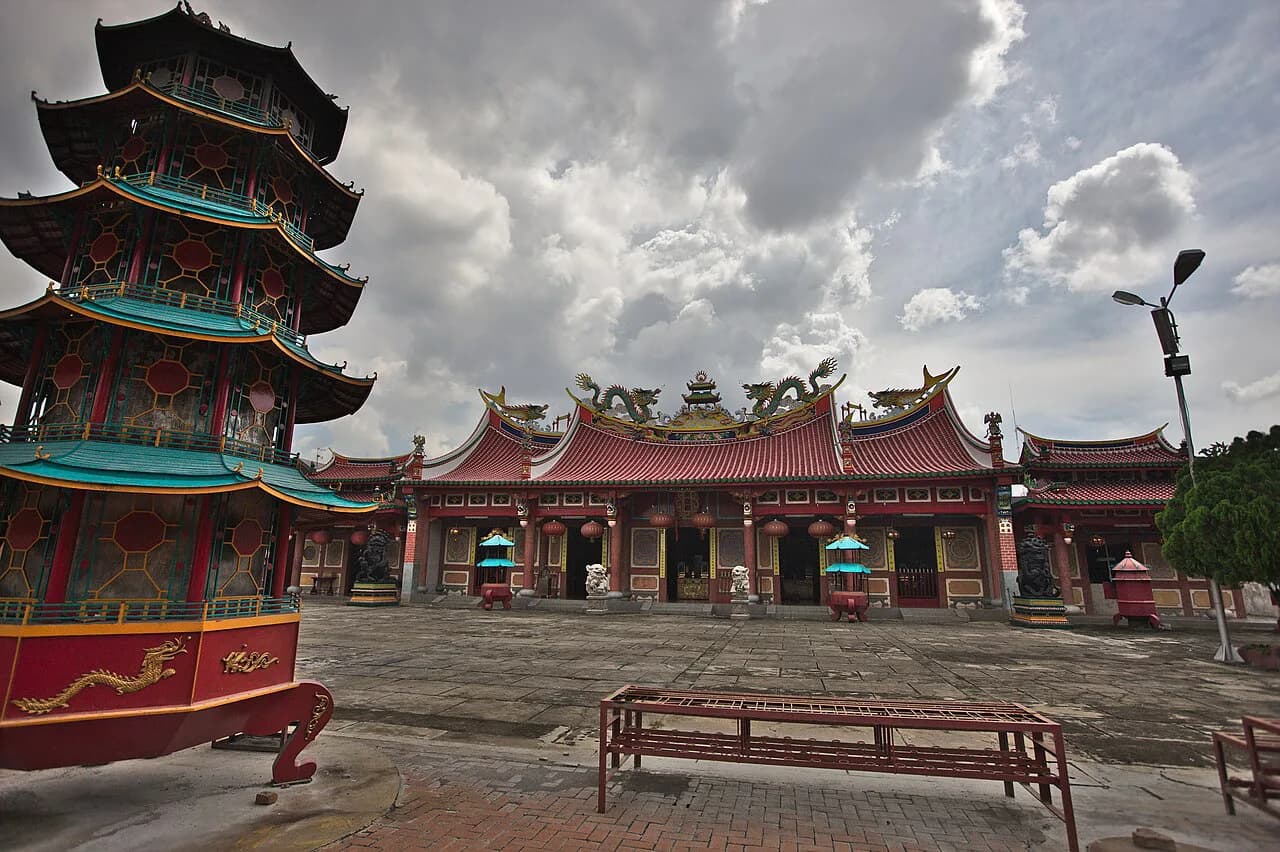
Vihara Gunung Timur opened to the public in 1962 and is described by Indonesia's tourism ministry as the largest Vihara in Medan. It is a Chinese-style temple built by the city's Chinese community, serving both Buddhist and Taoist worshippers under one roof.
The draw is not scale alone but contrast: dragons on the roof and over the entrance, red lanterns hanging in nearly every corner, and carved pillars bearing Buddhist sayings in Chinese characters. It is a working house of worship, so you will almost certainly be moving around people who are there to pray rather than to sightsee.
One caution on superlatives: the temple is sometimes called the second-oldest in Medan, after Vihara Setia Budi on Jalan Irian Barat, but that ranking comes only from a 2012 local-press feature and isn't corroborated by an official heritage source. Treat the second-oldest ranking as local lore, not a firm fact you'd quote.

Where It Is: Jalan Hang Tuah No. 16, on the Bank of Sungai Babura
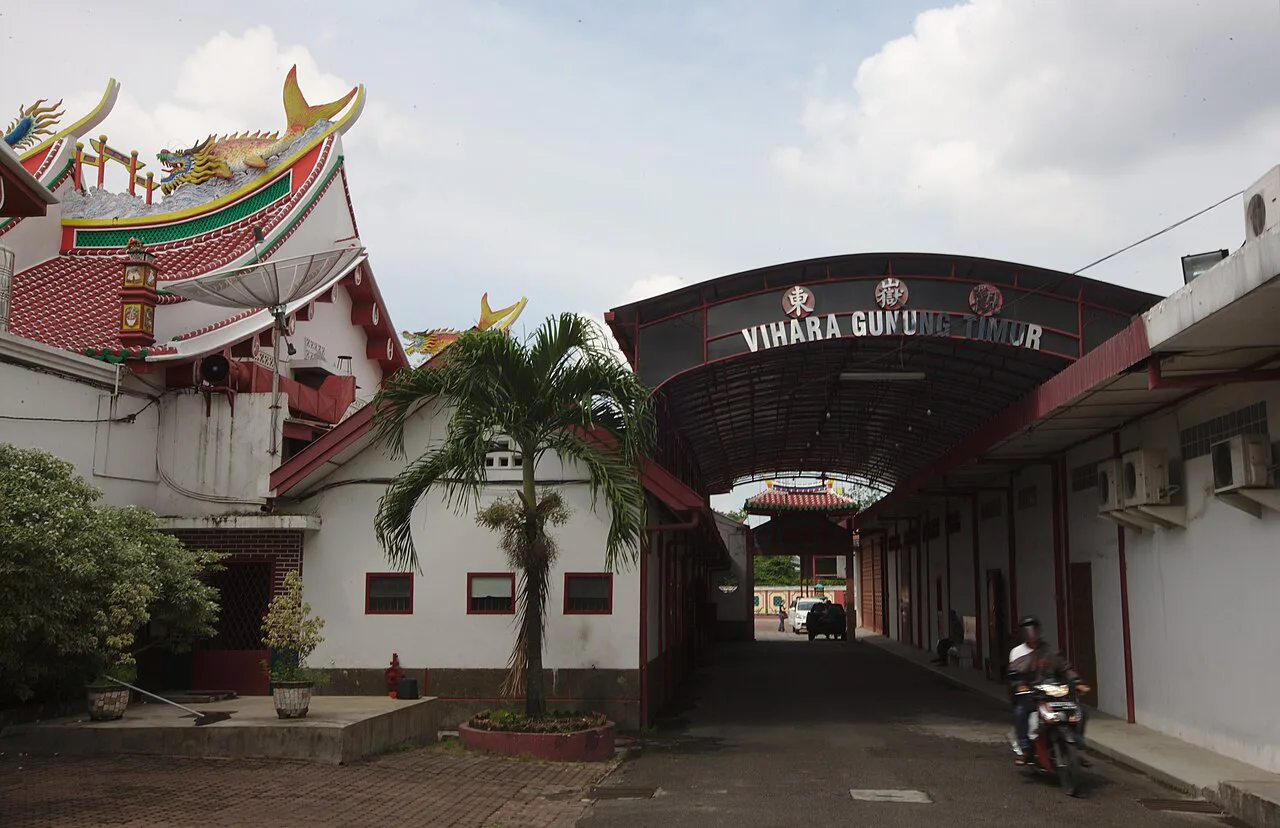
The address is Jalan Hang Tuah No. 16, within walking distance of several of central Medan's sights. The compound covers almost a hectare and faces Sungai Babura, part of what local accounts describe as a feng shui choice: flowing water for flowing fortune.
Because the site sits low against the river, it historically had a flooding problem in the rainy season, which the foundation addressed by building a barrier wall. Expect the riverbank to look plain rather than landscaped.
For orientation on the wider city and how this fits among the other major sights, our Medan Attractions: 12 Visitor Guides map places the temple alongside the palace, the mansions and the other houses of worship covered in our Medan guides.
How to Get There and Where to Be Dropped Off
Jalan Hang Tuah runs through the older commercial core, so a Grab or Gojek car or a metered Bluebird taxi is the calmest option; central Medan has heavy traffic, and the driver will know the riverside stretch better than you will. Ask to be dropped at the front gate on Jalan Hang Tuah and confirm the return pickup point before you step out.
If you are already walking central Medan, the temple works as part of an on-foot loop with the nearby Chinese and colonial landmarks, but the road has narrow shoulders and fast traffic; a short car hop is often more comfortable in the late-morning heat.
What You'll See Inside: The 20 Worship Stations and 80-Plus Deities
Inside, the temple is organized around 20 numbered worship stations, each holding between one and six figures. The numbering follows a logic a first-time visitor will miss without it: station 1 is the worship place for God (Tuhan), station 2 for the temple's master deity, station 3 for blessing in business, and station 6 covers family matters such as marriage and children.
Across those stations sit more than 80 deities; the local press reports the figure as over 80 rather than as a precise number, and which deity occupies which station is not publicly recorded. So walk along the line of stations slowly instead of trying to identify and name each one.
In the center you will see round red offering tables, three of them tied to the offering ritual, with lower planked areas on the left and right that read as practical rather than decorative. Incense and candles are provided without a set charge, and upkeep and supplies are funded by donations that are not fixed at a set amount, so bring small rupiah notes for the box.
The Architecture: Dragons, Red Lanterns and Pillars With Chinese Inscriptions
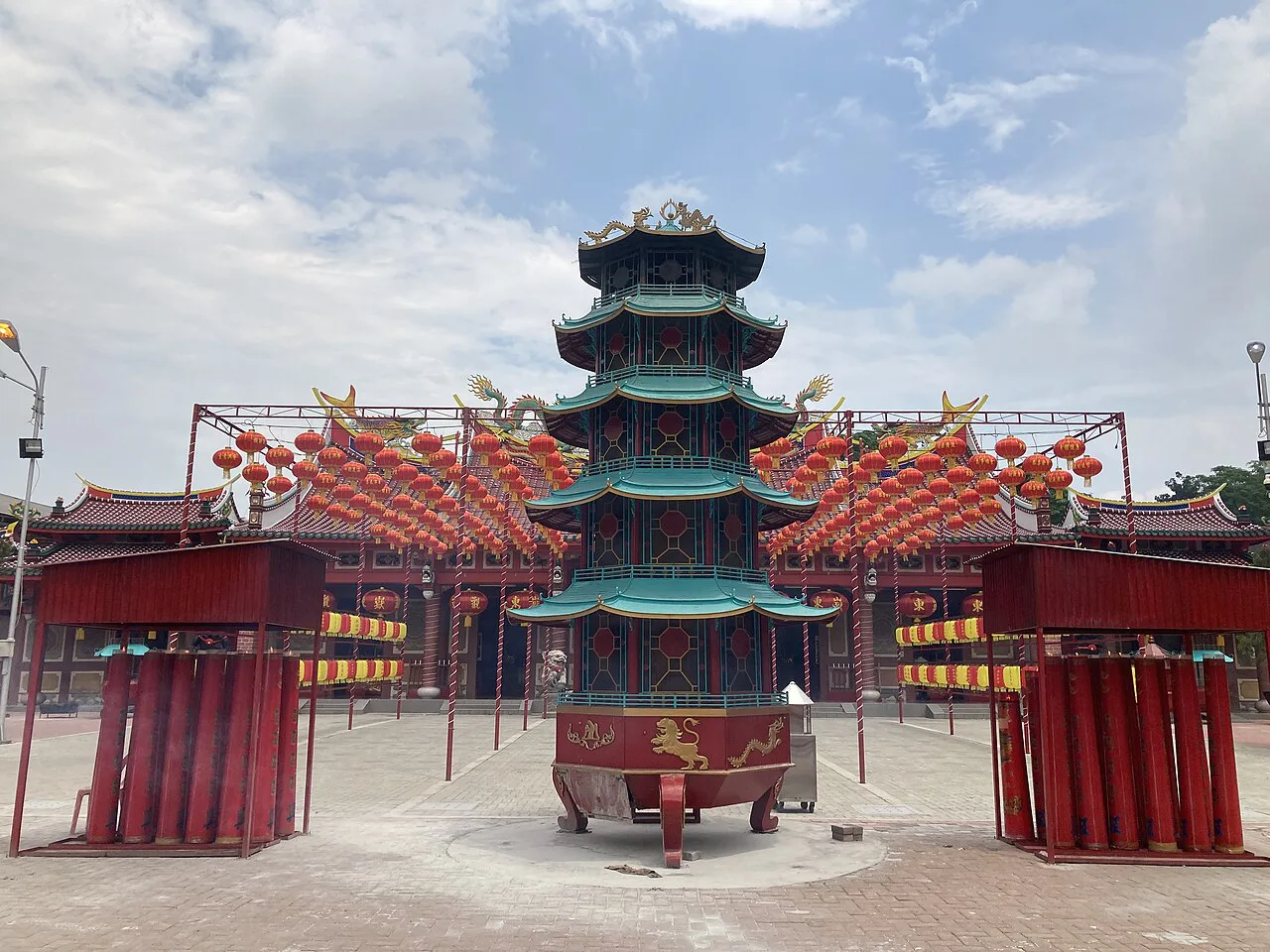
The roof crest and entrance carry dragon figures, and a gold dragon replica sits in front of the main worship space. Red lanterns Hang throughout the compound, and the pillars are inscribed with Buddhist sayings in Chinese characters, which you can look at even if you cannot read them.
Little changes here from year to year beyond practical upkeep: the lanterns are generally replaced annually and the deity figures are dusted once a year. The original two main halls were extended in the 1970s with additional worship space, and storage buildings were later added on both sides.
For photos, the red-and-gold façade reads best in soft light, and the lanterns add color to interior shots. The temple has its own Instagram presence under the name Vihara Gunung Timur Sakti, which is a way to see recent photos before you head over.

The Buddhist and Taoist Mix and How the Temple Is Organized
Vihara Gunung Timur is a combined Buddhist and Taoist temple, not a single-school shrine. Within the Taoist tradition, the number of gods worshippers recognize runs into the thousands, while this temple holds more than 80; Buddhist practice, by contrast, keeps the Buddha figure at the center of its own space.
What that means for you is simple: move through the stations in order and watch what the people around you are doing. If someone is kneeling or lighting incense at a station, step to the side rather than in front of them.
The temple is also tied to the Chinese community's annual calendar; observances around Imlek, the Chinese New Year, and Cap Go Meh draw crowds, though the temple celebrates quietly compared with others in the city. Rather than chase dates, ask your hotel or check the temple's Instagram for what is happening during your stay.
How Much Time to Allow and the Best Part of the Day
Allow around 30 to 45 minutes for the stations, the pillars and the dragon figures. If you want to sit quietly and watch the offerings, an hour is comfortable; you can also treat it as a 15-minute walk-through if you are rushing.
Mornings are calmer and cooler. The front of the temple opens for the public at 08:00 WIB, according to local press, and the front doors close at 17:00 WIB; after that, people can still pray by entering through the side door, which closes at 23:00 WIB at the latest.
If you want dusk photos of the lanterns, the side-door arrangement is your route after the front closes, but confirm the current setup when you arrive, since a working temple adjusts access around ceremonies.
Hours and Entry Details: What's Published and Where to Confirm
The temple does not publish a ticket price; sources describe it as open to the public and note that incense and candles are supplied without a set charge, with donations covering upkeep. There is no booking system to pre-register for a solo or small-group visit.
The published opening time of 08:00 WIB and the front-door close at 17:00 WIB, with side-door access until 23:00 WIB, come from a 2012 local-press account, so check current details on the temple's Instagram or with your hotel before making a special trip for a particular time.
Because this is an active place of worship, hours can shift for ceremonies, and visitors are typically expected to step back during a service rather than tour through it. Build in a flexible window of an hour rather than pinning your day to a fixed slot.
Nearby: Other Stops to Pair With a Visit
The temple sits close enough to Medan's other heritage sights that a half-day combining two or three works well. The Tjong A Fie Mansion in Medan, the historic home of a Chinese-Indonesian businessman, is a natural pairing for anyone following the city's Chinese heritage.
Sri Mariamman Temple, Medan, the city's Tamil Hindu temple, is another short hop away and makes a sharp architectural contrast: bright gopuram towers against Gunung Timur's red-and-gold restraint. Our guide to Sri Mariamman Temple (Kuil Sri Mariamman), Medan covers what to see there.
If you have time for one more, the Maimun Palace in Medan, the former royal residence, is a taxi ride away and rounds out a heritage day; check its opening days separately before building it into the plan.
Is Gunung Timur Worth 45 Minutes of Your Medan Day?
Yes, if you are already spending a day in central Medan and want a compact, atmospheric stop. Pair it with the Tjong A Fie mansion or the nearby Sri Mariamman temple, and go before the day heats up: the front door opens at 08:00 WIB and shuts at 17:00 WIB.
If you are short on Medan time and choosing between sights, skip it rather than squeeze it into a rushed itinerary; a working temple rewards calm viewing, and rushing through while people pray is the wrong way to see it. Either way, confirm the door arrangement on the day, since ceremonies can change access.