
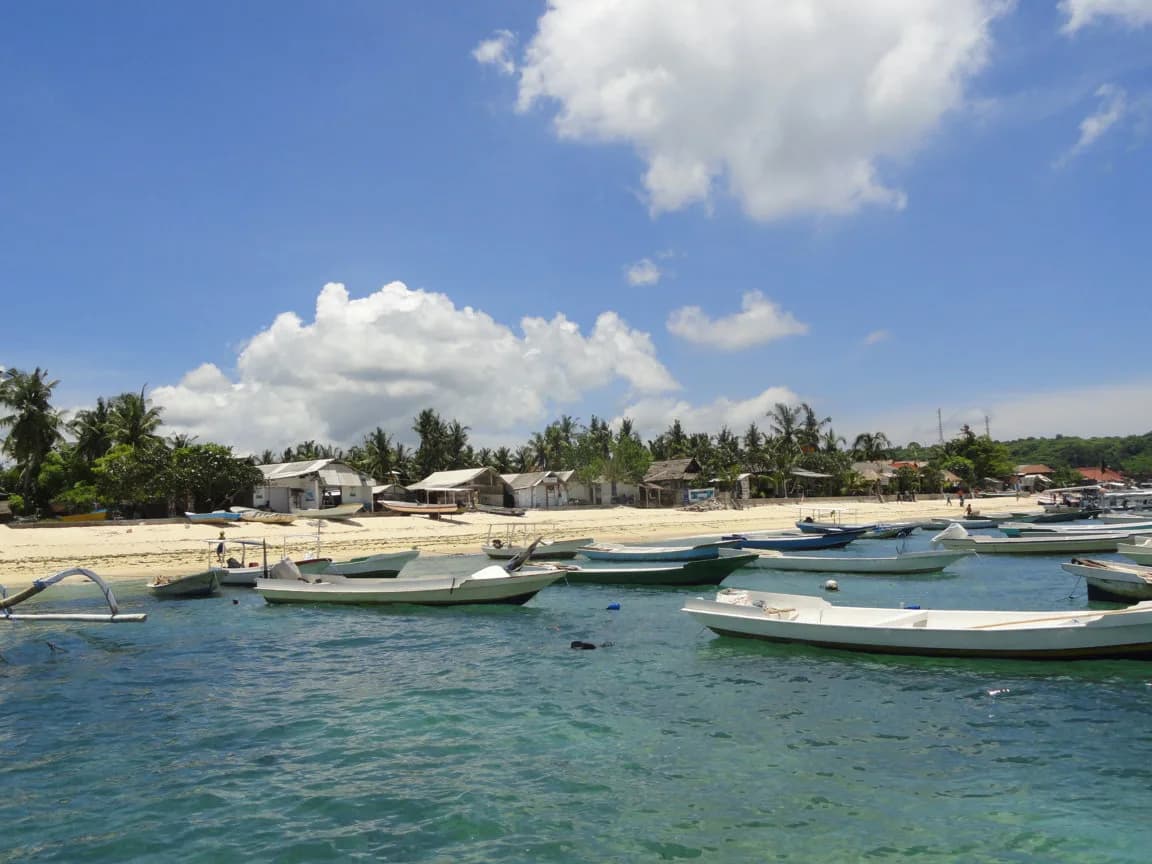
Jungut Batu Beach, Nusa Lembongan: A Practical Guide to the Island's Main Bay

Jungut Batu Beach is the longest beach on Nusa Lembongan and the island's working heart: a curving bay that lines Jungutbatu village on the island's northern side, with Bali's Mount Agung visible across the water on clear mornings. If you only have time for one stop on Lembongan, this is the one that combines a swim, a meal and a sunset in a single walk. This guide covers how the bay is laid out, how to get there from Sanur, what the water is actually like, and which nearby beaches are worth adding.
Plan around one key split: the village end carries the restaurants, bars, shops and the widest spread of places to stay on the island, while the northern stretch is the quieter white-sand, turquoise-water section. Treat Jungut Batu as both a beach and a base, because staying here saves you scooter time every evening.
Where Jungut Batu sits and how the bay is laid out
The beach runs along the northern shore of Nusa Lembongan, with the village of Jungutbatu directly behind it and Bali's Mount Agung visible across the Badung Strait on clear mornings. It is described as the island's longest beach and its main town center, which is why the shoreline changes character from one end to the other.
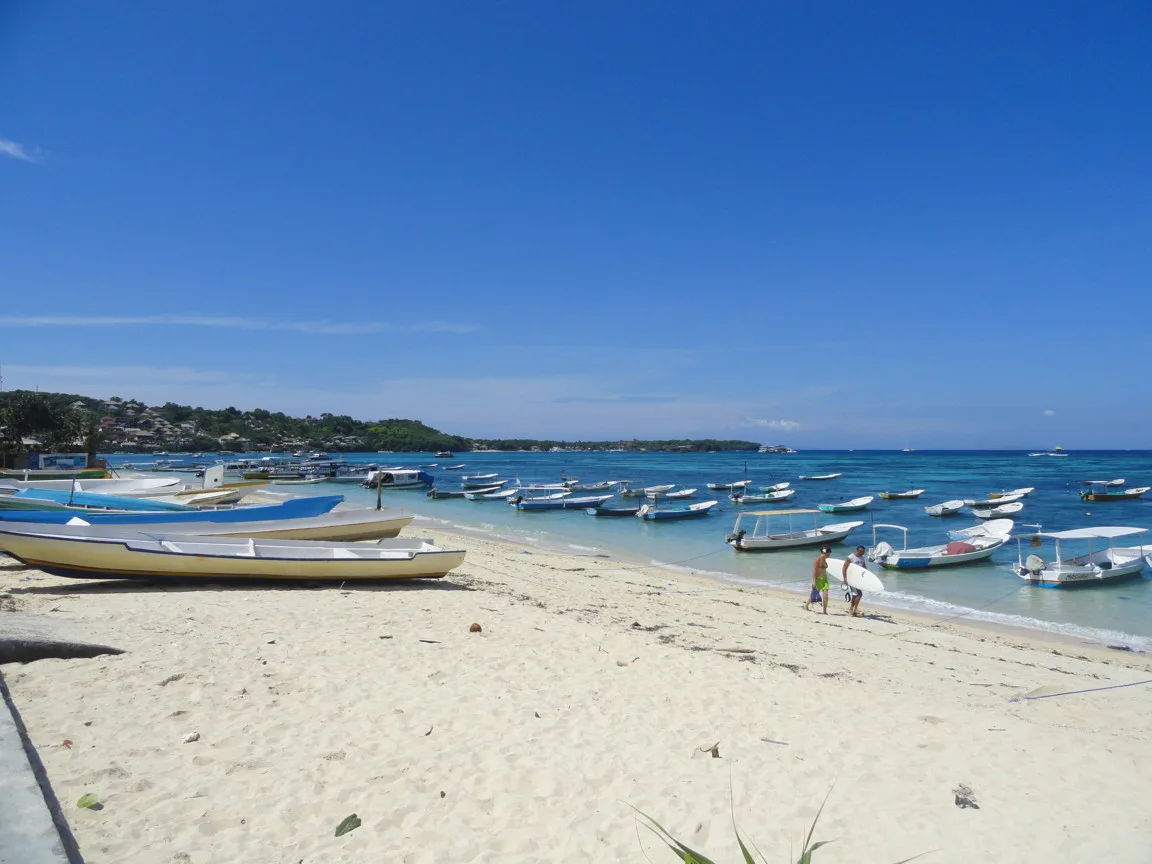
Start at the northern end if you want sand and space: that stretch is the white-sand, turquoise-water section usually photographed, with beachfront restaurants set just behind it. Walk south into the village and the beach narrows into a strip of cafés, bars, dive shops and small shops, with boats moored offshore.
If you are choosing where to sleep, note that Jungutbatu has the widest range of accommodation on the island, from budget beachfront bungalows to private villas. That convenience comes at the cost of seclusion: this is the busiest part of Lembongan, not a hidden cove.

Getting there from Bali and around the island
Most visitors arrive by fast boat from Sanur on Bali's east coast; one local guide puts the Sanur crossing at roughly 30 minutes, but treat that as a ballpark and confirm the schedule and drop-off point with whichever operator you book. Boats land at the Lembongan harbor side, from which Jungut Batu beach and the village are a short walk or a quick ride depending on where you are staying.
Once on the island, a rented scooter is the most flexible way to move between beaches, and one local source quotes scooter rental at about IDR 75,000 to 100,000 per day. That figure comes from a single non-official source, so ask at your accommodation for the current local rate rather than budgeting from it.
Local taxis and hotel shuttle services are the alternative if you would rather not ride, and drivers generally know the beach access points along the bay. No source documents an entry ticket for the public beach, so plan for your boat crossing, transport and whatever you eat and drink.

What the water is like: lagoon inside, reef outside
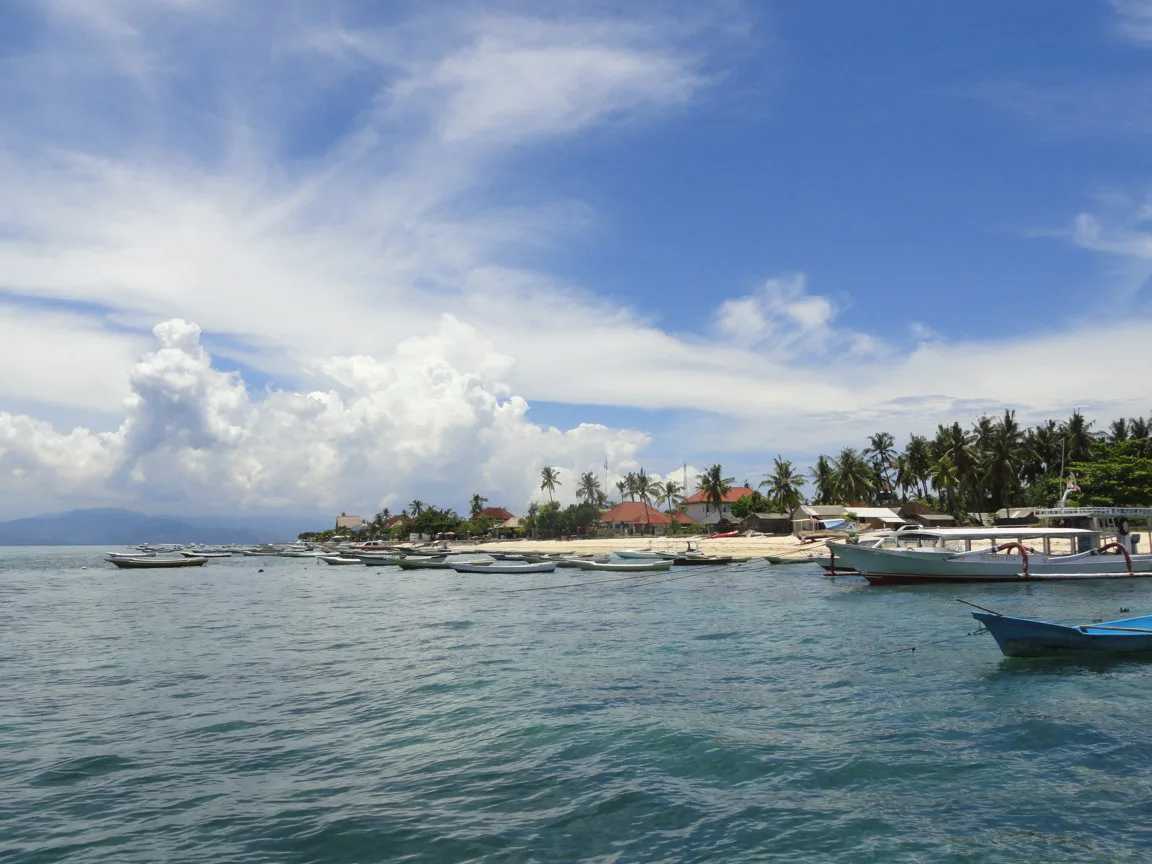
Jungut Batu's bay is protected by an outer reef, which creates a calm inner lagoon used for swimming and stand-up paddleboarding while the surf breaks sit further out on the reef line. That geography is the single most useful thing to understand here: swimmers stay inside, surfers paddle out through the channels.
Four named breaks sit off this bay: Playgrounds, Lacerations, Shipwrecks and Razors. Third-party guides generally describe Playgrounds as the mellow option for newer surfers and Shipwrecks as better suited to intermediate and advanced riders, but these are informal local labels rather than certified advice, so talk to a surf school on the beach before paddling out.
The bay is also a departure point for snorkeling and boat trips toward Nusa Ceningan, Nusa Penida and nearby reef sites, with boards, kayaks and jet skis available from operators along the sand. Book directly with the operator and confirm what the trip includes, the meeting time and the price in rupiah before you pay.
Beachfront eating and the sunset end of the bay
Food ranges from small local warungs to beach clubs with international menus, all within a short walk of the sand. Named spots in local guides include Suka's Warung for Balinese dishes, the Beach Club at Sandy Bay, Ohana's Beachfront Resort and Beach Club, and The Deck Café & Bar, which are often recommended for sunset. Menu prices and opening hours are set by each venue, so check them directly rather than assuming a beach-club minimum.
Because the bay faces west, sunset is the main event, and beachfront seats fill first. Local guides suggest arriving about 30 minutes early to claim a spot at a café or bar, and Ohana's runs a daily beach bonfire that makes it one of the busiest sunset venues on the island.
How much time to allow at Jungut Batu
A half day covers the essentials: a morning walk on the northern sand before the heat builds, a swim or paddle inside the lagoon, lunch on the beachfront and sunset drinks if you can stretch it. Local sources favor early morning for quiet photos, midday for sand and water, and late afternoon for the sunset.
If you want to surf, eat at more than one place or use the bay as a base for day trips, give it a night or two instead. Staying here means you can walk to dinner and sunset rather than arranging a ride back to a quieter part of the island after dark.
Nearby beaches and sights to add on
Coconut Beach, just north between Jungut Batu and Tamarind Bay, is the natural add-on: calm water, shade trees and easy walking access from Jungutbatu accommodation. Tamarind Beach, Nusa Lembongan sits next in the chain toward Mushroom Bay, and both work well as a second swim stop on the same scooter loop.
Mushroom Bay, on the island's southwest side, is described as the most sheltered beach on Lembongan and is a common stop for families, while Dream Beach, Nusa Lembongan is a cliff-backed spot better suited to experienced swimmers when swells and rips pick up. One local source puts Dream Beach about a 10-minute drive from Jungut Batu and Mushroom Bay about 8 minutes, which are reasonable planning figures rather than exact times.
Further south, the Yellow Bridge connects Nusa Lembongan to Nusa Ceningan and gives access to the mangrove forest and the cliff pools at Devil's Tear, roughly 12 to 15 minutes by scooter from the bay according to the same local guide. Sandy Bay Beach, Nusa Lembongan is the other west-facing option if you want a sunset without the village crowd.
Who Jungut Batu suits, and who should look elsewhere
Jungut Batu fits travelers who want convenience: walkable food, the island's biggest choice of beds, a safe lagoon for a casual swim and a sunset that needs no planning. It also suits surfers who want to be near the reef breaks without a daily commute.
Skip it as your base if you came for seclusion, since the village strip is busy and boats moor along the shore. In that case, look at the southern coves and treat Jungut Batu as a half-day visit instead, using the Nusa Lembongan Attractions: 9 Visitor Guides overview to compare the alternatives before you book.
Should Jungut Batu be your Lembongan base or just a beach stop?
Choose Jungut Batu as your base if you value walkable dinners, the widest choice of places to stay and a sunset you can reach on foot. Keep it as a day stop if quiet sand matters more, and spend your nights in one of the island's smaller coves.
Either way, confirm your fast-boat schedule, your scooter or driver arrangement and any beach-club seating rules directly with the operators before you travel, since these change and are not published in one place.
Explore more Nusa Lembongan guides
Frequently Asked Questions
Do you need a ticket to visit Jungut Batu Beach?
No source documents an entrance fee for the public beach, and the shoreline is open to walkers and swimmers. Costs you will encounter come from boat crossings, transport and whatever you order at beachfront venues, so confirm those with the operator or venue.
Can you swim at Jungut Batu Beach?
Yes. The inner lagoon sits inside an outer reef, which makes it calmer than the open water and suitable for swimming and stand-up paddleboarding. Surfers use the reef breaks further out, so stay inside the lagoon unless you have arranged a lesson with a local school.
How do you get to Jungut Batu from Bali?
Most travelers take a fast boat from Sanur and arrive at the Lembongan harbor side, then walk or ride a short distance to the beach. Crossing times and departure points are set by each operator, so confirm them when you book rather than relying on a fixed timetable.
Is Jungut Batu good for sunset?
The bay faces west toward Mount Agung, which is why it has become the island's main sunset spot. Beachfront cafés and clubs fill up, and local guides suggest arriving around 30 minutes early to get a seat.
Which surf breaks are off Jungut Batu?
Four named breaks sit off the bay: Playgrounds, Lacerations, Shipwrecks and Razors. Local guides generally place Playgrounds at the easier end and Shipwrecks at the more advanced end, but these labels are informal, so get current advice from a surf school on the beach.