
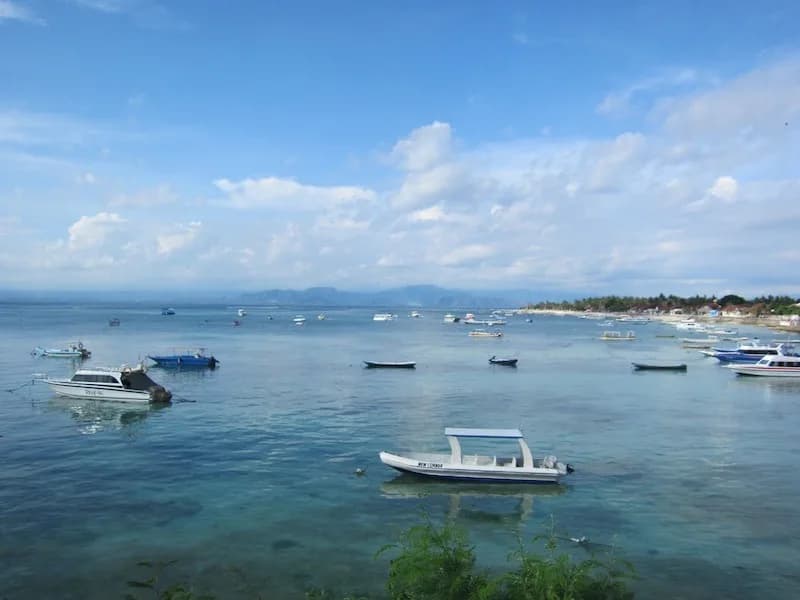
Mushroom Bay, Nusa Lembongan: What to Expect From the Beach and Harbor

Mushroom Bay is a small, sheltered white-sand cove on Nusa Lembongan's west coast, and for most travelers it doubles as the island's arrival hall, since fast boats from Sanur run up onto the beach and passengers wade a few steps ashore. Give it a half day for swimming and lunch, or base yourself here if you want the beach, restaurants and the boat back to Bali within a few minutes' walk. This page covers where the bay sits, what the beach landing is like, where to eat, and which nearby coves are worth adding.
The cove packs a lot into a short stretch of sand: beachfront restaurants, small hotels and homestays, and a view across the Badung Strait toward Mount Agung when the haze allows. Visibility is the catch, because the volcano often hides behind cloud, so treat a clear peak as a bonus rather than a guarantee. Because the bay is walkable end to end, you can skip scooters entirely if you are staying here.
Where Mushroom Bay sits on Nusa Lembongan
Mushroom Bay occupies the island's western shore, a short run south of Jungutbatu village, the other main place to stay. The bay is compact enough that hotels, warungs and the landing point sit within a few hundred meters of each other, which is why it works as a base as well as a day stop. Walking is the default way to get around inside the cove, so you only need wheels to explore the rest of the island.
The name comes from the mushroom-shaped corals that were once found in the bay's water, a common account repeated in visitor listings. That is useful context rather than a promise of what you will see today, since the reef has changed over the years. The bay is sometimes written as Teluk Jamur, so don't be thrown if you see that on a sign or a boat ticket.
The beach: swimming and sand
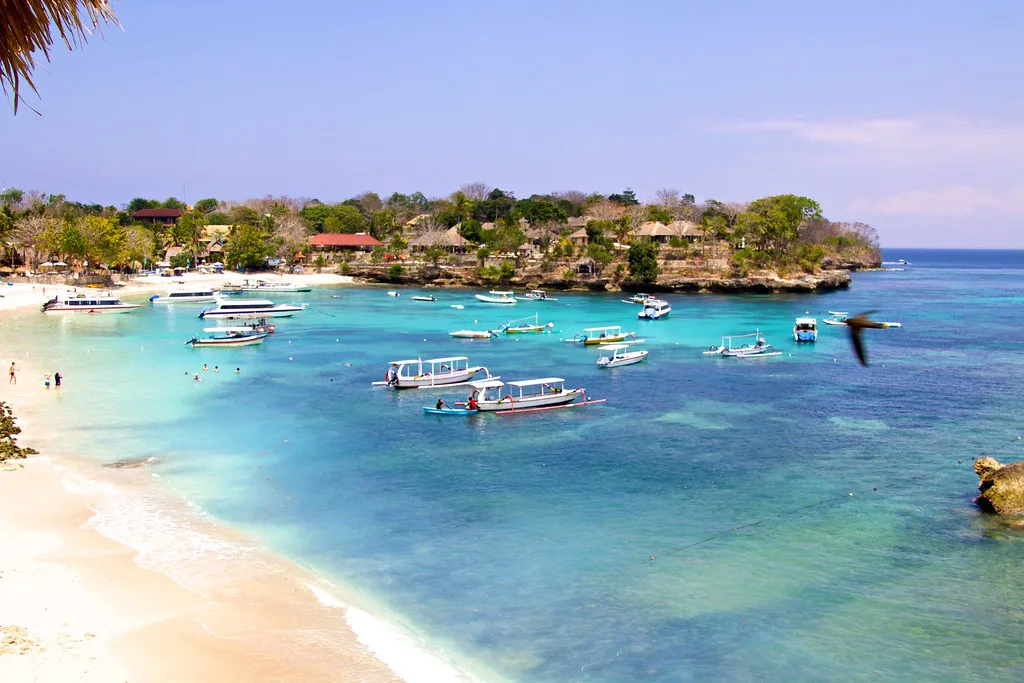
The water here is gentle and the cove fairly sheltered, which makes the bay one of the island's easier places to swim rather than simply look at. The sand is fine and pale. Beach rankings on Lembongan are highly personal — some writers prefer Mahagiri or Jungutbatu for a quieter day — so treat any "best beach" label loosely.
One practical wrinkle: when a boat is due, the beach briefly becomes a working landing strip, with crew hauling luggage and passengers wading through the shallows. Time your swim away from the morning boat rush and the sand reverts to a normal beach. There is no beach club here, just beachside restaurants where you can park yourself with a drink.
How you arrive: beach landing or east-side jetty
Most fast boats from Sanur finish their crossing by running up onto Mushroom Bay beach, where you step into shallow water and wade a short distance to dry sand. Crews are practiced at carrying luggage and often lift children straight onto the boat, so the maneuver is less stressful than it sounds. Boats typically cluster in the morning, with a handful of afternoon departures, though times shift with tides and operator schedules.
Not every company uses the beach. Rocky Fast Ferry runs a jetty on the island's east side instead, which means a different arrival experience and a different onward transfer. Before you buy, check which landing point your ticket uses, because it determines whether you step off in Mushroom Bay or somewhere across the island.
Ferry fares change and vary by company and season, so budget by checking the operator's published rate when you book rather than fixing on an old number. One traveler's published fare was 400,000 IDR one way from Sanur and 600,000 IDR return, which gives a rough sense of scale but should not be treated as today's price. Buying ahead is worth the small effort, because Sanur port gets hectic in the morning and many departures leave early.
If you are hauling a suitcase but not staying in the bay, Sanur port has left-luggage options near the terminal, which lets you day-trip without the bag. Ask at the terminal for the current operators and rates on the day, since these small services change hands. Otherwise, pack so that a short wade with your bag is easy, and a dry bag helps more than a wheeled case on sand.
Where to eat around the bay
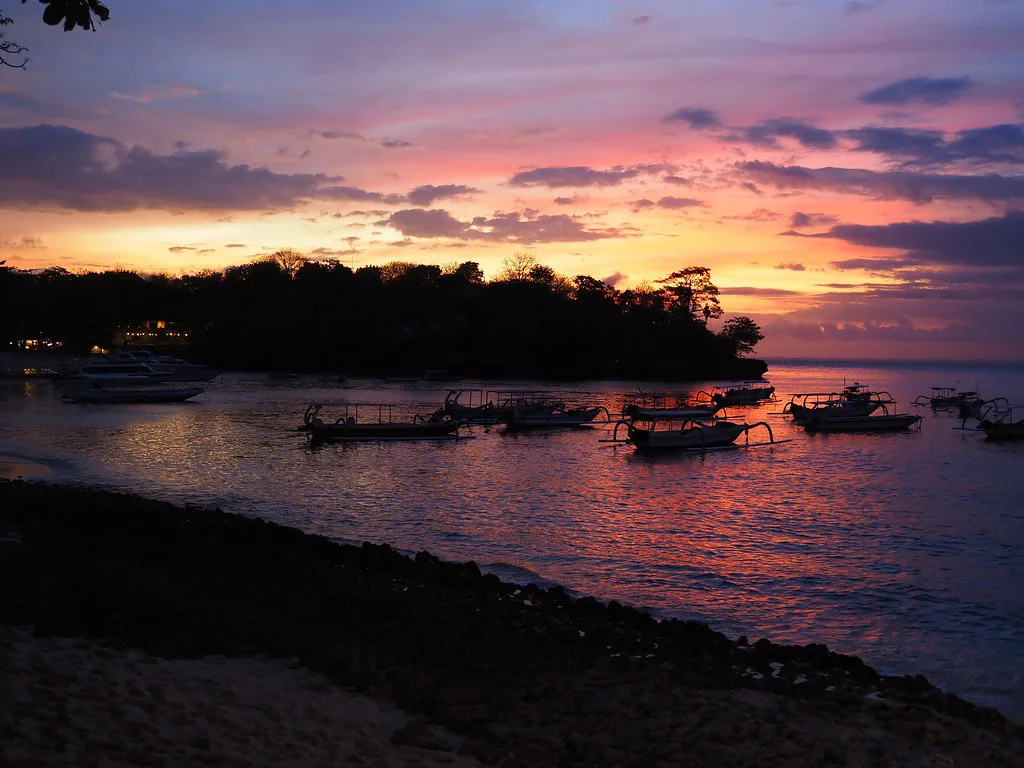
Hai Bar & Grill serves breakfast, lunch and dinner right on the sand in an open-air setting, with a family-friendly menu and occasional movie nights in the evening. Hai Ri Zen, its sister restaurant next door, opens for dinner only and runs a small-plates menu of Asian and Western dishes designed around sunset views. Both offer complimentary pickup from elsewhere on the island, which matters if you are staying in Jungutbatu and don't want to ride over. Check current hours directly when you arrive, since these are live restaurant schedules rather than fixed island fixtures.
Sanghyang Bay Bar & Restaurant sits by the sea under a shaded terrace with west-facing views, open from breakfast through dinner, and serves seafood, pork ribs, pizzas and Indonesian dishes alongside live music in the evenings. It also runs Balinese cooking classes in several packages, which is a reasonable way to fill a rainy afternoon. Menus and hours change, so confirm before you build an evening around it.
What to do on and off the water
Nusa Island Surf School runs lessons for all levels and provides transport to nearby breaks, making it an easy way into the island's surf without organising your own board and driver. The same outfit rents stand-up paddleboards, and early morning is the best window, when the bay goes glassy before the boats start moving. Book ahead in high season, when instructors fill up.
Bali Hai Cruises brings day-trippers from mainland Bali to a pontoon moored just off the bay, with snorkelling, waterslides, banana boats and a coral restoration workshop on offer, plus lunch included. Guests at Hai Tide Beach Resort, which sits on the sand, get direct access to the pontoon during their stay. If you would rather have the bay to yourself, plan your swim for late afternoon after the day boats leave.
How long to allow and whether to stay
A half day covers Mushroom Bay comfortably: a swim, lunch at one of the beachfront restaurants, and a wander along the sand. Staying overnight is the better call if you want the cove at its quietest, since the day boats and most arrivals clear by late afternoon. Accommodation ranges from local homestays to mid-range hotels such as Hai Tide Beach Resort and The Tanis Beach Resort, so there is a price point for most budgets.
The trade-off is atmosphere: Mushroom Bay feels more developed and busier than Jungutbatu, which one long-time visitor describes as the more laid-back of the two main bases. Choose Mushroom Bay for ferry convenience and a swim-first stay, and Jungutbatu if you want surf breaks, beach clubs and a slower village feel. Both are close enough that you can visit the other in a short ride.
What's nearby on the west coast
Dream Beach, Nusa Lembongan and Sandy Bay Beach, Nusa Lembongan sit along the same western shore, a short ride south, and pair naturally with a Mushroom Bay morning. Dream Beach is the more dramatic of the two, with surf and a cliff-backed curve of sand, while Sandy Bay is known for sunsets. Both are easy add-ons rather than separate days.
Dream Beach is worth seeing on the same loop, and Devil's Tear, where swell crashes against the cliff, sits close by and is usually combined with it in one outing. Farther afield, the Yellow Bridge connects Lembongan to Nusa Ceningan and makes a worthwhile half-day loop if you have a scooter or driver. Keep your radius tight if you are only in the bay for a night.
If you want another small cove nearby, Tamarind Bay sits within easy reach of Mushroom Bay. Treat it as a stroll-and-swim stop rather than a destination in its own right.
Is Mushroom Bay worth basing yourself in?
Yes, if you want a walkable beach holiday where the boat back to Bali leaves from the sand you just swam off. No, if you are chasing a quiet village feel or surf-first days, since Jungutbatu does both better. Either way, book your crossing early and confirm which landing point your ticket uses.
For the rest of the island, from Dream Beach to the mangrove forest, work through the Nusa Lembongan Attractions guide before you lock in where to sleep.
Explore more Nusa Lembongan guides
Frequently Asked Questions
Why is it called Mushroom Beach?
The bay is named for the mushroom-shaped corals that were once found in its water, according to the attraction's listing. The reef has changed since then, so don't expect to see the formation today; the name is historical.
Can you swim at Mushroom Bay?
Yes. The bay is one of the more swimmable spots on Nusa Lembongan, with gentle water and a sheltered curve of sand. Avoid the shallows when boats are landing, mostly in the morning.
Do you need a scooter in Mushroom Bay?
No. The bay is compact and walkable, with restaurants, hotels and the beach landing all within a few minutes of each other. You only need transport to reach other parts of the island.