
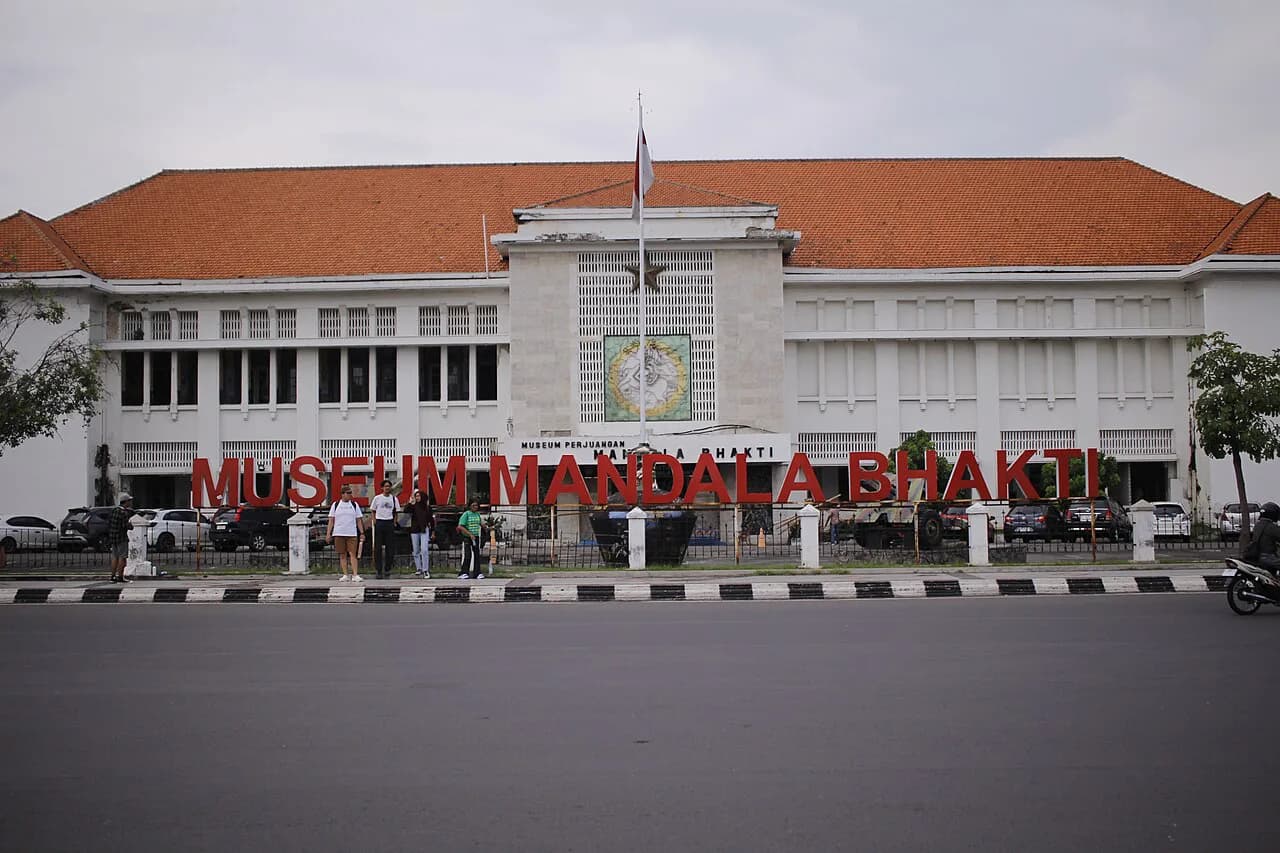
Museum Mandala Bhakti in Semarang: A Visitor's Guide to the TNI Struggle Museum

Museum Mandala Bhakti is a compact army museum, not a general city museum, and most visitors need about 45 minutes to an hour inside. It sits on the south side of the Tugu Muda roundabout in South Semarang, an easy walk-in stop rather than a dedicated trip across town. This guide covers what the collection holds, how to get there, what sources list for hours and entry, and which nearby sights pair with it.
What Museum Mandala Bhakti is: a TNI struggle museum
This is a museum of military history, built around the Indonesian army's record of the independence struggle and later peacekeeping missions. Its full local name is Museum Perjuangan Mandala Bhakti, and it is associated with Kodam IV/Diponegoro, the regional military command. If you are choosing between Semarang's museums, know that this one is about weapons, uniforms and documents rather than art, culture or natural history.
The collection sits in themed rooms rather than one long gallery, so you move through defined subjects instead of a chronological trail. That makes it easy to skim if you are short on time or to linger if military hardware interests you. Expect a traditional, locally oriented display rather than interactive exhibits or English-language interpretation.
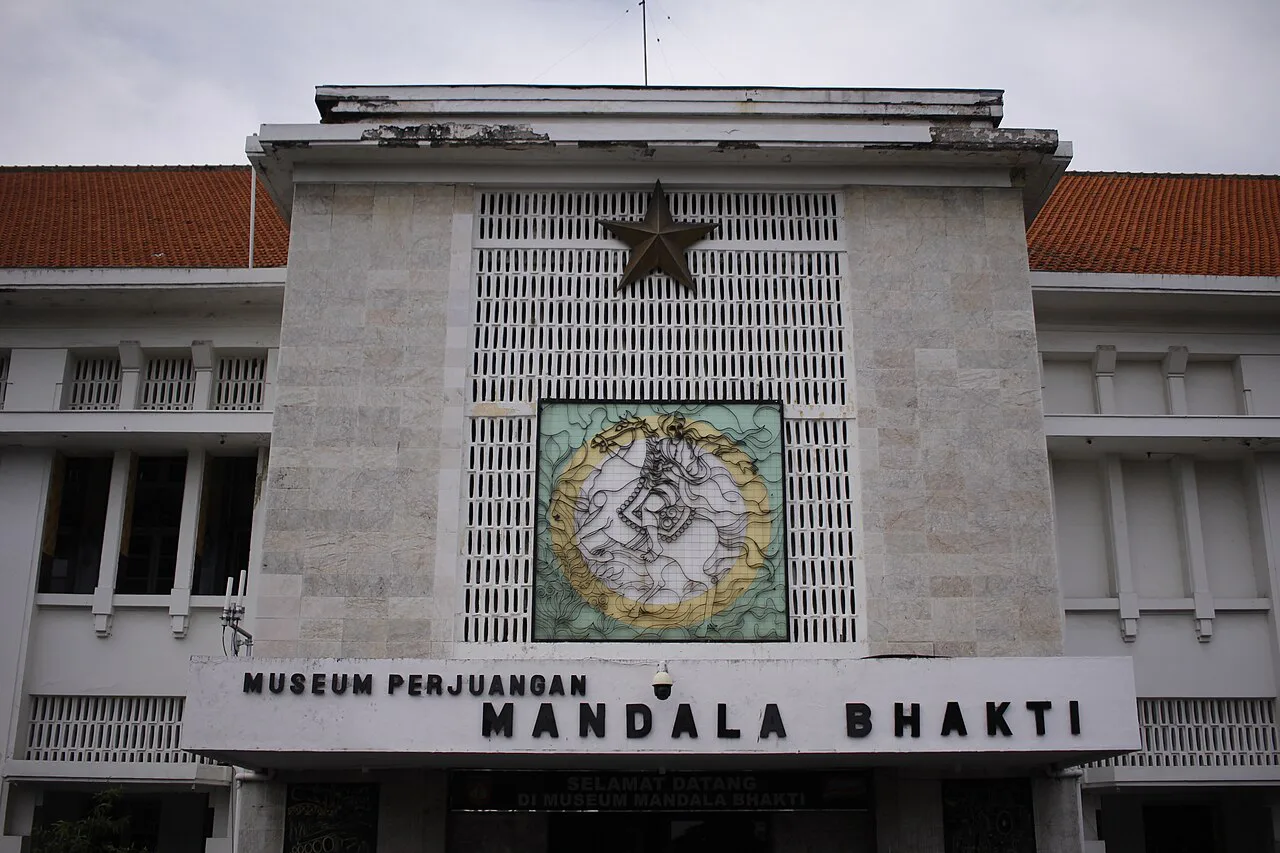

Where it is: Jalan Mgr Soegijapranata, by Tugu Muda
The museum stands at Jalan Mgr Soegijapranata No. 1 in Barusari, South Semarang, on the southern edge of the Tugu Muda roundabout. Address listings vary: some sources render the street as Jalan Mgr Sugiyopranoto, the same road under a different spelling, so search both in a maps app. If your driver does not recognize the museum name, naming Tugu Muda as the landmark usually resolves it.
Because the building sits right at the roundabout, it is one of the easiest locations in the city to describe and find. It also puts you within walking distance of several other central Semarang sights, the main practical reason to slot the museum into a half day rather than a separate outing.
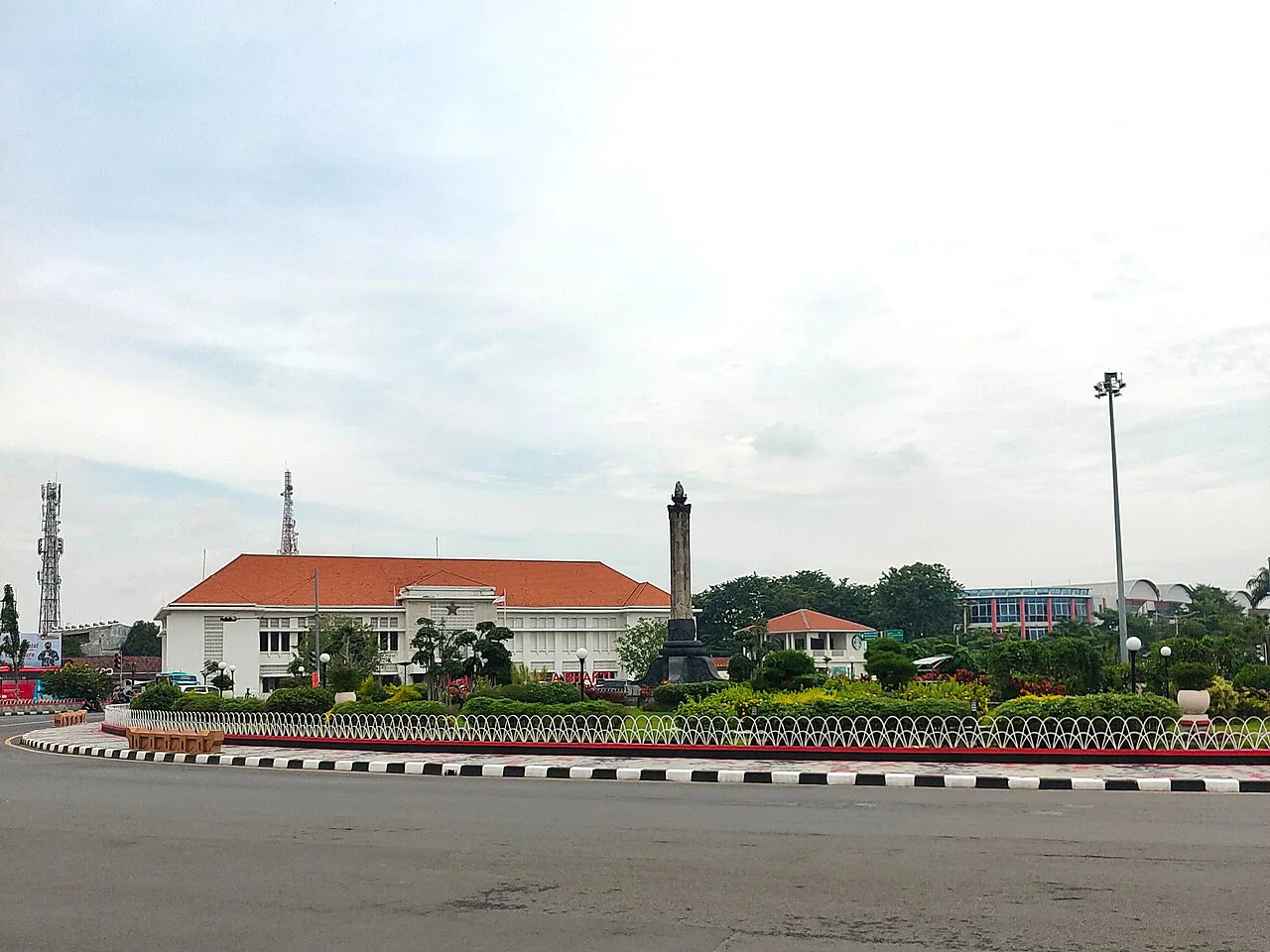

How to get there from central Semarang
From the Tugu Muda area, the museum is a short walk and needs no vehicle at all; the roundabout itself is the wayfinding landmark. If you are coming from further out, a ride-hailing car through Grab or Gojek, or a Bluebird taxi, will drop you at the entrance on Jalan Mgr Soegijapranata. Ask to be let out on the museum side of the road rather than at the roundabout, since crossing the traffic on foot is the awkward part.
Public transport in Semarang is not built around this stop, so treat a ride-hailing trip or taxi as the practical option for the last leg unless you are already staying near the center. Traffic around Tugu Muda builds through the day, so a morning arrival gives you a calmer approach and frees the afternoon. Plan by distance and traffic rather than a promised number of minutes.
Opening hours and entry: what is listed and what to confirm
Attraction listings show 8:00 to 15:00, including English-language listings for this address. Treat that as the published figure rather than a guarantee, since small museums in Indonesia adjust schedules around public holidays and internal use. Check before you set out, ideally by asking your hotel to call ahead on the day.
Entry is reported as free by a local travel site, described there as gratis with no ticket price at all. That claim comes from a single non-official source, so present it to yourself as reported rather than confirmed policy and be ready to pay a small amount or drop a donation if asked on arrival. Because there is no official ticket page to check, the safest approach is to confirm at the door rather than budget from a blog.
No closure day is documented in the available sources, and none should be assumed either way. If your time in Semarang is tight and this museum matters to you, build in a backup nearby sight so a closed gate does not cost you the afternoon; Lawang Sewu is a short walk from the roundabout.
The building: a 1930s colonial courthouse turned command post
The structure dates to 1930 and is attributed to architects I. Kuhr E and van Leeuwen in a local account of its history. That account describes a Dutch-colonial building originally used as a high court for European residents of Semarang, with an architectural kinship to Lawang Sewu, the better-known colonial landmark nearby. The style is worth a look even if the displays inside are not your subject.
The same reported history traces the building through Japanese military police use during the occupation, then a 1950 role as headquarters for the regional defense command, before its conversion into a museum in March 1985. These details come from one source rather than an official museum history, so read them as the commonly told version rather than a fully verified record.
What is inside: the weapons and ammunition room
The weapons room mixes improvised and modern arms: bamboo spears, kris, rencong daggers and bows alongside pistols, heavy machine guns and launchers. Reporting on the collection also notes a 25-pounder field gun, older Luger pistols and a Browning machine gun associated with the five-day battle in Semarang. For anyone interested in military hardware, this is the core of the museum.
Labels are in Indonesian and the displays are traditional glass-case and wall-mounted arrangements, so plan on looking rather than reading deeply unless you have some Indonesian. Photographing objects is generally the way visitors record the details they want to look up later, but confirm any photography rule with staff at the entrance.
What is inside: the uniforms room
A separate room covers dress and equipment, running from rough goni cloth garments through PETA and Heiho gear to BKR, TKR and TNI uniforms, plus foreign army dress and military-police and women's corps items. The range shows the collection is about the institution's evolution as much as about combat. If weapons displays feel repetitive, this is the more distinctive half.
Other displays: documents, photographs and the Diponegoro diorama
Beyond weapons and uniforms, the museum holds documents, photographs of national heroes and a three-dimensional representation of Pangeran Diponegoro's life from childhood through his struggle against colonial rule. The materials are spread across several rooms rather than one hall, so walk the whole building before deciding you have seen it.
Because the museum is tied to a regional command, some displays extend into the army's later role in international peacekeeping missions, which gives the collection a broader frame than the 1940s alone. If you are visiting with someone who expects a city-history museum, this framing is the clearest sign that the museum is a different kind of stop.
How long to allow
Budget 45 minutes to an hour for the building and its rooms. Add time if you read Indonesian labels closely or want to study the weapons cases, and cut it to half an hour if you are mainly there for the colonial architecture. The listed 15:00 close makes this a morning stop before lunch rather than a late-afternoon filler.
Facilities on site
A local listing describes toilets, a mushola, parking, a gazebo and seating areas among the facilities. That is a modest set, matching the scale of the museum, and enough to make a short visit comfortable without expecting a cafe or shop. Carry water with you, since the center of Semarang around Tugu Muda does not offer much shade between sights.
What is nearby: Tugu Muda, Lawang Sewu and Kampung Pelangi
Tugu Muda is literally at the doorstep, and Lawang Sewu, the former railway headquarters with its famous doors and stained glass, is a short walk from the roundabout. Kampung Pelangi, the painted hillside village in Randusari, is also in South Semarang and can be combined with the museum if you have a driver or ride-hailing car for the connection.
If you want a second, very different stop later in the day, Brown Canyon on Jalan Fatmawati is an hour-scale detour out of the center rather than a walk, so it belongs in a separate block of time. Keep the museum paired with the Tugu Muda cluster and save the outlying sights for another slot.
Who this museum suits and who should skip it
This museum rewards travelers interested in military history, the Indonesian independence period, or colonial architecture less polished than Lawang Sewu, and it is a sensible low-cost add-on if you are already at Tugu Muda with an hour free. Families with young children may find the displays static, and anyone wanting curated English interpretation will get more from Semarang's larger heritage sites.
Should you slot it into your Tugu Muda walk?
Yes, if you are already at the roundabout and have an hour to spare; the building, the weapons room and the uniforms room justify a short stop. Skip it if your Semarang time is limited to one heritage visit and you have not yet seen Lawang Sewu. Either way, confirm the listed 8:00-15:00 hours and the reported free entry on the day, since neither is published by an official museum source.
Explore more Semarang guides
Frequently Asked Questions
Is Museum Mandala Bhakti free to enter?
A local travel site reports that entry is free, with no ticket price listed. That is a single non-official source rather than a published museum policy, so confirm at the entrance and carry a little cash in case a small charge or donation applies.
What are the opening hours of Museum Mandala Bhakti?
Attraction listings show 8:00 to 15:00 as the opening window. Small museums in Indonesia sometimes adjust around public holidays and internal use, so ask your hotel to call ahead on the day you plan to visit rather than relying on the listed hours alone.
How do I get to Museum Mandala Bhakti from central Semarang?
The museum is on the south side of the Tugu Muda roundabout, so from the center it is a short walk. From further out, use Grab, Gojek or a Bluebird taxi and ask to be dropped on the museum side of Jalan Mgr Soegijapranata, since crossing the roundabout traffic on foot is the awkward part.