
Sam Poo Kong Temple: What to See at Semarang's Chinese Temple Complex

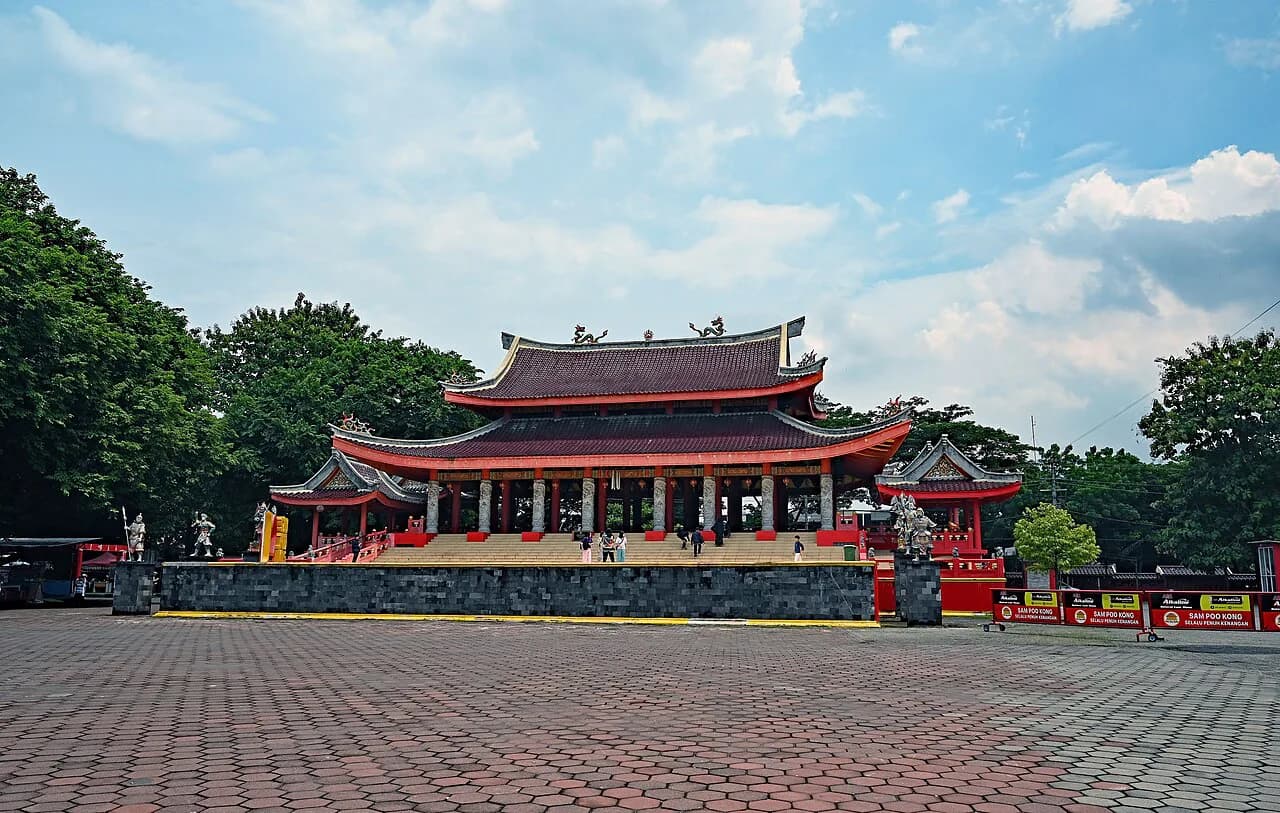
Sam Poo Kong temple deserves about an hour of your Semarang time, and it earns the trip if you want a Chinese temple that is still actively used rather than preserved as a museum. The complex sits in the Gedung Batu area of Semarang on Java's north coast and is closely tied to Zheng He, the Ming Dynasty mariner whose voyages are commemorated here. This page covers the two-zone layout, how to reach it by city bus or ride-hailing car, reported ticket prices, and what sits inside the inner sanctum.
What and where Sam Poo Kong is
Sam Poo Kong is known locally as Klenteng Gedung Batu, and one long-running travel blog calls it the biggest Chinese temple complex it has seen in Indonesia. It lies in the Gedung Batu area of Semarang, on Java's north coast, west of the old town and separated from it by a stretch of city traffic. The site commemorates Zheng He, whose voyages through maritime Southeast Asia left a mark on Chinese communities across the region.
Treat the age claims with care. That same blog notes the original building is long gone and the current structure has roots in the 18th century, even though the site has been holy ground for roughly six centuries. A ticketing platform instead describes the temple as built in the early 15th century and the oldest Chinese temple in Semarang, which conflicts with that account and is a seller's framing rather than a dated record. Semarang sits in Central Java, and this temple is one of the region's better-known Chinese heritage sites.

How the complex is laid out
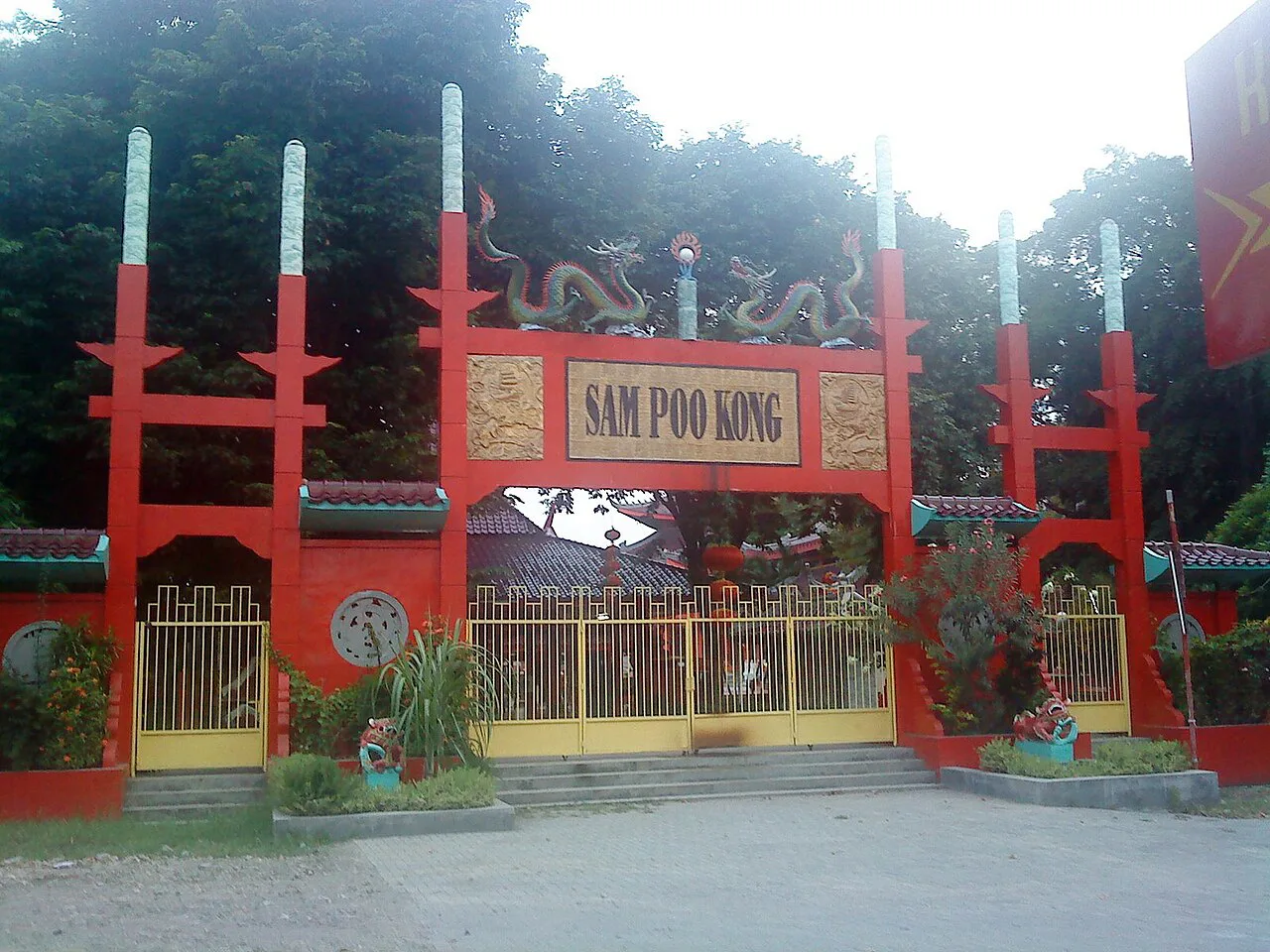
The site splits into two zones, and knowing this before you walk in prevents confusion. The first is a broad, open courtyard with a gateway, statues, and a few freestanding buildings; your ticket gets you into this public zone, which is not primarily a worship area. The second is the inner sanctum, where the main temple building and a cluster of smaller shrines stand among gardens, and this is where worshippers come to pray.
The main hall is the classic red-and-gold Southeast Asian Chinese temple building, filled with artifacts and the smell of burning incense. Around it sit pagodas and smaller temples, some weathered and partly overtaken by greenery. An academic survey of the site counts five building groups within the grounds, so expect more than a single hall.
Two details surprise visitors who expect a straightforward temple. Inside the inner area is a grave associated with Wang Jing, Zheng He's second in command, though that identification is one blogger's reading rather than an official label. Flanking an altar deep in the temple stand two Dvarapala, the Hindu-Buddhist guardian figures found across Java, a reminder that this Chinese temple also draws Muslim Javanese pilgrims and sits inside a culture with older layers.

Getting there by BRT, taxi or car
The simplest public transit option is Semarang's BRT city bus, corridor 5, which stops at the Sam Poo Kong stop; from there it is about a 200-meter walk to the entrance, according to a traveler's account of the route. This is a real city bus, not a tour shuttle, so carry small change or the local payment card and allow for a wait. For door-to-door comfort, book a Grab or Gojek car, take a Bluebird taxi, or hire a private driver from your hotel in the center.
Semarang traffic is gentler than south Bali's, but the run from the old town to Gedung Batu still takes time in the late afternoon. If you are combining Sam Poo Kong with other stops, doing it first in the morning keeps the drive short and the courtyard bearable. For a full picture of what else the city holds, Semarang Attractions: 12 Visitor Guides sets out the main sights and how they cluster.
How much time to allow, and when to go
Plan on roughly an hour for the whole complex, a little longer if you read the plaques or sit in the courtyard. That is enough to walk the outer zone, step into the main hall, and wander the smaller shrines and gardens behind it. Photographers who rent a costume inside the grounds should add another 20 to 30 minutes.
Timing matters more than you might expect. A traveler who visited notes that between 10 a.m. and 2 p.m. the open courtyard is brutally hot, and that stretch is when most tour groups arrive. Aim for an early-morning or late-afternoon visit, when the light on the red façades is better and the stone is not radiating heat. If you are stuck at midday, keep to the shaded inner walkways and the covered parts of the main hall.
Ticket prices and what they include
The reported weekday rates, from a traveler post dated December 2023, are IDR 15,000 for Indonesian adults and IDR 25,000 for international visitors. The ticket covers entry to the complex, including the public courtyard and the inner shrine area. Treat those figures as a snapshot rather than today's price, since third-party posts go stale and weekend or holiday rates may differ.
To confirm current pricing, check the temple's ticketing listing or ask your hotel to call ahead before you travel. Online ticket sellers list Sam Poo Kong as a bookable attraction, which is a useful place to compare the gate price against an advance purchase. If you plan to rent a costume or buy a small offering at the shrine, budget extra cash on top of the entry fee.
Opening hours and ceremony-day checks
Sam Poo Kong is generally open daily, with a traveler listing showing 8:00 a.m. to 6:00 p.m. as the operating window. That is a third-party figure rather than a posted official schedule, so verify it the day before you go, especially if you are fitting the temple into a tight transfer. Because this is an active place of worship, ceremony days can change access to the inner hall without much notice online.
There is no reliable published calendar of ceremony closures for Sam Poo Kong, so ask your hotel or a local driver on the morning of your visit. If you arrive and find the inner sanctum busy with worshippers, wait in the outer courtyard; the crowd usually thins. Keep your voice down once you cross into the shrine zone.
What you'll actually see inside
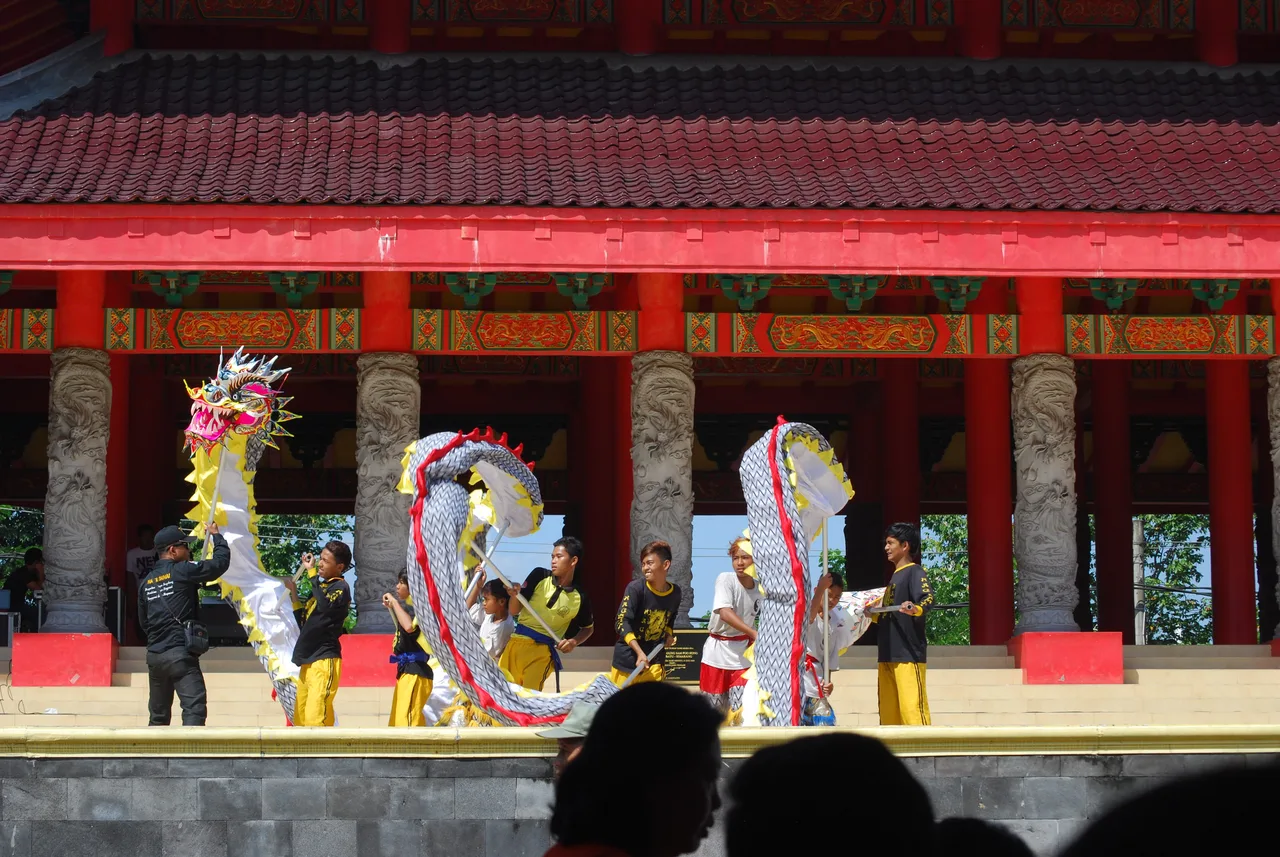
Start with the entrance gateway and the row of statues in the courtyard, which set up the Zheng He story before you reach the temple proper. The main hall is the visual highlight: red columns, gold trim, carved pillars, and a haze of incense around the altars. The travel blog singles out the pillar carvings as some of the best detail work in the complex, and they reward a slow look rather than a quick snapshot.
Behind the main hall, the smaller temples and gardens feel quieter and more weathered, with trees pressing in on old roofs. This is where you will find the guardian figures and the grave associated with Wang Jing, and where the temple reads most clearly as a living religious site rather than a monument. If you expected a single grand hall, the size of the grounds will come as a surprise.
Costume rentals and photos
The complex rents imperial Chinese costumes for photos, an add-on that costs extra beyond the entry ticket. The traveler who mentions it does not publish a rate, so ask at the rental counter before you commit rather than assuming a price. Mornings give softer light on the red façades and an emptier courtyard before the tour buses arrive.
Nearby options to pair with your visit
Sam Poo Kong is often paired with Pecinan Semarang, where Klenteng Tay Kak Sie is the main temple stop, and with the old town around Gereja Blenduk, the Dutch-era church at the heart of the colonial quarter. Both sit closer to the city center, so a sensible half day runs temple first, then Chinatown, then the old town on foot. Lawang Sewu in Semarang, the former railway headquarters with its many windows, is another short stop if you still have energy.
If you are building a wider circuit outside the center, Brown Canyon is a reclaimed quarry landscape that photographers like, and the Pagoda Avalokitesvara at Vihara Buddhagaya Watugong offers a contrasting Buddhist site on the city's edge. Museum Ronggowarsito in Semarang covers Javanese history and culture if the weather turns. Each is a separate stop with its own travel time, so pick two rather than chaining all of them.
Is Sam Poo Kong worth an hour of your Semarang trip?
Yes, if you want a working temple with real religious life rather than a restored showpiece, and if you can go in the morning before the courtyard heats up. Skip it if your Semarang time is down to a single stop and you would rather spend it on the old town or Lawang Sewu. The reported entry price is low enough that the gamble is small either way.
Before you go, confirm the day's opening status and current ticket price with your hotel or the temple's ticketing listing, since the published figures come from third-party sources and can change. Then decide whether you are combining Sam Poo Kong with Chinatown and the old town in one half day or treating it as a standalone stop.
Explore more Semarang guides
Frequently Asked Questions
Is Sam Poo Kong a Taoist, Buddhist or Muslim site?
It functions mainly as a Chinese temple honoring Zheng He, with shrines used by Chinese-Indonesian worshippers, and it also draws Muslim Javanese pilgrims because of Zheng He's and Wang Jing's connection to early Islam on Java. The complex includes Hindu-Buddhist guardian figures as well, so expect a layered site rather than a single tradition.
Do I need to book Sam Poo Kong tickets in advance?
Usually not. The gate sells tickets on arrival, and online platforms also list the attraction if you prefer to pre-purchase. Advance booking mainly helps if you want a bundled ticket or are visiting on a busy holiday weekend.