
Masjid Agung Bogor (Masjid Agung Al-Isra): A Visitor's Guide

Masjid Agung Bogor needs about 20 to 40 minutes as a prayer stop, and longer only if you plan to linger on the alun-alun or walk through Pasar Anyar. The building is officially named Masjid Agung Al-Isra, and many residents simply say Masjid Agung Kota Bogor, so three names point to one address. This guide covers where it sits, how to walk in from the station, what the renovated hall looks like, how much time to give it, and what to see nearby.
One Building, Three Names
If you search for Masjid Agung Bogor, Masjid Agung Al-Isra or Masjid Agung Kota Bogor, you are looking at the same mosque beside the city's central square. Traveloka's roundup of Bogor mosques lists it as Masjid Agung Al-Isra, noting that residents usually shorten the name to Masjid Agung, while travel blogs use the Al-Isra form. The naming matters mainly when you ask for directions or check a map pin, so try the Al-Isra spelling if the first search returns nothing.
The mosque you see today is not the building shown in older guides. It reopened for worship in stages after a long renovation, and one city news report describes the first post-construction Ashar prayer at the end of 2022 while work continued on finishing touches. A later travel account says the mosque was formally inaugurated in March 2024. Dates differ between accounts, so treat any photo older than 2022 as unreliable.
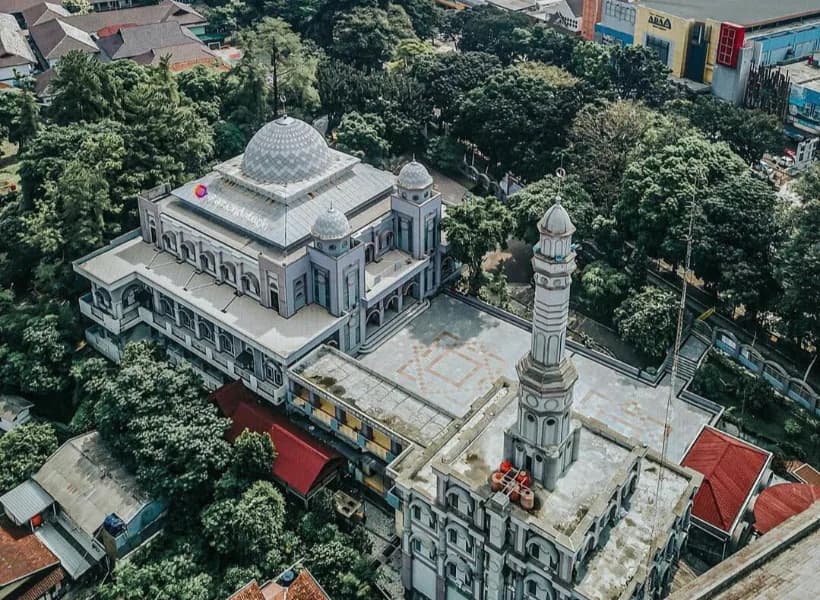
The building is a working mosque first and a landmark second. It sits in Bogor Tengah, on the north side of Alun-alun Kota Bogor, with Stasiun Bogor to its west and Pasar Anyar to its east. That position in a transit corridor shapes how most visitors use it: a short pause between trains, or a cool seat before walking the square.

Where It Is and How to Get There
The address published for the mosque is Jalan Nyi Raja Permas No. 1, Bogor Tengah, and it stands directly beside the alun-alun. If you arrive by commuter train, walk out of Stasiun Bogor and look for the white building with the tall minaret on the north edge of the square; the walk is a few minutes. Travelers coming from Sukabumi or Cianjur on the Pangrango service can also use Stasiun Paledang, then continue on foot or by ride-hailing car.
Ride-hailing apps work well for drop-offs, but the streets around the square are one-way and congested, so ask the driver to stop on Jalan Nyi Raja Permas rather than circling. If you are coming from the botanical gardens side of town, most drivers will route through the center and drop you within a block of the square. For train details, timetables and the difference between the two Bogor stations, see the Stasiun Bogor guide on this site.
Because the mosque is part of a dense commercial block, there is no dedicated visitor parking to count on. Motorcycle taxis and short walks are the practical way to reach the doors on busy weekends. If you are combining the mosque with a longer day in town, the Bogor Attractions: 12 Visitor Guides maps out the other sights within reach of the same square.

What You See Inside and Out
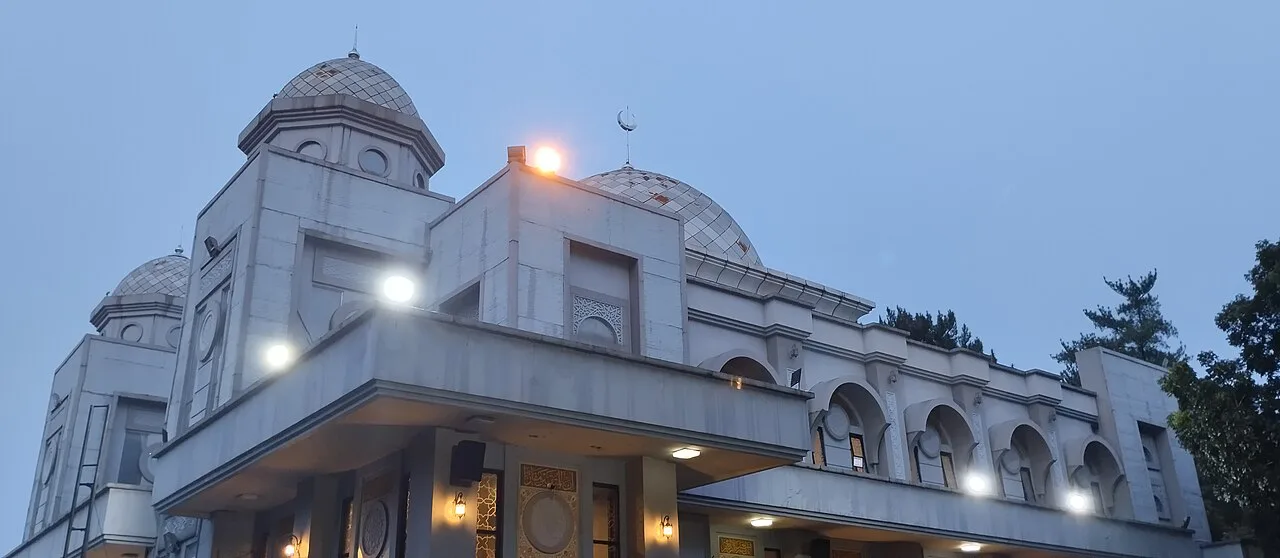
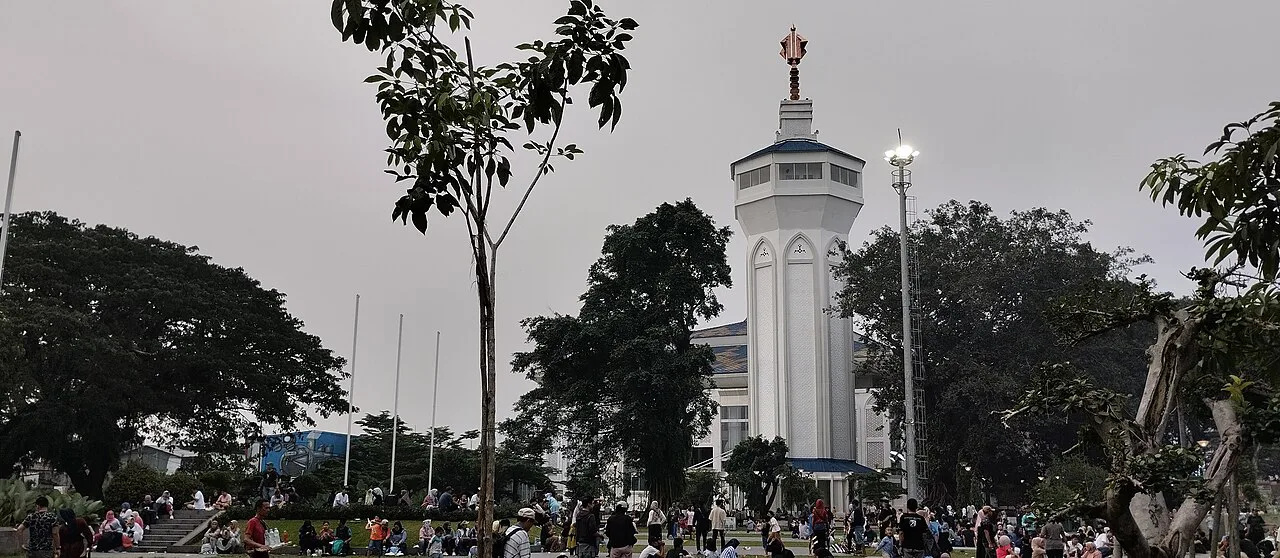
From outside, the mosque reads as a modern white block rather than a domed classical silhouette, which is why some first-time visitors walk past it. A travel account describes a minimalist white exterior, a matching minaret on the south side, and a wooden double main door at the top of the steps. The wudu taps sit below the main hall, so you climb after washing rather than before.
Inside, the prayer hall is wide, carpeted and airy, with none of the cramped feel of the older building. Traveloka notes the design as modern and minimalist, and a visitor account mentions a large clean hall with soft carpet that absorbs a full Friday congregation. The scale is the point: this is a city mosque built to hold crowds, not a small neighborhood musala.
There is no evidence that ticketed entry, guided tours or fixed visiting windows exist here, and no source states formal opening hours. If you want to see the hall rather than pray in it, ask at the entrance or check the mosque's own Instagram account, @masjidagungbogor, for announcements before you go. That is also where any ceremony closures or special programs would appear.
Non-Muslim visitors should not assume access to the prayer hall. No source confirms a general visitor policy, so ask politely at the door and accept a no without pressing; viewing from the square still gives you the exterior and the setting. Fridays around midday and the Idulfitri and Iduladha holidays are the least practical times for a casual look, since the hall and forecourt fill with worshippers. This is one of the two moments in this guide where checking current conditions before you set out is worth the effort.
How Long to Allow
Budget 20 to 40 minutes if the mosque is a prayer stop: wash, pray, and step back out to the square. The building is compact enough that there is no gallery circuit or museum wing to work through, and the layout puts you back at the entrance quickly.
Stretch the visit to an hour or more only if you fold in the surroundings. Alun-alun Kota Bogor is directly south, Pasar Anyar is a short walk east, and Stasiun Bogor is next door, so a mosque stop naturally becomes a loop through the old center. Add time for the square in the late afternoon, when the open space is busiest and the light on the white facade is best.
Skip a dedicated trip if you are in Bogor only for the botanical gardens or the palace. The mosque works best as a 20-minute insertion into a day already centered on the square, not as the reason for the journey. Visitors staying near Puncak should instead consider one of the mosques along the Puncak road rather than coming down into the city traffic.
Nearby After Your Visit
Step out and you are already in the old civic core. Alun-alun Kota Bogor spreads south of the mosque, Pasar Anyar sits to the east as one of the city's oldest markets, and Stasiun Bogor is immediately west, which makes the mosque a natural first or last stop on a walking loop.
For a longer walk, head southwest toward Kebun Raya Bogor (Bogor Botanical Gardens), the large garden estate that anchors the city's sightseeing. The Bogor palace, Istana Bogor, stands near the gardens' northern edge, and the museum Zoologi Bogor is on the same block, so one direction covers several stops.
If you want a quieter counterpoint to the mosque square, the Bogor cathedral, Gereja Santa Perawan Maria, is a short ride away and part of the same historic center. None of these are replacements for the mosque itself; they simply fill out a half day that already starts at the alun-alun. Confirm each one's hours on site, since they change independently of the mosque.
Other Grand Mosques in Bogor
If the Al-Isra hall is closed for an event or too crowded, Bogor has several other large mosques worth knowing. Traveloka's list includes Masjid Agung Al-Mi'raj on Jalan Raya Pajajaran, a Middle Eastern-style building with a library and a separate Islamic study center, and Masjid Raya Al-Muttaqin on Jalan Achmad Adnawijaya in Bogor Utara, known for its green and yellow dome. Both are in different parts of the city, so pick by direction rather than by ranking.
Closer to the Sentul and Puncak side, Masjid Andalusia in Sentul City and Masjid Az-Zikra in Bukit Azzikra offer larger complexes with learning spaces and libraries. These suit travelers staying outside the city center who want a substantial mosque visit without driving into Bogor's core. Check each one's own channels for visiting conditions before making the trip.
Is the Alun-Alun Mosque Worth the Stop?
Yes, if you are already near Stasiun Bogor or the alun-alun, because the walk costs you minutes and the renovated hall is genuinely impressive. No, if you would be crossing town in traffic only to see a mosque interior that may be closed to casual visitors. Treat it as a 20-minute anchor for a half day around the square, the market and the gardens.
Before you go, check the mosque's Instagram for any closure notice, and confirm access at the door if you are not coming to pray. Pair the visit with the Kebun Raya Bogor and the surrounding old town rather than building a whole day around one building. That way a closed door or a full forecourt costs you almost nothing.