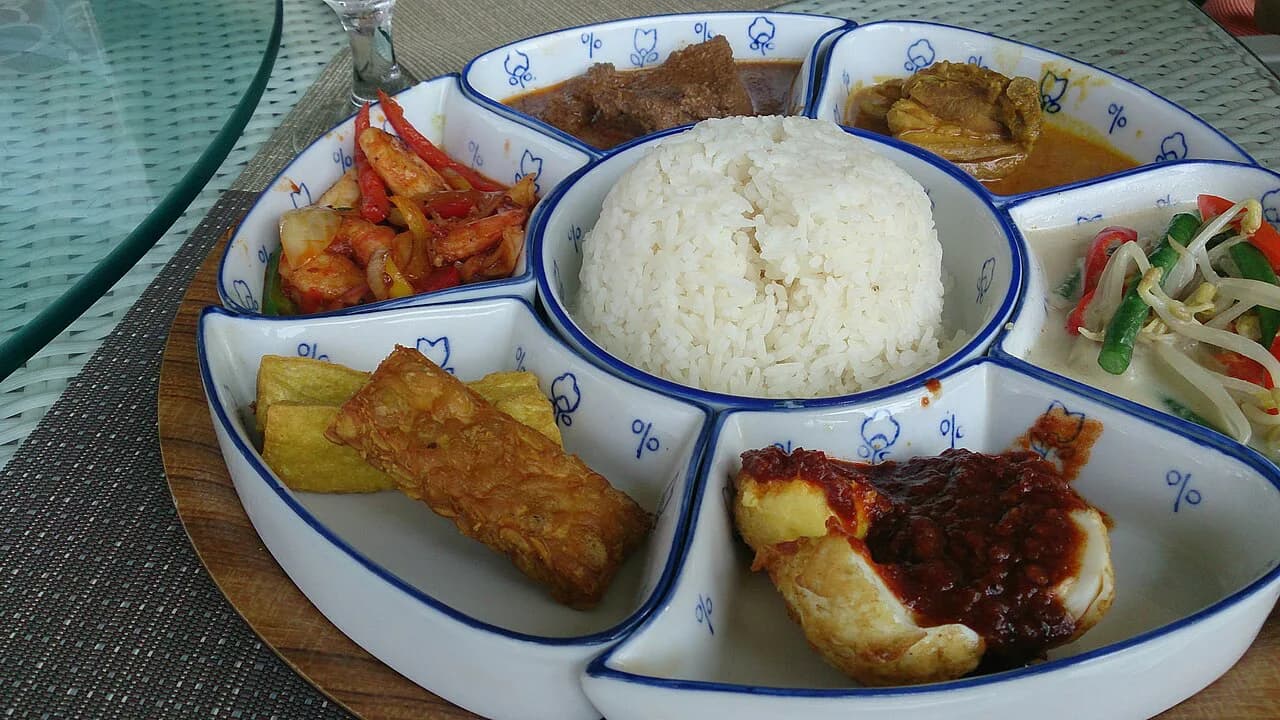
Nasi Padang in Bali: What to Order & How It Works
Learn what nasi padang is, how the sit-down and takeaway systems work, which dishes to pick, and how to eat it in Bali without overpaying.
On this page
Last updated November 2026: nasi padang is the Minangkabau meal from Padang in West Sumatra, built on steamed rice and a spread of pre-cooked dishes. You either sit down and let plates arrive at your table, or you point at what you want and have it packed to go. Bali has plenty of Padang restaurants, and this guide covers ordering, picking dishes and avoiding surprises as part of our look at wider Indonesian cuisine.
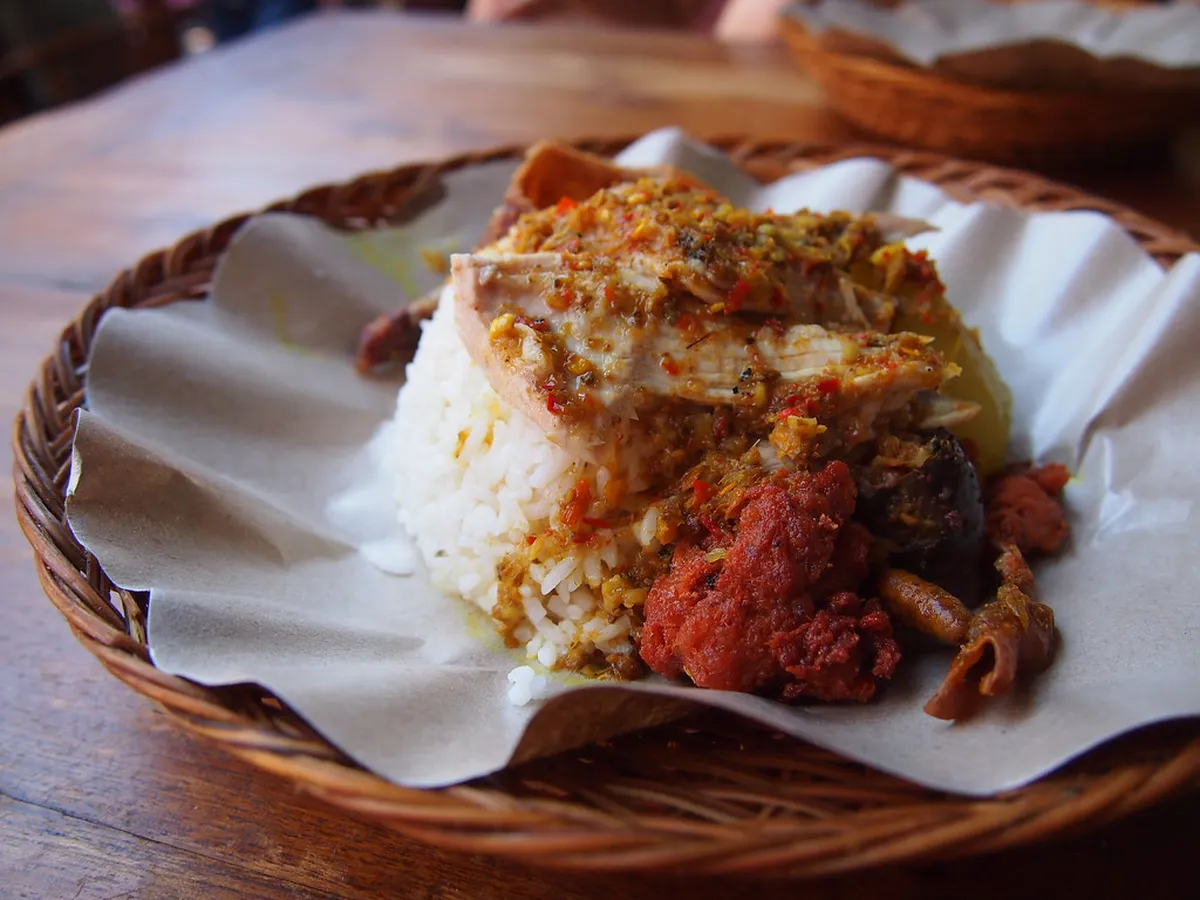
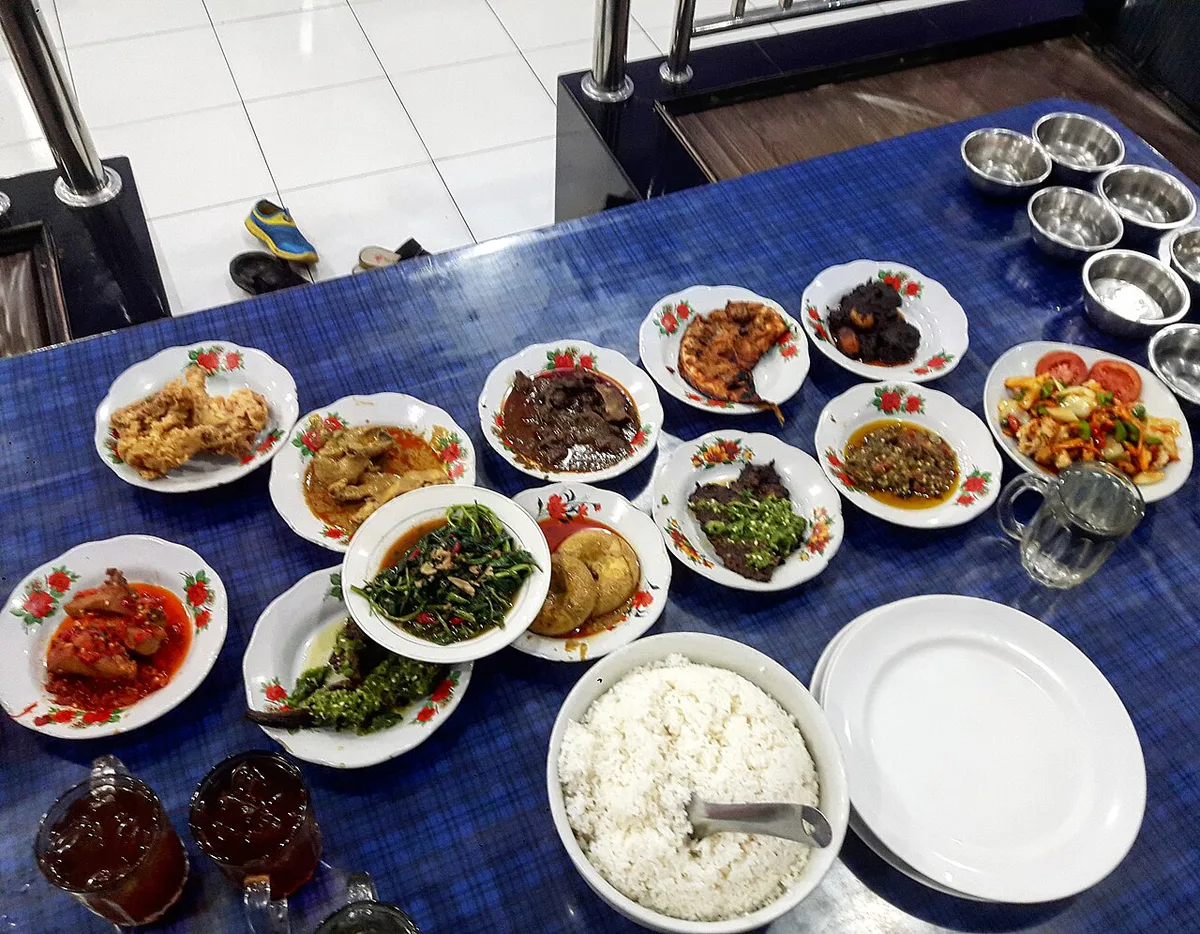
Featured image: ProjectManhattan, CC BY-SA 3.0, via Wikimedia Commons.
What Is Nasi Padang?
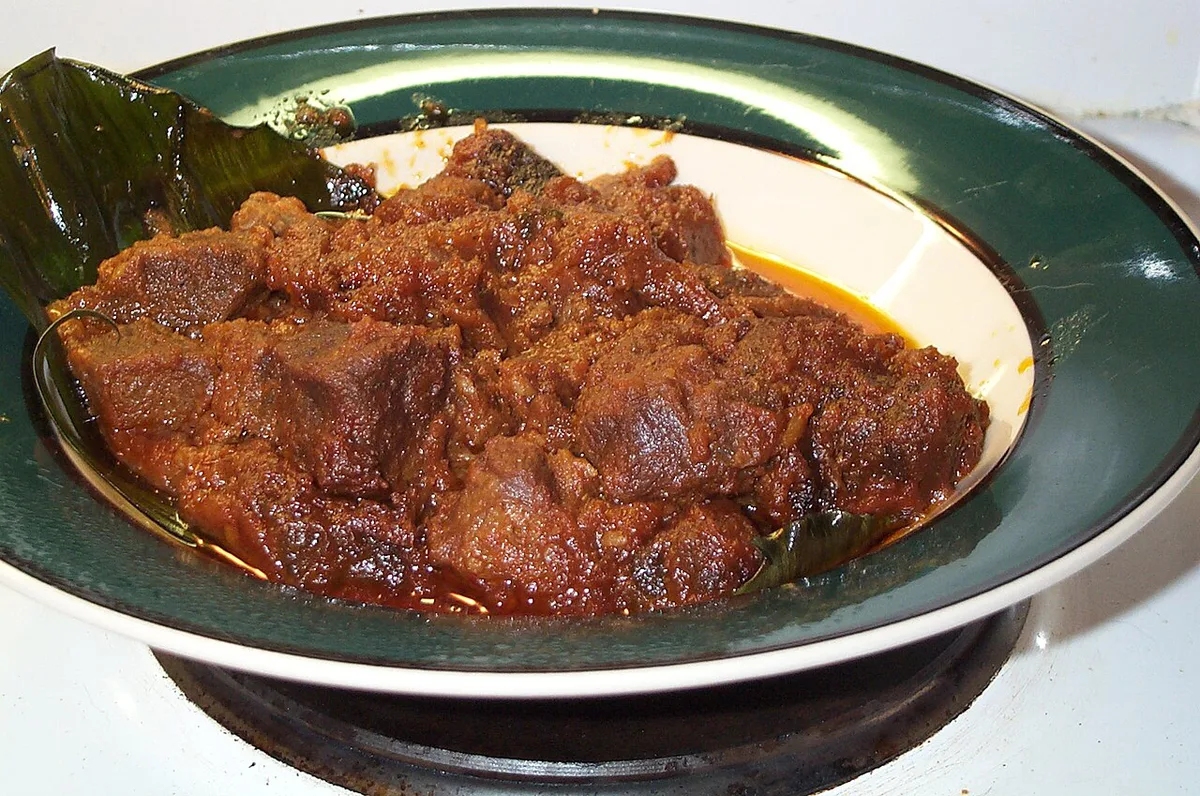
Nasi padang means "Padang rice". It is named for Padang, the main city of West Sumatra, and it comes from Minangkabau cooking. A meal is steamed rice with several dishes cooked ahead and held on display. Rendang and gulai are the two names you will see everywhere. Restaurants serving it are usually called rumah makan Padang, which translates as Padang eating house. Across Indonesia, including Bali, you can spot one by the stacked plates or trays of dishes in the front window. Expect rich, coconut-based and chili-heavy flavors rather than the lighter, herb-driven profile of many Balinese dishes.
How Nasi Padang Works: Sit-Down vs Takeaway
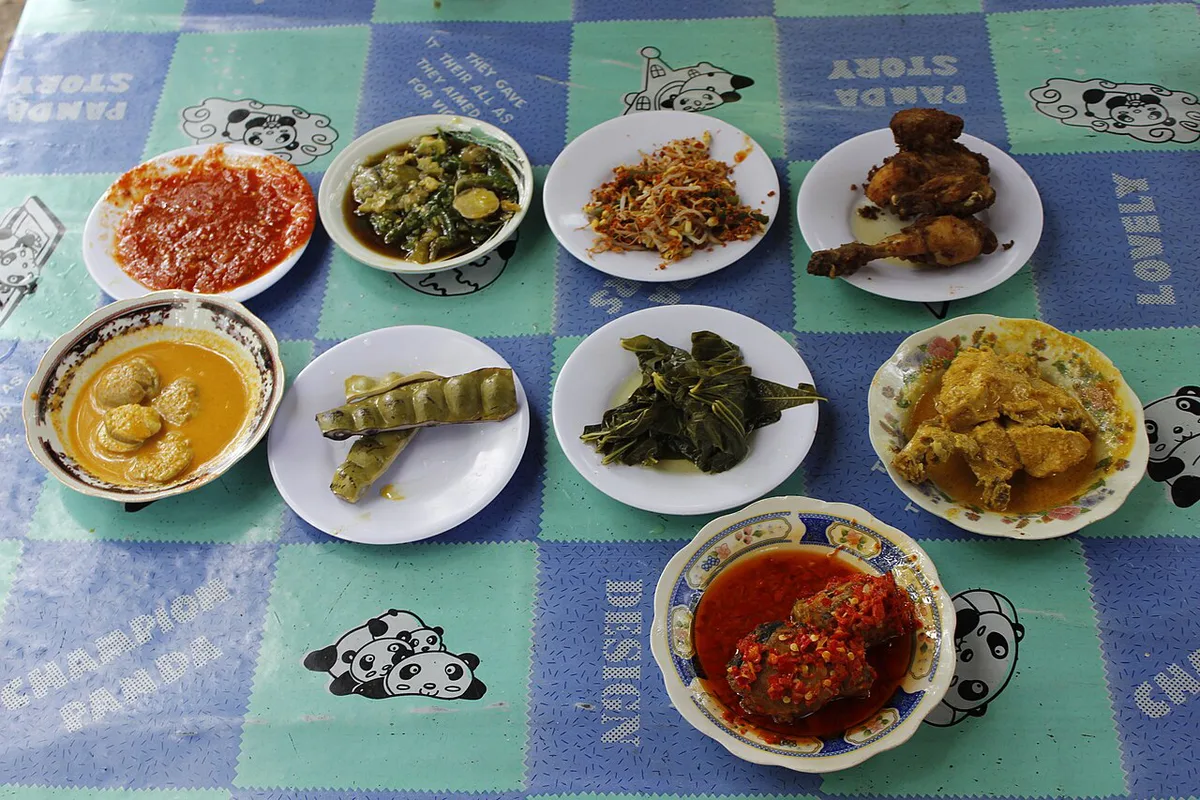
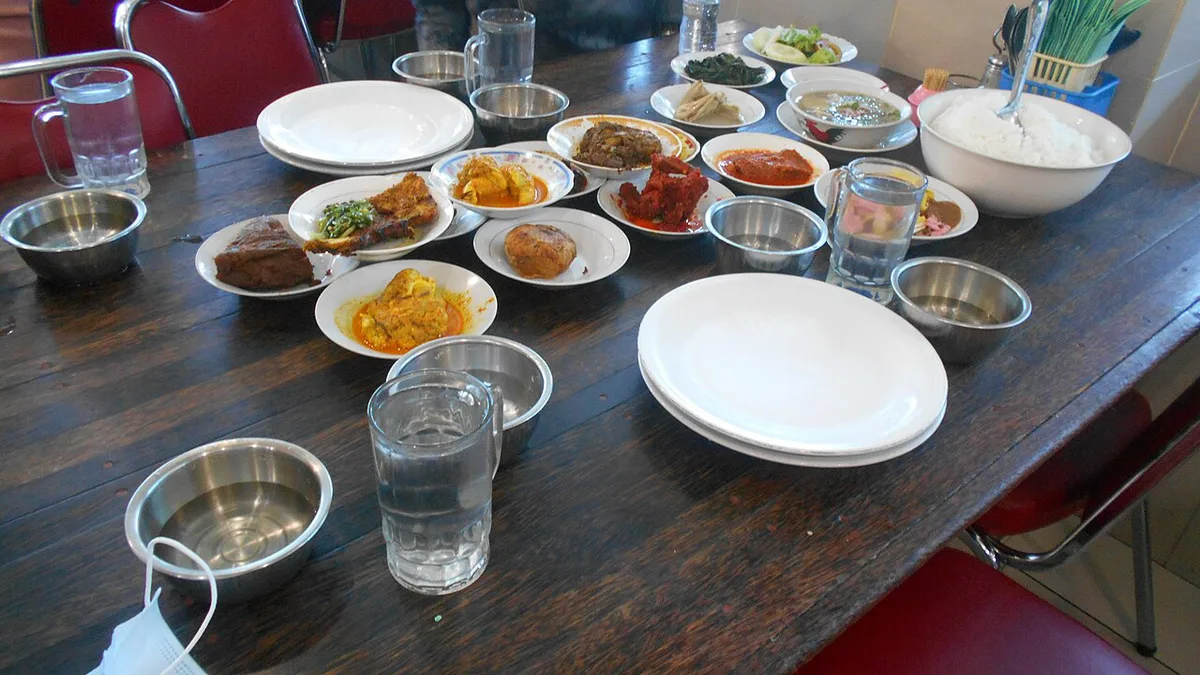
Two serving modes exist, and the billing logic differs between them. In the traditional hidangan style, staff bring many small plates to your table without being asked. You eat what you want and are generally charged only for what you touched. Plates you leave alone go back to the kitchen. Takeaway, called bungkus, works the other way around. You choose each item at the counter, and staff pack it with rice in a paper wrap or box. Because practice varies between restaurants, ask a staff member how they count the bill before you start eating. Our guide to street-food stalls covers other places where pointing at the display is the normal way to order.
- Sit-down (hidangan): plates arrive unprompted, and you generally pay for what you eat.
- Takeaway (bungkus): you point, staff pack, and you pay per item chosen.
- Say "bungkus" to ask for takeaway.
- Say "tidak pedas" to ask for no spice.
- Say "sambal dipisah" to get chili sauce on the side.
- Say "berapa semuanya?" to ask for the total.
What to Order: A First-Timer's Plate
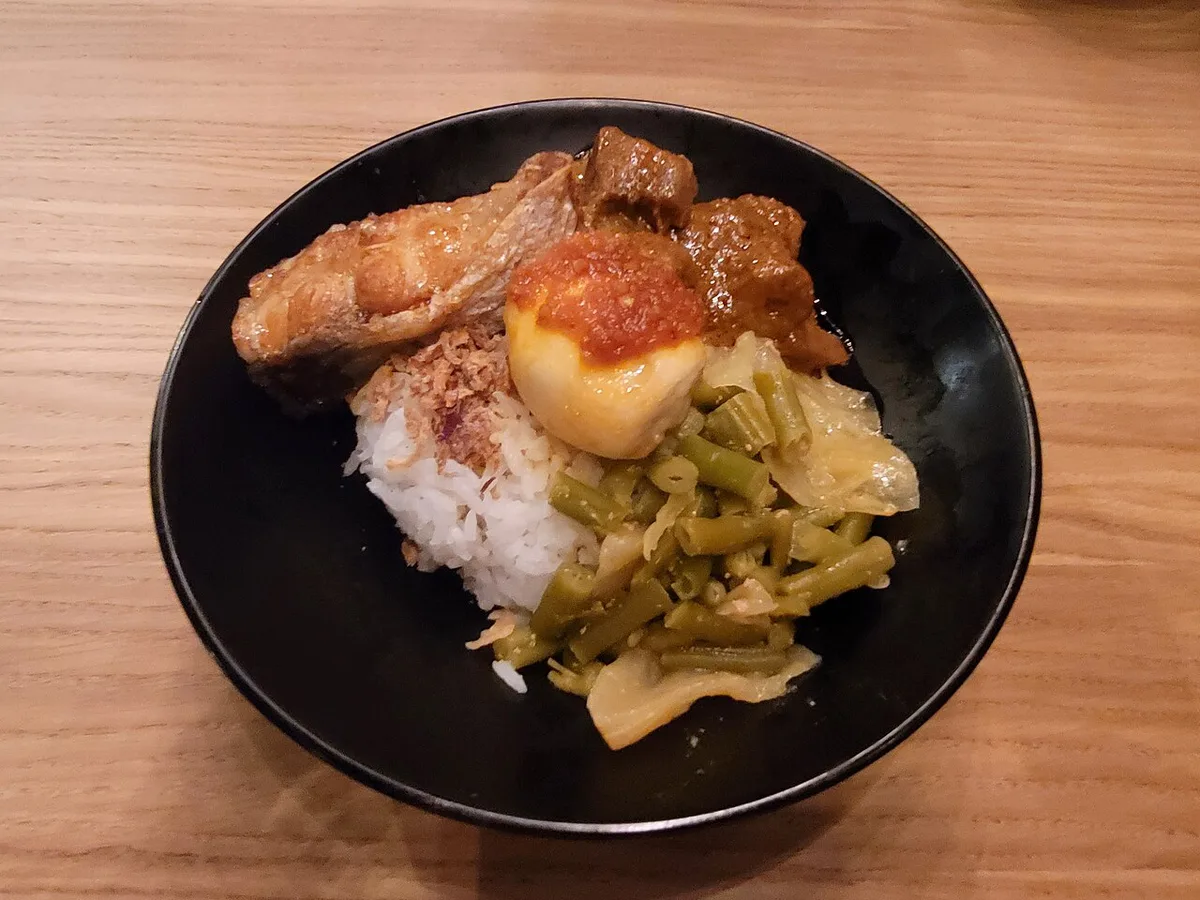
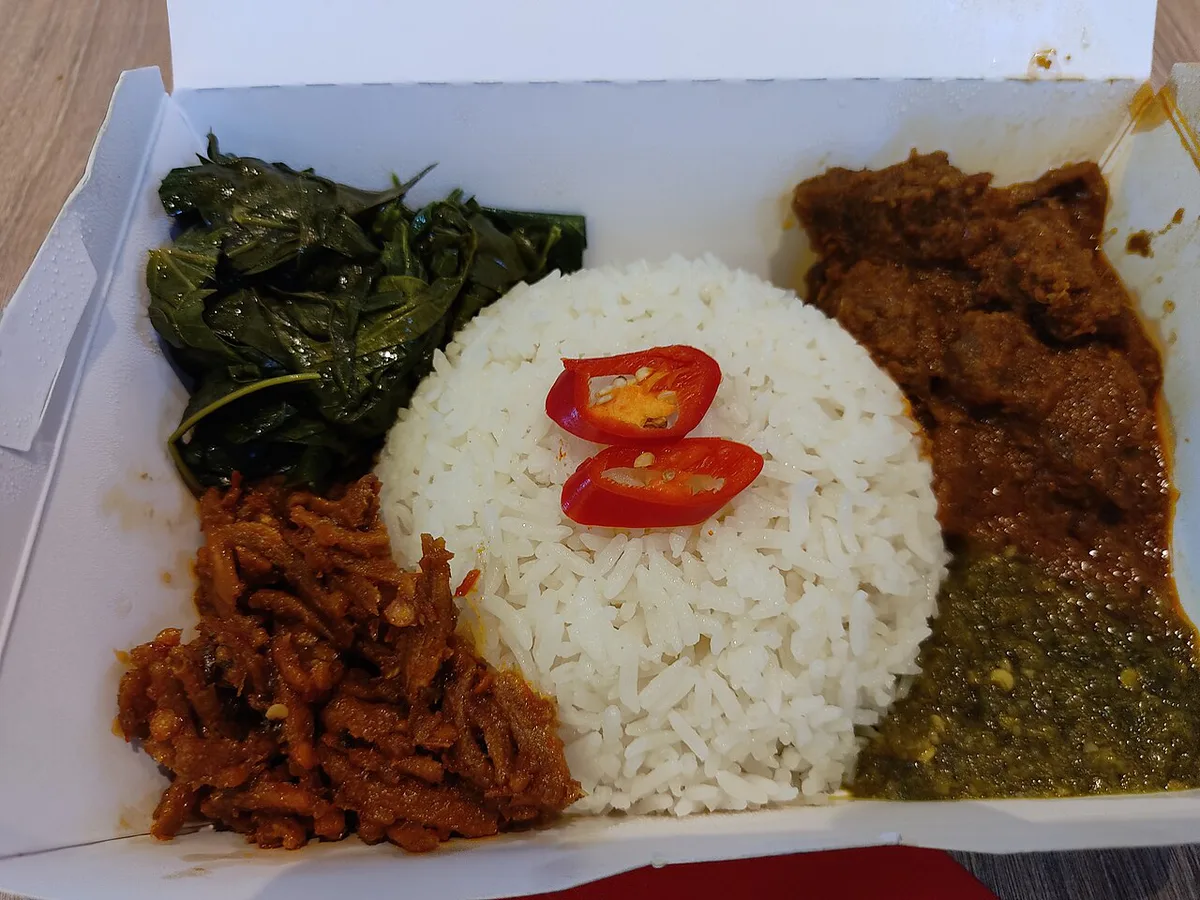
A good first plate has one rich dish, one fresh or green element and one sambal. Start with rendang, add a vegetable such as cassava leaves, and keep the chili on the side until you have tasted it. Descriptions below are general, and heat varies from kitchen to kitchen.
| Dish | Flavor and heat | Who it suits |
|---|---|---|
| Rendang | Dry, slow-cooked beef in spiced coconut; rich, medium heat | Beef eaters wanting the signature dish |
| Gulai | Coconut-milk curry; savory, varies by filling | Anyone who prefers sauce over dry dishes |
| Gulai nangka | Young jackfruit in curry sauce; soft, savory | Vegetarian-leaning eaters (ask about the base) |
| Ayam pop | Pale, lightly seasoned fried chicken; mild | Spice-averse eaters and children |
| Dendeng balado | Thin crisp beef with red chili; hot and salty | Heat lovers who like a crunchy texture |
| Sambal ijo | Green chili sambal; fresh and sharp, often hot | Anyone willing to dab a little at a time |
| Daun singkong | Boiled cassava leaves; bitter-green, mild | Vegetable seekers balancing the rich dishes |
| Telur balado | Egg in red chili sauce; medium to hot | Budget-minded eaters who want a simple protein |
| Paru and other offal | Rich, chewy, often fried and spiced | Adventurous eaters; skip if you want to avoid offal |
Dietary Notes: Halal, Vegetarian, and Spice Level
Padang restaurants are generally Muslim-run and serve halal food, so pork is not on the menu. That makes them a clear contrast with the roast suckling pig at Babi Guling in Bali: What It Is, How to Order, Where to Eat stalls. Treat this as a general pattern rather than a guarantee, and confirm with staff if it matters to you. Vegetarian options exist but need care. Cassava leaves, jackfruit and plain rice are the usual picks, yet sauces and cooking fat may involve meat or stock. Ask before you commit. On spice, sambal is the main heat source, so keeping it separate gives you control. Dendeng balado and telur balado carry chili in the dish itself. Heavy dishes with coconut and fried items also make a full meal, so go lighter with a second plate if you are unsure how it will sit.
Finding Good Nasi Padang in Bali
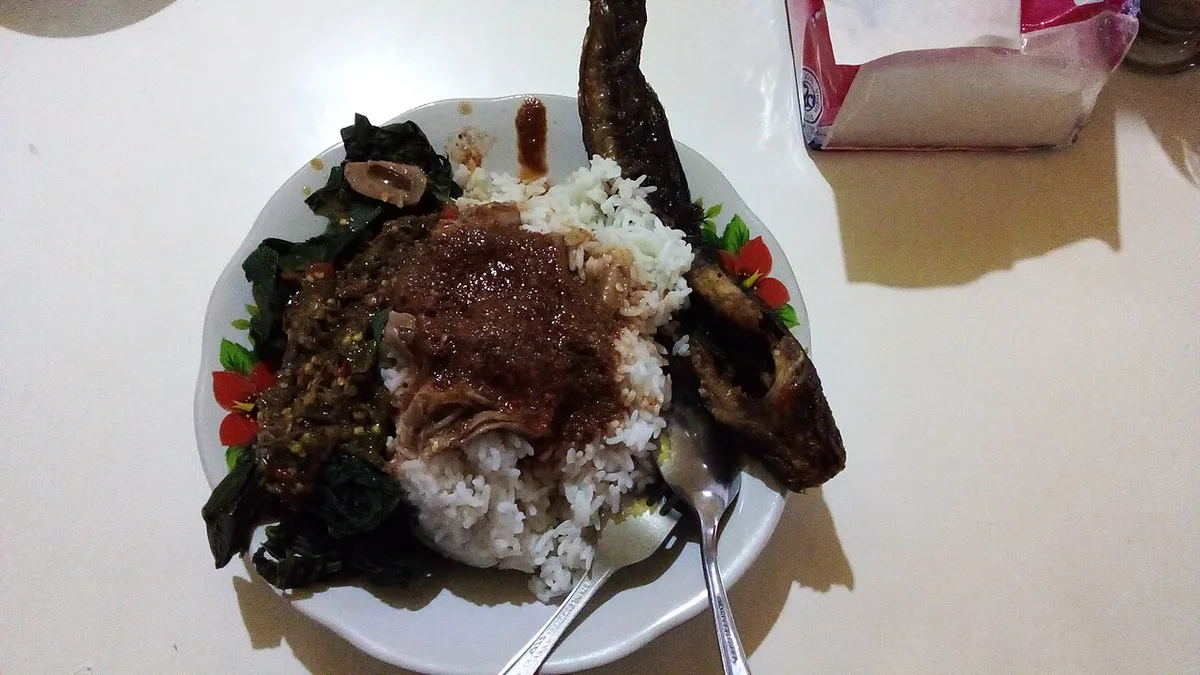
Bali is mostly Hindu, so Padang restaurants are one of several options from other Indonesian communities in the island's food scene. When you want Balinese cooking instead, start with our overview of Balinese dishes, or browse eating around Bali for wider context. Quality varies between tourist streets and local neighborhoods, so judge each place on what is in front of you. No venue names are listed here, because current operating status could not be verified for this draft.
- Look for a busy room with steady turnover, since the display is cooked ahead.
- Check that dishes look freshly refilled rather than dried or sitting in a shrinking sauce.
- Choose a place with a visible, full display of rendang, gulai and sambal.
- Eat at midday, when displays are typically at their fullest, and ask when the last batch was cooked.
- Carry some cash, as small restaurants may not take cards.
Nasi Padang vs Nasi Campur vs Other Warung Meals
Nasi campur is mixed rice assembled from a smaller set of dishes. It leans on the local style, so in Bali it often comes with Balinese side dishes. Our page on mixed-rice plates explains that format. Nasi padang is more tightly defined. Its dishes are Minangkabau, and the choice of rendang, gulai and sambal is wider and richer. A family-run warung is the broader category of small, casual eateries, and many serve nasi campur rather than Padang dishes. Verified prices were not available for this draft. Check the menu board or ask before ordering, and compare per-item charges before you commit.
Mistakes to Avoid
Most problems come from not knowing which serving mode you are in. A few habits prevent nearly all of them.
- Do not assume every plate on the table is a fixed set menu; ask how items are counted.
- Send back plates you will not touch, so they are not counted.
- Do not skip the sambal question if you dislike heat.
- Avoid a quiet place with a tired-looking display.
- Do not expect pork, and do not expect Balinese dishes on the menu.
- If you want to learn the dish yourself, look for hands-on cooking classes rather than guessing at it.
Frequently Asked Questions
What does nasi padang consist of?
It is steamed rice served with a selection of pre-cooked dishes. Common ones are rendang, gulai, dendeng balado, sambal ijo and cassava leaves.
Is nasi padang healthy?
It depends on what you pick. Many dishes are rich, coconut-based or fried, while boiled cassava leaves and plain rice are lighter choices. For personal dietary needs, ask staff about ingredients or consult a health professional.
Notes for your Indonesia trip
Optional updates when we add or change a town or island guide.
You might also like



Continue reading
More guides you'll find useful