Nasi Campur in Bali: What's on the Plate & How to Order
What is nasi campur? See what goes on a Balinese plate, how to order as a visitor, and which sides to check for pork, shrimp paste, and spice.
On this page
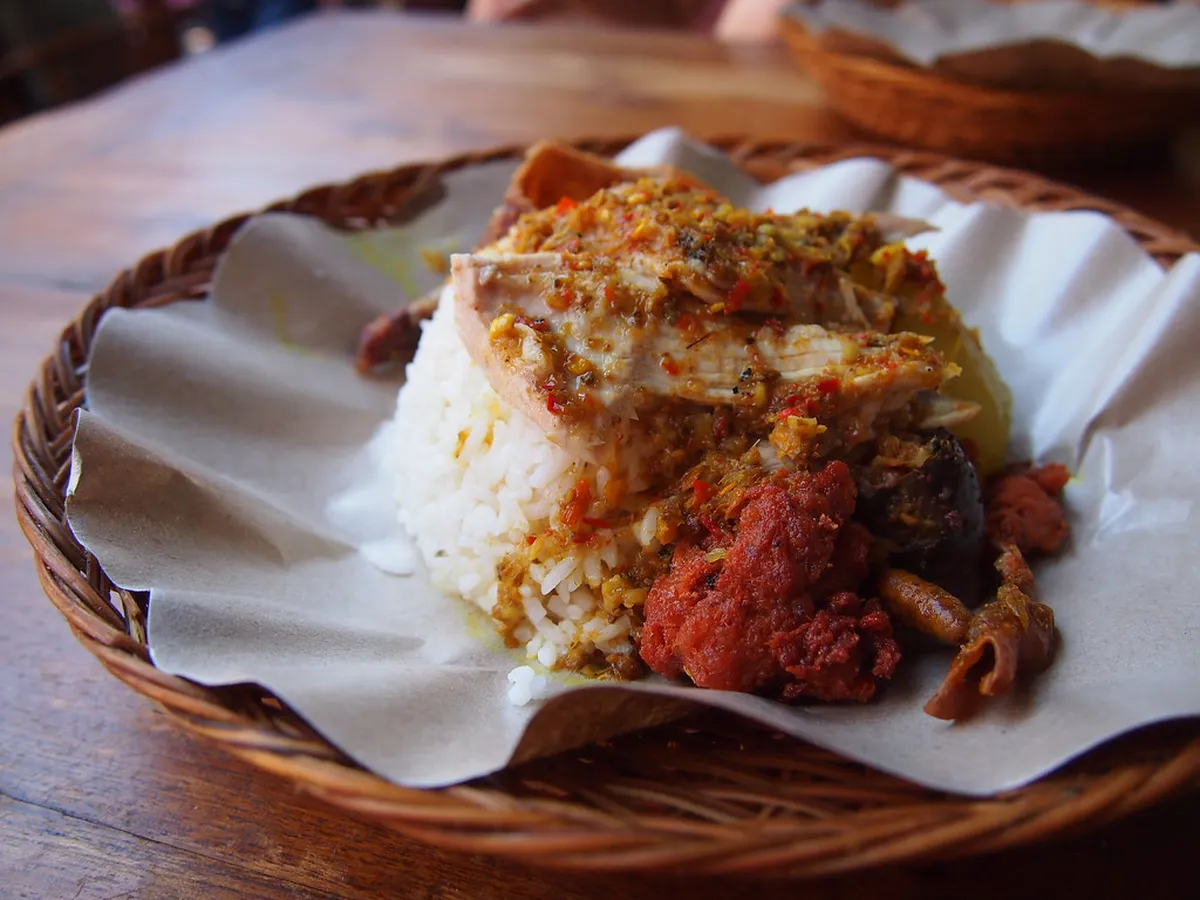
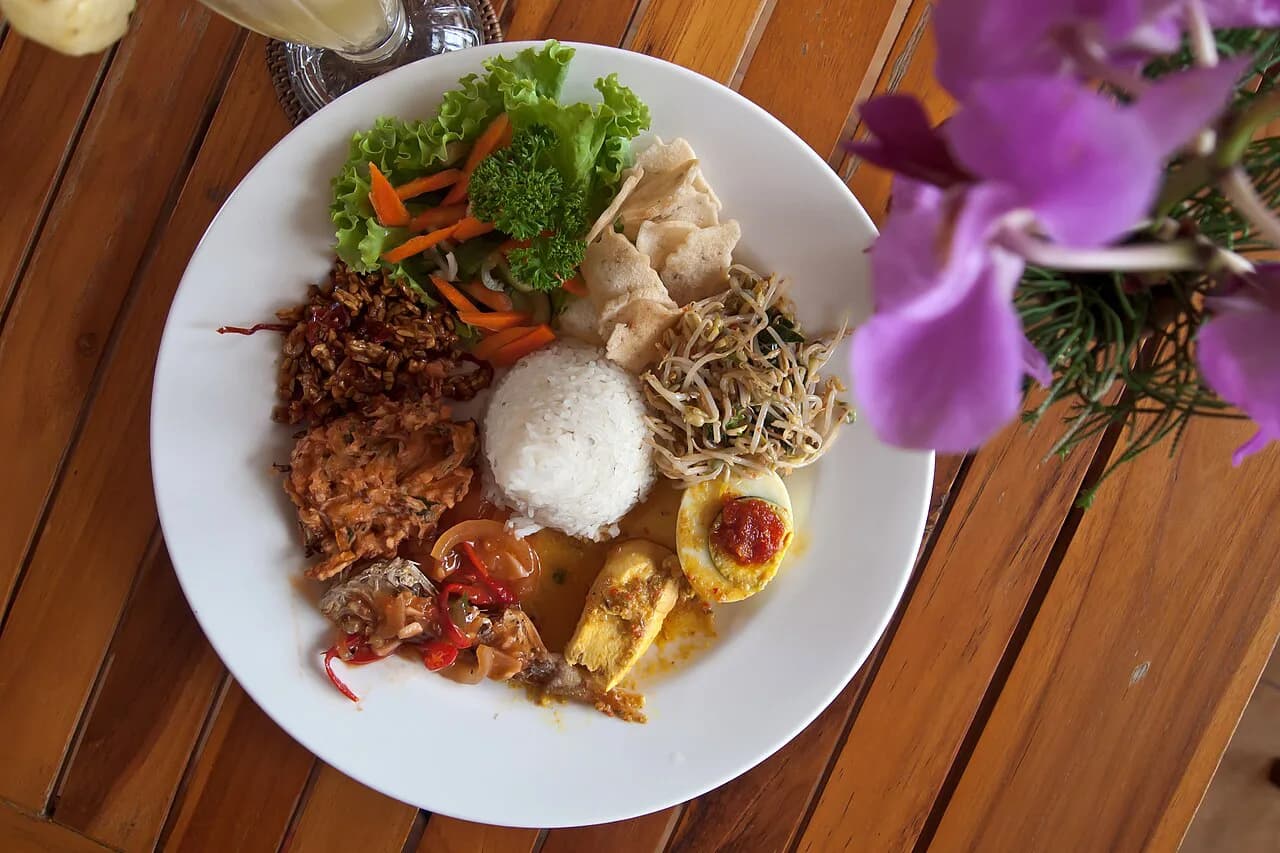
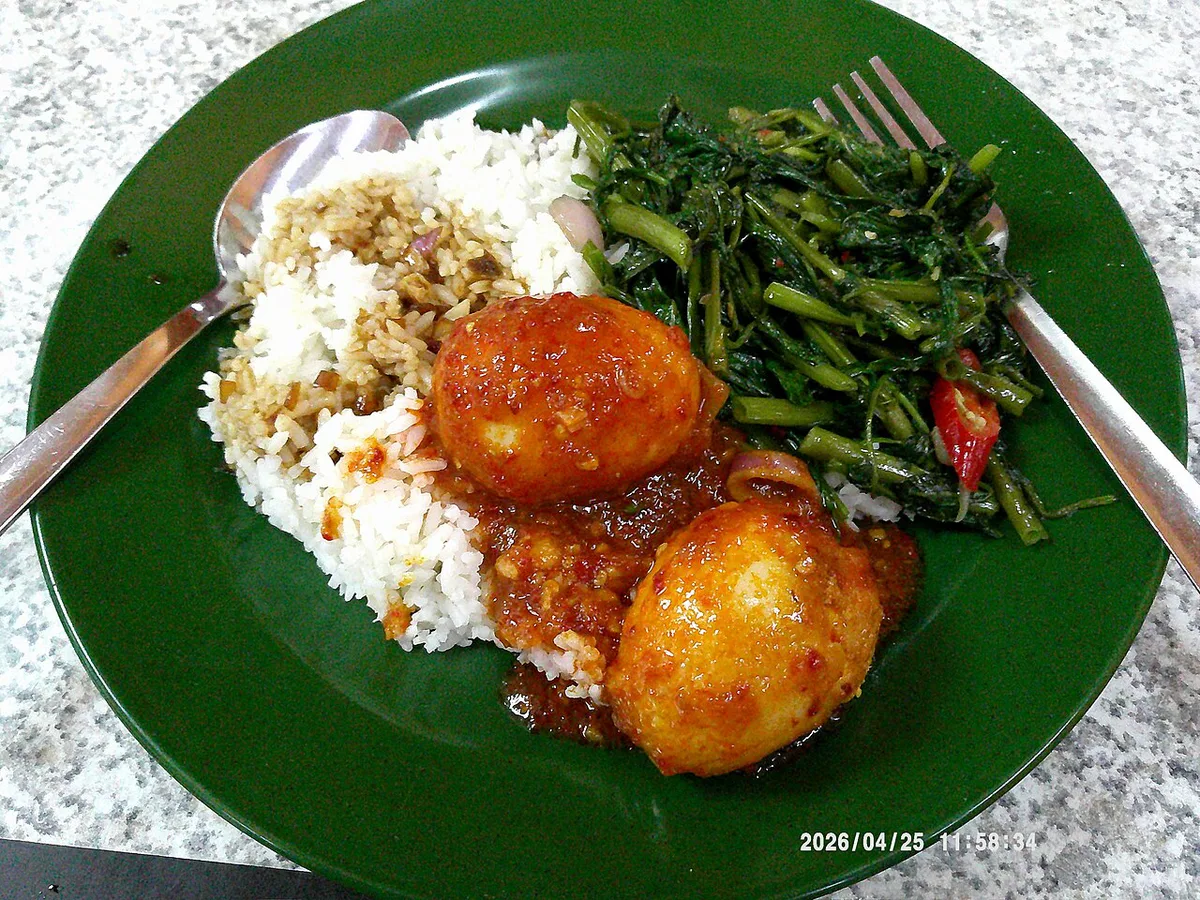
Last updated November 2026: nasi campur means "mixed rice", a scoop of steamed rice served with small portions of several sides. In Bali, a nasi campur plate usually holds meat, vegetables, sambal, and egg or tempeh. Below you'll find what each part is, how to order, and what to ask about pork and spice.
Featured image: Vyacheslav Argenberg, CC BY 4.0, via Wikimedia Commons.
What Is Nasi Campur?
Nasi campur is Indonesian for mixed rice. You get nasi Putih (plain steamed rice) with a handful of small sides. Each stall picks its own sides, so no two plates match. Search results frame it as an everyday meal rather than a special-occasion dish. Nasi campur is also an Indonesian and Malay term, so Javanese and other regional versions differ from the Balinese plate. Our guide to Indonesian dishes covers the wider family.
What Goes on a Balinese Nasi Campur Plate
Balinese plates commonly include the items below. Components vary by stall, so treat this table as a checklist rather than a rule. Ask the cook if a dietary flag matters to you.
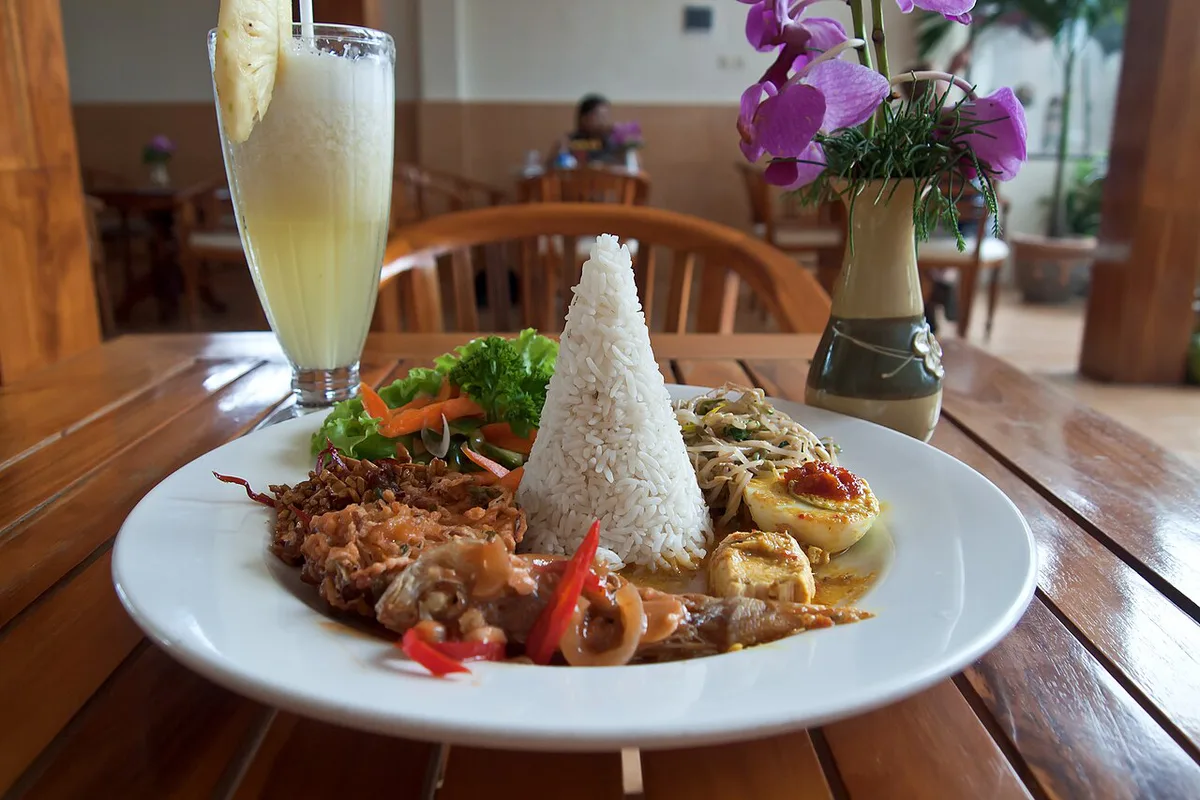
| Item | What it is | Spice level | Dietary flag |
|---|---|---|---|
| Ayam suwir | Shredded chicken, seasoned | Varies by stall | Chicken |
| Sate lilit | Minced satay, often fish | Mild to medium | Contains fish; confirm the filling |
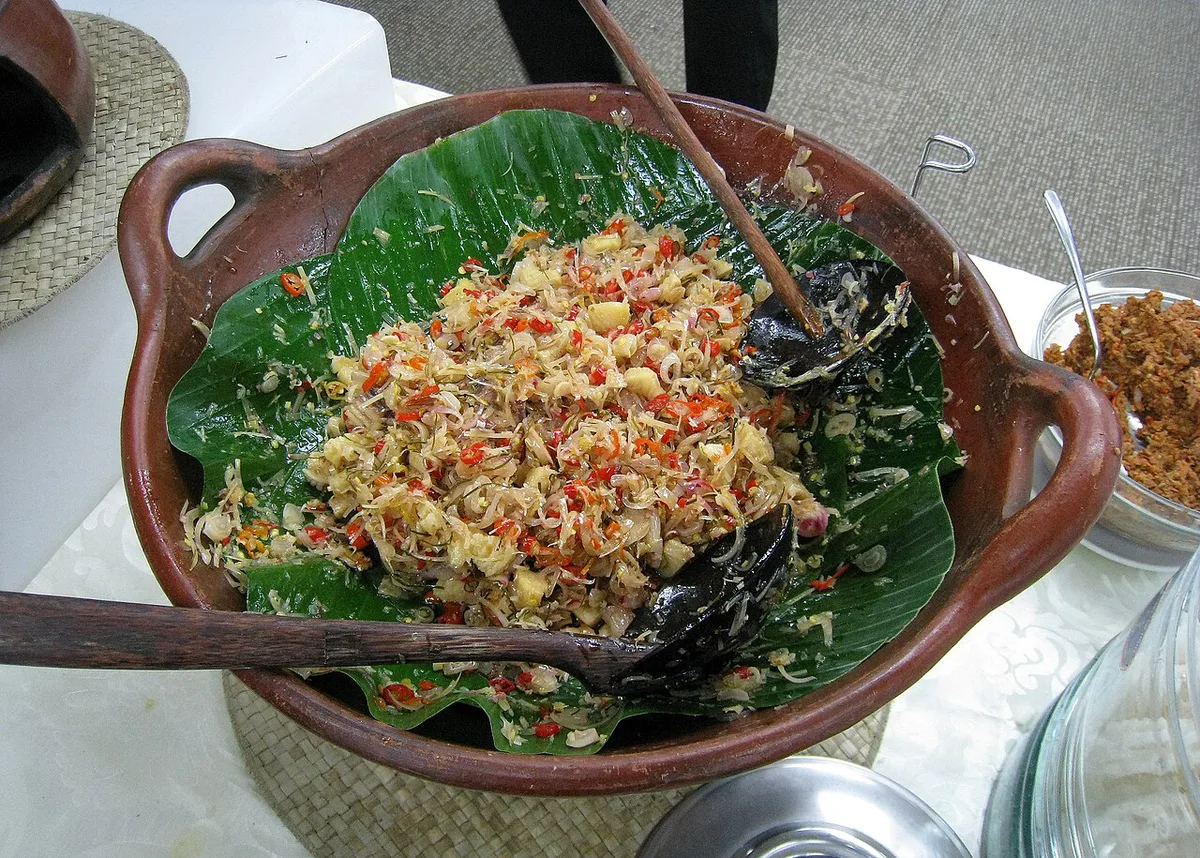
| Urap | Vegetables mixed with grated coconut | Mild | Usually meat-free; check for shrimp paste |
| Sambal matah | Raw, freshly mixed chilli and shallot relish | Hot | Prepared fresh; ask for it on the side |
| Tempe and tofu | Fried or braised soy sides with spices | Mild | Typically vegetarian; check the sauce |
| Lawar | Chopped mix of vegetables, coconut, and often meat | Varies | May contain pork; ask first |
| Peanuts, crackers, lime | Crunchy garnish and a squeeze of citrus | None | Crackers may contain shrimp |
How to Order Nasi Campur as a First-Time Visitor
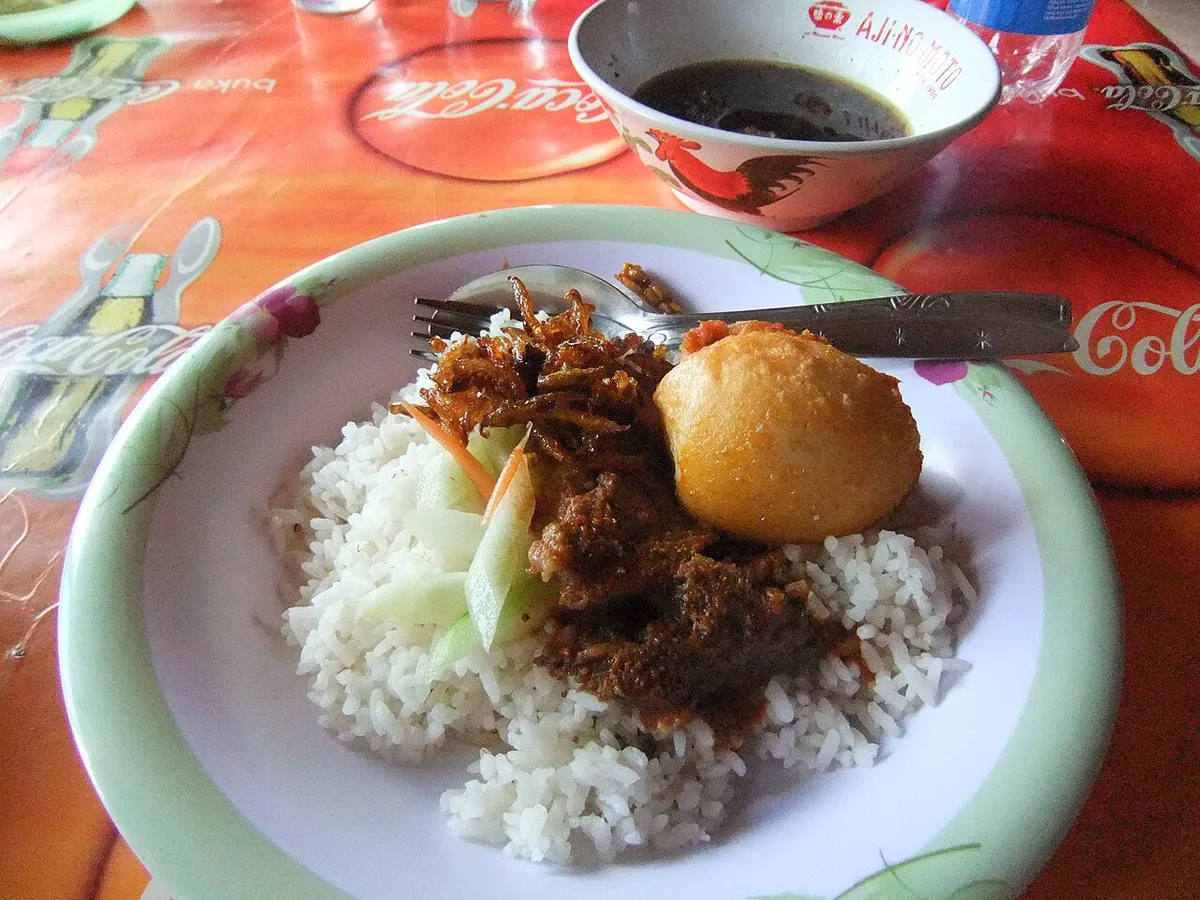
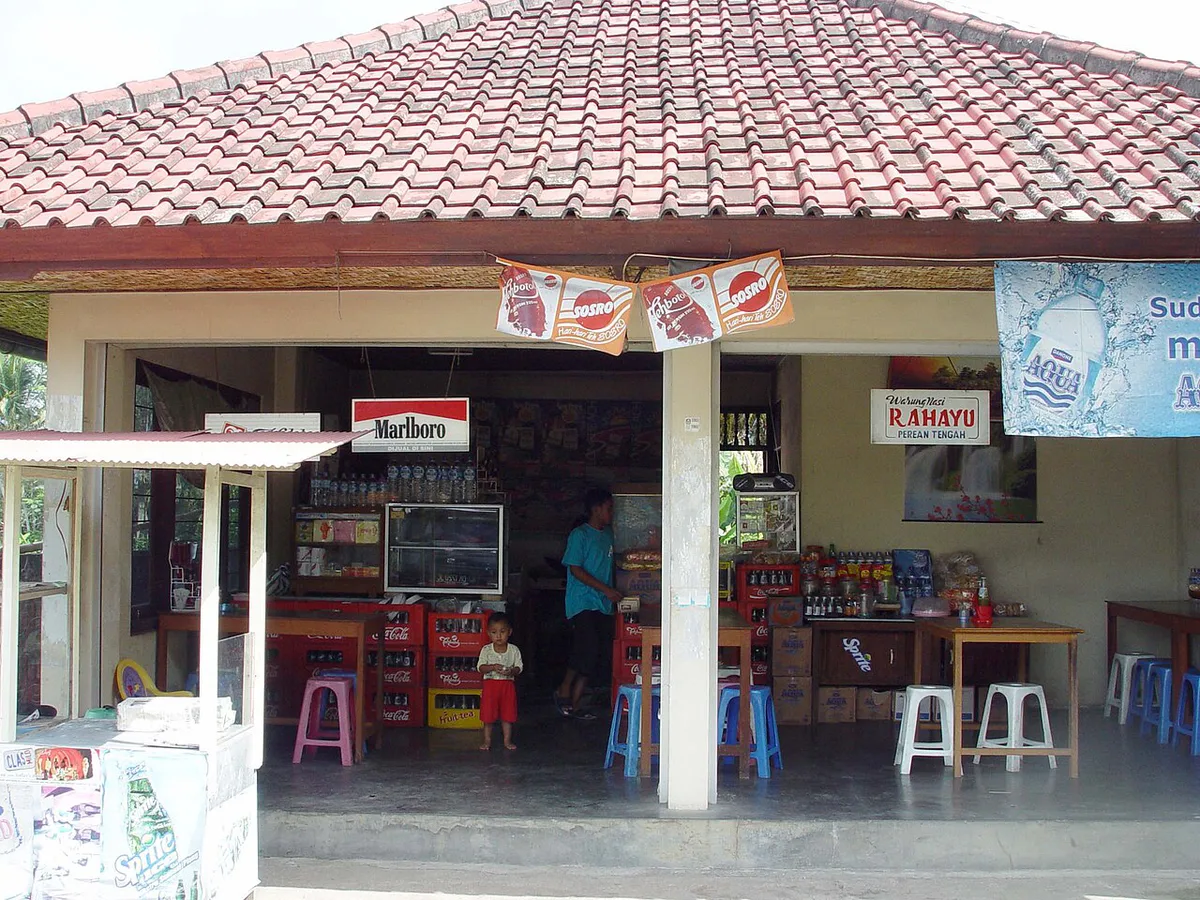
At a warung with a glass display, you point and choose. Start with rice, then name the sides you want. Pricing mechanics differ: some stalls charge by selection and others by a fixed plate. Ask before you pay. For broader context on local eating, see our Balinese food overview.
- Look at the display first and note which sides are still available.
- Point at three or four sides rather than everything.
- Ask for sambal on the side, or say "tidak pedas" for not spicy.
- Say "tanpa babi" if you avoid pork, then check the sides that look chopped or minced.
- Confirm the price before the cook plates it.
Vegetarian, Halal, and Pork-Free: What to Ask For
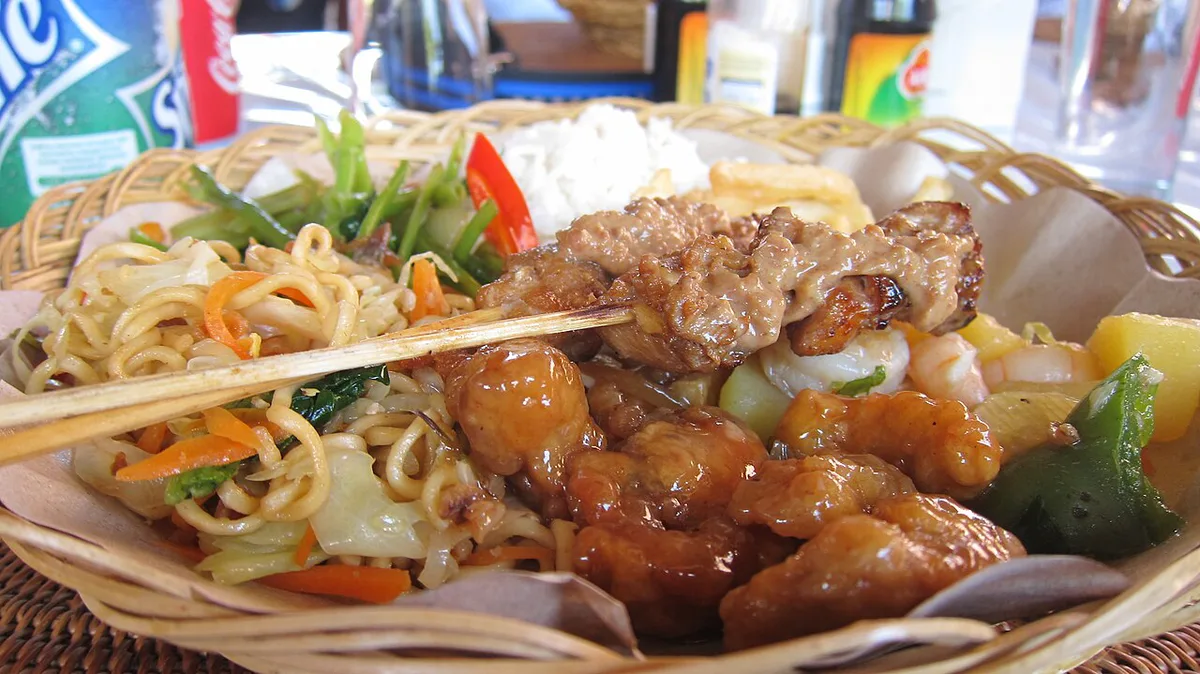
Balinese nasi campur often includes pork or shrimp paste in some sides. Do not assume a plate is vegetarian because it looks like vegetables and rice. Lawar and Sate lilit deserve the most questions. Urap, tempe, and tofu are the likeliest vegetarian choices, but sauces vary. Halal rules depend on the stall, and pork can appear at non-Muslim-run places. Check the stall's signage or ask directly. Pork dishes like Babi Guling in Bali: What It Is, How to Order, Where to Eat sit in a separate category, but they often share a counter.
Where to Eat Nasi Campur: Warung vs. Restaurant vs. Street Stall
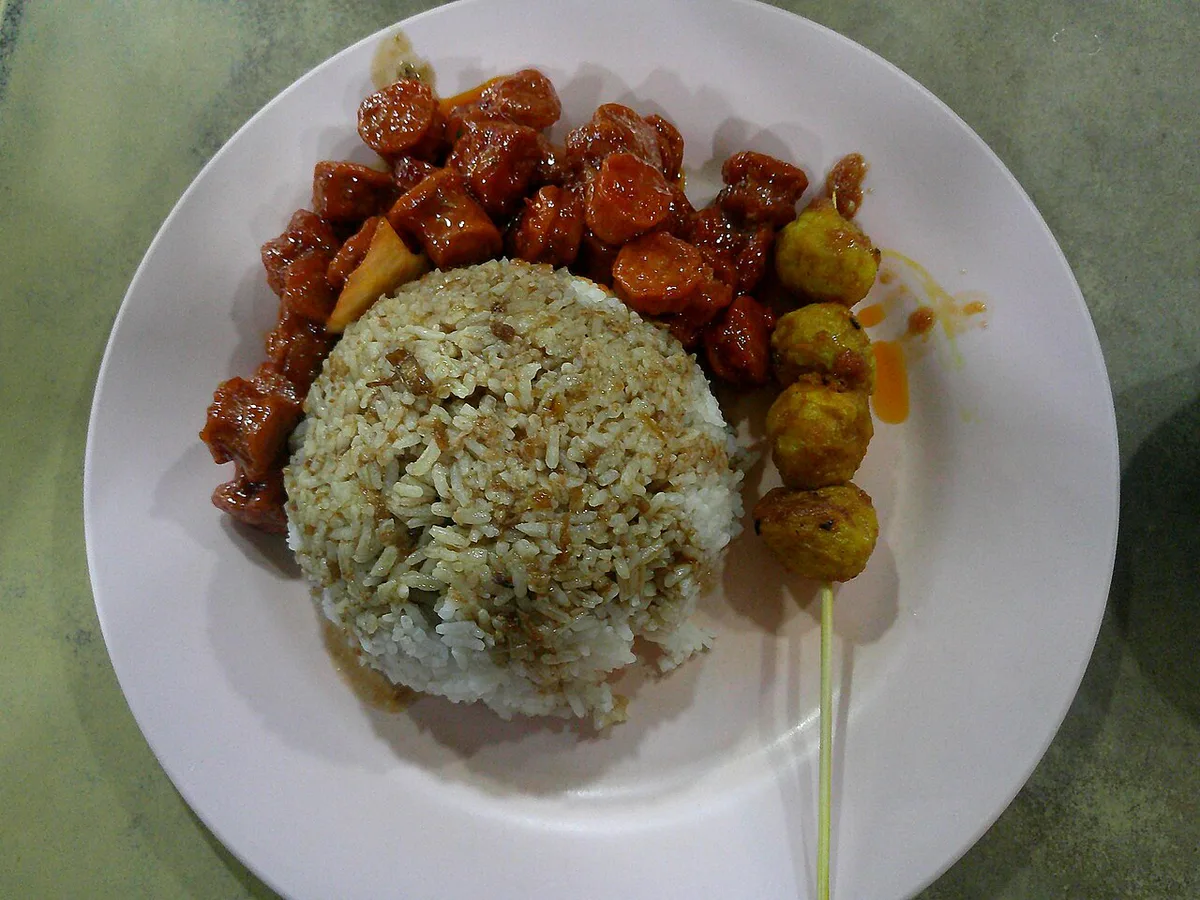
Each venue type trades cost against comfort. Our guide to the warung format explains the family-run setup. Ubud is a sensible base for finding one, but verify any venue locally before you go. Stalls are covered in our Bali street food guide.
| Venue | Cost tier | Authenticity | Ease for foreigners | Best for |
|---|---|---|---|---|
| Local warung | Cheaper | High | Moderate; point and choose | A daily meal with local sides |
| Tourist-oriented restaurant | Pricier | Varies | Easy; printed menu | Comfort and clear ingredient lists |
| Market or street stall | Cheaper | High | Harder; fewer English labels | Fast, informal eating |
What Nasi Campur Costs in Bali
No verified current price supports a figure here. Check posted menus and the official Indonesia Travel site for current guidance.
Common Mistakes With Nasi Campur
A few errors repeat for first-timers. Most are easy to avoid with one question at the counter.
- Taking too much sambal matah on the first plate.
- Assuming the plate is vegetarian without asking.
- Arriving late, when popular sides may have sold out. Verify local timing.
- Skipping the menu or display price check at tourist-facing places.
Nasi Campur vs. Nasi Padang and Other Mixed-Rice Dishes
Nasi campur is a plate you assemble from a stall's selection, built around Balinese flavors in Bali. Nasi Padang in Bali: What to Order & How It Works is a separate mixed-rice style with its own dishes and serving method. Balinese plates lean on sambal matah, lawar, and Sate lilit. For Balinese dishes to try next, see Bebek Betutu. To make a plate yourself, book a Balinese Cooking Class: How to Choose the Right One in Bali.
Frequently Asked Questions
What is the difference between nasi campur and nasi kandar?
Nasi kandar is a Malaysian dish, so it falls outside this Bali guide. Both serve rice with a choice of accompaniments. Check a Malaysian food source for specifics.
Notes for your Indonesia trip
Optional updates when we add or change a town or island guide.
You might also like



Continue reading
More guides you'll find useful