
Nusa Dua, Bali: A Candid Guide to the Resort Enclave
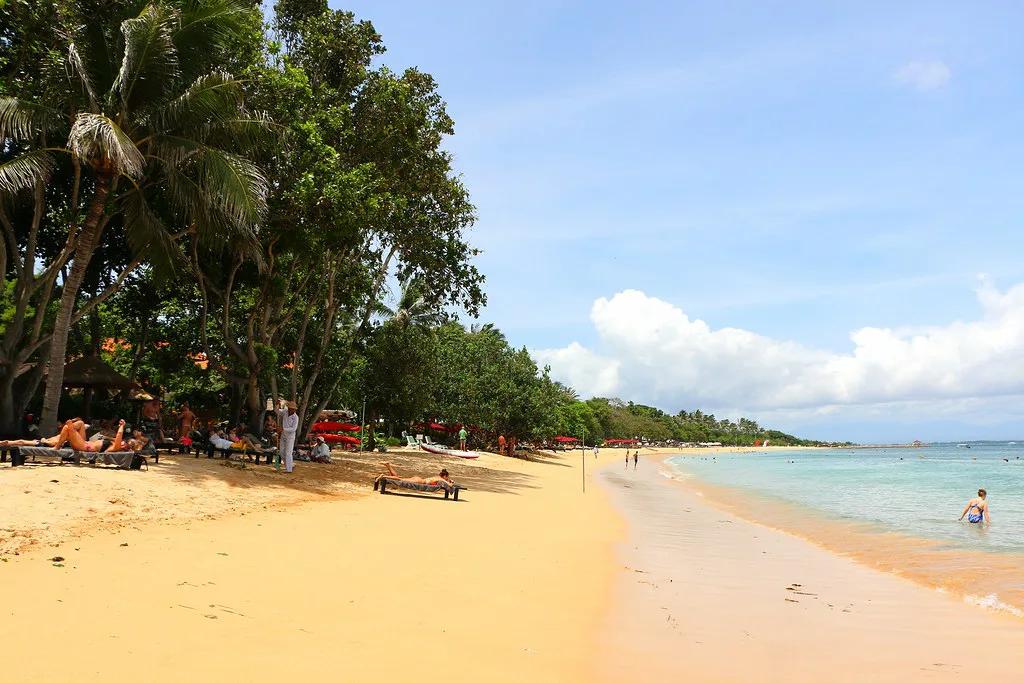
Nusa Dua is not a Balinese town but a purpose-built tourism estate on the Bukit Peninsula, roughly 10 km from Ngurah Rai International Airport, where international resort chains line white-sand beaches behind a gated perimeter. If you want calm swimming water, manicured grounds and a resort that handles everything, it works well; if you want street life, cheap warungs and village texture on foot, it will feel sealed off. This guide covers its three beaches, its sights, where to stay and eat inside the district, and how to move around without a car.
The estate sits in southeast Bali on the Bukit, and one travel guide describes it as a government-supported complex with 24-hour security and a 20-minute drive from Denpasar airport. That gated structure is the whole point: resorts run their own beaches, pools and restaurants, and many guests barely leave the complex. Read the security line as a description of how the estate is managed, not as a guarantee about your trip.
Who Nusa Dua suits, and who it does not
Nusa Dua suits families with young children, travelers who want a resort base with a swimmable beach out front, and anyone treating Bali as a rest stop rather than a cultural deep dive. The protected lagoon makes swimming easy for kids, and resort-run kids' activities and pools keep days full without a car. It also suits couples who prefer quiet evenings to bar strips.
It does not suit travelers who want to walk out of their hotel into a scrum of cafes, galleries and local warungs. The estate is spread across wide roads and landscaped grounds, so even a short errand often means a taxi, a shuttle or a long walk in heat. If street life and independent restaurants matter, compare this district against Ubud Bali or Canggu Bali before you commit your nights.
The beaches: Nusa Dua, Geger and Mengiat
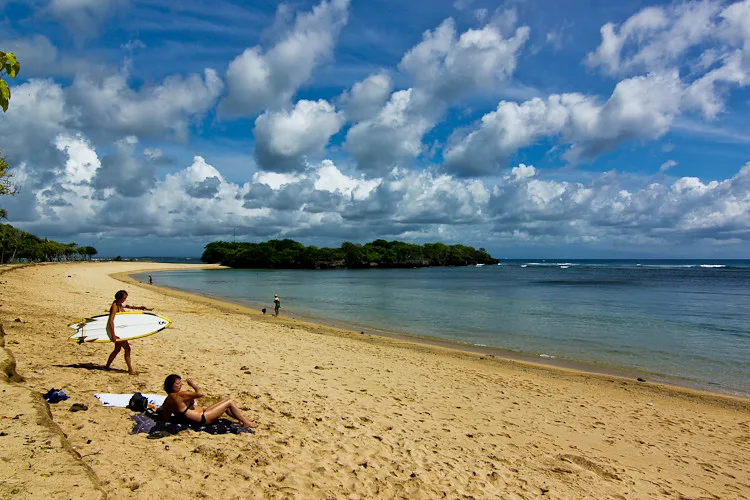
Nusa Dua Beach is the main stretch, with an offshore reef creating a protected lagoon and swimming conditions that stay gentle. Resorts front much of it, but most areas are accessible to non-guests, and past the Hilton Resort the public beach has simple warungs selling food at low prices. Expect calm water rather than surf character; the reef is precisely why the swim is easy.
Geger Beach, just north, is the local favorite for a swim: soft white sand, clear calm water shielded by an offshore reef, and seaweed farms worked by locals along the shore. It is generally less crowded than the big-name beaches, and you can buy snacks from nearby warungs. The trade-off is seaweed at certain tides, so watch your footing near the waterline.
Mengiat Beach is the quiet third option, a low-traffic stretch where you can sit without hawkers pressing souvenirs or massages on you. Travelers who want a book-and-a-towel afternoon often prefer it to the busier resort fronts. Conditions change with tide across all three, so pick your beach on the day rather than locking in a plan weeks ahead.
The Waterblow: worth it only on the right swell
The Waterblow is a wave-cut gap in the cliffs on the Nusa Dua peninsula where Indian Ocean swell slams into a rock cavity and bursts upward. A paved path and viewing platform let you watch safely, though spray can reach you. On calm days the effect shrinks to a modest splash, so it is a dud if the sea is flat.
Entry is free, and it sits within walking distance of Museum Pasifika, which makes the pair a natural half-day on foot. Crowds tend to build after late morning, and the rocks beyond the platform are slippery, so stay behind the boundary. Pair it with the museum and you have filled a morning even if the waves underperform.
Museum Pasifika: a rainy-day anchor
Museum Pasifika, in the tourism estate near the Waterblow, holds Asia-Pacific art across eleven galleries, including works by European painters who worked in the region alongside pieces from across the archipelago and the Pacific. One travel account puts adult entry at around IDR 70,000 with children under 10 free, and another repeats the same figure; treat it as a reported number and confirm the current ticket at the desk or on the museum's own site before you go.
Budget two to three hours if you actually read the labels, less if you skim. It is the best bad-weather option in the district and a good escape from midday heat, but it will not hold young children who have no interest in galleries. Cameras are fine in the collection rooms; flash, tripods and video beyond the lobby are not.
Tanjung Benoa: the water-sports hub next door
Tanjung Benoa, a short drive north of the main resort strip, is where Nusa Dua's water sports concentrate: jet skis, banana boats, parasailing and helmet sea walks, all run by competing operators. Prices vary between shops and bargaining is normal, so compare two or three before committing. Check the equipment and the operator's reputation before you pay, and expect the busiest conditions in peak season.
The contrast with the resort beaches is sharp: Tanjung Benoa is commercial and busy, while Nusa Dua's lagoon is quiet and free. If you only want to swim, stay put; if you want motorized fun, this is the one place in the district to book it. Activities here are booked as packages, so ask exactly what is included rather than assuming.
Puja Mandala and an evening at the Devdan Show
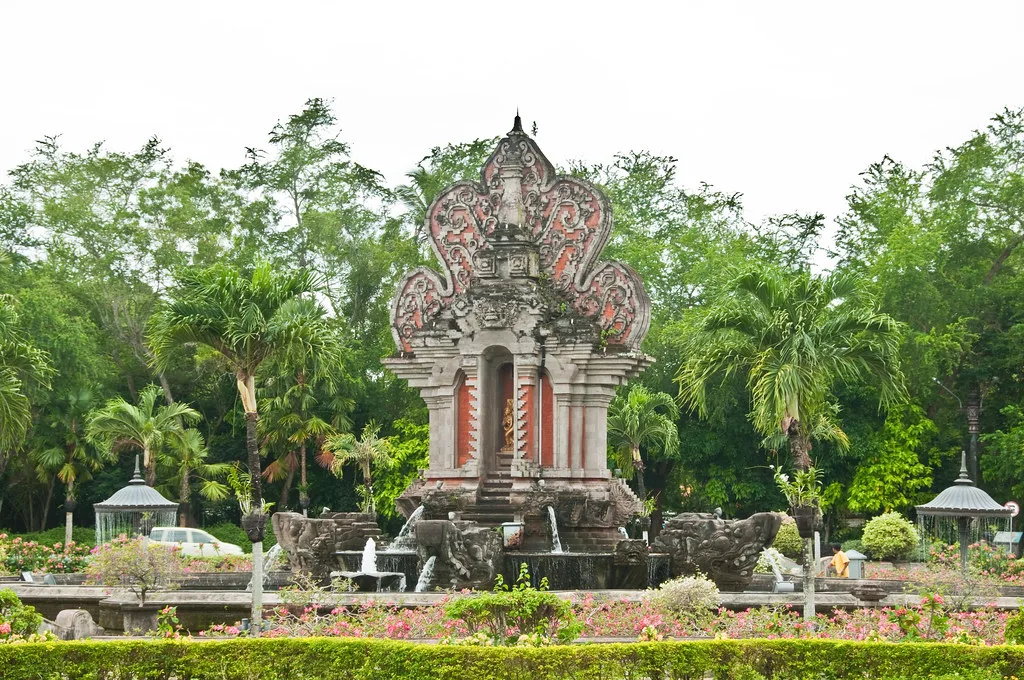
Puja Mandala, a compound where five houses of worship stand side by side, is the district's most distinctive cultural stop; confirm visiting details and any entry conditions on arrival. It is a short drive from the resort core rather than a walk, so slot it into a transfer day rather than an afternoon on foot. The Devdan Show at Bali Nusa Dua Theatre is the evening option: a reported 90-minute acrobatic dance production tracing Sumatra, Java, Kalimantan, Bali and Papua.
The show is family-friendly and colorful, and tickets are sold at a premium, so book through the theatre or a reputable agent and confirm the current schedule directly. Do not build an evening around a show time you saw on an old listing. For a quieter night, resort-run restaurants in the estate stage their own Balinese dance performances.
Bali Collection and the estate's retail layout
Bali Collection is the main shopping and dining center, mixing beachwear, high-end fashion and restaurants in one walkable cluster. It is the closest thing the estate has to a town center, and it is where you go when resort dining gets repetitive. Nearby, the Galleria Nusa Dua area holds boutiques and upmarket restaurants beside the tennis and lawn bowls club.
Retail here is planned rather than organic: expect air-conditioned malls and landscaped promenades instead of a chaotic market street. That makes it easy with kids and strollers but less interesting if you came for browsing local shops. For contrast, a genuinely different retail and street-food scene is a taxi ride away in Seminyak or Kuta.
Getting to Nusa Dua and getting around inside it
From the airport, the drive is about 20 minutes, and most resorts offer airport transfers, which is the simplest arrival. Ride-hailing apps and metered taxis work for the trip in, but some resorts restrict app pickups at their gates, so ask your hotel where the pickup point is. Inside the estate, many guests walk the beach promenade or use resort-supplied golf carts rather than calling a car for every meal.
Distances inside the gated zone are longer than they look on a map, and the heat makes a 20-minute walk feel like more. Plan your day around one cluster, then move once, rather than shuttling back and forth. A morning stroll along the beach promenade at sunrise is one of the better free routines here.
Where to stay in Nusa Dua
Resorts cluster along Jalan Pantai Mengiat, Jalan Pratama and the ITDC zone, with the biggest names fronting the beach. Ayodya Resort Bali sits on Jalan Pantai Mengiat, Conrad Bali on Jalan Pratama, and Hilton Bali Resort on Jalan Raya Nusa Dua Selatan, while the Marriott's Bali Nusa Dua Gardens and Terrace aparthotels occupy lots inside the tourism estate. Rates swing with season and availability, so compare current prices rather than relying on any figure you read in a guide.
Pick a beachfront property if swimming out front matters and you want the promenade on your doorstep. Aparthotels and villa-style suites like Taman Dhamawangsa Suites suit longer stays and families who want kitchens and space. If you want a town you can walk, Sanur offers a more village-like alternative with a comparable coastline.
Where to eat in Nusa Dua
Eating in Nusa Dua splits into two tiers. Inside the resorts, restaurants are convenient but priced for hotel guests; at Bali Collection you get a broader choice of cuisines in one place. For a cheaper, more local meal, head to the public stretch past the Hilton, where simple warungs sell good food at low prices.
Geger Beach adds a third option: small cafes and warungs near the sand where you can eat after a swim without changing out of beach clothes. Prices there are reasonable by resort standards, and the setting beats a hotel buffet. If you want a serious dinner out, Jimbaran's seafood beach restaurants are a short drive south.
How long Nusa Dua needs, and what to combine with it
Three days covers the district comfortably: one for the beach and Waterblow, one for Museum Pasifika and Bali Collection, and one for Tanjung Benoa or the Devdan Show. Expedia's own guide calls three days more than enough for the major attractions, which matches how compact the estate is. Longer stays make sense only if you are using a resort as a decompression base.
For day trips, Jimbaran is close for a seafood dinner, and Uluwatu's temple and clifftop views are a straightforward drive around the Bukit. Kuta and Seminyak are the opposite direction for shopping and nightlife. Treat Nusa Dua as a base and the rest of south Bali opens up; treat it as the whole trip and you will miss the island.
Should you book Nusa Dua or look elsewhere?
Book Nusa Dua if you want a calm, reef-protected beach, a resort that handles logistics, and a base that is 20 minutes from the airport. Skip it if you want street-level Bali on foot, independent warungs on every corner and a town that feels lived-in. The honest trade-off is comfort and quiet for a walled-off experience.
Before booking, confirm three things directly with the property or venue: current room rates, the Devdan Show schedule and Museum Pasifika's entry fee. Those details change, and the figures floating around in older guides may not match what you pay at the desk. For everything else, check current access and prices as you go rather than assuming a walkable, free or bookable-on-the-day option.
Frequently Asked Questions
Which part of Bali is Nusa Dua in?
Nusa Dua sits on the Bukit Peninsula in southeast Bali, on the island's southern tip. It is a gated tourism estate rather than a traditional village, roughly 10 km from Ngurah Rai International Airport, and it neighbors Tanjung Benoa to the north and Jimbaran to the west.
Is Nusa Dua good for families?
Yes. The offshore reef creates a protected lagoon that keeps the water calm for swimming, resorts run pools and kids' activities, and the estate is compact enough to avoid long transfers. Families who want a self-contained resort base tend to be happiest here.
Do I need a car in Nusa Dua?
Not strictly, but it helps. Many guests walk the beach promenade or use resort golf carts, and airport transfers are commonly arranged by hotels. For sights like Puja Mandala or trips to Tanjung Benoa and Jimbaran, plan on a taxi, a ride-hailing app or a hotel car.