
Tunjungan, Surabaya: A Guide to Jalan Tunjungan and Its Heritage Core

Tunjungan is worth half a day and one evening: a daytime walk past the heritage facades of Jalan Tunjungan, then the street again after dark when stalls, coffee carts and small performances take over. It suits walkers who like old commercial architecture and an easy, busy evening out, and it suits travelers who want a central Surabaya base rather than a quiet one. This guide covers what the district is, who it fits, the buildings to look for, eating and sleeping in the area, and how to get there and around.
The street runs north to south through Genteng, the old commercial heart of the city, and the Tunjungan Plaza mall complex sits at its southern end. Beyond those anchors, the surrounding blocks are ordinary working city, so treat the district as a street to walk rather than a walled sight. For the wider set of area guides, see the Surabaya Neighborhoods overview and pick the base that matches your trip.
What Tunjungan Is: Surabaya's Historic Shopping Street
Tunjungan began as a commercial corridor, not a monument. The Surabaya historian Kuncarsono Prasetya traces its rise to the late nineteenth century, when a tram line and the city's first residential developments turned it into a shopping street with arcades. It was the city's first lifestyle quarter, and it kept that role until malls pulled the crowds away in the 1990s.
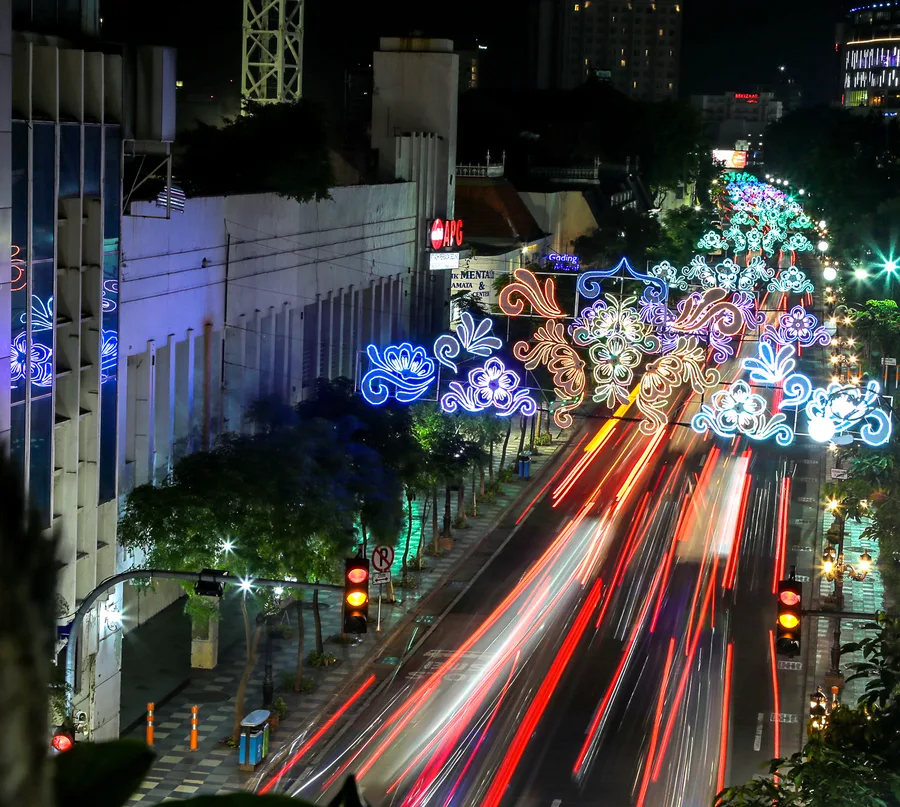
The city has since pushed the street back into use, and since November 2021 it has run an evening program, Tunjungan Romansa, with cultural performances and small business stalls. That designation is reported by local media rather than published as a fixed calendar, so check current details before you build an evening around a specific act. Today the district reads as two things at once: a heritage street to browse by day and a lit, crowded promenade after dark.
Keep your expectations calibrated. This is not a restored colonial quarter like Kota Lama in Semarang; it is a working urban street where heritage buildings sit among shops, offices and traffic. The pleasure is in the walk, the facades and the food, not in a single ticketed attraction.

Who Tunjungan Suits, and Who Should Stay Elsewhere
Tunjungan fits walkers who enjoy looking up at old department store fronts, travelers who want dinner and a stroll within a few minutes of their hotel, and anyone using Surabaya as a stopover who wants one compact district to see. It also works for people who prefer a busy street to a resort pool.
It fits less well if you want a quiet residential base with evening calm, or if your main interest is the Arab Quarter's mosque and market atmosphere, which belongs to Ampel, Surabaya rather than here. Families with strollers should note that the street is best covered on foot and carries traffic, so the mall end is the easier stretch. If you are arriving by train and want a practical base near the station, Gubeng, Surabaya is the more logical choice; comparisons of both areas sit in the Surabaya Neighborhoods guide.

How the District Is Laid Out
Orientation is simple: Jalan Tunjungan is one long north–south street, and Tunjungan Plaza, the big mall complex, sits at its southern end near the large intersection. A street listing's walking directions from the plaza describe heading south toward the street's marked entrance; in practice, use the mall as your landmark and walk from there.
Tunjungan Plaza itself opened in 1986 and has grown into a multi-block complex, which is why it dominates the street's southern end rather than sitting politely behind it.
The Genteng blocks around the street are where ordinary Surabaya happens: offices, smaller shops and food places on side lanes. Night photographs of the street show the mall towers behind a quieter roadway, which gives a fair sense of the scale mix you will see.

Plan your loop so the mall is your start or finish point rather than your destination. Walk north along Jalan Tunjungan reading the facades, then return on the opposite side, which gives you a different set of shopfronts and shade. The district is compact enough that you will not need transport within it once you arrive.
The Heritage Buildings to Look For on Foot
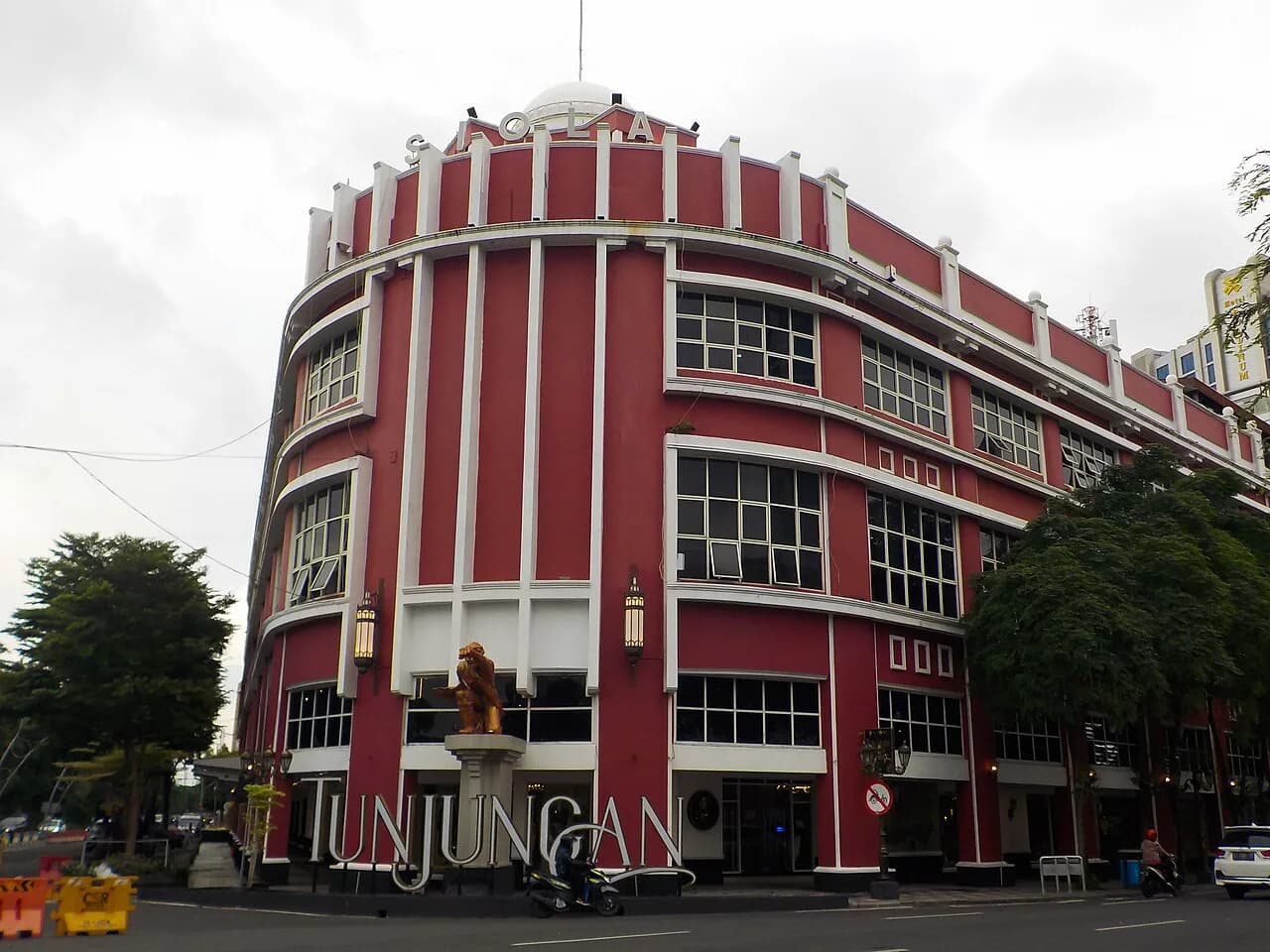
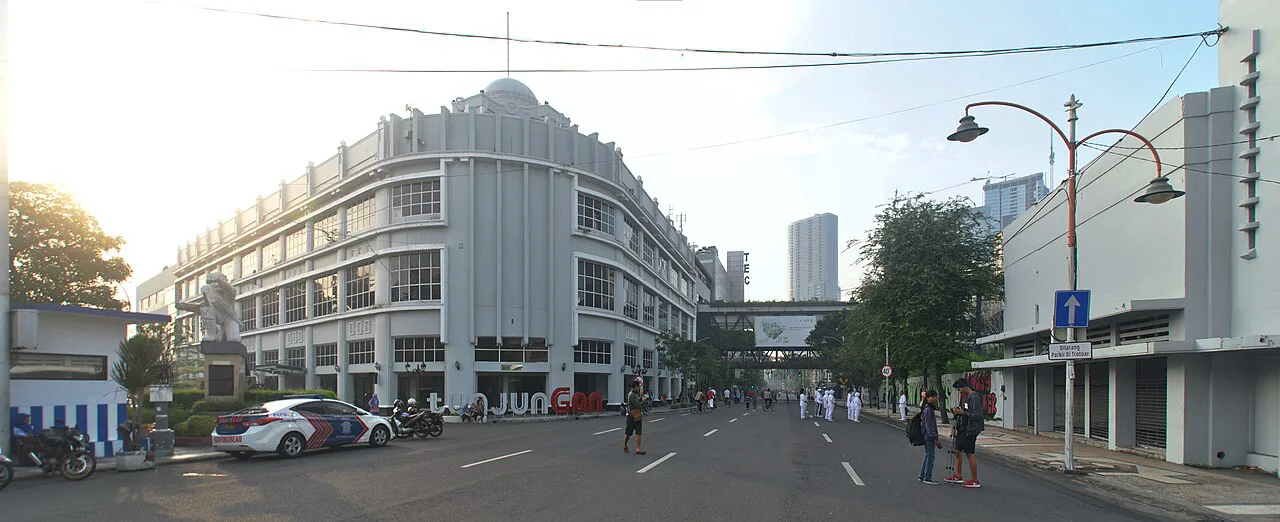
The most storied building is Siola, which began as the White Away Laidlaw department store, became the Japanese-owned Chiyoda in the 1920s and was described as the largest store of the Dutch East Indies period, selling everything from kitchenware to garments. Frame it as a historic commercial building rather than a shop to visit, and check locally what it houses now before planning around it.
Hotel Majapahit, originally Hotel Oranye, was the street's first hotel, and the historian's account links it to the area's early business prestige alongside imported car and motorcycle showrooms. Treat it as architecture and history on your walk; confirm current access and any guest rules directly with the property.
Other names from the arcade era are part of the street's story rather than confirmed current businesses: Tang Go Toko, later known as Toko Nam, active in the 1930s, and Toko Metro in the 1950s, at the site now occupied by Hotel Swiss Belinn. Read these as layers of the street's retail history, and do not count on finding any of them operating under those names.
Local reporting puts the number of designated heritage buildings on Jalan Tunjungan at twelve, and notes that the buildings themselves are a draw for photography. That number is a useful target for a walk: look for plaque-level detail and facades rather than a single address.
Tunjungan Romansa: Timing Your Evening Walk
Tunjungan Romansa is the city's evening street program on Jalan Tunjungan, designated as a tourism destination on 21 November 2021 and described as running every night with arts and cultural performances plus small-business stalls. Treat the nightly claim as a general pattern rather than a guarantee of any particular act on your date.
The practical consequence is timing: come in the evening if you want the street at its liveliest, with lights, food carts and coffee stalls. Come in the morning or early afternoon if you want to photograph the facades without a crowd in front of them. A visit that does both is the best use of a day here.
The street is described as open around the clock according to a listing sourced from a Google business profile, and that listing notes hours can change for services and special events. That is not a promise that every shop or stall is open at any given hour, so check current details for the specific places you care about.
Where to Eat and Drink in Tunjungan
Eating here splits into two moods. Along the street you get the evening stall scene the district is known for, plus coffee shops and small culinary businesses that cluster around the Romansa program; inside Tunjungan Plaza you get the predictable range of mall dining under air conditioning. Choose the street for atmosphere and the mall for comfort or a group that cannot agree.
No specific warung, cafe or restaurant on Jalan Tunjungan is verified here, so use the street itself as your filter: walk the length once, note the stalls with steady local queues, and return to the one you liked. A listing for the street advises bringing cash because many local vendors may not take cards, which is the single most useful preparation for an evening of grazing.
Shoes matter more than you would expect: the guidance for the street is to wear comfortable shoes because it is best explored on foot, and the distances between the mall end and the heritage stretch add up over an evening.
Where to Stay in Tunjungan
The district's hotel story starts with Hotel Majapahit, originally Hotel Oranye, the street's first hotel and part of its early elite commercial character. Outside that documented history, no current hotel in Tunjungan is verified here as a recommendation, so compare rates, recent reviews and exact locations on booking platforms and confirm directly with the property before you commit.
As a base, Tunjungan gives you walkable evenings and the mall's practical amenities, which is a real advantage on a short Surabaya stop. The trade-off is street noise and traffic rather than calm, so light sleepers should ask for a room away from the street side. If you want a quieter residential feel or a base tied to the train station, compare Gubeng, Surabaya and the other areas in the Surabaya Neighborhoods guide before booking.
Getting to Tunjungan and Around It
Within the district, walk. Around it, the three useful options are local bus, app-based motorcycle taxi and bicycle rental, and a street listing gives rough figures for each: a local bus from the Tunjungan Plaza area toward Genteng at about IDR 3,000 with a journey of about ten minutes, an ojek booked through Gojek or Grab at roughly IDR 10,000 to 15,000 for five to seven minutes, and bicycle rental at about IDR 20,000 per hour. Treat these as indicative rather than fixed and confirm the fare in the app or with the driver.
For ride-hailing, enter the destination clearly in the app so the driver takes you to the street itself rather than dropping you at the far side of the mall complex. For buses, ask the driver to tell you when to get off at Jalan Tunjungan, since the stop names are not obvious to visitors.
If you are coming from elsewhere in the city, Tunjungan is central enough that a ride-hailing trip is usually the simplest arrival, and walking takes over from there. Travelers combining districts often pair Tunjungan with a different quarter on the same day; the city-wide Surabaya Attractions list helps you sequence those stops by area.
Is Tunjungan Worth an Evening, or Just a Walk-Through?
Give Tunjungan an evening rather than a passing look. Walk the street in daylight for the Siola and Hotel Majapahit-era facades and the twelve designated heritage buildings, then come back after dark for the stall-and-performance atmosphere of Tunjungan Romansa. One caution in each direction is enough: check the current program before you plan around a specific act, and confirm fares and hours as you go.
If you are deciding between areas, Tunjungan is the right base for walkable evenings and mall convenience, while Ampel, Surabaya suits mosque-and-market mornings and Gubeng, Surabaya suits rail connections. Read the Surabaya Neighborhoods guide, then book the district that matches how you actually spend your days.
Explore more Surabaya guides
Frequently Asked Questions
Do I need to pay to walk Jalan Tunjungan?
No ticket is needed to walk the street; it functions as an open public thoroughfare, and the evening stalls and mall are separate stops along it. Any spending is on food, drinks and shopping. Confirm current arrangements for specific events before you go.
How long should I spend in Tunjungan?
Half a day plus an evening covers it comfortably: a daytime walk for the heritage facades and a return after dark for the stalls and street atmosphere. If you are short on time, one evening walk past the main buildings and the Tunjungan Plaza end captures most of the district.
Is Tunjungan Plaza the same thing as Jalan Tunjungan?
No. Tunjungan Plaza is the large mall complex at the southern end of the area, while Jalan Tunjungan is the historic street itself running north to south through Genteng. Most visitors use the mall as a landmark and then walk the street.