
Wonokromo, Surabaya: What's in This South Surabaya District

Wonokromo is a working residential district in south Surabaya, best treated as a transit and everyday-commerce area rather than a sightseeing base. Come here if you want a functioning heritage railway station, a large market and the city zoo within one kecamatan; skip it as a base if you want polished tourist infrastructure within walking distance. This guide covers what the district contains, how to reach it, how to move inside it, and where it fits in the wider set of Surabaya Neighborhoods.
Where Wonokromo sits, and why it is not just the zoo
Wonokromo is a kecamatan, so it holds several kelurahan rather than one attraction. A postal-code listing for the kecamatan names Wonokromo, Jagir, Sawunggaling and Ngagel Rejo among its sub-areas, which is a useful reminder that the name covers a lived-in district and not a single gate. When someone in Surabaya says Wonokromo, they may mean the station, the market or the zoo, so ask which before you set off.
Treating the name as a synonym for Kebun Binatang Surabaya, or KBS, causes most first-time confusion. The zoo is one piece of the district, and a travel plan built only around it will leave you without a sense of how the neighborhoods fit together. Read it as the southern anchor of a city guide, and use the wider Surabaya Attractions overview to decide whether the zoo belongs in your day at all.

How to reach Wonokromo: rail first, road second
Stasiun Wonokromo is the practical gateway from the south and southwest. The city's culture and tourism data portal describes it as the entry gate for trains arriving from the south, toward Malang and Banyuwangi Baru, and from the southwest, toward Madiun. That makes it a sensible arrival point if your trip comes up from those directions rather than from Jakarta.
Arriving by road means Jalan Wonokromo, the district's spine. Live traffic mapping for Jalan Wonokromo is the honest way to judge conditions before a car or ride-hailing trip, because congestion varies by hour and the road carries local traffic as well as through traffic. Compare that with arriving at a station on the city's other side, such as Gubeng, if your accommodation sits further north.
Joyoboyo Terminal also sits inside the district's orbit, giving it a second transport anchor alongside the railway. Public sources do not post train frequencies or terminal schedules here, so check KAI and terminal information close to your travel date instead of relying on a fixed plan.

The landmarks that define the district
Four names do most of the defining: Kebun Binatang Surabaya, Pasar Wonokromo, Jagir Dam and Joyoboyo Terminal. A local tourism write-up on the area lists exactly these alongside the railway station as the faces of present-day Wonokromo. Plan your walk around that short list rather than trying to inventory the whole kecamatan.
Kebun Binatang Surabaya is the best-known of the group and the reason many visitors cross the district at all. The zoo is the anchor of the area's image, and the same source pairs it with the market and terminal as a cluster rather than separate outings. Published ticket prices and opening hours for the zoo are not given here, so confirm both with the operator before you travel.
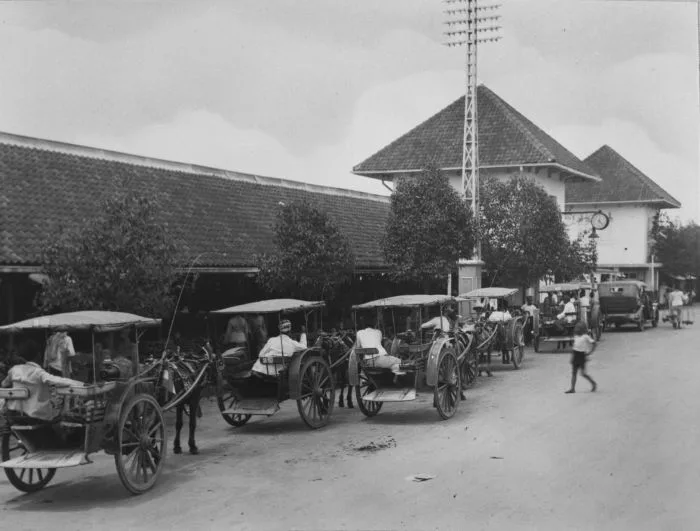
Pasar Wonokromo is the everyday-commerce counterpart to the zoo, and the market has a long history in the district. A photograph of the market dated to the early 1930s appears in the regional encyclopedia entry for Wonokromo, which is reason enough to treat the market as part of the area's identity rather than a stop you add on impulse. For any current trading hours, check locally.
Stasiun Wonokromo as a heritage building
Stasiun Wonokromo is a listed heritage building as well as a working station, which is the detail most visitors miss. The city's data portal records its address as Jalan Stasiun Wonokromo no. 1 and gives its elevation as about seven meters above sea level. It also notes three bells around the station's traffic-control room, each with its own role.
The station's place in regional transport history runs deeper than its platforms. The same portal states the station once served as a hub in a large junction tied to the Surabaya–Solo line, which it says continued on to Batavia in 1894. It also describes the station's older role in moving plantation produce from areas around Surabaya toward Tanjung Perak for shipment onward to Europe.
The track layout changed over time as well, shrinking from seven lines to five and then to four in the official description. That is a small piece of detail, but it explains why the station feels more functional than monumental. Look at the building and the signals rather than expecting a museum-style exhibit.
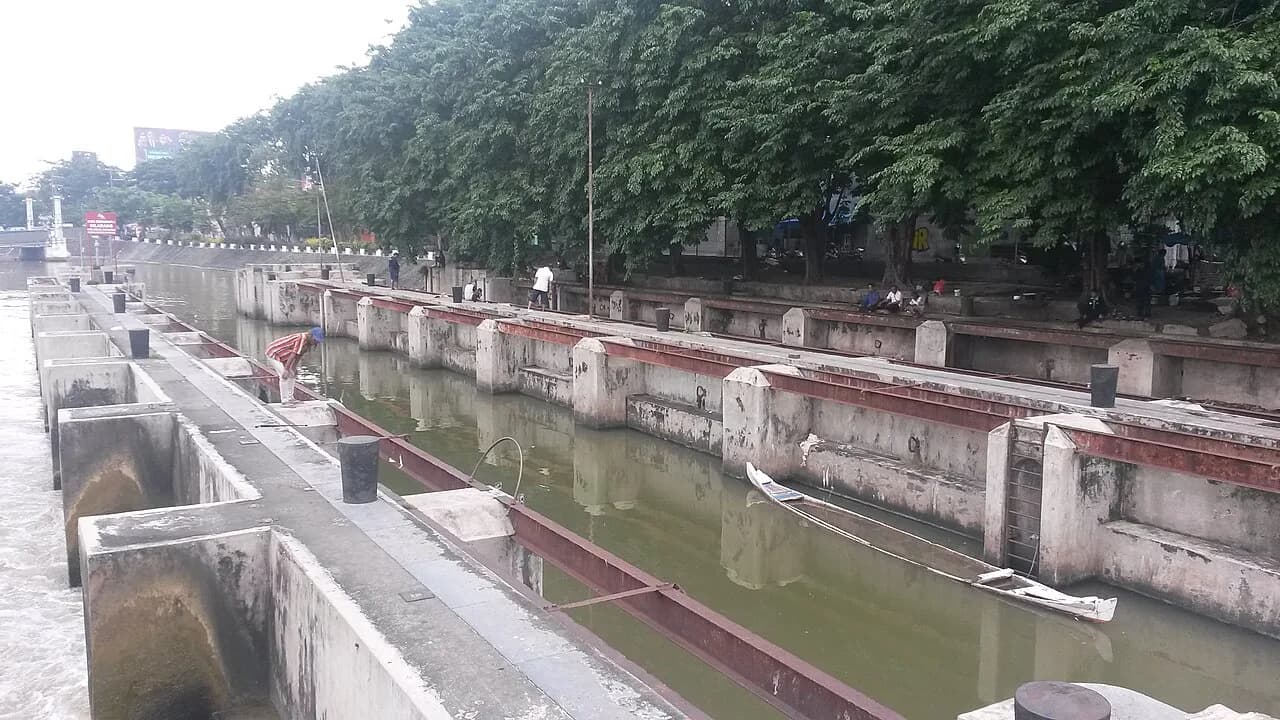
Jagir Dam and Kali Wonokromo
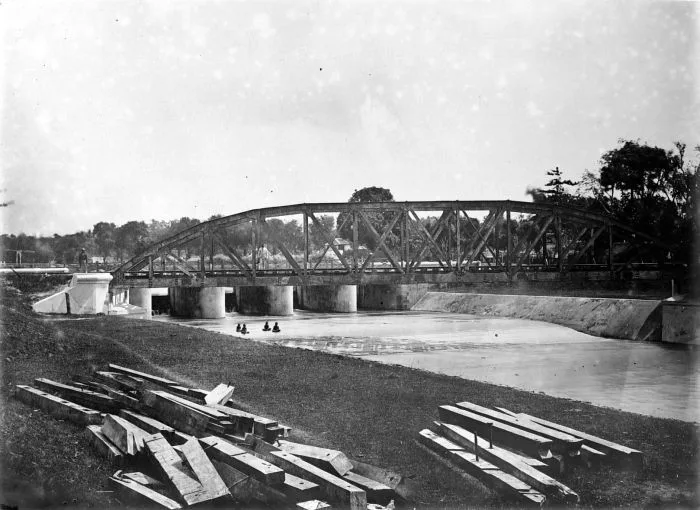
Jagir Dam is flood-control infrastructure, not a developed visitor attraction. The tourism write-up frames it as a regulator of river volume that has shaped the Wonokromo area since the 1850s, and it openly asks why the dam has not been made into a tourism asset. Read that as an argument for future potential, not a description of facilities you can use today.
Pair the dam with Kali Wonokromo and the picture becomes clearer. The same source traces how the river sweeps through the district and down through the wider drainage system, and it describes proposed river routes downstream to the Madura Strait. No boat service or riverside path is documented there, so plan on looking at the water from the bank rather than booking anything.
Wonokromo, Jagir, Sawunggaling and Ngagel Rejo
Inside the kecamatan, the sub-areas differ in feel without differing much in function. A postal-code listing groups Wonokromo, Jagir, Sawunggaling and Ngagel Rejo as separate kelurahan, which helps you locate an address without assuming the whole district is uniform. Jagir is the one most tied to the dam and the river; Sawunggaling carries a strong local identity in the area's own storytelling.
The district's cultural weight shows up in Surabaya's own songs and references, which the local tourism write-up uses to explain why Wonokromo matters to residents. That is useful context for a visitor: you are in a place people feel strongly about, not a blank patch between stations. Expect a lived-in feel rather than a curated one.
Who this district suits, and who it does not
Wonokromo suits travelers who value transport convenience and ordinary city life over scenery. It works well for a short stop tied to the station, a market morning or a zoo visit, and for anyone traveling onward toward Malang or Madiun by train. It does not suit travelers who want cafés, galleries and walkable hotel strips, because those are not what this district is known for.
If nightlife and heritage sightseeing within a block are your priorities, base elsewhere and visit Wonokromo as a daytime errand. Tunjungan and Ampel are the better-known draws for that style of trip. Use this page for the transit-and-everyday-life half of your itinerary instead.
Getting around locally
Walking works along Jalan Wonokromo and around the station and market cluster, provided you accept Southeast Asian roadside conditions. The district's landmarks sit within reach of the road spine, but the distances involved are not published in any consistent form here, so gauge them on a map before committing to a route on foot.
For bigger hops to the zoo or the market, short rides on Grab, Gojek or a Bluebird taxi are the practical option. Traffic conditions change through the day, so check a live map before ordering rather than assuming a fixed travel time. Keep small notes in rupiah on hand for the fare shown in the app.
Where to stay in Wonokromo versus basing elsewhere
Wonokromo's case as a base rests on rail access rather than on accommodation quality you can plan around from a guide. The area is described as a mixed residential district, and no official Surabaya tourism page lists visitor lodging in it, so compare current booking listings yourself rather than treating this as a hotel district.
Stay near Gubeng or the city center if you want more choice and easier evenings, then ride down to Wonokromo for the day. That split gives you the station's convenience without committing your whole stay to a district that is not organized around tourists.
Checks before you go
Confirm three things before you set out: current train times into Stasiun Wonokromo, the zoo's ticket and opening arrangements, and whether Pasar Wonokromo is trading normally on your date. None of these are fixed in the pages that describe the district, and all can change. A quick check with the operator or station on the day saves a wasted trip.
Should you base in Wonokromo?
Use Wonokromo as a working district you pass through or spend a half-day in, not as the anchor of a Surabaya holiday. Its strengths are rail access from Malang and Madiun, a heritage station worth a look and the zoo and market within the same kecamatan. If you want a comfortable evening base, choose another district and come south for the day.
Explore more Surabaya guides
Frequently Asked Questions
Where is the Wonokromo kecamatan office?
The district office location is not published on the official Surabaya tourism portal used for this guide. If you need it for an administrative errand, check the Surabaya city government's own directory or ask at your accommodation rather than relying on a map pin.
What does Wonokromo mean in Javanese?
The official Surabaya heritage portal does not publish a translation of the name, and this guide does not treat any single gloss as authoritative. Local storytelling about the district is more useful for understanding its identity than a literal translation.
Is Jagir Dam open to visitors?
No boating, viewing platform or ticketed access is documented. The available write-up treats the dam's tourism potential as an unrealized idea, so plan to see the water from public road access nearby rather than expecting a site with facilities.
Sources
- Jagir Dam Wonokromo Surabaya : Flood Control and The Regulator of River Volume Since Surabaya 1856
- Portal Data ADINDA - Aplikasi Satu Data, Informasi dan Administrasi Dinas Kebudayaan, Kepemudaan dan Olahraga serta Pariwisata Kota Surabaya
- Petunjuk arah berkendara ke Jalan Wonokromo, Jl. ...
- Kecamatan Wonokromo 60241 - 60246, Kota Surabaya