
Tanah Lot Temple: How to Visit Pura Tanah Lot in Bali
Tanah Lot Temple is best treated as a half-day outing built around one view: a Hindu sea shrine on a rock just off Bali's southwest coast, silhouetted against the sunset. You are unlikely to tour rooms or walk the shrine itself, so plan for the approach, the shoreline viewpoints and the timing rather than for a long interior visit. This guide covers where the temple sits, how to reach it from Kuta, Seminyak or Ubud, how low and high tide change your access, and how long to allow.
Why Tanah Lot is famous: an offshore shrine and a sunset silhouette
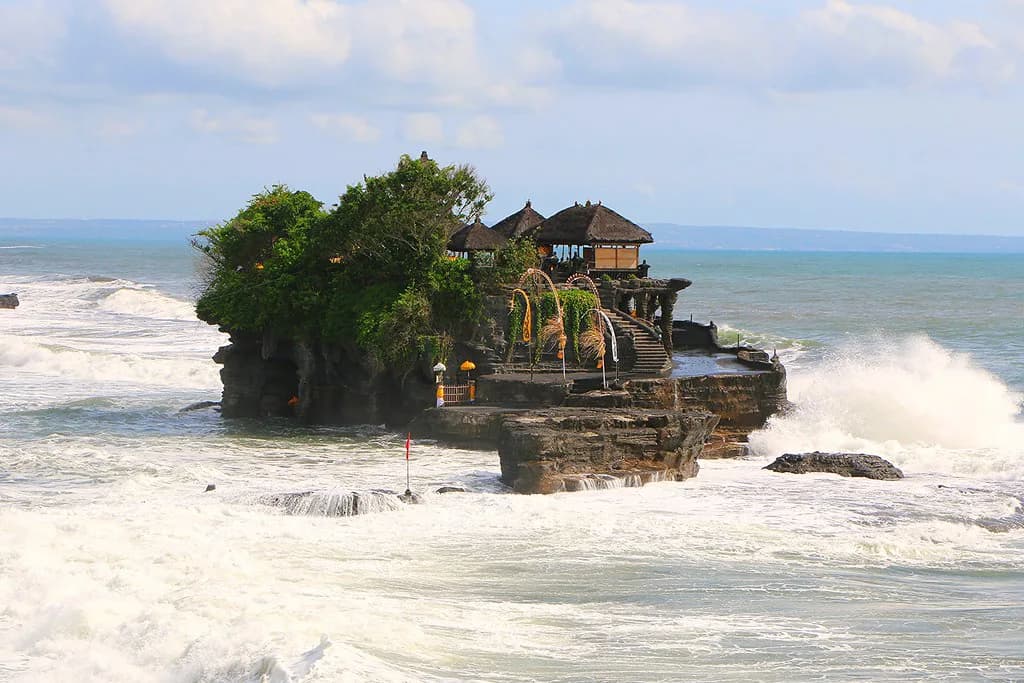
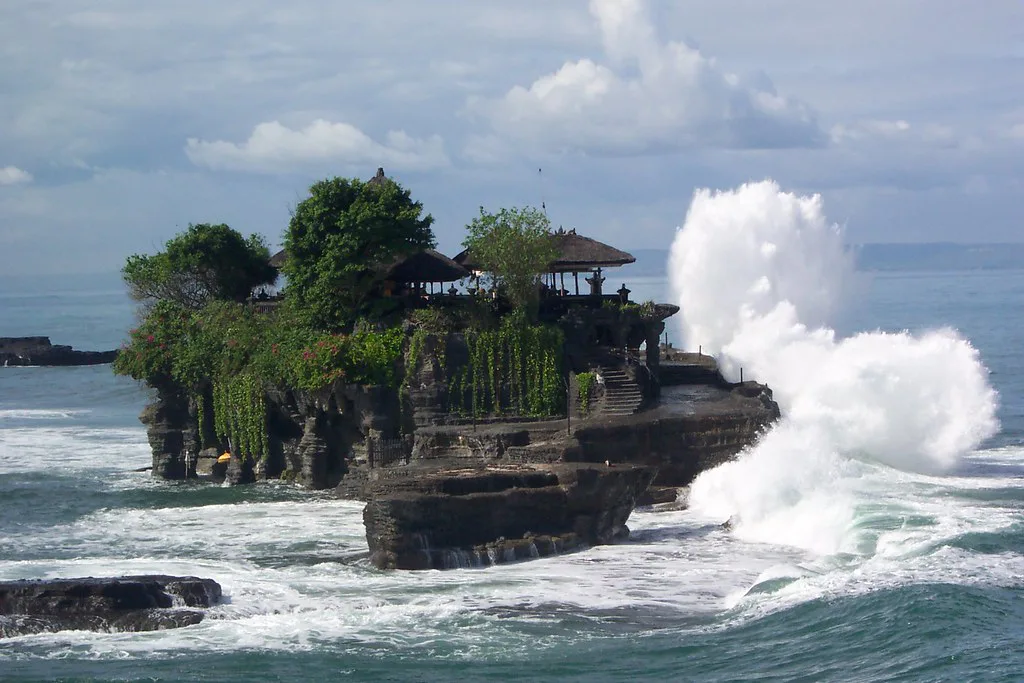
Tanah Lot is one of Bali's most photographed sea temples, a Hindu shrine perched on a rocky outcrop that stands just offshore and is reachable on foot at low tide while waves surround it at high tide. It is dedicated to the sea god and forms part of a chain of sea temples along the island's southwest coast, according to a place description that also notes local belief in snakes guarding the base. That combination of architecture, ocean setting and legend is what draws crowds.
The founding story usually credits the priest Dang Hyang Nirartha, though sources disagree on whether that happened in the 15th or 16th century, so treat the 16th century as the commonly cited date rather than a certainty. Legend also says his scarf became a sea snake protecting the shrine. The couple's legend, that partners who visit together may drift apart, circulates widely online and is a local story rather than a documented fact.
The temple's religious role matters more than its photo value: it is an active place of worship for Balinese Hindus, and visitors share the grounds with people who come for reasons that have nothing to do with photography. Expect to give way at prayer areas and to keep your distance when ceremonies are underway. If you are comparing sea temples across the island, this one is the offshore-rock version, while cliff-top and lakeside shrines at other sites are a different experience.
Where Tanah Lot Temple is: Beraban Village, Tabanan Regency
Pura Tanah Lot sits in Beraban Village in Tabanan Regency, on Bali's southwest coast, roughly an hour and a half from the main tourist strips of Kuta, Seminyak and Ubud according to one guide. That figure is a driving estimate, and traffic on the routes out of south Bali can stretch it considerably. Build the drive into your plans rather than assuming a quick hop.
Tanah Lot's Tabanan Regency setting makes it a natural pairing with inland highland stops rather than a beach-day add-on, since the coastal road west from Canggu and Seminyak runs a long way before the turnoff. If your base is on the Bukit peninsula, the drive is longer, and a late-afternoon arrival leaves little margin. Other lakeside and highland temples in Bali are covered in the guide to Ulun Danu Beratan temple if you want to combine a coastal and an inland stop.
How to get there: driving times and the walk in
Most travelers reach Tanah Lot by private car or a hired driver, since public transport does not run directly to the site and ride-hailing apps are patchy on this stretch of coast. Agree on a pickup time after sunset with your driver, because finding a car at the exit when the car park empties is otherwise awkward. From Kuta, Seminyak or Canggu, allow roughly an hour to ninety minutes in normal traffic.
The final approach is not a quiet beach walk. You buy a ticket, pass through a path lined with stalls and vendors, and continue to the beach and the temple entrance, which one account describes as a fairly commercialized setup that eases once you reach the shoreline. Allow extra time for that corridor, especially on weekends and holidays when the market path fills up.
Tide and timing: what low tide and high tide change
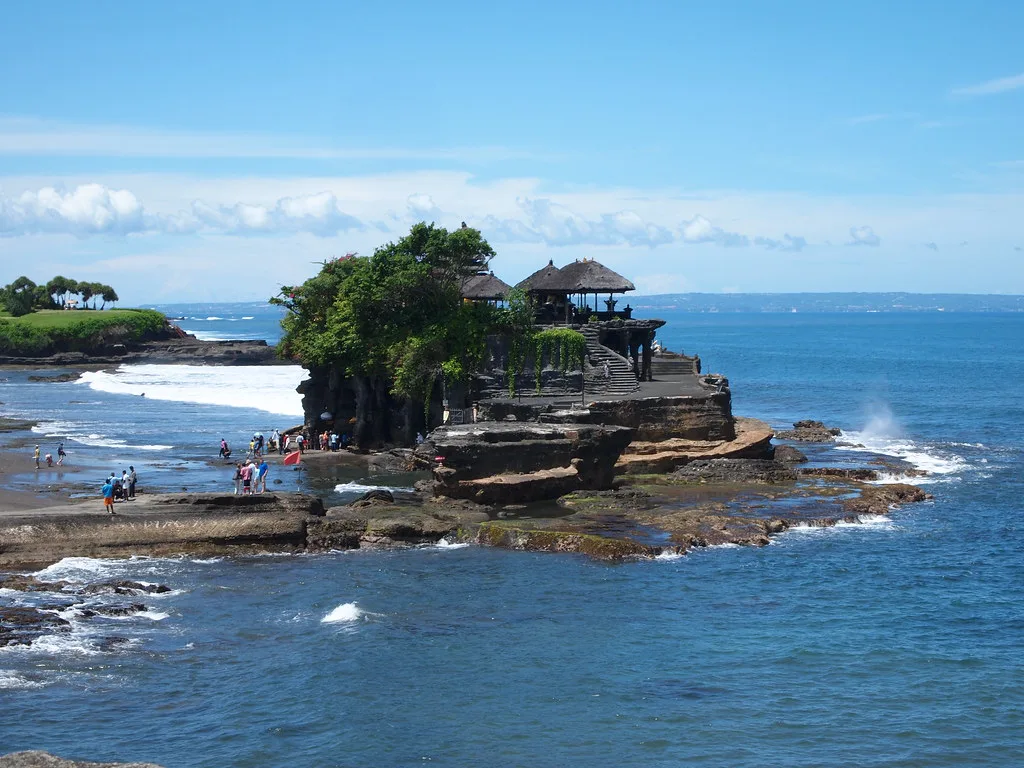
The single decision that shapes your visit is the tide. At low tide you can walk across the exposed rock toward the shrine; at high tide the outcrop is surrounded by water and the approach is cut off. One travel video advises checking tide timings if you want to get closer to the temple, which is the practical rule: check a tide table for the Beraban area for your date before you fix your arrival time.
Sunset is a separate question and the reason most people come. Arriving one to two hours before sunset gives you time to walk the shoreline, find a viewpoint and watch the light change, per the same practical advice, and staying through golden hour produces the photographs the site is known for. Multiple sources note the sunset silhouette as the defining image, so expect the terraces and seaward viewpoints to be busiest in the hour before dusk.
If you want the rock without the crowd, a low-tide morning visit trades the famous light for far fewer people. That is a genuine trade-off rather than a compromise to avoid: the shrine reads differently in flat daylight, and the stroll out along the rock is easier without a queue. Whichever you choose, check the tide for that specific day rather than assuming the pattern from a previous trip.
What you actually see: the rock, the viewpoints and the guarded base
The centerpiece is the shrine on its rock, seen from the shore, from the paved paths and terraces that ring the site, and from the beach below. The base of the rock is the spot tied to the sea-snake legend, and guides describe snakes said to guard it, so treat any animal you see there as part of a living site rather than an exhibit. Give the shrine itself room and view it as worshippers do, from outside.
Erosion control matters here: part of the temple now sits on artificial rock built to stabilize the foundations, which is why the outcrop looks less natural up close than in the classic distant photograph. Knowing that helps set expectations, especially if you have seen heavily edited images. The grounds themselves are landscaped and walkable, with stalls selling drinks and souvenirs along the main route.
Can you go inside, and what the visit is like
No, you should not expect an interior tour. Tanah Lot is a working shrine on a rock, and visitors view it from the shore and the surrounding paths rather than walking through its courtyards, so the visit is about the setting, the light and the photographs. If you want a temple you can enter and explore in detail, plan a separate stop elsewhere.
That makes this a contemplative stop rather than an activity-packed one. Bring a little patience for the crowds at the seaward viewpoints and set aside time to sit rather than rush the loop. For contrast, a temple where you can watch or take part in a water-purification ritual in Manukaya village offers a more hands-on visit, and Tirta Empul temple is worth reading up on if that appeals.
How long to allow: a short stop versus a sunset stay
A quick visit, meaning the ticket area, the vendor path, a loop of the shoreline viewpoints and a few photographs, takes about an hour to ninety minutes on foot. Budget two to three hours if you are staying for sunset, because you will arrive early, walk slowly, wait for the light and then deal with the exit traffic. Either way, the drive is the bigger commitment.
The market path and grounds add time that first-time visitors underestimate. If you are combining Tanah Lot with other stops, a half-day frame works better than trying to squeeze it between two south Bali beach appointments: one temple, one inland viewpoint and a drive back is a sensible shape. Trying to add a second temple in the same afternoon usually means arriving at Tanah Lot right as the crowds peak.
Tickets, hours and ceremony closures: what to confirm
A ticket is required to enter the Tanah Lot area, and the approach runs past stalls and vendors before you reach the beach and temple entrance. Ticket prices, opening hours and any ceremony-related closures are not published consistently across sources, so confirm them directly with the site or your driver before you set out rather than relying on a number from an older blog.
Because the temple is active, ceremonies can affect access to parts of the grounds, and those dates follow the Balinese calendar rather than a fixed weekly schedule. Ask locally a day or two ahead if your trip hinges on getting close to the rock. This is also where a driver who knows the site earns their fee, since they can call ahead.
What's nearby: pairing Tanah Lot with other southwest stops
Tanah Lot sits on a coast-and-highlands loop, so the natural pairing is a morning inland and an afternoon here. In Tabanan Regency, the lakeside Pura Ulun Danu Beratan makes a logical earlier stop on a full-day drive, and it is a different kind of temple visit: cooler, calmer and set against water rather than surf. Check the map before you commit, because the two sit far enough apart to fill a day.
If you are based in Ubud and want a temple stop closer to town, Goa Gajah is a short drive from the center, while Lempuyang temple sits far to the east and belongs to a separate day entirely. Uluwatu Temple, on the Bukit peninsula, is the other sea temple most travelers weigh against Tanah Lot, but it is a different drive from a different base rather than a same-day add-on.
Is Tanah Lot worth the drive from your base?
If you are staying in Seminyak, Canggu or Ubud and want one sunset temple with an ocean setting, Tanah Lot earns the drive, provided you leave enough margin to arrive before the light turns. If your base is in Uluwatu or Nusa Dua and your schedule is tight, the round trip is long enough that you should decide deliberately rather than slot it in.
Check the tide for your date, confirm tickets and hours with the site or your driver, and treat the visit as a half-day rather than a quick photo stop. That way the vendor path, the crowds and the drive all fit into the plan instead of eating into it.
Explore more Bali guides
Frequently Asked Questions
Can you walk to the Tanah Lot shrine on the rock?
Only when the tide is out. At low tide the rock is exposed and visitors can walk across toward the shrine; at high tide the outcrop is surrounded by water. Check a tide table for the Beraban area for your specific date, since the timing shifts daily.
Do you need a ticket to visit Tanah Lot Temple?
Yes, entry to the Tanah Lot area requires a ticket, and the route in passes a market path before you reach the beach and temple entrance. Prices and opening hours are not published consistently, so confirm them with the site or your driver before you go.
How long does a Tanah Lot visit take?
Allow about an hour to ninety minutes for the paths and shoreline viewpoints, or two to three hours if you stay for sunset. The drive from south Bali or Ubud is the larger part of the trip, so a half-day frame is realistic.
Can you go inside Tanah Lot Temple?
No. The shrine is a working place of worship on an offshore rock, and visitors view it from the shore and surrounding paths rather than walking through its courtyards. Plan a separate temple stop if you want an interior visit.
Sources
- Tanah Lot Temple · Road Trip Guides and Itineraries Worldwide | tourants
- Would you visit a place that’s surrounded by a centuries-old legend? 🌊⛩️ Tanah Lot Temple is one of Bali’s most iconic sea temples, famous for its breathtaking sunset views and a local belief that couples who visit together may eventually drift apart. Whether you believe the story or not, it’s one o
- Tanah Lot Temple | The Vacation Gateway
- Tanah Lot Temple Guide in General (2026 Guide) | HolidaySG
- 🌅✨ TANAH LOT TEMPLE – A MUST-VISIT IN BALI! ...