
Tirta Gangga Water Palace: A Practical Guide to East Bali's Royal Water Garden

Tirta Gangga is worth about one to two hours of your day, and it is best treated as a stop on an East Bali drive rather than a quick add-on from Ubud. It is a former royal water garden built around natural springs, not a working temple, so you come for ponds, stepping stones, fountains and gardens rather than for prayer or purification. This guide covers where the palace sits, how to reach it, how the three levels are arranged, and what to confirm about tickets and hours before you set out.
What Tirta Gangga Actually Is
Tirta Gangga was built in 1946 by Anak Agung Anglurah Ketut Karangasem, the last king of Karangasem, as a royal water garden and retreat. The name links Tirta, blessed or holy water, with Gangga, the Ganges, and the springs here are still treated as sacred by local communities. Much of the complex was damaged when Mount Agung erupted in 1963 and later restored, which is why the buildings read as twentieth-century royal work rather than ancient stone.
The distinction matters for planning: Tirta Gangga is a garden with pools, statues and ornamental architecture, and writers on the site describe it as distinct from Bali's ancient temple complexes. You are visiting a landscaped royal estate in the highlands, not a pura where worship defines the visit. If you want the temple-and-springs experience with ritual bathing, that is a different site entirely.

Where It Sits in East Bali
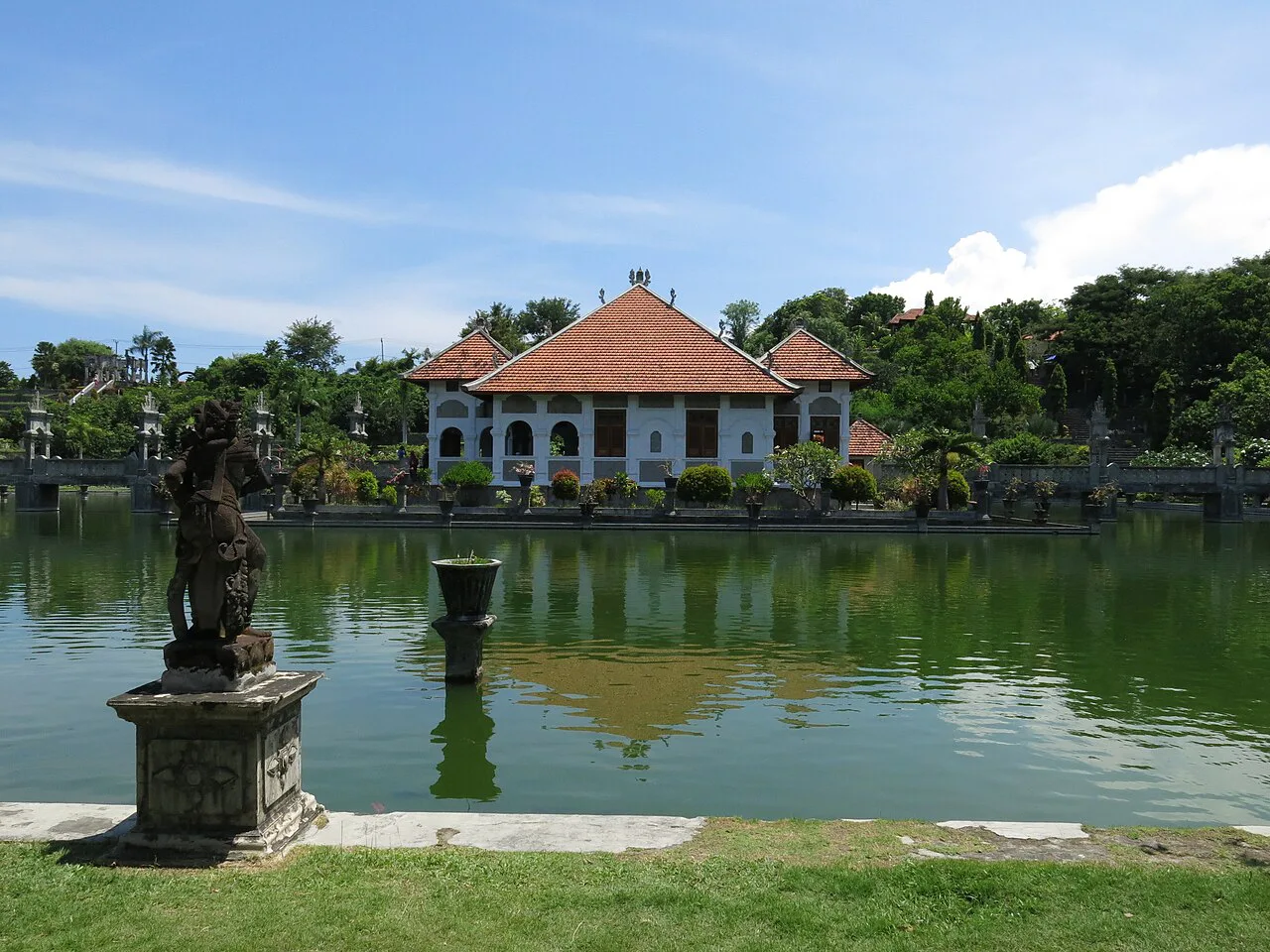
The palace stands in Ababi Village, Abang District, Karangasem Regency, roughly seven kilometers north of Amlapura, the main town of Karangasem. It sits in the foothills of Mount Agung, surrounded by rice fields, which gives the grounds a cooler, quieter feel than the coastal tourist zones. The commonly listed address is Jalan Raya Abang, Ababi, and mapping apps handle the final approach better than any written direction.
Think of Karangasem as the frame for the visit: this is East Bali, not the Ubud hinterland, and the surrounding countryside is part of the appeal. Travelers heading onward to Amed or Candidasa pass close by, which is why the garden fits naturally into a day of driving in this corner of the island. For a wider set of options in the region, browse our Bali Attractions: 6 Visitor Guides before you fix a route.
How to Get There
From Ubud, plan on roughly 1.5 to 2 hours by car, with the caveat that traffic and road conditions swing that figure considerably. Published distances of about 50 to 60 kilometers sound short, but East Bali roads are slow, so treat Tirta Gangga as part of a day trip rather than a quick excursion from central Ubud. A private driver who knows the eastern route is the least stressful option for most visitors.
From Kuta, Denpasar and the southern beach areas, the drive is longer and you should expect to spend a substantial part of the day in the car. One source puts the trip from Ngurah Rai International Airport at about 2 hours 15 minutes, and another estimates around two hours from Denpasar, both before you account for bad traffic. Hiring a car and driver for the full loop usually makes more sense than paying for a round trip to a single gate.
Scooters can reach the palace and the sources list riding as an option, but the eastern climbs and mixed traffic make a car the calmer choice if you are not a confident rider. Whichever way you come, leave slack in the schedule: the point of this corner of Bali is the drive through rice fields and villages, not a sprint between gates.
How the Complex Is Laid Out
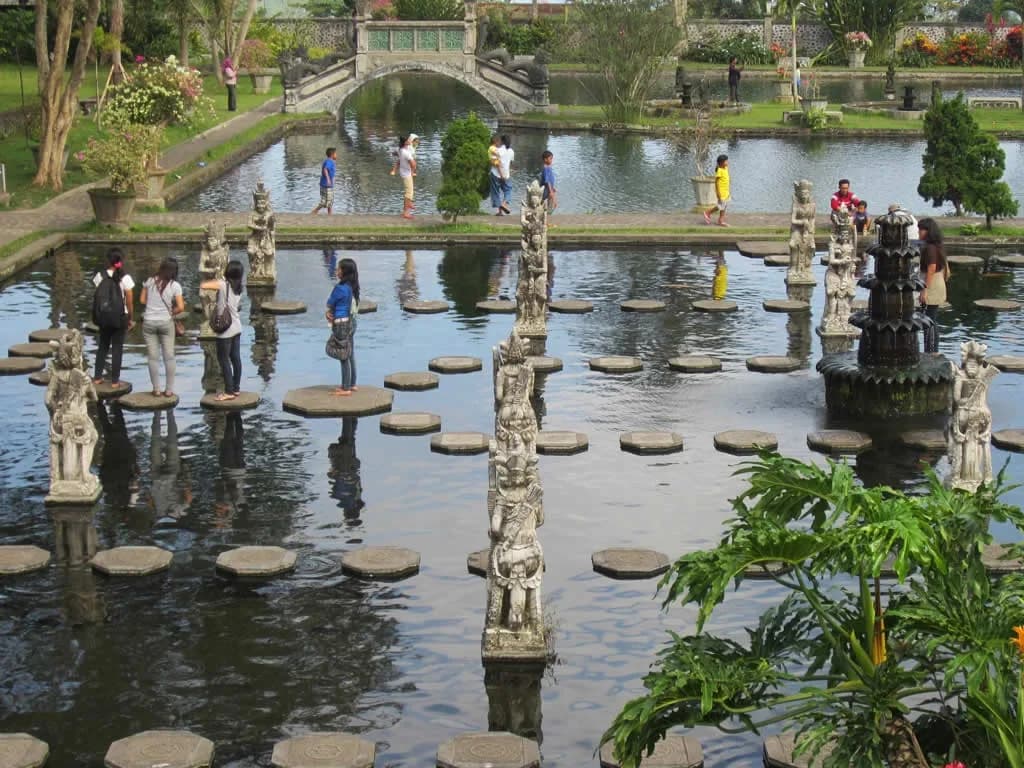
The roughly 1.2-hectare garden runs east to west and is usually described in three levels. The lowest section holds the ornamental ponds, the tiered fountain tower and the koi, and it is where nearly every visitor stops first. Above it sits the swimming pool area fed by clear, cool spring water, and at the top you find a banyan tree and the natural spring that supplies the entire complex and the surrounding fields.
Knowing the order helps you move through the site deliberately instead of drifting back and forth. Start low for the fountain and stepping stones while the light is still soft, then climb to the pool and spring before the tour groups fill the lower ponds. The upper spring is the quietest part and the easiest place to understand why the water matters here.
What to Do Inside
The signature move is walking the stepping stones across the koi ponds, with the tiered fountain tower rising behind you. Fish food is sold by vendors outside the gates, and feeding the koi is a simple pleasure that keeps children occupied while adults take photographs. The stones can be slick, so watch your footing when the ponds are busy.
Swimming is possible in a designated pool for an extra charge on top of admission, and it is the reason some visitors linger longer than expected. Bring a towel and a change of clothes if you intend to get in, since the water is spring-fed and cool. If you would rather stay dry, the gardens, statues and Chinese-influenced architectural details reward a slow walk on their own.
Opening Hours and Ticket Prices
Published figures for Tirta Gangga disagree, so treat any number you see online as a starting point rather than a guarantee. One guide lists official hours of 8:00 to 18:00, another shows 8:00 to 17:00, and entrance fees across sources range from IDR 40,000 to IDR 50,000 for foreign visitors, with a separate swimming surcharge and a small car parking fee. Because these are the kinds of details that change without notice, confirm the current price and closing time at the gate or through the palace's own channels before you drive out.
The gap between sources is normal for a site of this kind: rates differ for domestic and foreign visitors, swimming is priced separately, and older pages stay online long after they are updated. Budget for the higher end of the published range and keep small rupiah notes handy so you are not caught short. That way a modest increase at the counter does not derail the day.
How Much Time to Allow
One to two hours is the honest range for most visitors, and that includes photos, fish feeding and a walk up to the spring. The published recommendation of around 1 to 2 hours matches what the layout supports: the site is compact and you will not be wandering for half a day. Add time only if you plan to swim or sit with a drink at one of the restaurants near the entrance.
Because the drive from Ubud or the south eats most of a day on its own, the palace works best as one stop among several in East Bali. Giving it ninety minutes and then moving on beats trying to stretch a small garden into a full afternoon. If you are building a broader Bali plan around several stops like this, the Bali Attractions hub is a sensible place to start sorting priorities.
Early Morning Versus Midday
Crowds build through the middle of the day and peak roughly between noon and late afternoon, when tour groups and school parties arrive together. Early morning and late afternoon are the calmest windows, and morning also brings cooler highland air and softer light on the ponds and fountain. Photographers who want the stepping stones without a queue should aim for opening time.
Midday is not a disaster, just a different experience: hotter, brighter and harder for clean shots of the fountain tower. If your schedule forces a middle-of-the-day stop, use the upper spring and banyan tree area as a retreat while the lower ponds clear. Plan the rest of your East Bali drive around that rhythm rather than fighting it.
Nearby Stops That Pair Naturally
Lempuyang Temple, Taman Ujung Water Palace, Amed, Candidasa, Besakih and Virgin Beach all sit within the same general corner of East Bali and appear repeatedly as companion stops. Pura Lempuyang Luhur, with its famous gate and its own queue system, is the most common pairing because it is close and pulls the same photographic crowd. Taman Ujung, another Karangasem royal water estate, makes an especially logical second stop for anyone interested in the kingdom's architecture.
Amed and Candidasa work as places to end the day rather than quick detours, since the coastal roads are slow. If your trip also takes in temples in other parts of Bali, our guide to Pura Tanah Lot in Beraban Village shows how a coastal temple visit differs in timing and crowds from an inland garden like this one.

Tirta Gangga Versus Tirta Empul
The two are often confused because both involve sacred spring water, but they serve different purposes. Tirta Empul is an active temple near Manukaya village where Balinese Hindus come for melukat, the purification ritual at the spring pools, so visitors move through a living religious site. Tirta Gangga is a royal garden where the water is ornamental and scenic, and where you can swim in a public pool.
If you have time for only one and want ritual atmosphere and temple etiquette, choose Tirta Empul. If you want stepping stones, koi and a fountain tower with a gentler time commitment, Tirta Gangga is the fit. They are far enough apart that combining both in one day means a lot of driving, so pick according to what you actually want to see.
Is It Worth It?
For photo-seekers, yes: the fountain tower and stepping stones deliver the images that draw people here, and the setting below Mount Agung adds context that a pool alone would not. For travelers wanting a quiet, contemplative morning, the honest trade-off is that the lower ponds get busy and the site is small. Arriving early is the single decision that most changes which version of Tirta Gangga you get.
Drivers who have already seen Bali's headline temples sometimes find the garden less transporting than expected, while families and casual visitors tend to enjoy the fish, the water and the short visit. Treat it as a pleasant, compact stop with real history rather than a bucket-list climax, and the day works.
Should Tirta Gangga Make Your East Bali Route?
Add Tirta Gangga if you are already driving through Karangasem, and give it ninety minutes in the morning before the tour buses arrive. Skip it if your only free day is short and you would spend most of it in the car for a one-hour garden. Confirm current hours and admission at the gate, since published figures vary, and keep small rupiah notes for the entry, the swim surcharge and parking.
Explore more Bali guides
Frequently Asked Questions
Is Tirta Gangga near Ubud?
Not really. It sits in Ababi Village in Karangasem Regency, East Bali, and the drive from Ubud typically takes around 1.5 to 2 hours depending on traffic. That makes it a day-trip stop rather than a quick side excursion.
What is Tirta Gangga in Bali?
It is a former royal water garden built in 1946 by the last king of Karangasem, arranged in three levels around natural springs, with koi ponds, stepping stones, a tiered fountain, a swimming pool and an upper spring under a banyan tree. It is a garden rather than a working temple.
How much does it cost to enter Tirta Gangga?
Published entrance fees vary between sources and swimming is charged separately, so the reliable move is to check the current rate at the gate or through the palace's own information channels before you drive out. Carry small rupiah notes for admission, the swim surcharge and parking.