
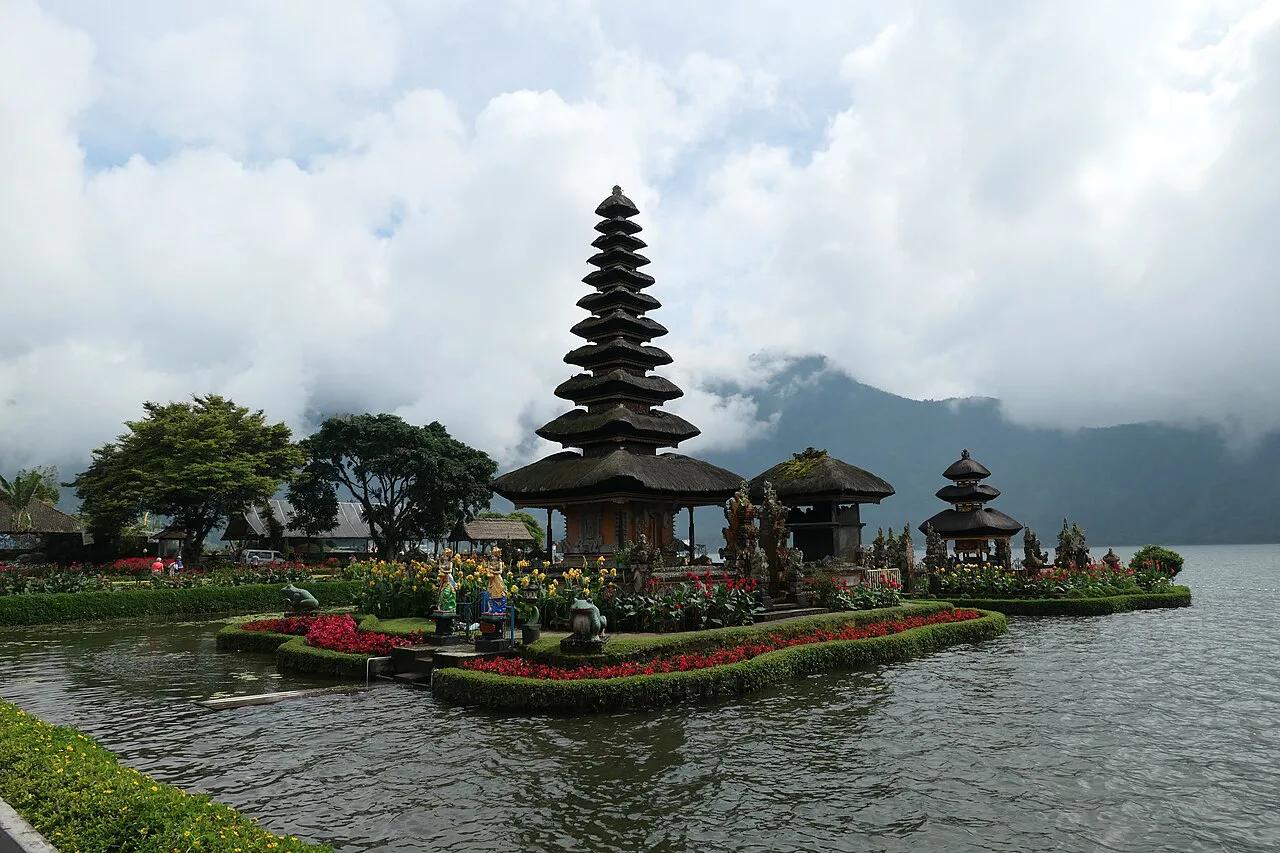
Ulun Danu Beratan Temple: How to Visit Bali's Floating Lake Temple

Pura Ulun Danu Beratan is a Balinese Hindu temple on the edge of Lake Beratan in the Bedugul highlands, and it needs roughly half a day once you count the drive. It is a genuine day-trip commitment from south Bali rather than a quick roadside stop, so build your plan around travel time first and photos second. This guide covers where the temple sits, how to reach it, what to look for inside the complex and which nearby stops fit the same loop.
What Ulun Danu Beratan Temple is
The temple is dedicated to Dewi Danu, the Hindu goddess of lakes and rivers, and sits on the shore of Lake Beratan in Tabanan Regency. Sources describe it as dating to the 17th century, with one placing the build in 1633, so treat the century as the reliable detail and the exact year as a reported claim. Its name is usually rendered as the source or power temple of Lake Bratan; some visitor guides also describe it as a UNESCO-linked site, though that specific designation is not confirmed by an official source here, so verify it if that status matters to you.
Architecturally, the complex is a mix of Hindu and Buddhist elements, with tiered meru shrines and a Buddhist stupa among the structures. The tallest meru is described as an 11-tier tower dedicated to Dewi Danu, which is why the lake-facing silhouette is the image most visitors come for. If you want the background before you arrive, this is a short read rather than a deep history lesson.
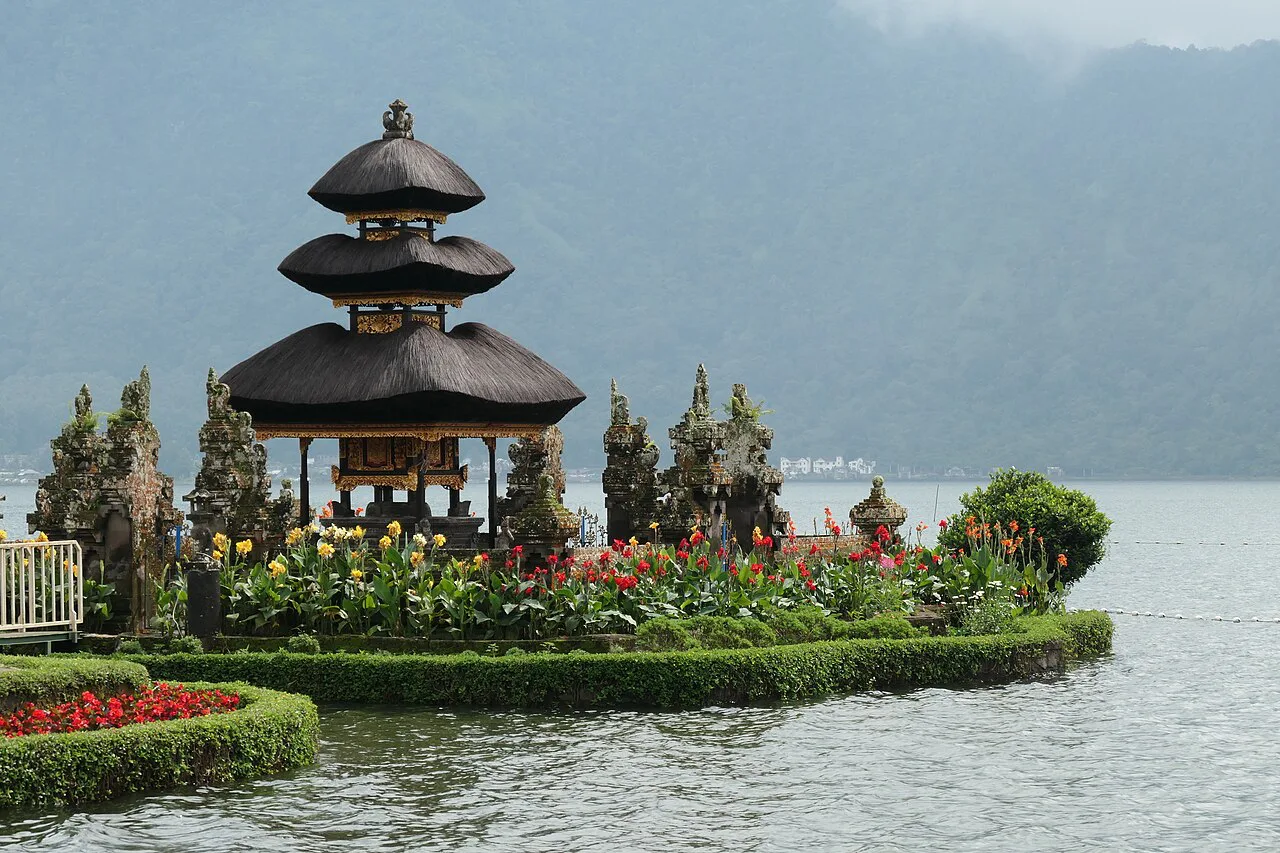

Where it is: Candikuning, Bedugul, Tabanan
The temple address is Danau Beratan, Candikuning, Baturiti, Tabanan Regency, Bali, on the highland plateau around Lake Beratan. It sits at roughly 1,200 meters, which is why the air here feels cool and misty compared with the coast, and why morning fog is a real factor in photos. If you are coming from a beach hotel, expect a change of climate as much as a change of scenery.
Bedugul is the district name you will see on road signs and in driver conversations, while Candikuning is the village where the temple gates and parking area are. Give your driver the temple name plus Bedugul or Candikuning rather than just "the lake," since several lakes sit in this highland area. A screenshot of the map pin helps on the final approach.

How to get there from Ubud and south Bali
Typical drive times reported for the temple run about 1.5 hours from Ubud and about 2.5 hours from Canggu, Kuta and Seminyak. Those are traffic-dependent estimates, not timetables, and the return leg during afternoon traffic can stretch them. If you are staying in south Bali, budget the better part of a day for the round trip before you add any other stop.
You have two realistic options: join an organized tour that bundles the temple with other highland stops, or hire a private driver and set your own order. A tour removes the navigation and parking hassle but fixes your timing; a driver costs more planning on your side yet lets you linger at the lake or skip a stop you do not want. Renting a car or scooter is possible, but the distance from the main tourist areas makes it a long, tiring drive for most visitors.
If you build a private-driver day, start early enough to reach Bedugul before the mid-morning tour-bus wave. A common shape is temple first, then one or two northern stops, then the return drive before the afternoon peak. Keep the itinerary to three stops maximum so the drive does not swallow the day.
What to see inside the complex
Inside, look for the multi-tiered meru shrines, the lake-facing arrangement of the main structures and the Buddhist stupa described as facing the complex's south side. Sources list five temples within the grounds, including Penataran Agung, Dalem Purwa, Taman Beji, Lingga Petak and Prajapati, each with a different role in Balinese worship. You do not need to identify every one, but knowing they are separate shrines explains why the grounds feel like a small complex rather than a single building.
The signature view is the meru reflected on the lake surface, which is why the temple is often called a floating temple. On misty mornings the reflection and the fog do most of the work; by midday, harsh light flattens the scene. Walk the lakeside path for alternate angles instead of crowding the main viewpoint.
Around the temple grounds, the Bedugul recreation park and lake boat rides are separate, extra-cost activities rather than part of the temple visit. Fishing gear rental has also been described as available in the area. Decide in advance whether you want the temple only or the wider lakeside stop, because the extras add time and cost.
The floating look: lake level and season
The postcard "floating" effect depends on how much water sits around the temple base, and one source ties higher water to the wet season, roughly October to April, with the dry season from about April to October producing lower water. That is a rough seasonal frame for this highland lake, not a guarantee for any given week. If the reflection is the main reason for your trip, go in the wetter months and accept that mist and rain come with it.
Check the lake level only through current traveler reports or by asking your driver, since no reliable published gauge exists for this. Even with low water, the temple complex and the mountain backdrop remain the draw. Set expectations accordingly and the visit rarely disappoints.
How long to allow at the temple
Plan about one to two hours for the temple complex and the lakeside viewpoints, and add more if you use the recreation park or take a boat out. Photographers tend to run longer at the main meru viewpoint, while a quick walk-through can be done faster. The bigger variable is the drive: the temple stop is short compared with the travel time from south Bali.
If you are pairing Bedugul with other stops, keep the temple first and work north or west from there. A realistic day might be two hours at the lake, an hour at one nearby gate or garden, and the rest of the daylight in the car. Trying to add three or more stops usually means rushing every one of them.
Opening hours and entrance fee: what is reported
One source lists official operating hours of 7am to 7pm while noting that worship continues around the clock, and a separate listing gives 7:00 AM to 7:00 PM. Treat these as reported hours rather than confirmed current ones, since temple schedules can adjust around ceremonies. Check the hours before you commit to a dawn arrival.
The same source gives an entrance fee of IDR 50,000 paid at the ticket counter in the parking area, a figure that should be treated as subject to change. Confirm the current ticket price at the gate or through your tour operator rather than budgeting to the rupiah. Boat rides, the recreation park and other extras are described as separate charges without published figures here.
Ceremonies such as Piodalan are described as annual events that draw local worshippers, and no fixed public date is published in these sources. If you hope to see one, ask the temple or a local guide shortly before your visit instead of planning around a guessed date. On ceremony days, expect parts of the grounds to be busier or partly in use.
Early morning versus midday
Early morning is repeatedly recommended for the calmest atmosphere and the mist over the lake, though some travelers report sunrise around 6am as the best light. The trade-off is fog that can hide the meru entirely on some mornings. Mid-morning into early afternoon, roughly 9am to 2pm, is described as better for clear photos but also as the busiest window for tour groups.
If you are on a fixed tour schedule, you may not control the arrival time, so ask the operator when the temple stop is planned. Independent travelers can hedge by arriving close to opening and staying through the fog burn-off. Bring a layer for the cool highland air, which surprises visitors arriving straight from the coast.
What to pair with the temple
The most natural add-ons sit in the same highland area: the Bali Botanic Gardens, Handara Gate, Wanagiri Hidden Hill and, a little further out, the Jatiluwih rice terraces. Lovina on the north coast is often combined with a Bedugul stop, but that turns the day into a long northern loop rather than a simple out-and-back. Choose two add-ons at most to keep the driving reasonable.
For travelers heading back south, Pura Tanah Lot in Beraban Village is the classic sunset pairing if you are coming from the Ubud side and can time the coast for late afternoon. Elsewhere on the island, Pura Tirta Empul in Manukaya village works as a Ubud-area stop and is often visited on a separate day. Both are different temples with different functions, so do not expect a swap for the lake setting.
If your Bali itinerary leans toward water palaces and carved temples, Tirta Gangga Water Palace in east Bali and Goa Gajah near Ubud are separate day trips that pair better with their own regions than with Bedugul. This page is about the lake temple, so treat those as other days rather than same-day additions.
Is the trip worth it from south Bali?
Yes, if you want the highland scenery and are willing to give up a full day for it; no, if you only have two or three days in Bali and want to stay close to your hotel. The 2.5-hour drive each way from Canggu, Kuta or Seminyak is the deciding factor, not the temple entrance. From Ubud, at about 1.5 hours, the trip sits more comfortably in a single day.
Group tours typically cost more than the temple ticket alone, because they bundle transport and other stops, so compare the tour total against a driver day before deciding. No confirmed tour price is published in the sources here, so request a quote and confirm what is included. A temple-only taxi there and back is rarely the cheapest option given the distance.
Book the lake temple day or skip it
Book Ulun Danu Beratan into a northern Bali day if you can spare the hours and want the misty lake setting at its best in the wetter months. Skip it on a short first trip from south Bali, or save it for a day when you already plan to be in Ubud or the highlands. Either way, confirm current hours and the ticket price at the gate before you set out.
Explore more Bali guides
Frequently Asked Questions
How long does it take to visit Ulun Danu Beratan Temple?
Allow about one to two hours for the temple grounds and lakeside viewpoints, longer if you add the recreation park or a boat ride. The drive is the bigger part of the day: roughly 1.5 hours from Ubud and about 2.5 hours from Canggu, Kuta or Seminyak each way.
When is the best time to see the temple reflected in the lake?
The reflection depends on lake level, which one source links to the wetter months roughly October to April. Early morning gives the calmest light and mist, while mid-morning to early afternoon is clearer but busier with tour groups.