
Museum Ullen Sentalu: A Guided Look at Java's Royal Heritage in Kaliurang

Museum Ullen Sentalu is worth two to three hours if you want Javanese court history told as a story rather than read off labels. It is a private cultural museum on the wooded Merapi slopes at Kaliurang, in Sleman Regency outside Yogyakarta, and access is by guided tour only. This guide covers where it sits, how to reach it, what the route shows you and how to plan the visit without wasting a morning.
The setting is part of the experience: cool highland air, lava-stone walls and a deliberately quiet atmosphere. That same setting means the drive up Jalan Boyong takes real time, and once your group starts you move at the guide's pace. Read this as a plan for one museum, not a tour of the region.
What Museum Ullen Sentalu is
The museum is dedicated to the culture and history of Javanese nobility, with particular attention to the courts of Yogyakarta, Surakarta, Pakualaman and Mangkunegaran. Indonesia's tourism ministry describes it as a specialized museum built around narrative rather than rows of cases, where guided tours protect the sequence of the story. That framing is the best way to set expectations: you are walking through an argument about Javanese court life, not browsing a hall at your own speed.
Its collection categories are broad: paintings and fine art, royal costumes and textiles, personal letters and manuscripts, historical photographs and archives, and symbolic palace artifacts. If you have already seen the kraton Yogyakarta in town, Ullen Sentalu is the quieter, more curated counterpart.

Where it sits: Jalan Boyong KM 25, Kaliurang
The address is Jalan Boyong KM 25, Kaliurang, Hargobinangun, Pakem, Sleman Regency, in the Special Region of Yogyakarta. It is on the slopes of Mount Merapi, in a wooded area that gives the museum its cool air and its hush. Pakem is the wider district, and Kaliurang is the highland settlement the museum is usually associated with.
Use the full street address and the Pakem district name rather than a vague 'near Kaliurang' instruction, because Jalan Boyong is a long uphill road. The official museum site is the place to confirm the current address and phone contact before you set out.

How to get there from central Yogyakarta
The practical choice is a private driver or a ride-hailing car, because the museum sits up Jalan Boyong on the Merapi slopes and the final stretch climbs. A traveler account describes the road as a little difficult and uphill before the museum appears, so budget patience rather than treating it as a quick city hop. Agree on the return leg before you are dropped off, since pick-up at a highland museum can take longer than in town.
The climb is part of the trip rather than dead time: the temperature drops, the traffic thins and the gardens make sense once you arrive. No source in this guide gives a reliable drive time from central Yogyakarta, so ask your driver or hotel for a realistic estimate on the day and add a buffer for the last uphill section. If you are basing yourself in town, keep the museum on a separate half-day from a downtown walk such as Malioboro.
How a visit works: guided groups only
You do not wander the halls alone. Visitors are split into groups and accompanied by a guide who explains the collections and the history behind them, and the museum treats this as central to how the story is told. Treat the tour as a conversation with a knowledgeable host, not a lecture you have to endure.
At the end of the route, visitors are served a glass of herbal concoction made with a recipe described as coming from the royal palace, which is a small ritual close to the tour. Because the format is fixed, your flexibility is limited once your group starts; if you want to linger on the batik, ask early rather than drifting to the back.
The three areas of the route
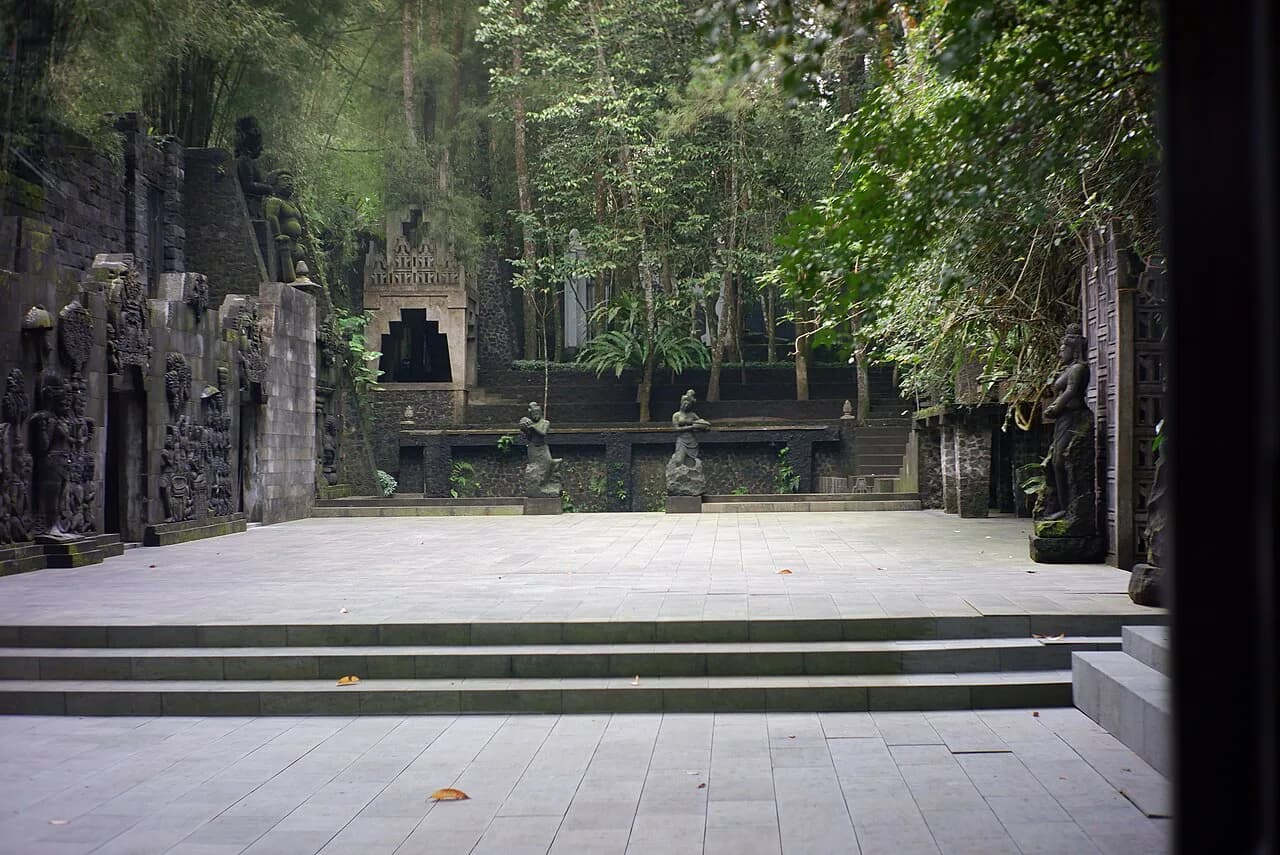
The route moves through three named areas. Guwo Selo Giri sits three meters below ground level with walls of lava stone, designed to evoke a temple, and it holds a painting of a woman whose eyes and feet seem to follow you from any angle. Taman Kaswargan is the transition space, built on stepped terraces that nod to megalithic culture. Knowing the names helps you follow the guide and place each room in the larger argument.
Kampung Kambang is the third area: five floating houses on water, laid out to resemble a Kalang compound in Kotagede, the old capital of the Islamic Mataram kingdom. Narrow labyrinthine lanes reproduce the feel of Kotagede's streets, and batik collections from Solo and Yogyakarta are displayed on either side to echo merchants' front yards. Slow down here and look at how the textiles are placed.
What you actually see
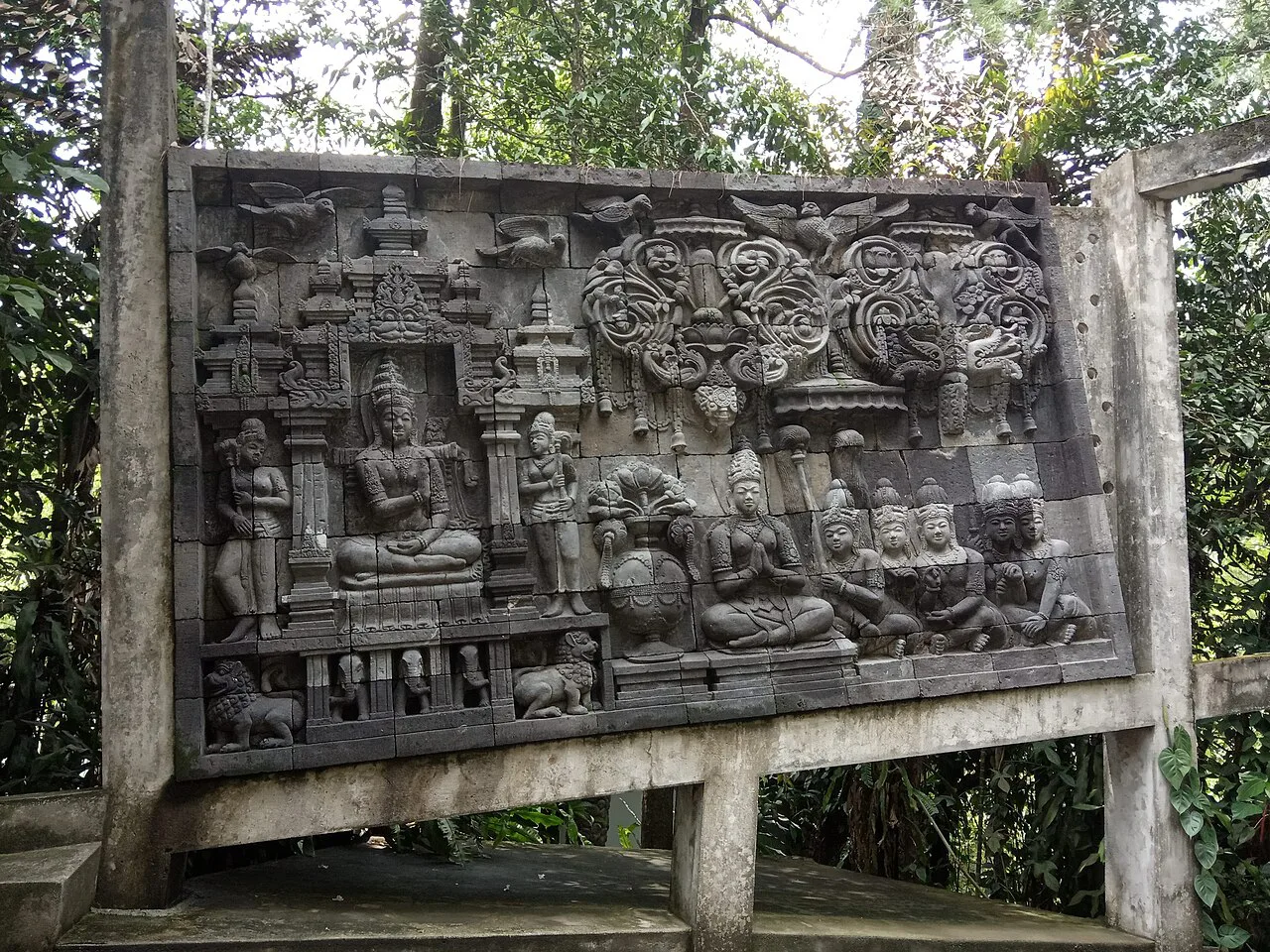
Across the route you see royal paintings, historical photographs, manuscripts and personal letters, court costumes and textiles, and symbolic heirlooms from the palaces. The Indonesia tourism page lists these as the museum's core collection categories, and the displays are arranged thematically to keep the narrative moving. Look for the textiles in particular: batik from Solo and Yogyakarta is a highlight, and the guide can explain the differences in pattern and status.
The building itself is part of the exhibit, with lava stone from the surrounding area and an architecture that settles into the hillside. A traveler review notes that some rooms hold authentic objects from the Yogyakarta royal family, but exhibits can rotate. Treat any single object as a bonus rather than a guarantee, and ask the guide what is currently on display.
The no-photo rule and designated photo spots
Cameras, including phone cameras, are not allowed during the guided tour, and the museum sets aside specific places where you can take photographs. A traveler account is explicit about this, so plan your shots around the permitted spots rather than expecting to photograph each room. Put the phone away at the start and you will enjoy the route more; the guide's explanations are the part you cannot rewind.
Tell anyone you are traveling with about the restriction in advance so it does not become an argument at the entrance. The designated spots and the gardens outside give you enough for a record of the visit.
Ticket tiers and tour options
Tickets are sold as different tour tiers rather than one flat entry. A visitor lists the Adiluhung Mataram, Scriptorium and Vorstenlanden routes at increasing prices, plus an English-language tour option, but these figures are traveler-reported and can change. Ask at the desk which routes are running on your day, what each includes and whether an English-language guide is available, then pay the current rate there.
The tier you choose shapes both the length and the depth of the visit, so decide before you reach the counter rather than defaulting to the cheapest option. If Javanese court history is the reason you came, the longer route is usually the better use of the uphill drive. Confirm current prices and inclusions with the museum directly, since this guide does not quote entry fees.
Opening hours and the Monday closure
The museum is closed on Mondays. One source gives Tuesday to Friday hours of 8:30 a.m. to 4:00 p.m. with the last ticket sale at 3:10 p.m., and Saturday and Sunday 8:30 a.m. to 5:00 p.m. with the last sale at 4:00 p.m. A separate listing shows a single 8:30 a.m. to 4:30 p.m. window, so the closing time is not consistent across sources. Plan around the earlier closing and verify the day's hours with the museum before you travel.
Because entry is by guided group, arriving near the last ticket sale is risky: you may be turned away or pushed onto a shorter route. Aim to be at the desk well before the cutoff, ideally in the morning, so you have the full choice of tours. This is one of the two points in this guide where checking current details before you go is genuinely worthwhile.
How long to allow
Allow two to three hours for the tour and the gardens, which is the recommended sightseeing time given for the museum. That estimate fits the guided format: the route itself takes time, and the highland setting invites a slow walk afterward. Add the uphill drive to and from Jalan Boyong, which is separate from the time inside.
A half-day is the realistic unit. Trying to pair Ullen Sentalu with a downtown stop in the same tight window usually means rushing the museum or sitting in the car.
Getting the most from the guided format
Ask questions about specific objects rather than waiting for a general overview. The guide is there to explain the paintings, the batik and the letters, and the museum's own framing stresses the educational side of the tour. A good question about a pattern's origin or a portrait's subject will get you more than any caption.
If your group is large, stay near the front so you can hear and ask. If you are visiting with family, the guided route is described as family-friendly, which makes it easier to keep everyone engaged. Do not expect to break away for a private look at a room; the format does not work that way.
What is nearby
The museum sits in the Kaliurang and Pakem area on the Merapi slopes, so the surrounding highland landscape is the natural add-on rather than another ticketed sight. Pakem works as a base if you want to stay close to the museum and the cooler air.
For a different kind of Yogyakarta sight, the Gereja Ayam (Chicken Church) is in the same upland direction, though it is a separate visit with its own hours. If you are building a broader plan, our Yogyakarta Attractions: 8 Visitor Guides covers the city's main stops, including Prambanan temple on the other side of town. Save those for another day rather than cramming them in after Ullen Sentalu.
Practical trade-offs
The cool highland air and the quiet are the reward for the drive, but they come with a fixed schedule. Once your group starts, you cannot skip ahead or double back, and the no-photo rule limits how you record the visit. If you want a museum you can roam freely, this is not it; if you want a story told well, the format is the point.
The other trade-off is time: the uphill approach and the guided route together consume a half-day, so it pays to combine the museum with the highlands rather than with a downtown itinerary. Decide which you value more, depth or breadth, and plan accordingly.
Should you build a half-day around Ullen Sentalu?
Yes, if you want Javanese royal history told as a guided narrative in a setting that feels far from the city. Book the half-day, go early in the week, choose your tour tier at the desk and confirm hours before you set out up Jalan Boyong.
If you would rather move at your own pace, spend the time downtown at the kraton or Taman Sari instead and keep Ullen Sentalu for a trip when the guided format appeals. Either way, the uphill drive is worth planning around, not squeezing in.
Explore more Yogyakarta guides
Frequently Asked Questions
Is Museum Ullen Sentalu open on Mondays?
No, the museum is closed on Mondays. Hours vary slightly across sources for the rest of the week, so check the day's schedule and the last ticket sale time with the museum before you travel.
Can you take photos inside Museum Ullen Sentalu?
Cameras, including phone cameras, are not allowed during the guided tour. The museum designates specific places where you can take photographs, and the gardens outside give you room to take pictures.
How long does a visit to Museum Ullen Sentalu take?
Plan on two to three hours for the guided route and the gardens. Add the uphill drive on Jalan Boyong separately, and treat the visit as a half-day rather than a quick stop.