
Tugu Yogyakarta (Tugu Pal Putih): How to See Yogyakarta's White Monument

Tugu Yogyakarta is a white monument standing in the middle of a busy four-way intersection, not an attraction you walk into. Plan on viewing it from the surrounding pavements for roughly 10 to 20 minutes, ideally near sunset or early evening when the traffic thickens and the monument is lit. This guide covers where it stands, how to arrive without stopping on the approach roads, what the shape means, and which nearby stops make the trip worth more than a single photo.
The stop is free and outdoors, so there is no queue, gate or visitor center to plan around. The trade-off is that there is also no dedicated parking at the roundabout, and the monument sits inside moving traffic. Treat Tugu as a roadside viewpoint on the way to somewhere else rather than a destination that fills an afternoon.
Where Tugu Yogyakarta actually stands
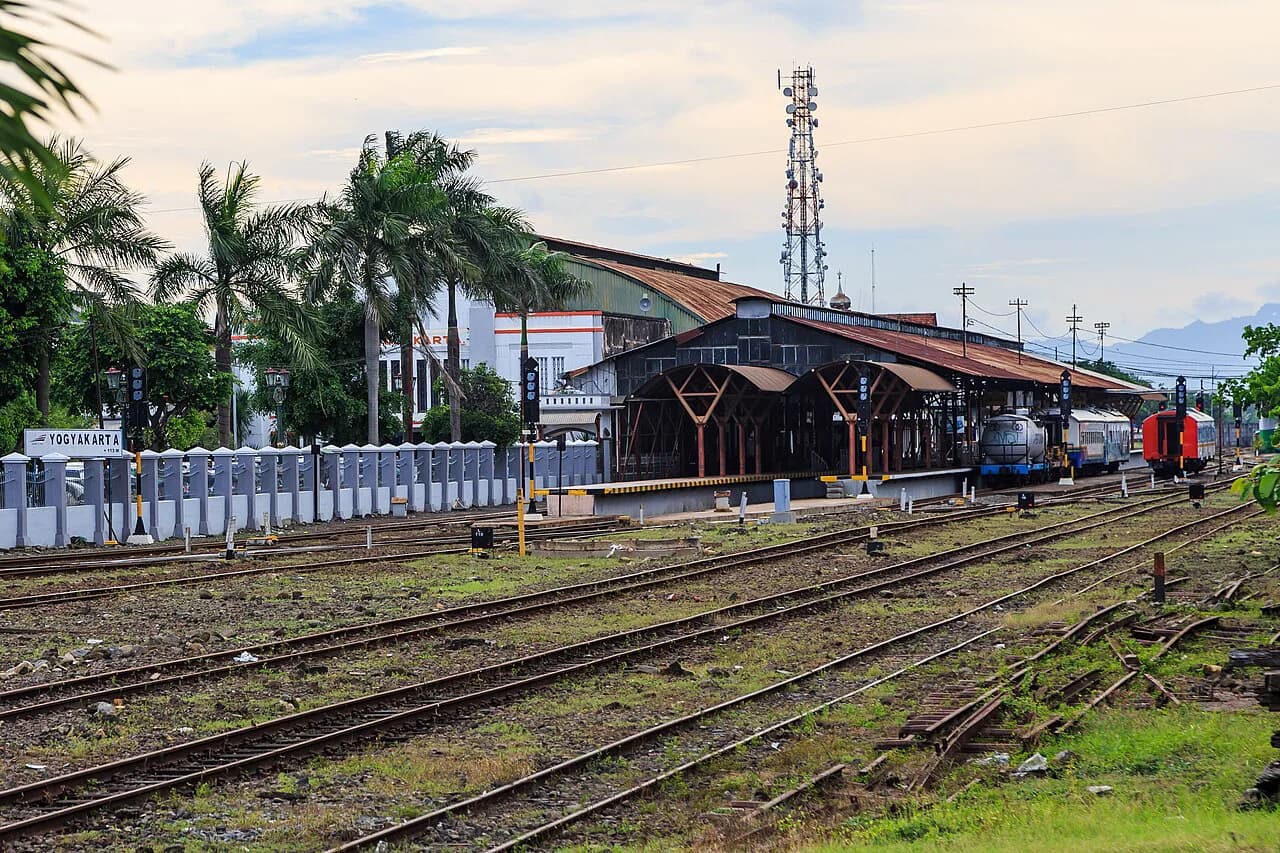
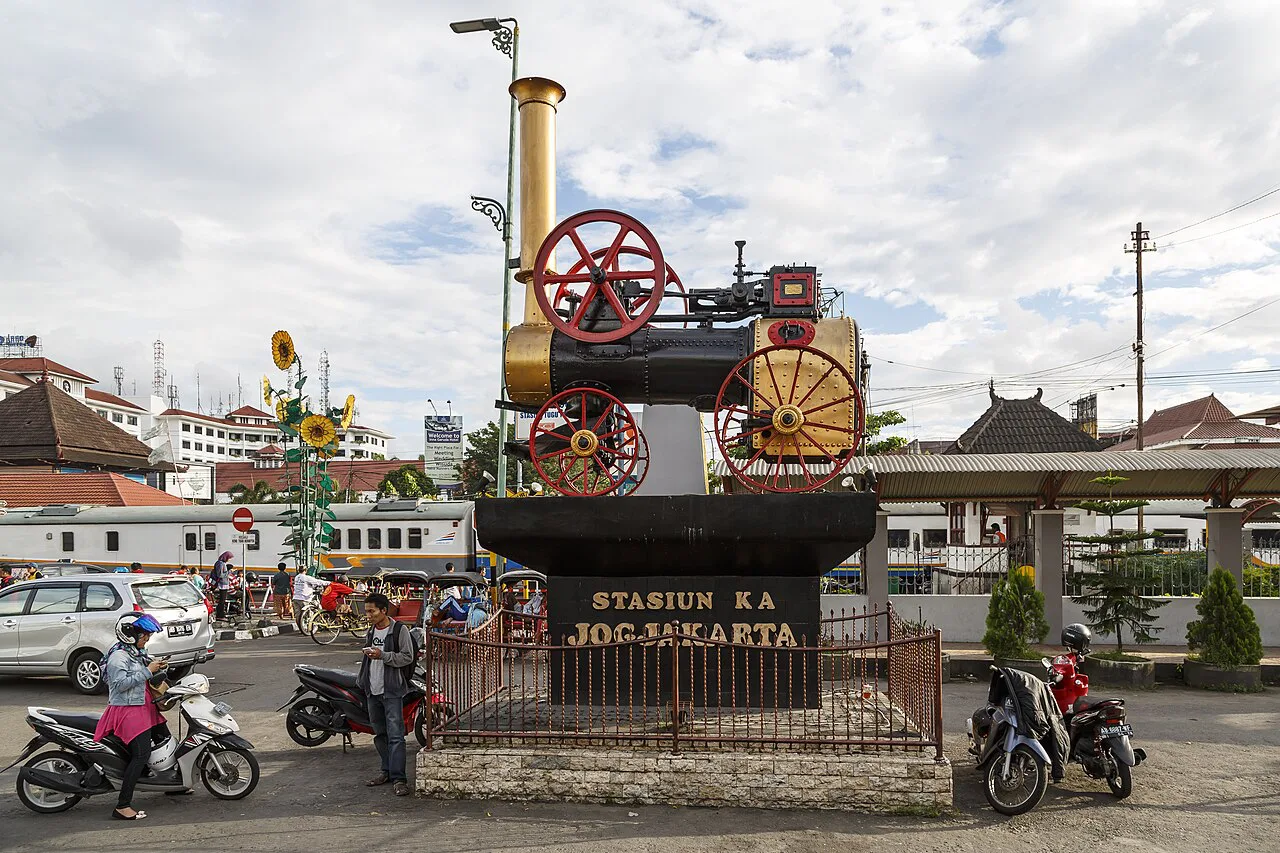
The monument occupies the center of the junction where Jalan Pangeran Mangkubumi, Jalan Jenderal Sudirman, Jalan A.M. Sangaji and Jalan Diponegoro meet, north of Yogyakarta railway station. Travelers commonly call that station Tugu Station, which can confuse a first visit: the station is about a kilometer southwest of the monument, not beside it. Use the crossroads as your landmark and the station as your orientation point.
Think of Tugu as the top of the Malioboro corridor. Walk or ride south from the monument and you slide into the shopping and hotel strip that most visitors already know; walk north and the streets grow quieter toward Kotabaru. That position makes Tugu an easy first or last stop of a central-city day rather than a separate excursion.

How to get there and where to be dropped off
Ride-hailing apps such as Grab and Gojek, a Bluebird taxi or a becak all work for the approach, but the drop-off point matters more than the vehicle. There is no parking on the monument roundabout, and stopping on the busy approach roads blocks traffic and puts you in the path of motorbikes. Ask the driver to pull over at a hotel, restaurant or side street a short walk from the junction, then finish on foot.
If you are already in central Yogyakarta, walking is the simplest option, since the monument sits on the pedestrian-friendly axis above Malioboro. Cross only at marked points and use the pavements rather than cutting across the intersection. Anyone considering the Trans Jogja bus or a KRL commuter line should confirm routes and stopping points for their travel date rather than relying on memory.

What you are actually looking at
The monument visible today is a layer of history rather than the first design. Hamengku Buwana I built the original, a cylindrical column topped with a sphere, known as Golong Gilig and read as a symbol of unity between ruler and people. An earthquake on June 10, 1867 brought it down, and the Dutch rebuilt it in 1889 as a square, tapering shaft with a pointed top, the silhouette now called Tugu Pal Putih.
Height figures vary between accounts, so treat any number as approximate: the original is described as roughly 25 meters and the current shaft at about 15 meters, with the cone tip cited at the same height. Inscriptions on the sides of the square shaft record those involved in the reconstruction. What you see is a compact white landmark rather than a monumental complex, which is why it reads as a city symbol in photographs more than as a place to explore.
How long to allow at the monument
Budget 10 to 20 minutes around the monument itself, enough for photos from a couple of pavement angles and a few minutes watching the crossroads. Trip.com suggests a far longer window of two to three hours for the wider area, which only makes sense if you fold in a walk down Malioboro or a museum stop. For most travelers the monument is a punctuation mark in a longer city day, not an itinerary item on its own.
YogYes recommends the 05:00 to 06:00 window, when the air is still fresh and motorbike traffic is light; treat that as their suggestion rather than an official visiting window. Late afternoon into early evening is the other strong slot, since the monument is lit after dark. Both times reward patience more than planning.
Tickets, hours and parking
Viewing the monument costs nothing and it can be seen at any hour, since it stands in open public space. Trip.com likewise lists the site as open all day. That does not mean facilities are open around the clock; toilets, cafes and shops along the surrounding streets keep their own schedules, so check with the venue you plan to use.
One caveat worth knowing: a dedicated Tugu guide states that current fee policies, parking charges and any street access restrictions were not verified. Confirm parking costs with whichever hotel, restaurant or lot you use. This is the point to check current details before you set out, particularly if you are arriving by car or coach.
Viewing safely from the pavement
The monument is not something you enter, climb or walk up to inside the traffic island. Shoot from the surrounding pavements and safe roadside positions, and never cross suddenly for a photo. A wide angle from a corner gives you the whole shaft without stepping into the road.
Look for a bench facing the monument on the Jalan Pangeran Mangkubumi corner if you want to sit with it for a while. The trade-off is that you are sitting beside a live intersection, so noise and fumes come with the view. Keep bags close and stay alert to motorbikes cutting the corners.
What is nearby
Poncowinatan Temple sits about 180 meters northwest of the monument, close enough for a short add-on on foot. Yogyakarta railway station is roughly a kilometer southwest, and Dharma Wiratama Museum about a kilometer east. Each is a modest stop rather than a headline sight, which suits a morning that starts at Tugu and drifts south.
Walking south from the monument puts you on the Malioboro corridor and within reach of the kraton Yogyakarta, the Sultan's palace complex that anchors the city's cultural axis. Closer at hand, Poncowinatan Temple sits about 180 meters northwest of the junction for a short add-on on foot. Prambanan temple lies well outside the center, so pair it with a separate half day rather than trying to squeeze it in around Tugu. Both reward reading up beforehand so the carvings and courtyards mean something when you arrive.
Reading the axis Tugu belongs to
Tugu sits on the north-south line that runs from Mount Merapi through the kraton to Panggung Krapyak and on toward the Southern Sea. Heritage interpretation reads that arrangement as a Javanese statement about the relationship between people, nature and the Creator. Knowing this changes the stop: the plain white shaft becomes a marker on a much larger map.
You do not need a guide to grasp the idea, but the layers are easy to flatten into a single photo. The earlier Golong Gilig form, its collapse and the colonial rebuild are separate stories that the present shape hides. Read a little before you go and the 15-minute stop carries more weight.
Is Tugu worth a stop?
Yes, if you fold it into a central Yogyakarta walk rather than treating it as a standalone trip. Allow 10 to 20 minutes, arrive early morning or toward evening, and plan a lawful drop-off a short block away instead of asking a driver to stop at the junction. Pair it with Malioboro or a nearby museum and the detour pays off.
Skip the dedicated taxi if your only goal is the photo: the monument stands in live traffic, there is nowhere to park at the roundabout, and the best vantage points are ordinary pavements. Anyone who wants the full context should read up on the axis and the 1889 rebuild first, then visit Kraton Ngayogyakarta Hadiningrat while the story is fresh.
Explore more Yogyakarta guides
Frequently Asked Questions
Can you go inside Tugu Yogyakarta?
No. The monument stands in the middle of an active four-way intersection with no visitor entrance, stairs or viewing platform. You see it from the surrounding pavements and roadside corners, and you should not step into the traffic island for a photograph.
Do you need a ticket for Tugu Yogyakarta?
No ticket is required to look at the monument from the street, and it is visible at any hour. Parking, cafes and any paid facility you use nearby set their own charges, so confirm those with the operator rather than assuming.
How do you get to Tugu Yogyakarta from Malioboro?
It is a straightforward walk north along the main corridor from the Malioboro area, or a short ride-hailing trip. Ask the driver to drop you at a hotel or side street a block from the junction, since stopping directly on the approach roads blocks traffic and is unsafe.
Sources
- Tugu Yogyakarta Map - Monument - Yogyakarta, Yogyakarta Special Region, Central Java, Indonesia
- TUGU JOGJA - Foto 360° & Sejarah Ikon Kota Jogja
- Tugu Yogyakarta Monument Tickets [2026] - Promos, Prices, Reviews & Opening Hours | Trip.com
- Tugu Yogyakarta - Tours and Activities | Expedia
- Tugu Yogyakarta (Tugu Jogja) — Yogyakarta Travel Guide