Bali Souvenirs: What to Buy, Where & How to Get It Home
Authentic Bali souvenirs by category, with where to buy, how to spot fakes, what to avoid, and what you can actually take home.
On this page
Last updated November 2026. The best Bali souvenirs are textiles, silver, carved wood, coffee, spices and spa products. Which ones suit you depends on luggage space, your home country's customs rules and where you are staying. Use this page to triage, then follow the links into our wider Bali shopping guide.
Featured image: F-GSPY, CC BY 3.0, via Wikimedia Commons.
Quick Answer: The Best Bali Souvenirs
Start with a shortlist of seven buys. Each one is made on the island, packs reasonably well and has a clear place to buy it. Recheck any named business before you travel, because shops move and close.
- Hand-stamped or hand-drawn batik and woven ikat: cloth that folds flat. See our batik buying guide for the details.
- Celuk silver jewelry: small, light and easy to carry. Details sit in our Celuk silver workshops page.
- Mas wooden masks and Pakudui carvings: strong gifts, but bulky and subject to wood rules at home.
- Plain Bali coffee from a plantation: sealed, roasted and easy to pack.
- Gula Aren palm sugar and sambal matah: kitchen staples for cooks.
- Boreh or lulur body scrubs: light, and sold at spas and shops.
- Rattan bags and wooden bowls: cheap, durable and found at most markets.
Bali Souvenirs at a Glance
Use this table to match an item to the traveler, the source and the carrying risk. Prices are not listed because the brief supplies no sourced figures. Ask for a quote on the spot and compare two stalls.
| Item | Best for | Where to buy | Carry risk | Skip if |
|---|---|---|---|---|
| Batik and ikat | Fashion and home-decor fans | Craft villages, galleries, fixed-price shops | Low, folds flat | You want a cheap beach sarong |
| Silver jewelry | Gift givers with a modest budget | Celuk workshops, reputable dealers | Low, but insure valuables | You cannot verify the maker |
| Wood masks and carvings | Collectors and home-decor fans | Mas and Pakudui workshops | High: bulky, fragile, customs checks | Your luggage is already full |
| Bali coffee | Coffee lovers | Plantations, supermarkets | Low if sealed | The label points to kopi luwak |
| Sambal and spices | Home cooks | Markets, supermarkets | Medium: jars can leak | Your recipient avoids shrimp paste |
| Boreh and lulur scrubs | Spa fans | Spas and shops | Medium: liquids and powders | You travel carry-on only |
| Rattan bags | Anyone on a budget | Markets across the island | Medium: bulky but light | You dislike bargaining |
Textiles and Clothing: Batik, Ikat and Kebaya
A brightly printed beach sarong is fine for the sand, but it is rarely the cloth to carry home. Ask whether the pattern was drawn with wax, stamped or simply printed. Real batik shows the design on both sides of the fabric. Printed cloth usually looks washed out on the back. Indonesian batik has its own entry on UNESCO's heritage list, so the craft is worth paying a fair price for. Tenganan is the village competitors name for textiles. Check that any shop you pick there is still open. Ikat is a woven cotton from East Bali, and our ikat weaving guide explains how to read the patterns. A tailor can also make a kebaya, the traditional blouse. Allow a few days and confirm the delivery date before paying a deposit.
Silver and Jewelry in Celuk
Celuk is the village most often linked with Balinese silver. Many workshops let you watch the work, and some run short courses. Ask three questions before you buy. Is the piece sterling silver? Is it stamped with a hallmark? Will the seller put the purity on the receipt? Buy directly from the maker or a reputable dealer for anything expensive. A price far below other stalls is a warning sign. Silver is light, so it suits a carry-on bag. Keep receipts in case you need to declare it at the border.
Wood, Masks, Art and Homeware
Mas is known for carved masks, and Pakudui is known for statues of Hindu figures such as Garuda. Batuan, Ubud and Sanur are named as centers of painting. Hand-carved wood shows tool marks and small variations. Molded pieces look identical from one to the next. Ask the carver how long a piece took. For paintings, the Museum Puri Lukisan is a useful place to see the range of styles before you buy. Our gallery paintings guide covers where to buy with confidence. For lower-priced carvings and bowls, try the art market stalls. Wooden bowls, spoons and coasters travel better than big statues. Rattan placemats and ceramics tableware also work, but wrap ceramics in clothing.
Food, Coffee and Spa Products
Buy coffee from a plantation and ask for plain Bali beans. Kopi luwak raises animal-welfare concerns, so skip it and choose regular roasted coffee instead. Gula Aren, the local palm sugar, is a cheap and useful gift for coffee drinkers. Sambal matah is a fiery paste of lemongrass, chili and shallots. Many sambals contain shrimp paste (terasi), so ask the seller before you give one to a vegetarian. Some instant noodles sold as Bali gifts are pork-flavored and not halal. Check the label before giving them to Muslim friends. Boreh is a warming paste of ground spices such as turmeric, ginger and cloves. Lulur is a related scrub. Buy sealed packs and keep liquids inside the limits your airline sets.
What to Buy in Each Area
Where you stay changes what you should buy. Spread your shopping over the trip, and leave breakables for the last days.
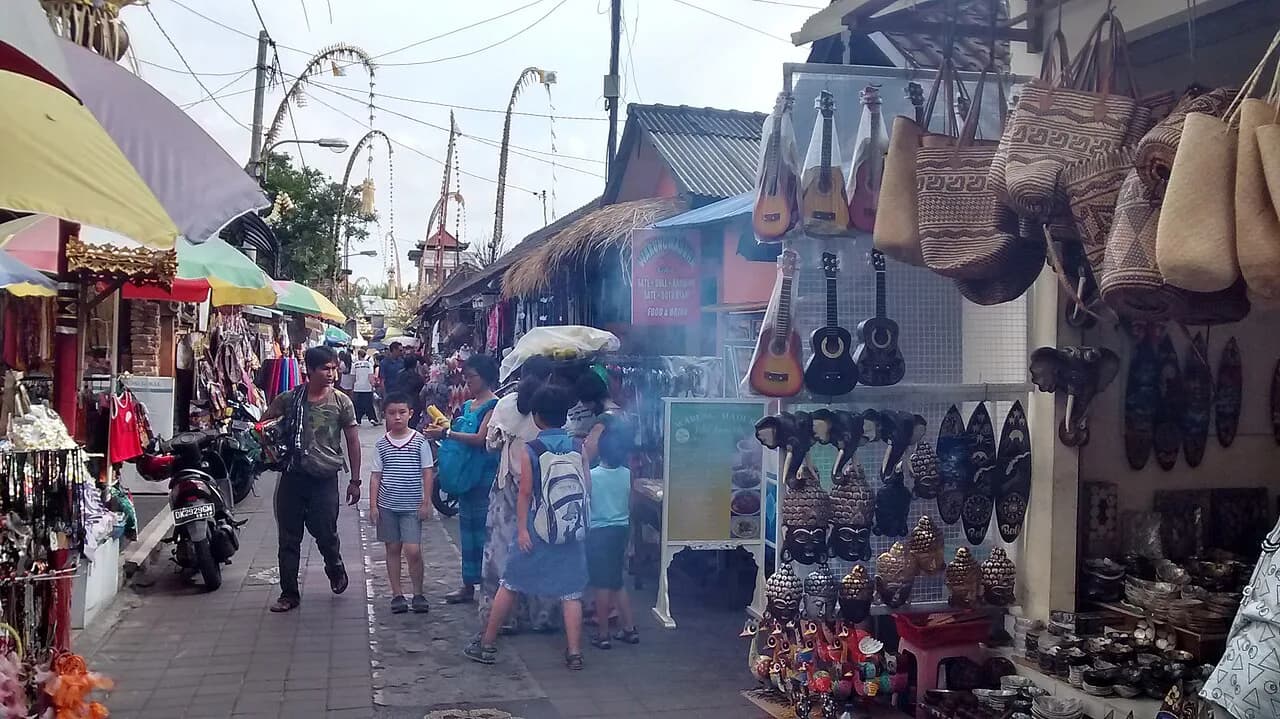
- Ubud: art, wood bowls and rattan. Sukawati Art Market is a short trip away for more stalls. See our daily markets guide.
- Canggu: locally made clothing and jewelry at small art markets. Early visits are less crowded.
- Kuta and Seminyak: fixed-price souvenir shops and malls. Our air-conditioned malls page compares them.
- Seminyak and Kuta fashion: try the outlet stores for clothing if you want branded pieces.
- Evenings: browse the evening night markets for snacks and cheap gifts.
- Sanur: Dewi Sri is a competitor lead for arak and rice wine. Check alcohol rules at home before buying.
- Airport: use it only for a last-minute fix. Check what the shops stock, since the brief has no verified list.
How to Bargain, Pay and Spot Fakes
Haggling is expected at markets and not at fixed-price shops. One popular guide suggests opening near 10–20% of the asking price, then moving up in small steps. Treat that as a starting point, not a rule. Stay polite and smile. Walking away often brings a better offer. Once you agree on a price, buy the item. Carry small bills, because markets and street vendors rarely take cards. Shops and malls usually do. Use ATMs inside banks or malls to reduce skimming risk. For fakes, ask where the item was made and whether you can meet the maker. Mass-produced imports often sit beside genuine work at tourist stalls. Mismatched brand marks on one product are a clear red flag.

Markets suit an opening near 10–20% of the asking price, since haggling is expected there. Fixed-price shops in Kuta and Seminyak offer no such room to bargain.
Getting Bali Souvenirs Home: Luggage, Shipping and Customs
Use a simple rule. Pack small and sturdy items. Ship bulky furniture or large carvings only after getting a firm quote. Skip anything that would cost more to move than to replace. Do not assume shipping prices before you haggle. Customs rules for food, wood and plant material differ by country. Check your own agency's page, such as Australia's DAFF, US CBP and USDA, or GOV.UK. Wooden masks are often allowed if clean, with no bark or insect damage, and you may need to declare them. Processed, sealed food is safer than fresh produce. For export and cultural background, see the official Wonderful Indonesia portal. Avoid shell, animal parts and endangered-wood products altogether.
Mistakes to Avoid
Buying a bulky carving on day one is the classic error. Another is accepting a price without comparing a second stall. Do not trust a "handmade" label without asking who made it. Avoid kopi luwak and unlabeled sambal. Do not carry fresh fruit or loose spices through customs. Finally, skip shell and animal-part souvenirs. For a calmer cluster of shops, try the Bali Provincial Tourism Office's official tourism pages to find current events and craft information.
Frequently Asked Questions
What are cheap things to buy in Bali?
Rattan bags, wooden bowls and spoons, Gula Aren palm sugar and packs of sambal are low-cost picks. Market stalls are usually cheaper than shops, but compare two sellers first.
What should I bring back from Bali?
Choose small, sturdy items: batik or ikat cloth, Celuk silver, sealed Bali coffee and body scrubs. Check your home country's customs rules for food and wood items before you buy.
Notes for your Indonesia trip
Optional updates when we add or change a town or island guide.
You might also like


Continue reading
More guides you'll find useful