Barong Dance in Bali: Meaning & Where to Watch
What the Barong and Rangda story means, how it differs from Kecak and Legong, and how to choose between village, Ubud and GWK shows.
On this page
Last updated November 2026: the barong dance is Bali's best-known story performance, pitting the lion-like Barong against the witch queen Rangda. Batubulan is the best-known village stage, Ubud offers palace and banjar venues, and GWK Cultural Park in the south runs a large evening show. Our guide covers the story, the types, a venue comparison and etiquette, and ties into the wider overview of Balinese dance traditions.
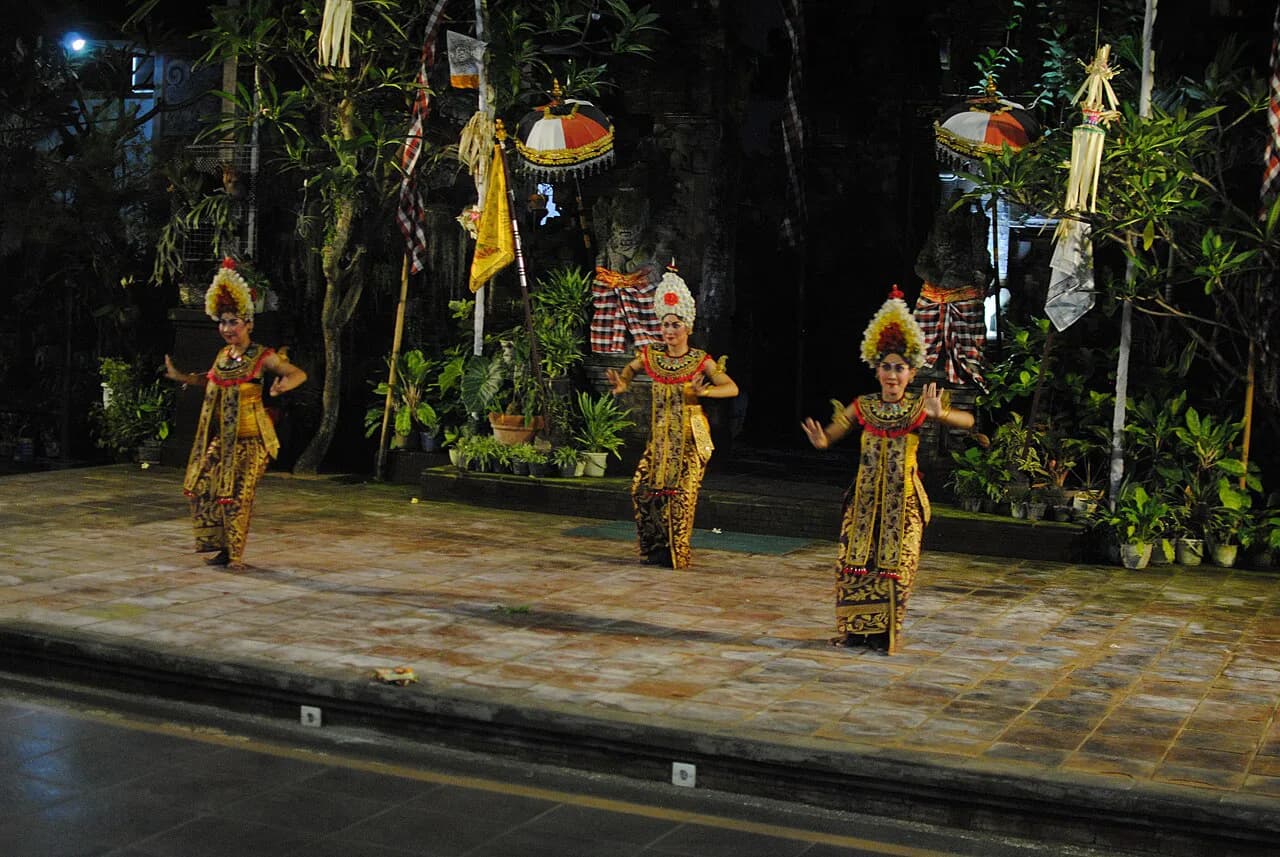
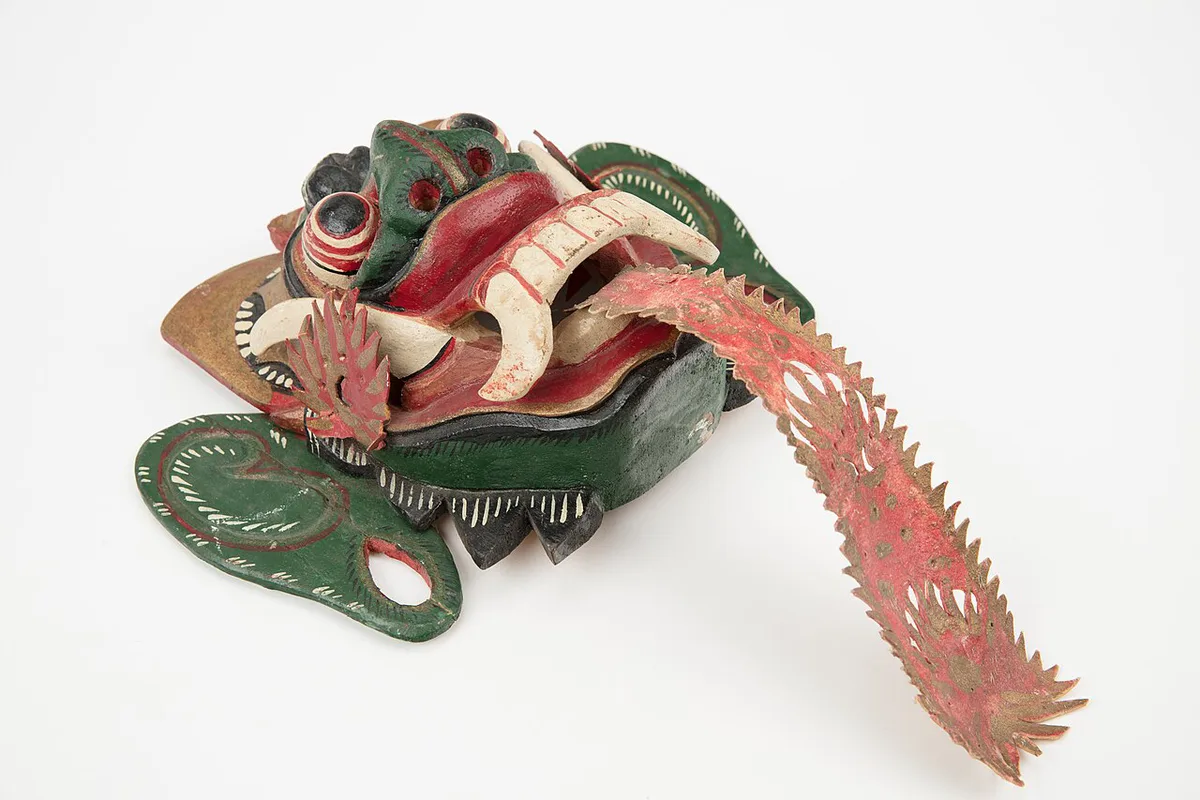
Featured image: Andy Mabbett, CC BY-SA 4.0, via Wikimedia Commons.
What Is the Barong Dance?
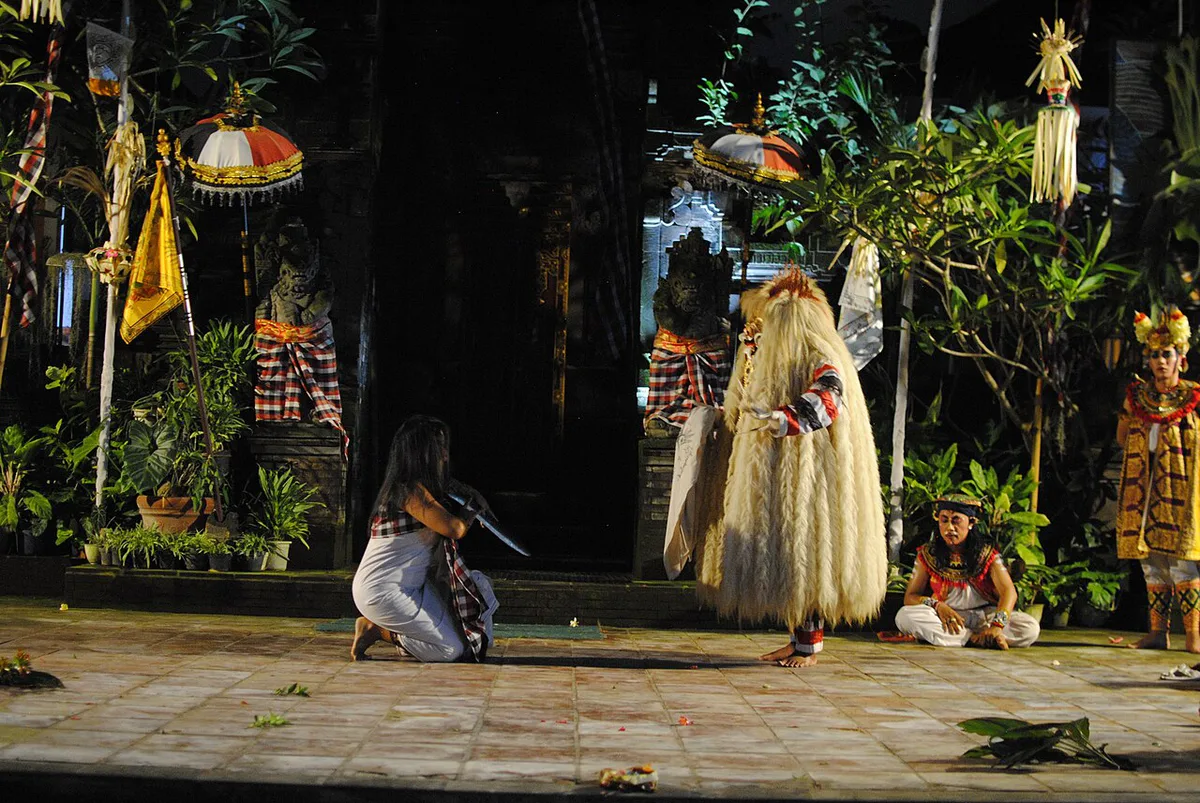
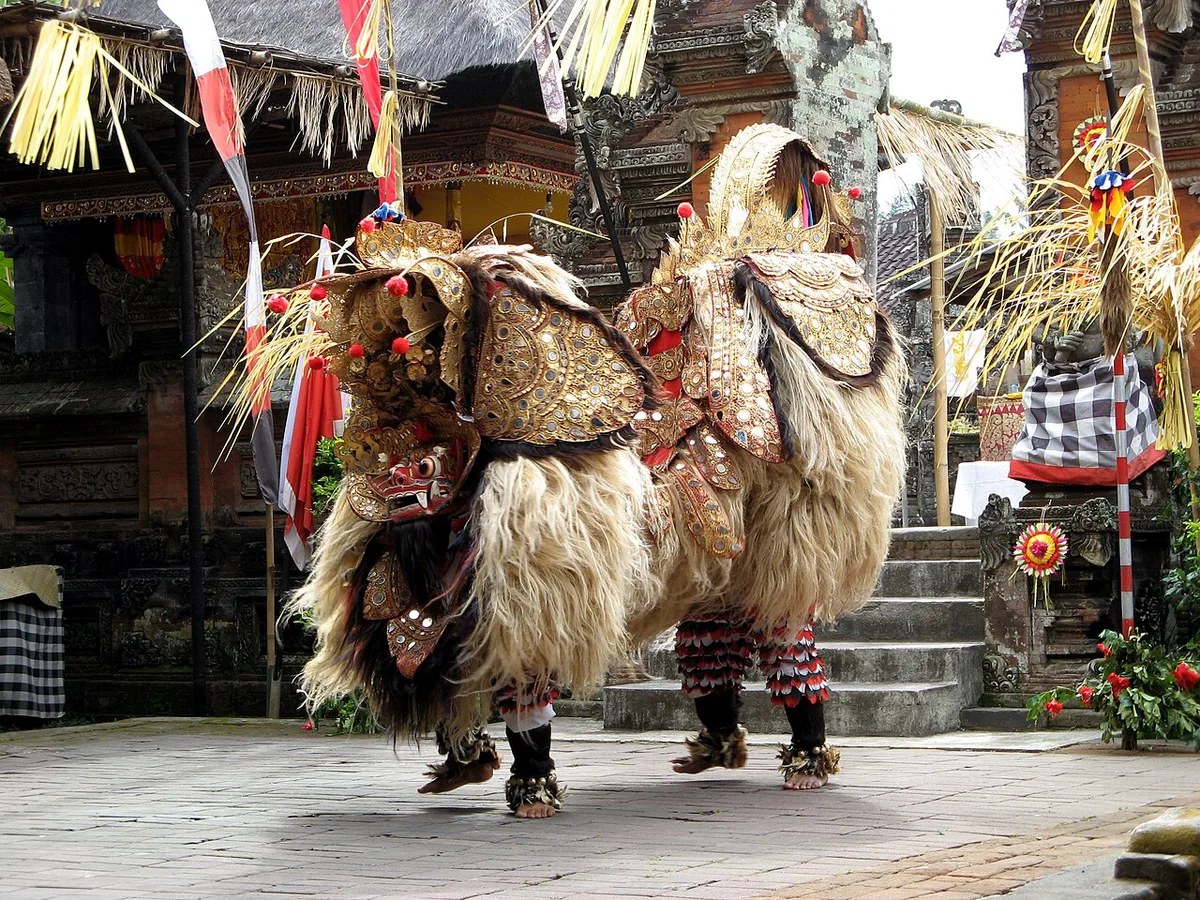
Barong is a protective spirit shown as a lion-like creature in a mask and thick white fur. Rangda is the witch queen who leads an army of evil forces. Their meeting is the core of a gamelan-accompanied drama that mixes dance, comedy and a trance climax. Sources describe the outcome as balance, not victory. Good and evil stay in tension, and neither is wiped out. That idea sits at the center of Balinese Hindu thinking, and it explains why the story is retold so often. UNESCO's listing of Bali's traditional dance genres shows how these performances fit into a wider heritage tradition. Tourist shows are a shortened, staged version of the story. Temple ceremonies are a different setting entirely.
The Story and What You'll See on Stage
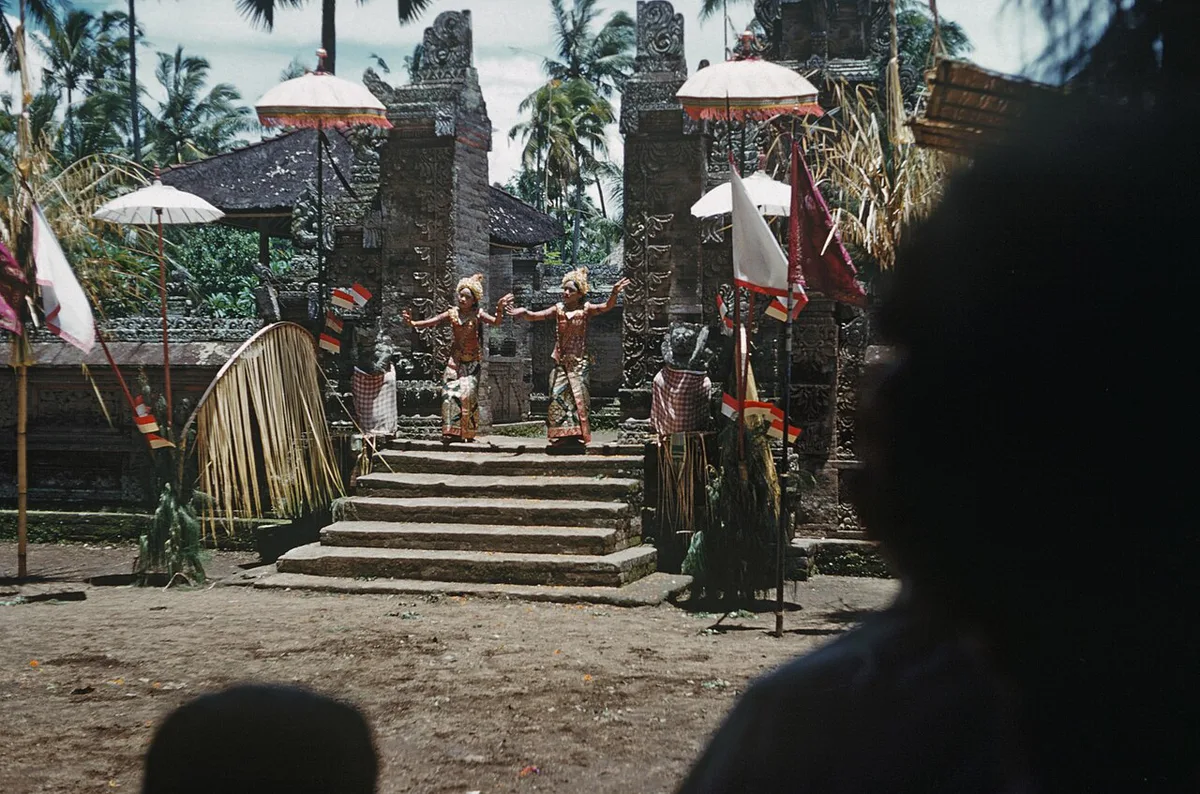
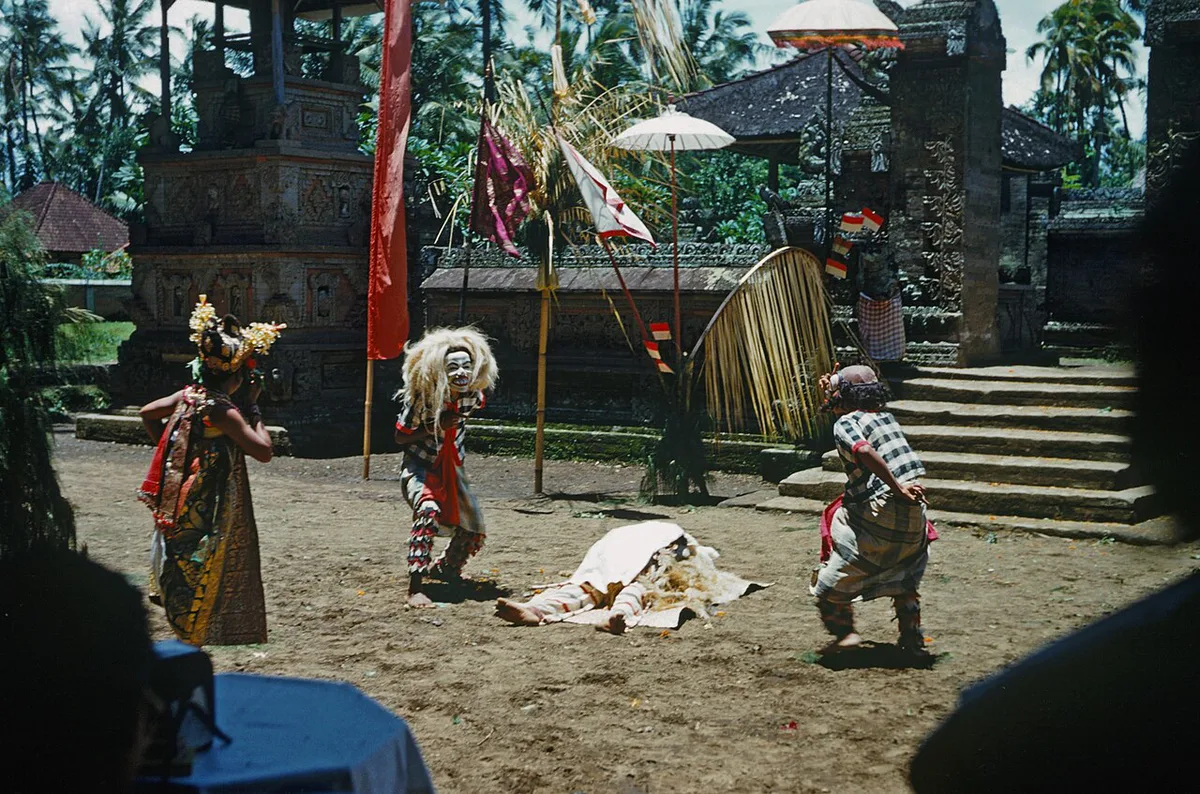
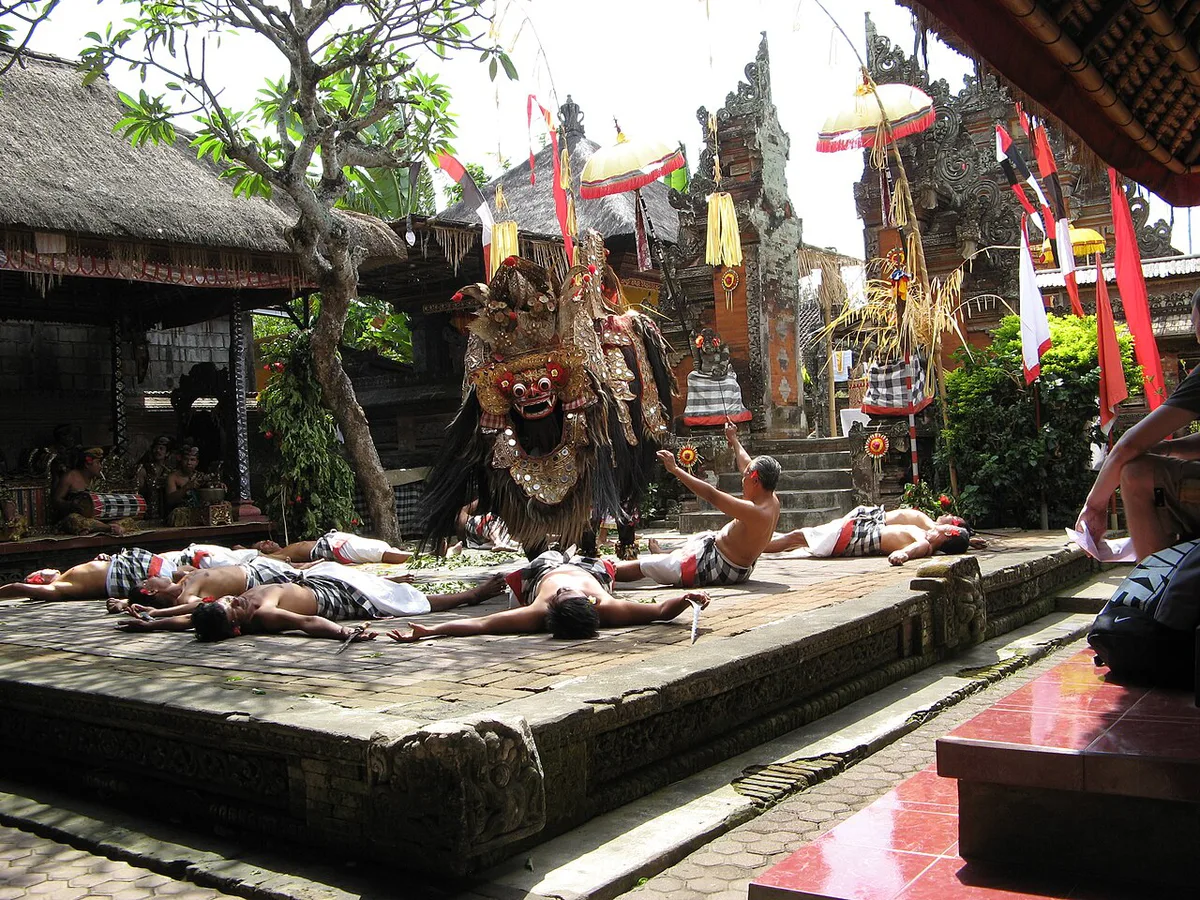
Most performances open with light, comic scenes before the tension builds. Rangda then appears, and Barong steps in as the village's protector. Followers of Barong draw kris daggers to attack Rangda. Her magic turns the blades on themselves, and the dancers fall into a trance. Barong's power protects them. Holy water is sprinkled afterward to bring everyone back to their senses. Watch the costumes closely. Barong's wooden mask is covered in white fur and decorated with mirror shards and gold ornament. One or two performers operate the body, much like a lion dance. Rangda's mask has bulging eyes and a long tongue. Gamelan drives each beat, and the music shifts sharply when the trance scene begins. The same good-versus-evil themes show up in shadow puppet storytelling, another Balinese tradition worth comparing.
Types of Barong
Barong Ket, the lion-like figure, is the one most visitors see. Other forms exist in different regions and ceremonies. Sources disagree on names, so treat any fixed count with caution. Mari Beach Club names a pig-shaped Barong as Bangkal and also lists Asu. GWK's blog calls the pig form Celeng and omits Asu. Check a museum or cultural source before quoting a firm number.
- Barong Ket: lion-like and the usual stage figure, often called king of spirits.
- Barong Landung: tall puppet-like figures, usually a male and female pair.
- Pig-shaped Barong: named Bangkal by one source and Celeng by another.
- Barong Macan: tiger-shaped.
- Barong Gajah: elephant-shaped, rare and tied to specific ceremonies.
- Barong Asu: dog-shaped, listed by only one of the two sources.
Where to See Barong Dance in Bali
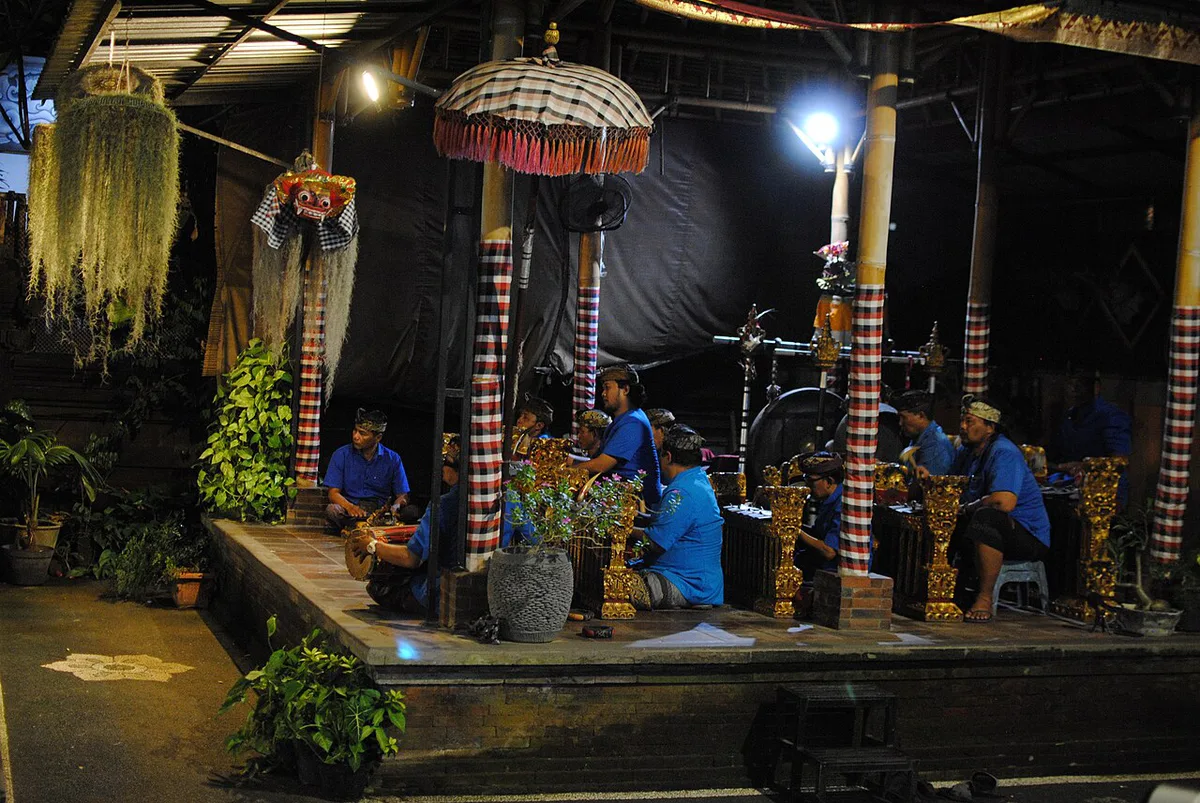
Batubulan sits just outside Denpasar on the road to Ubud. GWK's own blog reports village stages here starting around 9:30 AM or 10:00 AM, which makes it a morning stop before Ubud. In Ubud, performances rotate between venues such as Sahadewa, Jambe and Ubud Palace. Some run daily and others do not, so confirm each schedule locally. Denpasar villages offer community troupes, sometimes with children and youth groups. GWK Cultural Park stages its own "Baraong Show", a spelling used by the venue. GWK reports Wednesday to Saturday performances at 6:00 PM in an amphitheater seating up to 800, with five Barongs. That is a marketing claim, so check the official schedule. No source supplied ticket prices, so check each venue for current costs.
| Area | Setting | Usual timing | Cost | Best for |
|---|---|---|---|---|
| Batubulan | Purpose-built open-air village stages | Around 9:30 or 10:00 AM (reported) | Check venue | Morning on the Denpasar to Ubud road |
| Ubud | Palace and banjar venues such as Ubud Palace | Varies by venue; some not daily | Check venue | Central Ubud stays |
| Denpasar villages | Community performances, some tied to ceremonies | Check locally | Check venue | Less touristy, community feel |
| GWK Cultural Park | Amphitheater, large production | Wed to Sat, 6:00 PM (reported) | Check official site | South Bali and Uluwatu days |
How to Choose and Fit It Into Your Day
Match the show to your base and your day. If you sleep in Ubud, walk to a palace or banjar venue and skip the transfer. If you are heading to Ubud from the south, stop at Batubulan before 10:00 AM. That works as a sightseeing day with temples and craft stops. Staying near Uluwatu or Nusa Dua? The 6:00 PM GWK show on a Wednesday to Saturday pairs with a south Bali day. Neither option suits every itinerary. Morning shows leave the afternoon free but start early. Evening shows run only on four reported days. Verify drive times from your own hotel before committing, since traffic on the Denpasar to Ubud road varies. Consider adding a nearby site from our guide to temple visits around the island.
Batubulan's reported start of around 9:30 AM leaves little margin, so reaching the Denpasar to Ubud road by 10:00 AM keeps the plan on time.
Tickets, Timing and Etiquette
No source supplied current prices, so check the venue's own page or ticket desk. Arrive early for a front-row view, especially at open-air village stages. GWK's amphitheater seats up to 800, but reserve ahead for the Wednesday to Saturday 6:00 PM slot. Dress modestly, with covered shoulders and knees as a safe default. Silence your phone. Follow any photography rules, especially during the trance scene, and ask before photographing performers up close. Treat a temple ceremony as worship, not a ticketed show. Our notes on temple etiquette and customs cover sarongs and behavior in more detail.
- Mistake: assuming every Ubud venue plays daily. Confirm the day first.
- Mistake: arriving at GWK without a reservation for a Wednesday to Saturday show.
- Mistake: flash photography during the trance sequence.
- Mistake: walking into a temple ceremony as if it were a ticketed show.
Barong vs Kecak vs Legong: Which Show Fits You?
Pick the Barong dance for a story with masks, comedy and a trance climax. Choose the Kecak chant performance if you prefer a vocal group with no gamelan. Go for the Legong court dance if elegant, fast hand and eye movement appeals more than drama. For flames and trance imagery, see fire trance shows. Combining two styles in one evening works well in Ubud, where venues rotate programs. Carvers who make the masks are covered in our look at mask carving, which adds context before or after a show.
Frequently Asked Questions
Is Barong good or evil?
Barong is the protector, a lion-like spirit that stands for good. Rangda, the witch queen, represents chaos and destruction. Sources describe the story as a balance between the two, not a final win.
What are five traditional Balinese dances?
Common picks include Barong, Kecak and Legong. Fire trance shows are a fourth option. Shadow puppet performances such as wayang kulit round out the list, although they are puppetry, not dance.
Notes for your Indonesia trip
Optional updates when we add or change a town or island guide.
You might also like
Continue reading
More guides you'll find useful