Bali Customs: Entry Rules and Cultural Etiquette
Bali customs explained: where to check arrival and declaration rules, plus temple, offering and ceremony etiquette so you visit respectfully.
On this page
Last updated November 2026: Bali customs can mean border rules on arrival or the cultural customs Balinese people live by every day. Jump to the first section for declaration and entry steps. Jump to the later sections for temple, offering and ceremony etiquette.
Featured image: Mx. Granger, CC0, via Wikimedia Commons.
Bali Customs on Arrival: Declaration and Entry Steps
Arrival rules for Indonesia change often, and no verified allowances, fees or form deadlines were available when this guide was prepared. Check the official Indonesian customs and immigration websites before you fly, and re-check them shortly before departure.
- Before your flight: confirm on official portals which digital arrival or declaration forms apply to your passport.
- Before your flight: save any confirmation or QR code offline, in case your phone has no signal on landing.
- At the airport: keep your passport and saved forms within reach before you join the customs line.
- At customs: answer declaration questions plainly and declare anything you are unsure about.

What to Declare: A Decision Table for Common Items
Rules for each item below were not verified for this guide. Use the table to build your own checklist, then confirm each row on the official customs site. When an item is not clearly allowed, declare it or leave it at home.
| Item | Why it gets questions | What to do |
|---|---|---|
| Prescription medication | Some medicines are controlled substances | Carry original packaging and a doctor's letter; check the official rule |
| Vapes and tobacco | Allowances and restrictions apply | Check the official rule before packing |
| Alcohol | Duty-free limits apply per person | Check the official rule and conditions |
| Drones | Import and flying permissions may apply | Check the official rule before you fly |
| Cash | Large sums may need declaring | Check the official reporting threshold |
| Food and plant products | Biosecurity controls are common worldwide | Check the official rule, or do not pack them |
| Cameras and laptops | Usually personal effects, but commercial gear can differ | Check the official rule if you shoot professionally |
Temple and Ceremony Etiquette in Bali
Dress modestly at any temple, with legs and shoulders covered and a sash tied at the waist. Many temples lend or rent sarongs at the entrance, but bringing your own saves queuing. Confirm current arrangements with the site. Our guide to temple visits across the island shows what to expect before you go.
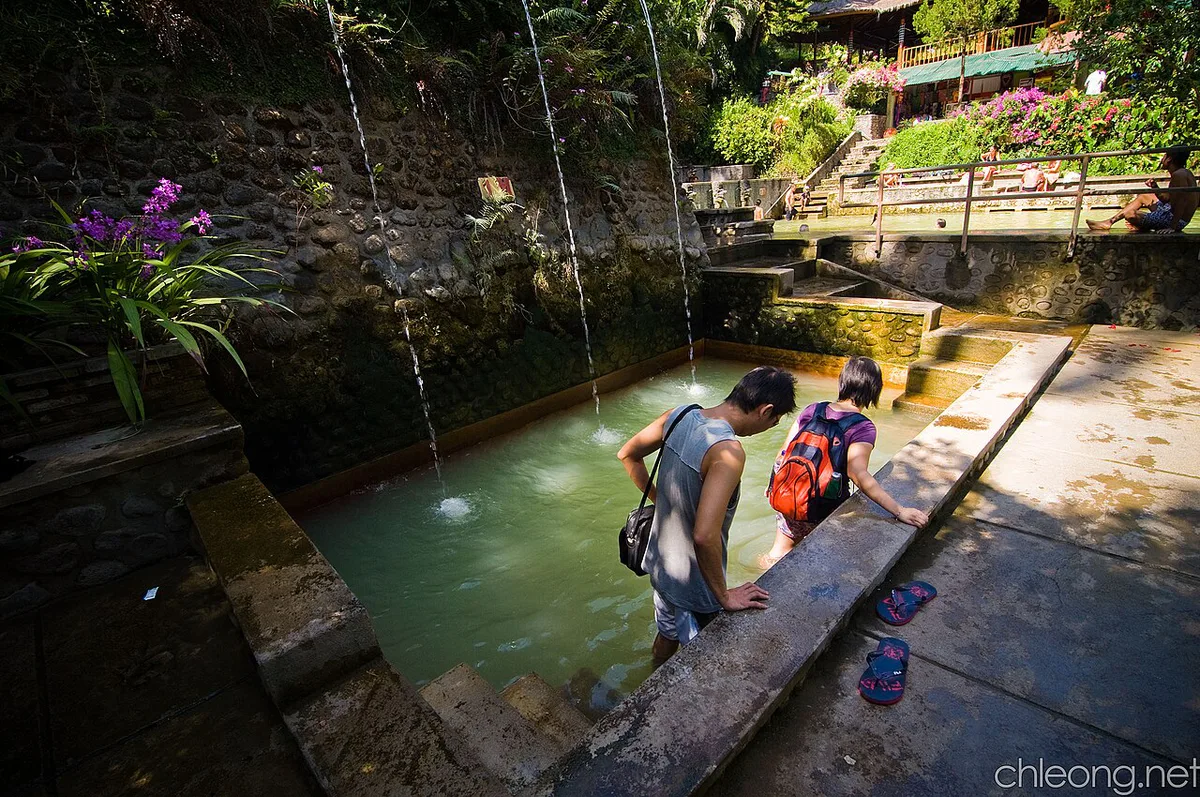
Inner courtyards may be reserved for worshippers, so follow posted signs and staff directions. Keep your head lower than priests and offerings, and never step over a offering or climb on shrines. Ask before photographing prayers, and keep flash off during rituals. Read about temple architecture and layout to understand why courtyards are separated this way. Purification rites at water temple pools are acts of worship, not photo props. Join only if invited and guided.
A procession can block a road with little warning. Step aside, stay quiet, and wait. Do not walk through a group of worshippers.
Offerings, Greetings and Everyday Manners
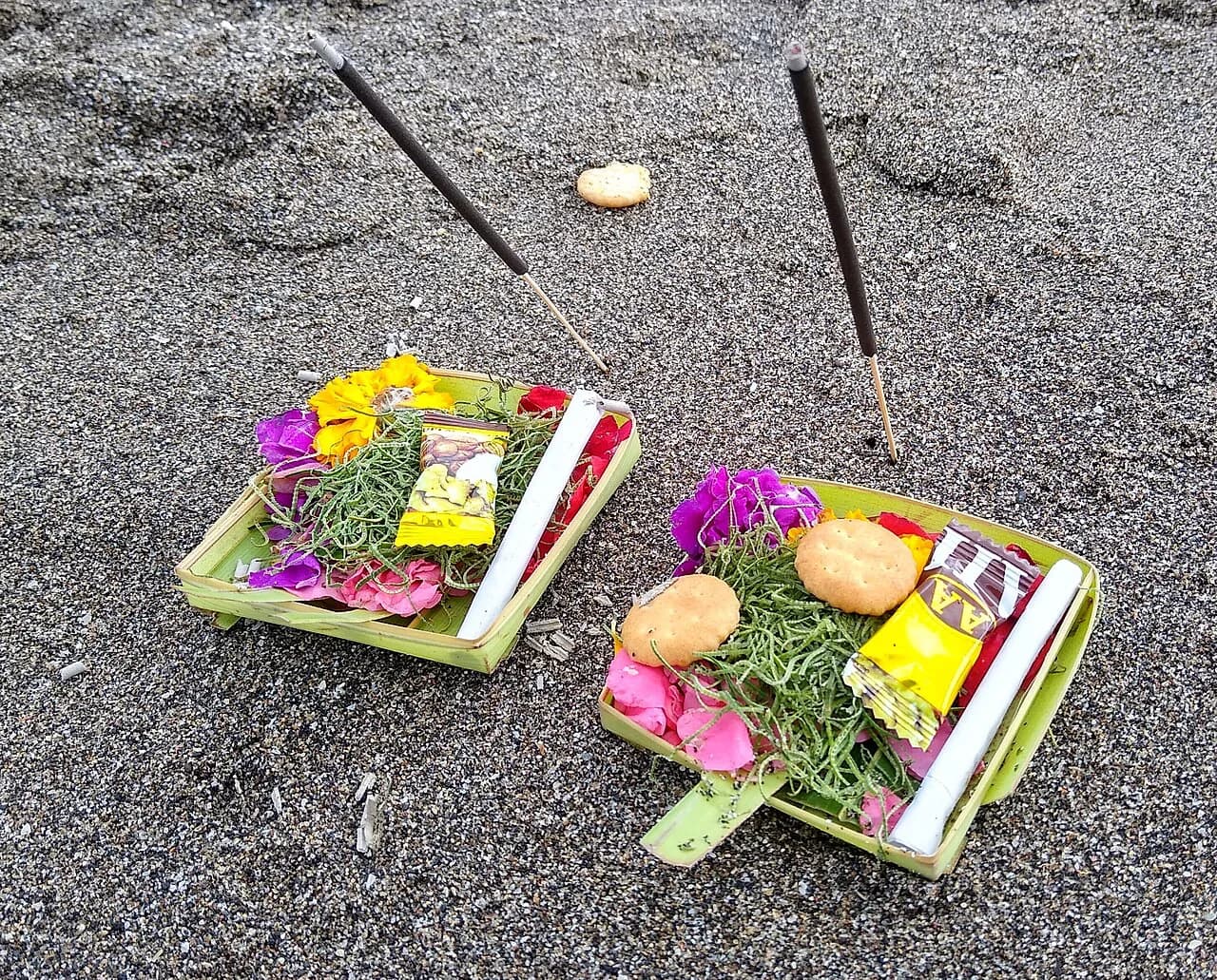
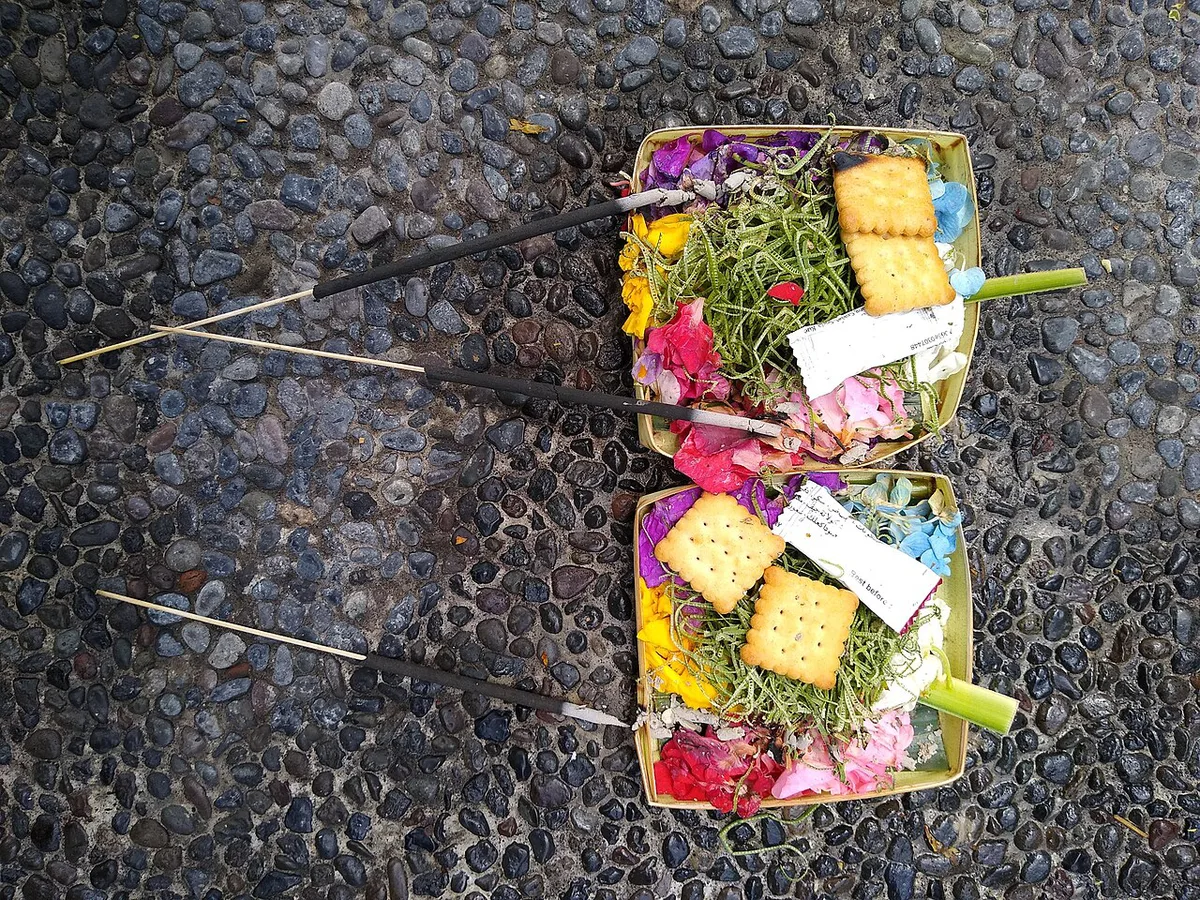
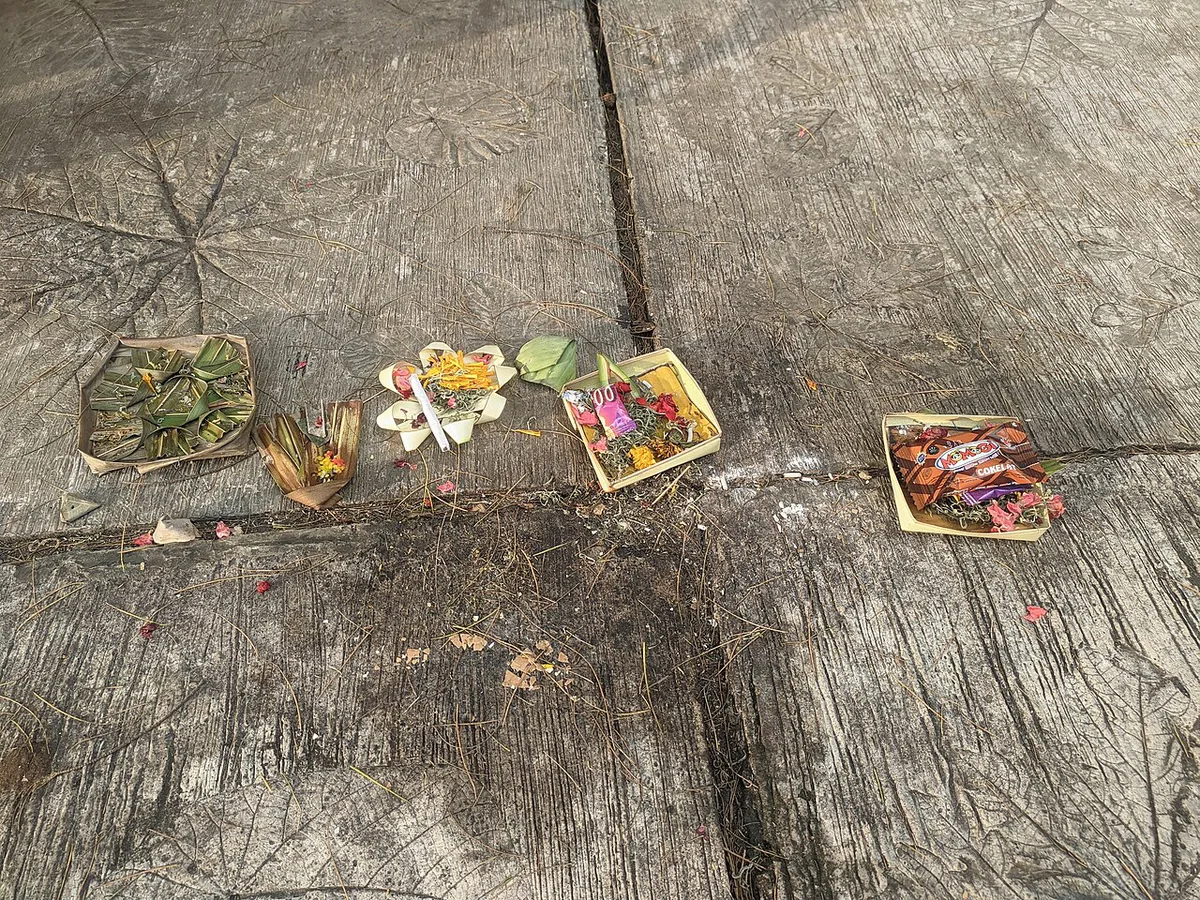
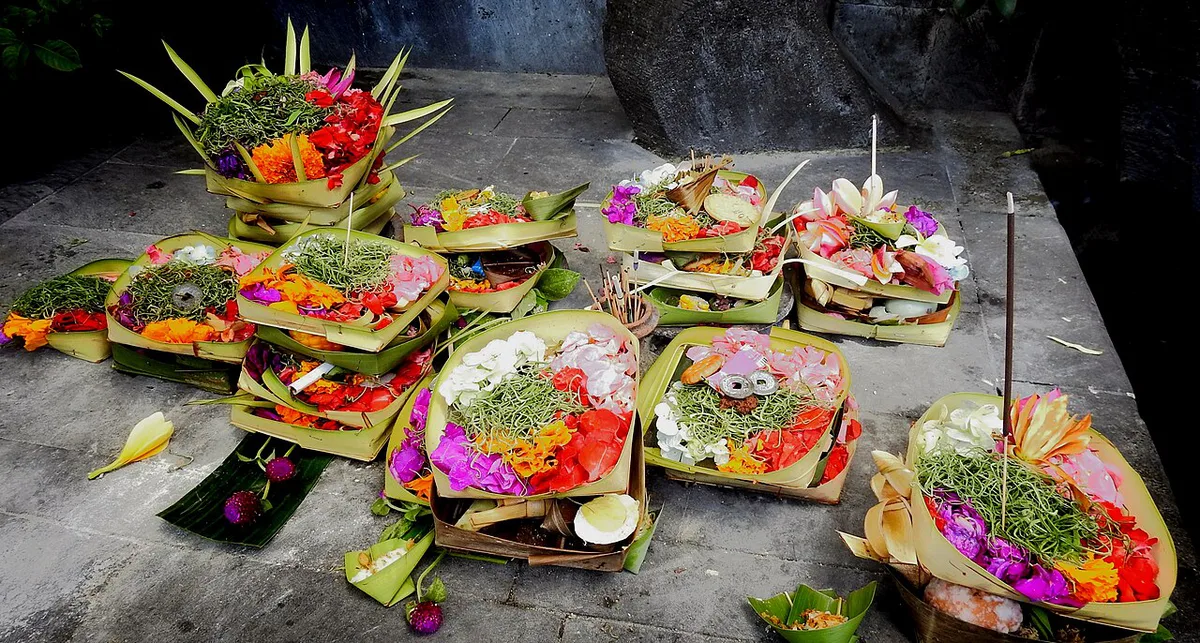
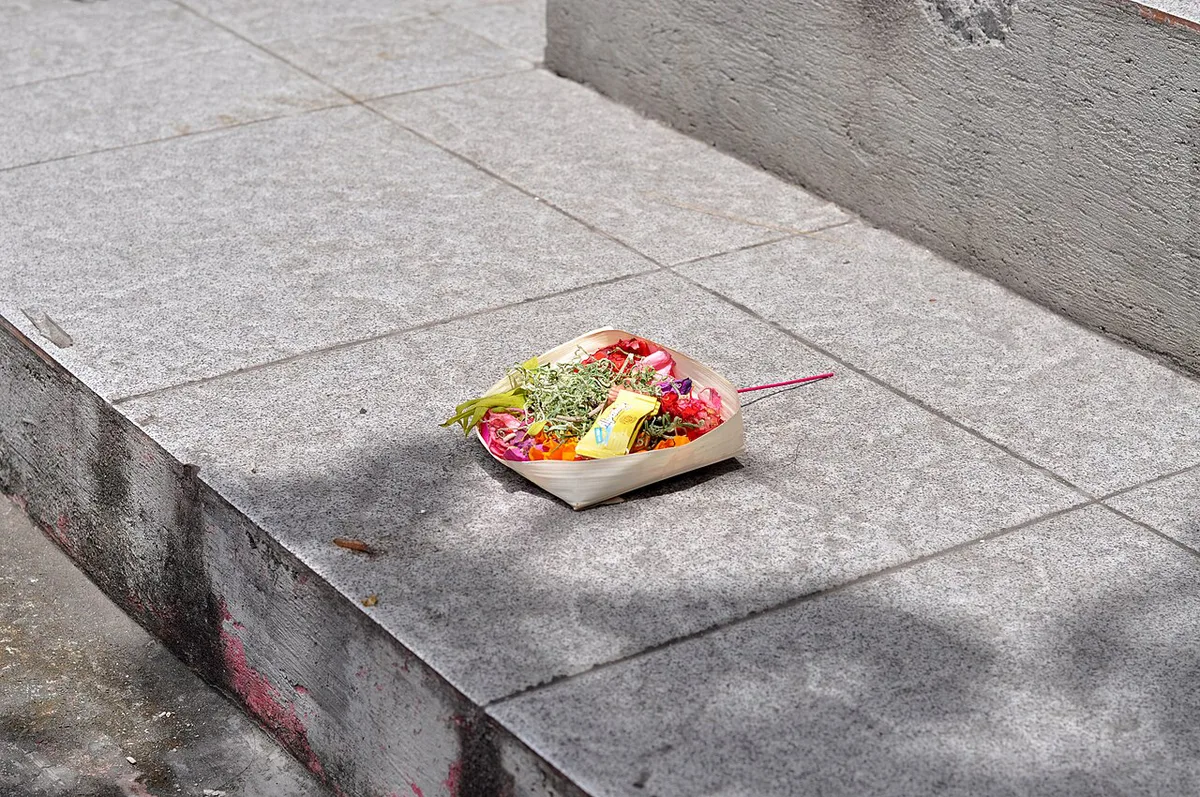
Small woven trays on pavements and shop steps are canang Sari, daily offerings of flowers and incense. Step around them rather than over them. If you accidentally touch one, apologise and move on. Locals do not expect perfection from visitors who show care.
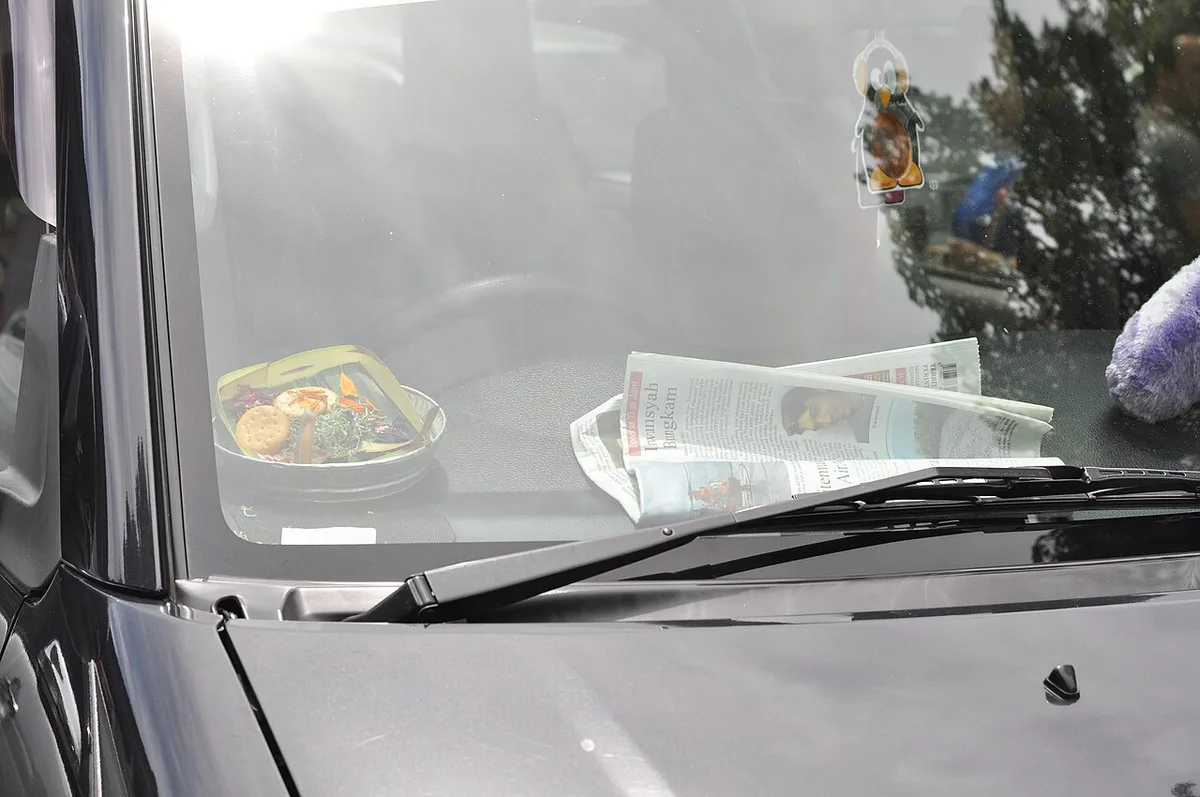
Tri Hita Karana is the Balinese principle of harmony between people, nature and the divine. It explains why offerings appear at doorways, cars, rice fields and shrines. Treat them as acts of worship rather than decoration.
Village life is organised through the banjar, a neighbourhood community council that coordinates ceremonies and local duties. Banjar members may close a street or fill a hall for a ritual. Be patient, keep voices low, and ask a host or guide when you are unsure whether you may watch.
Use your right hand for giving and receiving. Smile, greet people, and avoid pointing with a finger or touching a stranger's head. To learn how religion and rulers shaped these habits, read about the island's Hindu history.
Performances and Art: What to Expect
Many Balinese dances are sacred or ceremonial as well as entertainment. UNESCO recognises three genres of traditional dance in Bali. Arrive before the start, silence your phone, and stay seated until the piece ends.
A kecak chanting performance uses a seated chorus instead of a gamelan orchestra. Graceful legong performances are danced by young women in gold-trimmed costumes. The barong story stages good against evil. Some shows end with fire trance performances, so follow staff instructions on where to sit. For a broader view, see the other dance forms on the island.
For storytelling after dark, shadow puppet theatre is performed with a lamp and a screen. Visit the Puri Lukisan museum to place Balinese painting and carving in context.
Customs and Cultural Events: Planning Around Them
Ceremonies can close temples, redirect traffic or shift tour timings, so build slack into days with fixed commitments. Ask your accommodation about local ceremonies before booking transfers.
Nyepi is the Balinese Hindu day of silence, when the island goes quiet and normal activity stops. Restrictions can affect movement, lights and travel. Check an official Bali source for the exact dates and rules before you book flights or hotels around them.
Mistakes to Avoid
Most problems come from rushing or assuming. Use this list as a last check before you go.
- Packing restricted items without checking the official customs rule.
- Relying on a phone with no offline copy of your arrival forms.
- Entering a temple without a sash or covered legs and shoulders.
- Stepping over canang Sari or kicking offerings aside.
- Climbing on shrines or standing above priests for a photo.
- Walking through a procession instead of waiting at the side.
- Booking tight transfers on a ceremony or Nyepi day.
Frequently Asked Questions
Does Bali have a dress code?
Temples expect covered legs and shoulders, plus a sash at the waist. Many sites lend or rent sarongs, but bring your own if you want to be sure. Beachwear belongs on the beach, not in sacred or village spaces.
How much duty free can I take into Bali?
No verified allowance was available for this guide. Check the official Indonesian customs website for current limits on tobacco and alcohol. Re-check before you fly, as rules change.
Do I need my passport to go to Bali?
Yes, international visitors need a passport to enter Indonesia. Validity and visa rules depend on your nationality. Confirm them with the official immigration site before booking.
Notes for your Indonesia trip
Optional updates when we add or change a town or island guide.
You might also like



Continue reading
More guides you'll find useful