
Istiqlal Mosque, Jakarta: What to See and How to Visit

Istiqlal Mosque deserves about an hour to ninety minutes of a Jakarta day, and it pairs naturally with the cathedral across the road and the rest of Merdeka Square. The national mosque is the largest in Southeast Asia by structure and capacity, able to hold congregations of up to 120,000, according to Indonesia Travel. This page covers where it sits, how to reach it, what non-Muslim visitors can and cannot enter, the symbolism built into the dome and minaret, and how to sequence it with nearby sights.
What Istiqlal Mosque is and why it matters
Masjid Istiqlal is Indonesia's national mosque, built to commemorate the country's independence; the name comes from the Arabic word for independence. It was designed in 1954 by Frederich Silaban, a Christian architect from North Sumatra, and took 17 years to build under President Soekarno, who supervised the project personally. The result is the largest mosque in Southeast Asia by both structure and capacity, with room for up to 120,000 worshippers.
Capacity claims vary in emphasis across sources, but the 120,000 figure is repeated by both Indonesia Travel and Barcelo's Jakarta guide, which also dates construction to 1961-1978. Most Indonesian Islamic celebrations, including Ied prayer, are broadcast from this mosque, which is part of why it functions as a national symbol rather than only a neighborhood place of worship. Treat the size figure as the sources state it rather than as a measured fact you can verify on site.
Where it is
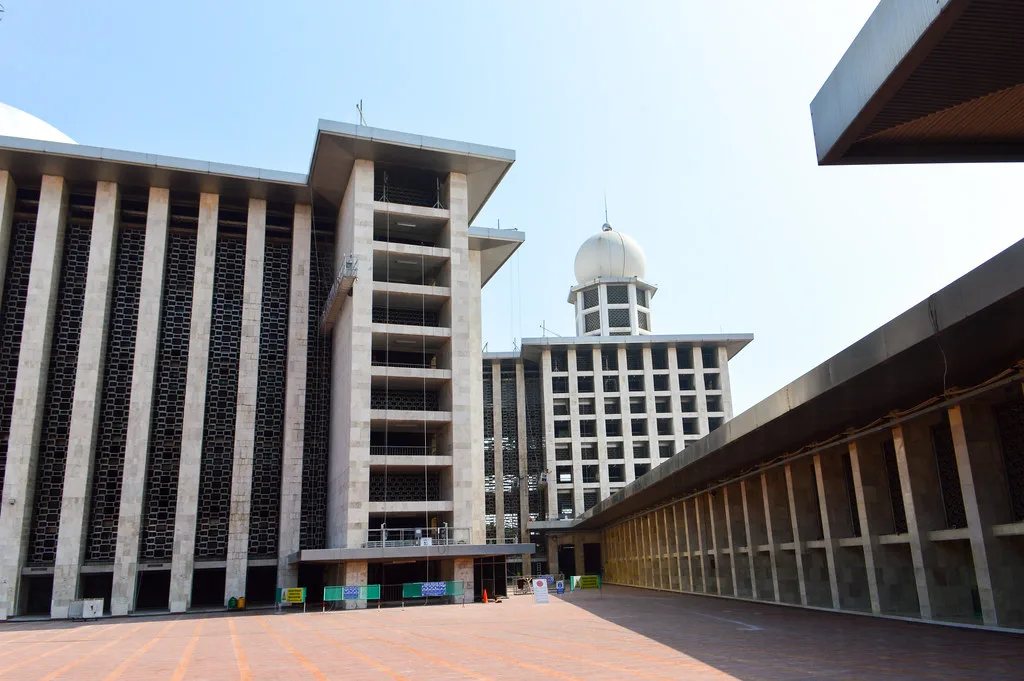
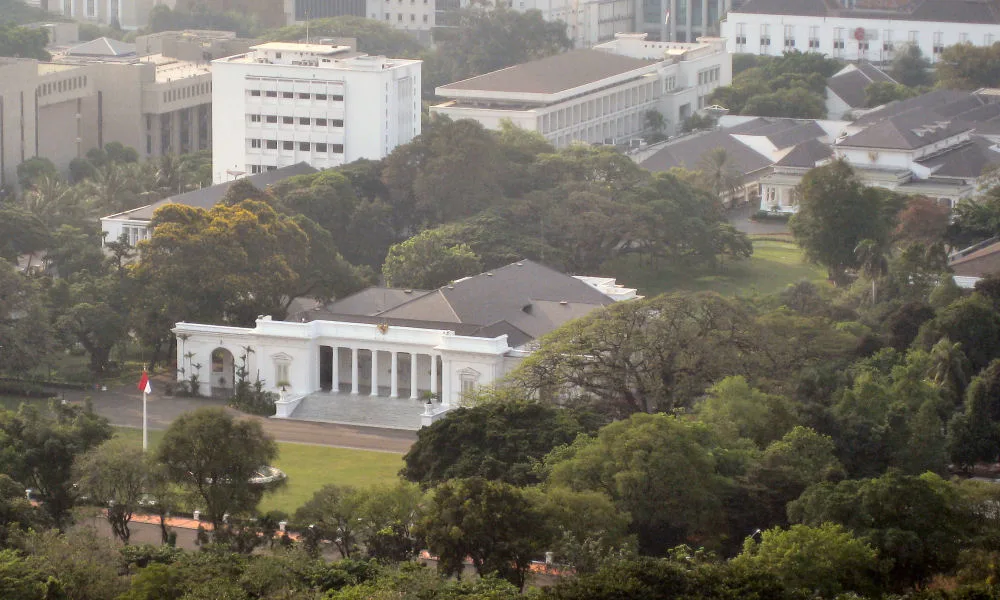
The mosque stands at Jalan Taman Wijaya Kusuma in Central Jakarta, on the northeast corner of Merdeka Square. Almost directly across Jalan Lapangan Banteng sits the old Catholic cathedral, a pairing that sources describe as a deliberate statement of religious diversity. Merdeka Square itself holds Monas, the National Library and the Merdeka Palace, so the mosque sits inside the city's densest cluster of landmarks; the National Museum is a short walk away rather than on the square.

How to get there
Gambir train station is the easiest anchor for arrival: from there you can walk to the mosque or take a motorbike taxi, known locally as an ojek. Indonesia Travel also lists Transjakarta buses toward Gambir from Soekarno-Hatta airport, along with the older Metromini minibuses, though the bus is the more predictable option for a first-time visitor. Ride-hailing apps such as Grab and Gojek work well for the final stretch if you are coming from elsewhere in the city.
Allow extra time for Central Jakarta traffic rather than trusting a straight-line distance on a map. If you are already touring the Merdeka Square area, the mosque is a walk from Monas and the National Museum rather than a separate trip. Plan the mosque as one stop in a walking loop and you avoid paying for two rides into the same district.
Visiting as a non-Muslim
Non-Muslim visitors cannot enter the main prayer hall, but they can visit the impressive upper hallways and terraces, according to Indonesia Travel. That distinction matters when you plan your time: the prayer hall is the part you view from outside or above, while the arcades, courtyard and terraces are where you actually walk. Shoes come off before entering the building, and there are seven entrances, each symbolizing one of the Seven Heavens in Islamic cosmology.
Beyond the shoe rule, sources do not publish a specific dress code or photography policy for visitors, so check the mosque's own website before you go rather than relying on blog generalizations. Worship times and Friday prayers will affect how much of the building feels accessible during your visit, and the mosque's published guidance is the place to confirm that. Build in flexibility rather than scheduling a tight slot.
What to see inside and out
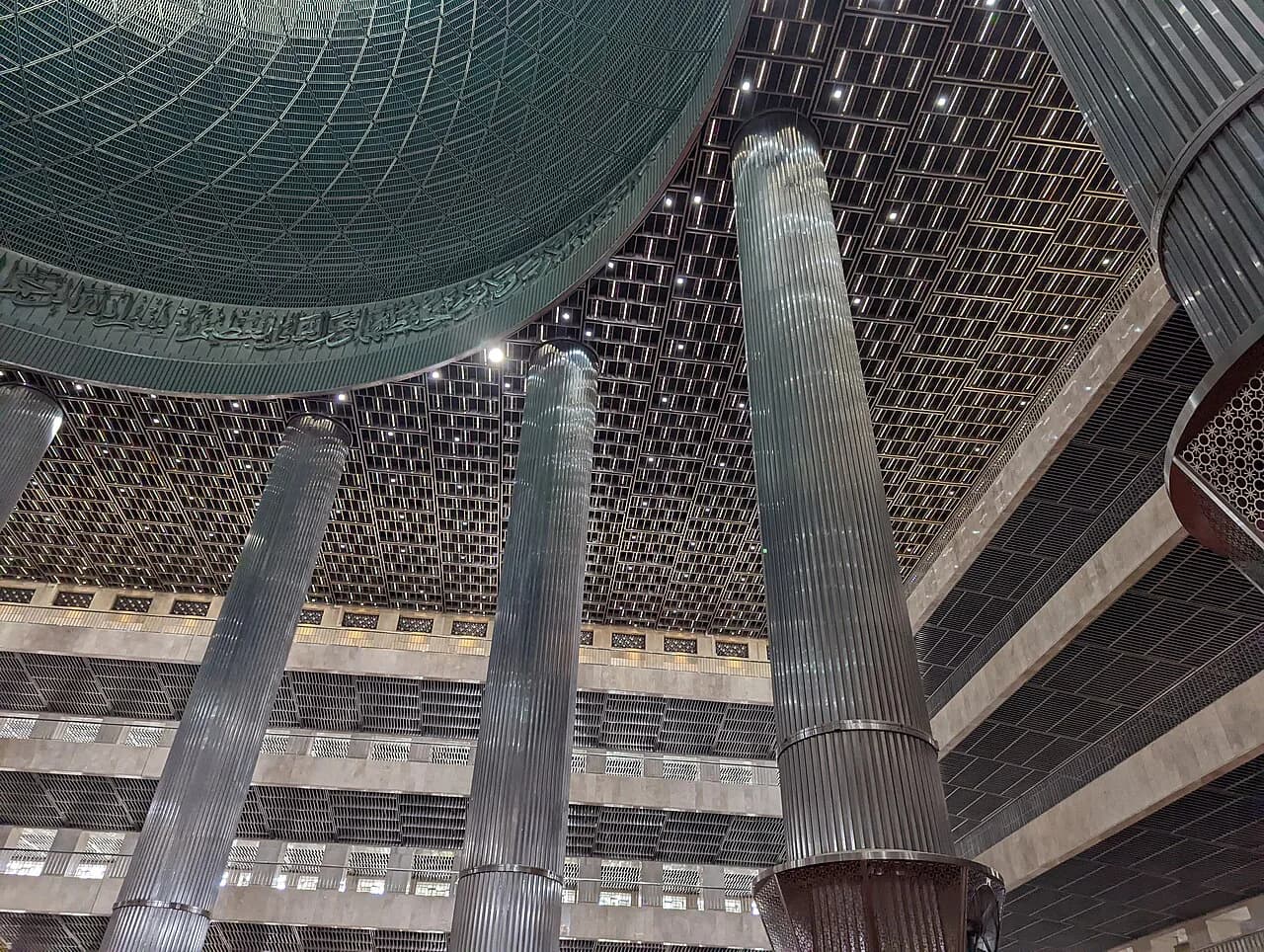
The main prayer hall is covered by a 45-meter-diameter dome supported by 12 round columns, and four tiers of balconies surround the hall. Much of the structure is clad in marble from East Java, and the interior is deliberately simple, with Arabic calligraphy spelling the names of Allah and Muhammad on the qibla wall. Look for the mihrab, the niche marking the direction of Mecca, at the center of that wall.
A single minaret rises 66.66 meters at the southern corner of the courtyard, connected to the main building by arcades, and you will find a fountain and pool beyond it. The number is meant to evoke the 6,666 verses of the Quran, and the choice of one minaret rather than several is usually read as a statement of divine oneness. The mosque was renovated between 2018 and 2020, and the new exterior lighting is designed to mimic phases of moonlight on the dome and minaret, which is why night photos look different from older ones.
Reading the numbers
The building is full of intentional numbers once you know where to look. The dome's 45-meter diameter refers to 1945, the year of Indonesia's independence proclamation, and the entrance dome is 8 meters across to mark August, the month of independence. The five levels, including the main floor and four balcony tiers, are commonly read as evoking the Five Pillars of Islam as well as the Pancasila, the national ideology.
The 12 columns supporting the dome are often linked to the prophet Muhammad's birthday, and the seven entrances represent the Seven Heavens. Knowing these references turns a walk through a very large hall into something closer to reading a building. You do not need a guide to notice them, but a quick look at the symbolism before you arrive makes the details easier to spot.
How much time to allow and the best order
Budget roughly an hour to ninety minutes inside the mosque and its courtyard, then add time for the walk around Merdeka Square. Barcelo's guide suggests a stroll around the square, including its musical fountain and deer park, can easily take over an hour on its own, so the mosque plus the square is a half-day rather than a quick stop. If you also want Monas or the National Museum, split the visit across two outings instead of cramming.
A sensible order is the mosque first, the cathedral across the road second, then Monas and the museum if you still have energy. Vatican News describes the proximity of mosque and cathedral as intentional, meant to embody the national motto of unity in diversity, so seeing them back to back is the point rather than a coincidence of geography. Doing both in one morning keeps transport costs and traffic exposure down.
Hours, tickets and entry rules
Barcelo's guide states that entry is free every day of the week, through one of the gates representing the seven heavens. That is the only claimed entry arrangement in the available sources, and it does not come with published opening hours or a stated closure schedule. To plan around prayer times and any maintenance closures, check the mosque's official channels before you travel rather than assuming a fixed daily window.
Nearby after your visit
The Cathedral of Our Lady of the Assumption, usually called Jakarta Cathedral, stands across the road; Vatican News notes its neo-Gothic design, teak ceiling and small museum, and describes a connecting tunnel between the two buildings. Check the cathedral's own visitor arrangements separately, since its opening times and access rules are not the mosque's. Allow another 30 to 45 minutes there if the doors are open.
Within the same district you can add Monas for a city overview, the National Museum for Indonesian collections, or push further north to Kota Tua for the old town and Taman Fatahillah. If you want a broader shortlist of what to pair with the mosque, the Jakarta Attractions collection maps out the options by area. Farther afield, Taman Mini Indonesia Indah in East Jakarta is a separate half-day and better saved for another trip.
Should Istiqlal Mosque be on your Jakarta shortlist?
Yes, if you have even half a day in Central Jakarta. The mosque gives you a national monument, a lesson in Indonesian symbolism and a view across to the cathedral in a single compact stop, and the Merdeka Square cluster supplies the rest of the day. Skip it only if your Jakarta time is limited to a single evening elsewhere in the city.
Before you go, confirm current visiting arrangements through the mosque's official website, since published sources do not give hours or closure dates. Plan your transport via Gambir or a ride-hailing app, carry the expectation that the main prayer hall is off-limits to non-Muslims, and leave room in your schedule for the cathedral and the square.
Explore more Jakarta guides
Frequently Asked Questions
What does the name Istiqlal mean?
Istiqlal is Arabic for independence, and the mosque was built to commemorate Indonesia's struggle for and achievement of national independence. That is why the building carries independence references in its dimensions, including the 45-meter dome diameter tied to 1945.
Can non-Muslims visit the Istiqlal Mosque?
Non-Muslim visitors may not enter the main prayer hall, but sources say they can visit the upper hallways and terraces and walk the courtyard and arcades. Shoes must be removed before entering the building.
Is Istiqlal the biggest mosque in Jakarta?
It is described as the largest mosque in Southeast Asia by structure and capacity, with a stated capacity of up to 120,000 worshippers. That makes it the principal national mosque rather than just Jakarta's largest neighborhood mosque.