
Monas Jakarta: A Practical Guide to the National Monument
Monas Jakarta is worth about an hour to ninety minutes, and the observation deck is the reason to arrive early. The National Monument is a 132-meter marble obelisk in the middle of Merdeka Square, capped by the gold-leaf Flame of Independence. This guide covers the entrance tunnel most first-timers miss, the cashless JakCard, the small deck and its lift queue, the diorama museum at the base, and the nearby Central Jakarta sights.
What Monas is: a 132-meter obelisk and a gold flame
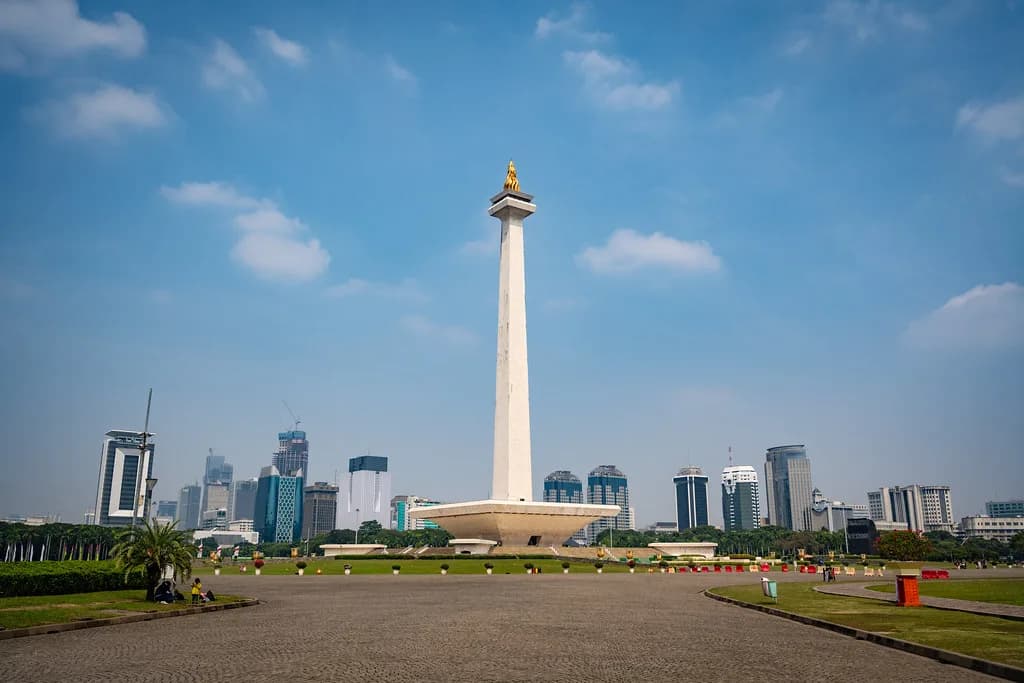
Monas stands 132 meters tall in Central Jakarta, but the shape carries more meaning than the height. The tall shaft and the broad cup at its base are read as a lingga and yoni, a Javanese pairing that explains why the monument looks nothing like a Western war memorial. The flame at the top is a bronze sculpture gilded in gold leaf, and it sits at the heart of Merdeka Square as a symbol of the independence struggle.
The design history is as political as the monument itself. A competition in 1955 chose architect Frederich Silaban, but President Sukarno wanted the lingga and yoni form, and Silaban's revised version proved too expensive for the economy of the time. Architect R.M. Soedarsono took over and folded the numbers 17, 8 and 45 into the dimensions, a reference to the 17 August 1945 declaration of independence. Construction started in 1961 and the completed complex was inaugurated in 1975.
Where Monas sits and how the entrance actually works
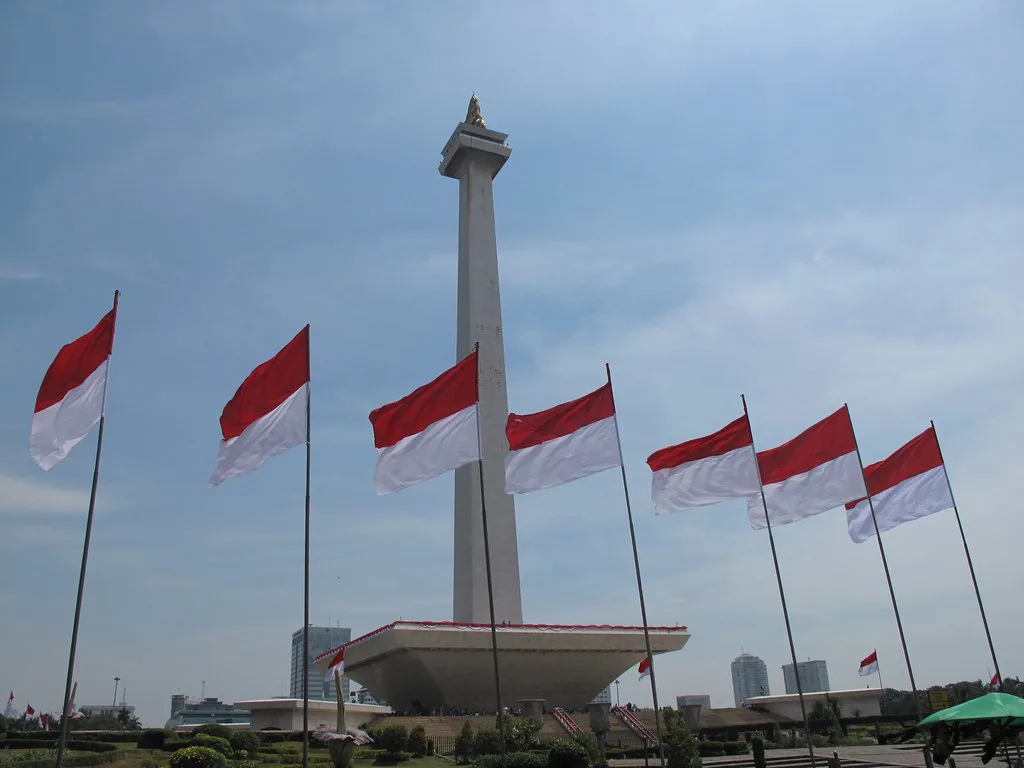
Monas occupies the center of Merdeka Square, the large green square in Central Jakarta, and the entrance is the part that trips people up. You do not walk up to the base of the monument: access is through an underground tunnel from the northeast corner of the square, near the IRTI car park, and the last stretch is on foot below ground. Ride-hailing drivers drop passengers at the park perimeter rather than at the monument, so plan on a walk of several hundred meters across open, largely shadeless ground.
Getting there by TransJakarta, KRL or MRT
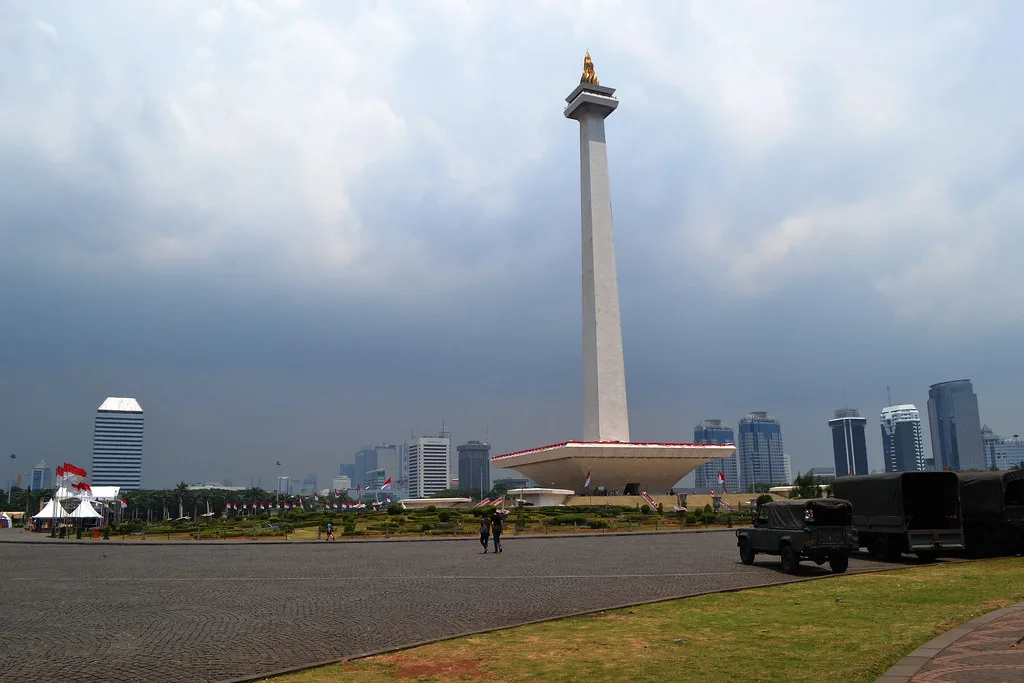
Public transport gets you close on several routes. TransJakarta buses stop at Monumen Nasional and Monas stops on multiple corridors, and the commuter KRL to Gambir station puts you on the eastern side of the square. If you take the MRT to Bundaran HI, finish the trip with a short Grab, Gojek or Bluebird ride.
Walking directions from the nearest station vary by line, so confirm the gate you want on a map before you set out. The monuments, museums and malls of Central Jakarta are spread out enough that most visitors mix one train or bus leg with a car ride rather than walking the whole way.
Tickets: the cashless JakCard and same-day deck passes
Monas does not take cash at the gate. You buy a JakCard, a Bank DKI stored-value card, on arrival, reported at around IDR 45,000 to 50,000 including a starting balance, and tap in with it. Deck tickets themselves are cheap, reported in the region of IDR 24,000 for an adult, with lower rates for students and children, and one card can cover several people in a group. Treat those figures as reported rather than fixed and confirm the current rates at the counter.
There is no online booking and no advance sale for the deck. Tickets are same-day, first come first served at the counter, so the only queue-skipping strategy is turning up at opening. The base museum alone costs considerably less than the deck ticket, which matters on a day when the lift sells out.
The observation deck and the lift queue
The deck sits just below the flame and is reached by a lift inside the shaft. It is small, roughly eleven meters square, and holds only about fifty people at a time, which is why the lift queue is the longest part of a busy visit. Arriving at opening can mean around twenty minutes of waiting; arriving late in the morning can stretch that toward two hours.
A clear morning is what the deck is for. Jakarta is largely low-rise and often hazy, so an early visit gives you a real sense of the city's sprawl while an afternoon can deliver grey. Set expectations accordingly: this is an honest city view rather than a postcard panorama, and the park below is often the more pleasant part of the trip.
The base museum, the dioramas and the Hall of Independence
At the base of the monument, the National History Museum tells Indonesia's story through 51 dioramas, running from the early archipelago through the independence struggle to the post-independence period. The dioramas were made by sculptors and students under Edhi Sunarso of Yogyakarta, and they were added in the final stage before the complex was inaugurated. Below the monument, the Hall of Independence holds a copy of the proclamation text.
Museum entry is included with the monument entrance, which makes it the affordable half of a Monas visit. If the deck is sold out for the day, the museum and the park are still worth about an hour, and the museum is the better choice for anyone who wants context rather than a view.
When Monas is closed, and why you check on the day
Monas is closed on Mondays, with a substitute closing day when a Monday falls on a public holiday. That rule is worth verifying before you build a day around it, since holiday weeks shift the pattern. Hours are also reported inconsistently and appear to run later on Friday to Sunday evenings, so check the day's schedule at the counter or on the official site rather than trusting a fixed time.
Merdeka Square park: joggers, picnics and hero sculptures
The monument is surrounded by about 80 hectares of green space, the largest urban park of its kind in Southeast Asia and a genuine escape from the traffic. Sculptures of national heroes are scattered across the grounds. Early mornings bring joggers circling the pathways, while families and groups picnic later in the day, and you will see people practicing martial arts or playing music in the open areas.
The walk in from the road is long, open and shadeless, and there is very little cover on the square itself. Carry water and a hat, and treat the crossing as part of the visit rather than a quick step off the sidewalk.
What is nearby in Central Jakarta
The National Gallery is close by if you want more art and culture after the dioramas. For a deeper dive into Indonesian history and artifacts, the National Museum of Indonesia in Jakarta sits within reasonable reach and covers far more ground than Monas can.
Istiqlal Mosque, the largest mosque in Southeast Asia, is another short ride away and pairs naturally with a Monas morning in Central Jakarta. Shopping and dining are easy to find at Thamrin City, Plaza Indonesia and Grand Indonesia Shopping Town, each offering everything from local handicrafts to international brands.
If you want a second, very different Jakarta attraction, Taman Mini Indonesia indah in East Jakarta spreads provincial pavilions, museums and performances across a large site on Jl Raya Taman Mini. It needs its own half day and its own transport plan, so do not try to pair it with Monas on the same tight schedule.
Is the deck worth the queue, or should you stay at ground level?
Choose the deck if you can be at the northeast-corner tunnel near opening and the sky is clear; the fifty-person capacity and same-day tickets make timing the whole decision. If you are arriving late, skip the lift and spend your hour on the dioramas, the Hall of Independence and the park, which cost far less and rarely disappoint.
However you split the visit, buy the JakCard first, avoid Mondays unless you have confirmed the substitute closure, and check current prices and hours at the counter before you commit.
Explore more Jakarta guides
Frequently Asked Questions
Why is Monas famous?
It is Indonesia's national monument, built to commemorate the struggle for independence and inaugurated in 1975. Its 132-meter obelisk and gold-covered flame sit at the center of Merdeka Square, and the base houses a diorama museum covering Indonesian history.
What is Monas in Jakarta?
Monas is the shortened name for Monumen Nasional, the National Monument in Central Jakarta. It combines an observation deck near the top, a history museum with dioramas at the base, and a large public park around it.