
Masjid Sunan Ampel in Surabaya: Visiting the Ampel Mosque and Sunan Ampel's Tomb

Masjid Sunan Ampel is a working mosque in North Surabaya, not a ticketed monument, and most visitors should plan on roughly an hour and a half to two hours once they reach the gate. It was founded in 1421 by Raden Rahmatullah, the figure known as Sunan Ampel, and his mausoleum sits in a building west of the prayer hall, which is why mosque and tomb are usually treated as one stop. This guide separates the three things people tend to blur together — the mosque, the tomb complex, and the surrounding Arab quarter — and explains how to reach them.
What Masjid Sunan Ampel actually is
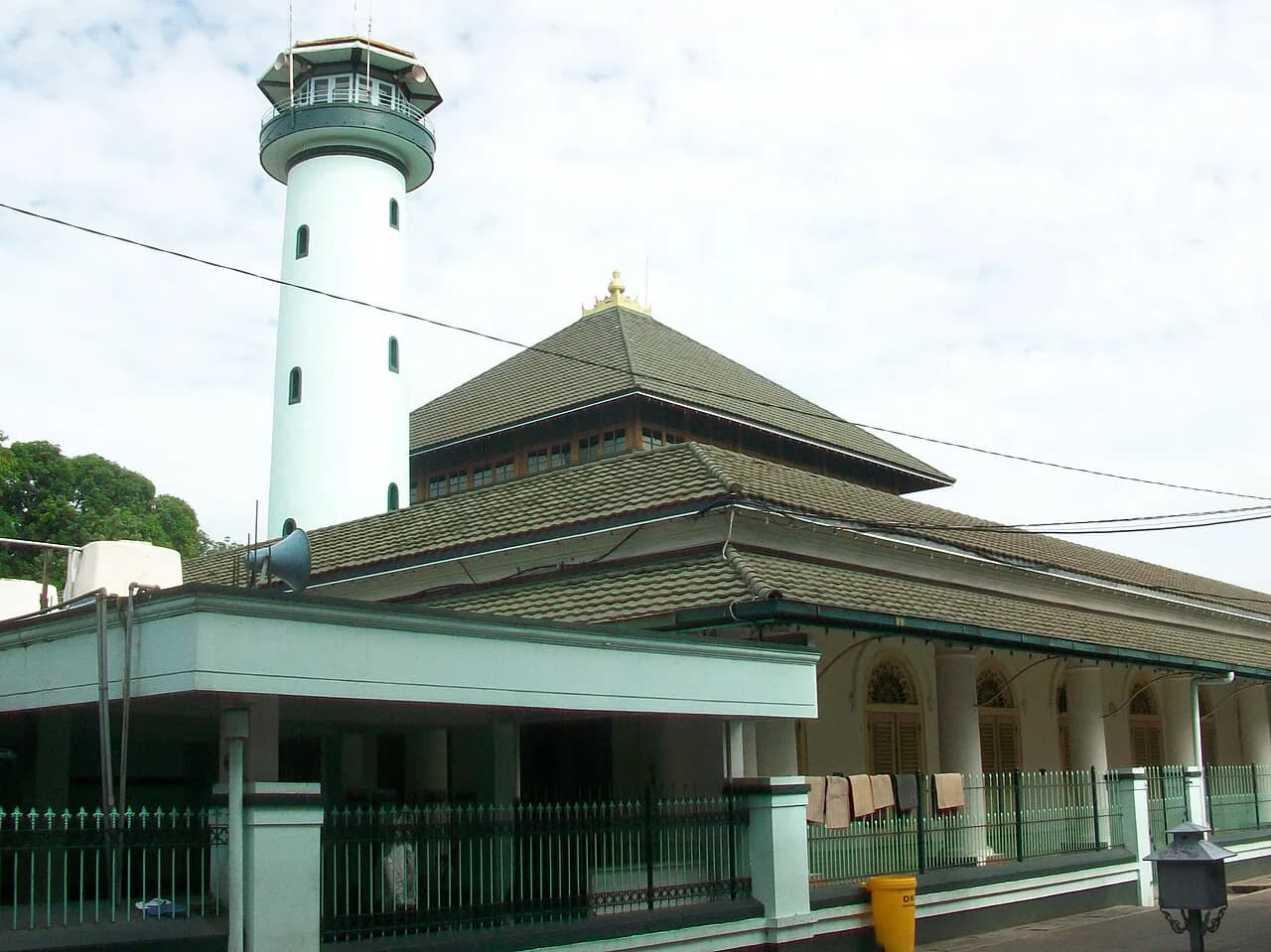
The complex began as the center of a pesantren established by Sunan Ampel on land in the Ampeldenta area, and the mosque has been in continuous use as a place of worship since. Indonesia's tourism ministry dates the mosque's construction to 1421 and describes the site as a blending of Islamic, Javanese, and Middle Eastern architecture, expanded and reorganized over the centuries to handle growing pilgrim traffic. Read the site that way and the visit makes sense: it is a living religious campus with a tomb at its heart.
Sunan Ampel is counted among the Wali Songo, the nine figures credited with spreading Islam across Java, and is often described as the senior teacher of that generation. He is said to have died around 1481 and was buried beside the mosque, which is how the prayer hall and the grave came to share one walled precinct. That pairing is deliberate rather than accidental, and it shapes how you move through the gates.

Where it is: Jalan Ampel Masjid, North Surabaya
The address is Jalan Ampel Masjid in Kelurahan Ampel, Kecamatan Semampir, in the northern part of the city inside the Kampung Arab Ampel. The mosque stands about 4 kilometers from Tanjung Perak, the main port for eastern Indonesia, so the surrounding streets have a long history of trade and arrivals. If you are plotting your day by district, this is Surabaya Utara and pairs naturally with waterfront sights rather than the southern business districts.
The immediate neighborhood is the Arab quarter itself, where the descendants of Yemeni and other traders have lived for generations and where shops sell prayer beads, caps, robes, perfume, and dates. That market is not scenery on the way in; it is part of the visit, and budget time for it. The dedicated page on Kampung Arab Ampel explains the lanes and food in more detail if you want to build a longer walk.
Getting there by train, bus, or ride-hail
If you arrive by train, the two practical stations are Pasar Turi and Gubeng. Indonesia's tourism ministry suggests continuing from either one by ojek or ride-hail app to the Ampel area, which is the simplest option with luggage or in the heat. Pasar Turi sits closer to the north side of the city, so it usually means a shorter onward leg, while Gubeng handles more services and may suit your schedule better; check current KAI schedules before committing.
City buses and angkot also run toward North Surabaya, and the ministry lists them as a viable route to the area. From the main gate or parking area you then continue on foot, roughly 5 to 10 minutes along the market lanes before you reach the mosque courtyard. That final stretch is narrow and busy, so a driver who offers to drop you at the doorstep may not be able to do so.
Walking in through the Ampel market
The approach sets the tone. Vendors line the lanes with prayer supplies and souvenirs — prayer beads, caps, robes, perfume, dates — and the crowd thickens as you near the mosque. Treat this as a slow corridor rather than an obstacle and keep your group together; it is the busiest part of the visit and the easiest place to lose someone.
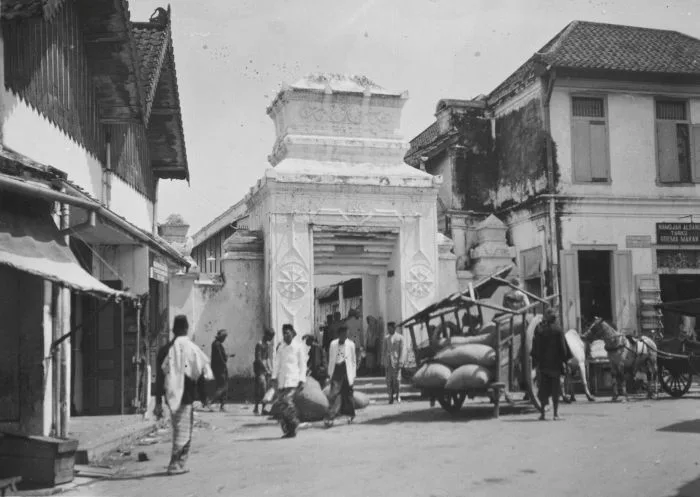
Five gateways mark the sequence into the precinct: Gapura Ngampel, Gapura Munggah, Gapura Posopati, Gapura Mengadeg, and Gapura Panekesen. They are traditionally read as symbolizing the pillars of Islam, moving you from the outer street, through transitional spaces, to the prayer area and finally the burial ground. Knowing that order helps you notice when the noise of the market falls away.
What to see in the mosque
The roof is the first thing to read: a triple-tiered Javanese crown, tumpang tiga, understood as three levels of spiritual attainment. Inside, the main hall is held up by sixteen solid teak pillars, the soko guru, each roughly 17 meters tall and reportedly built without iron nails or joints, with a diameter near 60 centimeters. The carved wooden mihrab and minbar mix Majapahit-era Javanese forms with Arabic calligraphy, and the lotus and vine motifs on the interior carvings point to older Hindu-Buddhist craft traditions absorbed into Islamic ornament.
Look for the minaret, a brick tower with Javanese-Hindu and Chinese structural influences that also works as a visual marker for the coastal district, and for the carved wooden ventilation panels above doors and windows. The woodwork is functional, not just decorative: it keeps air moving through the hall while filtering light.
The tomb of Sunan Ampel
Sunan Ampel's mausoleum lies in a building on the west side of the mosque, within the same complex, and pilgrims file along shaded corridors reciting selawat and zikir as they wait. The atmosphere is devotional rather than museum-like, and the layout intentionally joins a place of prayer to a place of remembrance. Visitors frequently ask why the tomb has no roof; the sources here do not settle that question, so ask on site rather than repeating a story you heard.
This is an active place of worship first and a sight second, so how far into the tomb area you may go can depend on the day, the hour, and whether a ceremony is underway. Neither the mosque nor the ministry publishes a clear rule for non-Muslim visitors in the material available here. Ask a caretaker at the entrance, follow what other visitors are doing, and stay out of the way of anyone praying.
How crowded it gets, and when to go
According to the mosque's takmir as reported in one profile, roughly two thousand people visit daily, with groups arriving by bus in numbers reaching around thirty coaches at a time. Treat those as reported figures rather than a live count, but they explain why the lanes can jam without warning. The same profile notes the Ramadan month as the peak, when pilgrimage and prayer bring the heaviest crowds.
For a calmer visit, the ministry's pilgrimage guidance suggests avoiding weekends and peak hours, when the tomb corridors and market lanes are most congested. Early mornings on a weekday are the usual sensible choice. Because prayer times and Ramadan dates shift each year, check a current Indonesian calendar rather than relying on last year's pattern.
Hours, tickets, and what to confirm
Masjid Sunan Ampel does not appear in these sources with published visitor hours or an entry ticket, and the complex functions as a mosque rather than a gated attraction. Mosque entry is generally free in Indonesia, but do not assume; confirm on arrival whether anything is being collected, especially for the tomb area. If your plans hinge on a specific window, ask your hotel or a driver to call ahead the same day.
How long to allow, and what to cut
Give the visit about 90 minutes to two hours: fifteen to twenty minutes through the market lanes each way, forty-five minutes for the mosque and tomb, and the rest for lingering in the Arab quarter. If you only have an hour, walk straight in, see the prayer hall and the gateways, and skip the shopping streets on the way out. Because the site is a working mosque, Friday midday is not the moment to browse the hall.
What is nearby
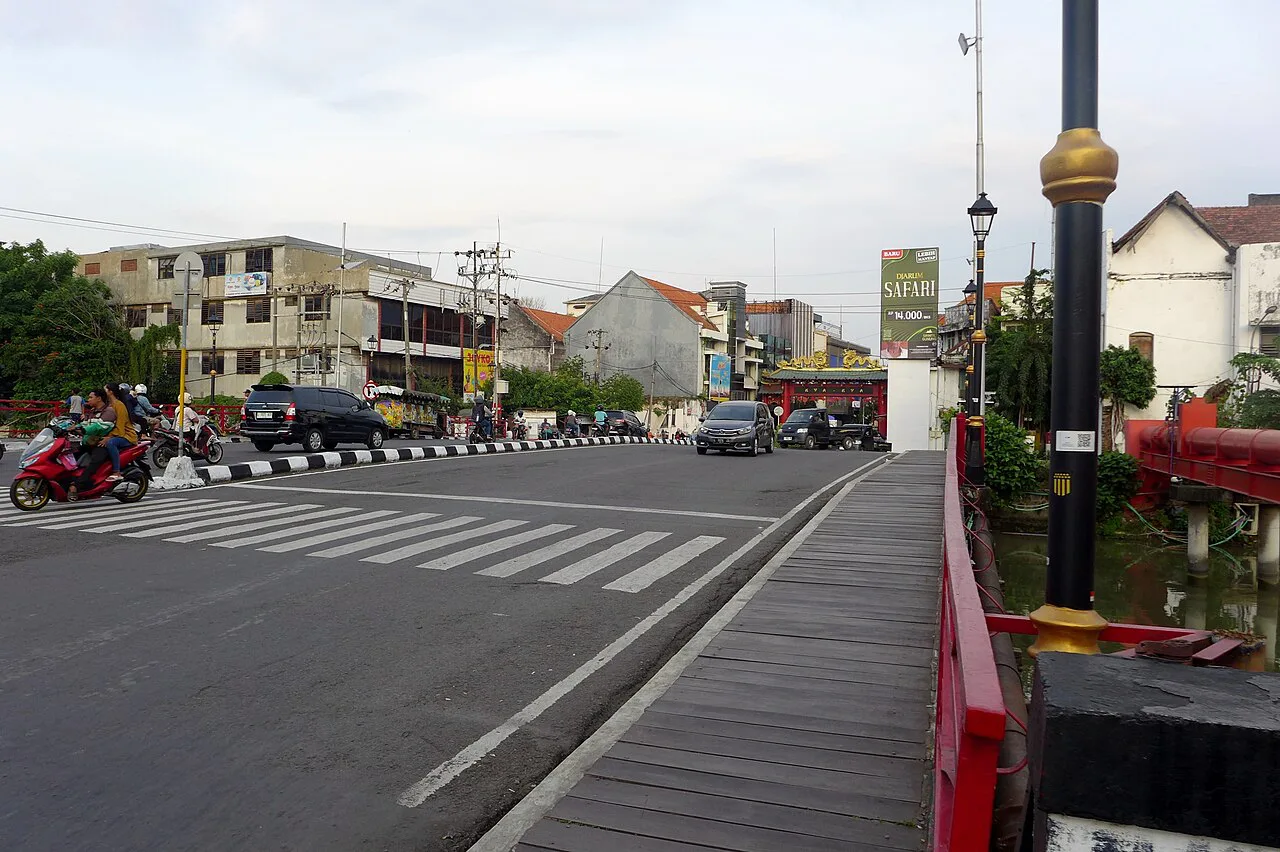
North Surabaya rewards a half day rather than a single stop. The old town around the Kalimas river, with its Dutch-era warehouses and the Red Bridge, is a short ride away and makes a logical second stop before or after Ampel. Klenteng Hong Tiek Hian, a Chinese temple in the same quarter, is listed by the tourism ministry among the religious sites close to the tomb, and the Tanjung Perak harbor area lies about 4 kilometers off.
If you would rather stay in the center, the Tugu Pahlawan Surabaya area, with its monuments and museums, is the opposite end of the city and works better as a separate morning. Closer to the port, the Kenjeran park Surabaya and the Kelenteng Sanggar Agung in Sukolilo Baru combine well with a northern loop. Pick one cluster per half day; crossing Surabaya twice in the same afternoon is the most common planning mistake.

Is Masjid Sunan Ampel worth the detour north?
Yes, if you want to understand Surabaya rather than just pass through it. The mosque and tomb give you a compact lesson in how Islam took root on Java, and the market lanes supply the texture that a restored monument usually lacks. Go on a weekday morning, arrive by ride-hail from Pasar Turi or Gubeng, and let the walk in take as long as it takes.
Skip it if you have only a few hours and your priority is the colonial center, since the trip north and back eats a chunk of the day. Either way, treat the visit as a guest in a working religious site: check current arrangements on arrival, and plan your second stop before you go so you are not negotiating traffic twice.