
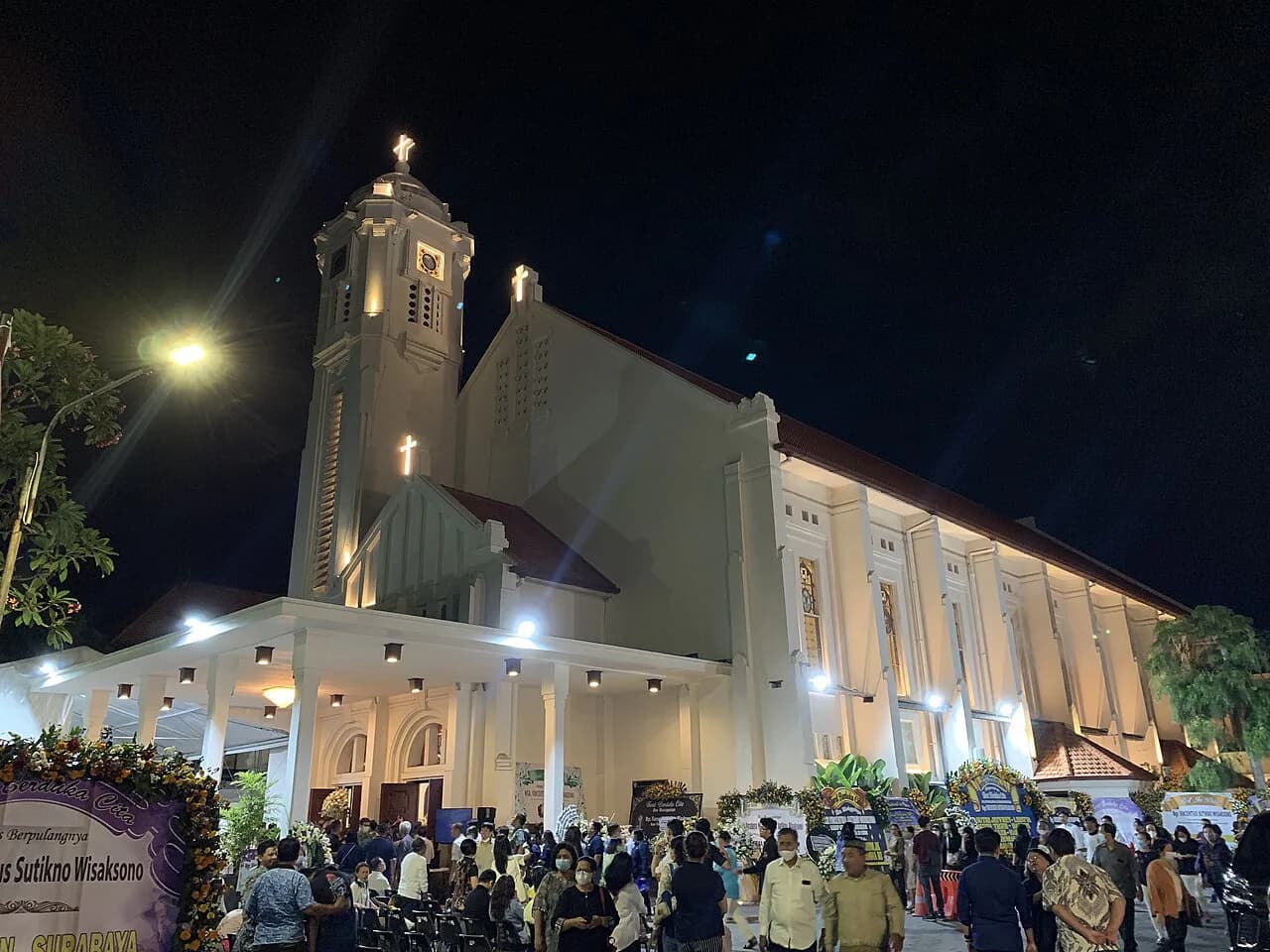
Gereja Katedral Surabaya (Hati Kudus Yesus): A Visitor's Guide

Gereja Katedral Surabaya is worth 30 to 45 minutes if you treat it as an active parish church rather than a museum, and far longer if you attend a Mass. It is the Catholic cathedral of the Diocese of Surabaya, formally Gereja Katolik Hati Kudus Yesus, or the Sacred Heart of Jesus Cathedral. This page covers where it is, how to get there, what to look for in the building, and how to time a stop around services.
What Gereja Katedral Surabaya is
The word cathedral refers to the bishop's seat, not to size, and that distinction shapes how you should read this building. The parish history explains that Katedral comes from the Latin cathedra, the chair or throne of a bishop kept inside the principal church of a diocese. Surabaya's diocese was formally established on 3 January 1961, which is why a church built decades earlier carries the title today.
Practically, you are visiting a working cathedral whose primary job is worship for a large urban congregation. It sits in a dense commercial district rather than a landscaped tourist compound, so there is no ticketed gate, no audio guide, and no formal visitor route. Approach it as you would a major city church in the United States: walk in quietly, look, and step out when a service begins or is about to.

Where it is on Jl. Polisi Istimewa
The address is Jl. Polisi Istimewa No. 15, Keputran, Kecamatan Tegalsari, Surabaya, in the flat central grid south of the river. It is a short ride from the Tunjungan and Darmo corridors, where most central hotels cluster. The street name is the easiest landmark for a driver: Polisi Istimewa runs through Tegalsari toward the Darmo area, and the cathedral is a recognized stop along it.
If you are also seeing the historic north of the city, plan the cathedral as a separate stop rather than a walk from the old quarter. The city's heritage sights sit in Surabaya Utara around the Kalimas river, a distinctly different district from Tegalsari's office and retail blocks. Pairing the cathedral with the old town works as a two-stop morning by car or ride-hailing app, not on foot.

How to get there from central Surabaya
Grab and Gojek are the most straightforward options from central hotels, and both let you pin the cathedral by name so you avoid explaining the address in traffic. Bluebird taxis are a good fallback if a ride-hailing wait is long at a busy hour. Rides from the Tunjungan area are short, but one-way streets and afternoon congestion can stretch a trip that looks brief on a map.
Allow extra time from the airport or the northern historic districts, and ask the driver to drop you at the church entrance rather than across the avenue. Traffic in Tegalsari builds through the working day, so a morning arrival is calmer than a late-afternoon one. There is no dedicated tourist parking lot to plan around, which is another reason to arrive by app-based car or taxi.
What to see in the 1921 church
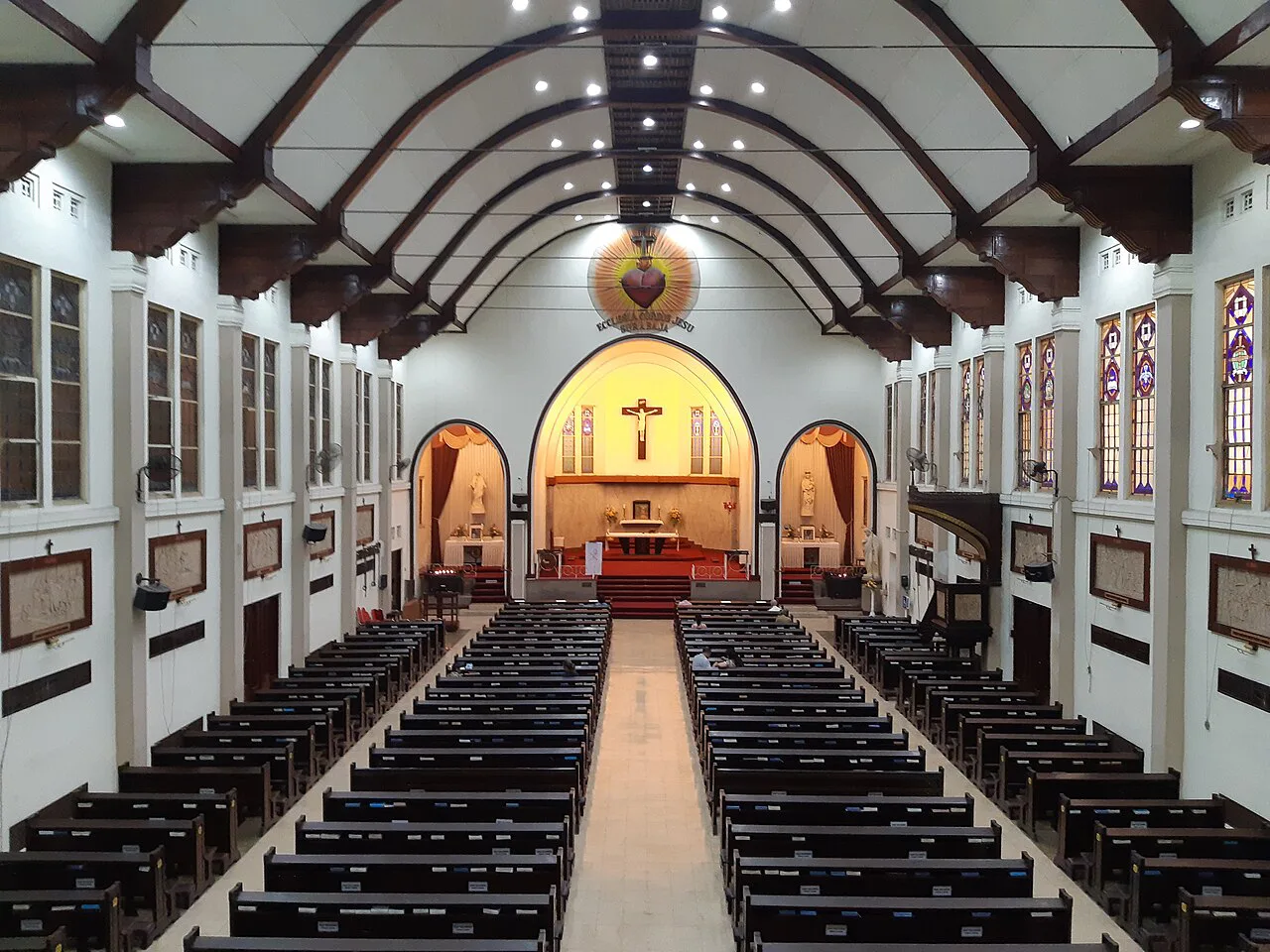
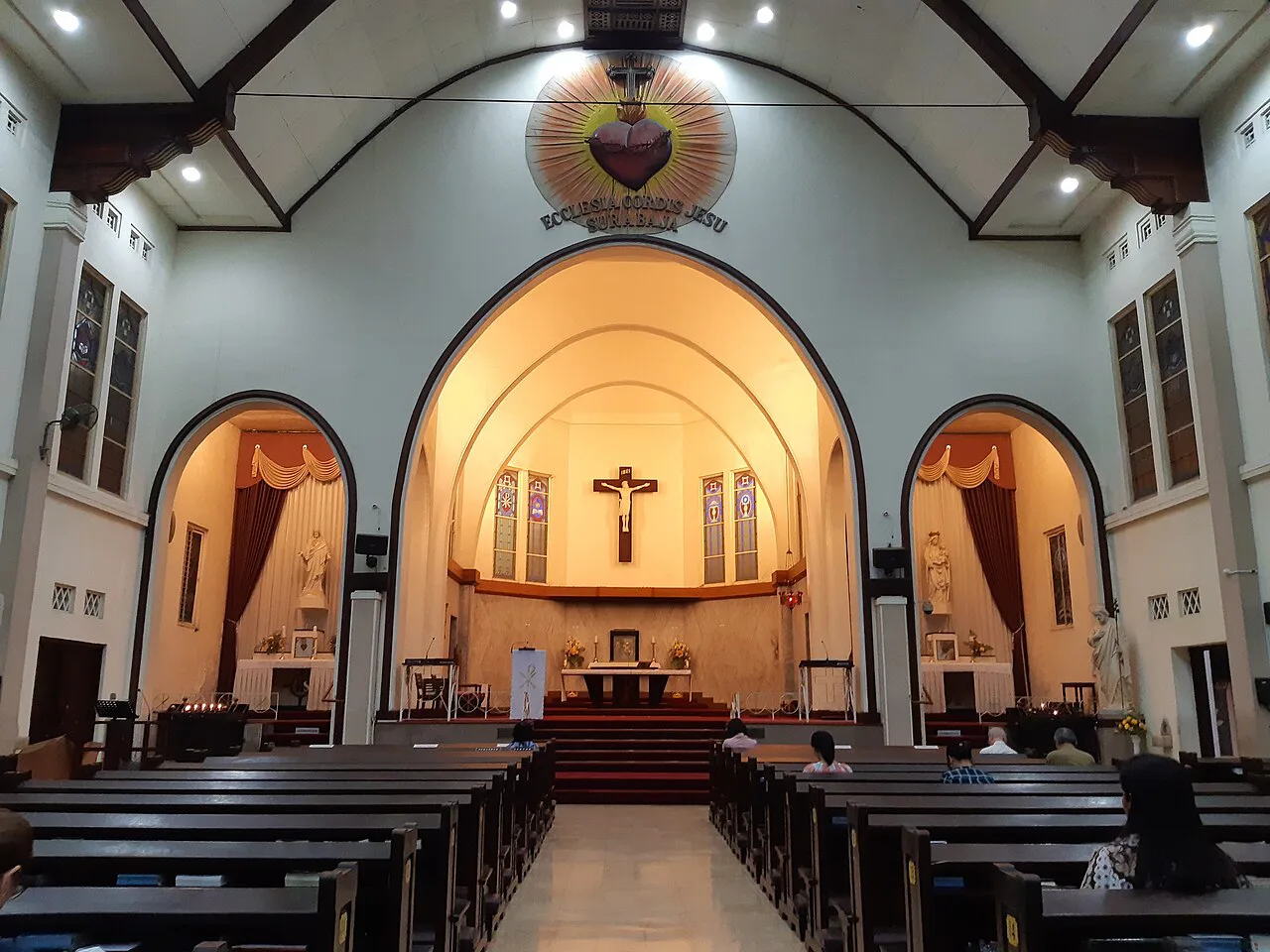
The building you enter was completed as the Hati Kudus Yesus church in 1921, and the parish account notes it was repaired in 1926. Its plan is a simple rectangle, so you can read the whole interior from the entrance in a couple of glances. Look up and forward rather than hunting for side chapels: the composition is concentrated at the far end.
The distinctive feature is the sanctuary end, described as a shell-shaped apse with arches curving to its left and right. That shape frames the altar and gives the interior its focus, so spend your time there rather than on the entrance wall. Stained glass, statues and devotional details are best appreciated from the pews, where you can sit without blocking anyone's sightline.
Photography is a judgment call rather than a posted rule you should assume. If people are praying or a service is underway, put the phone away and simply sit; outside those moments, discreet, silent shots from the back are the safer default. There is no published ticket office, so there is nothing to queue for.
The cathedral's place in Surabaya's Catholic story
Surabaya's first Catholic church was established in Kepanjen on 12 March 1822, well before the current building existed. As the congregation grew, a second church dedicated to the Sacred Heart of Jesus was built in 1921. The diocese itself dates from 1961, which tells you the parish predates the cathedral title by four decades.
Note what that history does not say: it does not establish this building as the oldest church in the city, because the 1822 church was a different structure in a different district. If you want the older Catholic thread in Surabaya, look at the churches of the north and central districts separately. The gereja Kelahiran Santa Perawan Maria Surabaya is the stop usually paired with the old-town walk for that earlier layer of the story.
Timing a visit around Mass
Sundays and holy days are the busiest and least suitable times for sightseeing, since the congregation fills the nave. The parish posts its Mass schedule and seasonal announcements, including special liturgies, on its own site, and that page is where to check before you build a morning around the cathedral. Weekday visits are quieter if your only goal is seeing the architecture.
Parish social accounts announce specific liturgies, such as an Advent Sunday Mass with reception of catechumens, which shows how event-driven the calendar can be. Treat these posts as pointers to current activity, not as a timetable you can rely on for a future trip. Confirm the week you travel rather than months ahead.
Opening hours and access: what to confirm
The parish secretariat lists Monday to Saturday, 07.00 to 14.00 WIB, alongside a contact number, and a third-party attraction listing repeats the same 07.00 to 14.00 window. Those hours describe the parish office and a listed visiting window, not a guarantee that the nave is open to tourists at every moment inside it. Before you go, check the parish announcement page or call ahead to confirm access on your date.
The sources consulted do not list an entrance fee or an online booking system, so do not budget for a ticket and do not plan around a reservation. If a staff member or volunteer asks you to wait outside during a liturgy, that is normal parish practice rather than a closed door. Confirm any special arrangements by phone through the number on the parish contact page.
How long to allow
For architecture and a quiet few minutes, 30 to 45 minutes covers the nave, the apse and a slow walk back out. Add time if you want to sit with the interior rather than photograph it, since the building rewards stillness more than a quick circuit. This is a single-building stop, not a half-day site.
If you attend a Mass, plan on roughly an hour plus arrival time. Combining the cathedral with a Tegalsari or Darmo errand works better than making it the anchor of a whole day, and most travelers will fold it into a central Surabaya morning alongside one other stop.
What else fits nearby
Taman Bungkul on Jalan Raya Darmo is a compact public park within a short ride and makes an easy pairing if you want open air after an indoor stop. It is a local gathering space rather than a monument, so go for a walk-through rather than a scheduled visit. Both stops fit comfortably into one morning by car or app-based ride.
History-minded visitors can add Tugu Pahlawan Surabaya, the city's independence monument, and the museum beside it for a sharper contrast with the cathedral's quiet interior. Both sit in the same central band of the city, so a driver can chain them without much dead time.
For a fuller picture of what else deserves your time in the city, the wider collection of Surabaya Attractions: 15 Visitor Guides puts the cathedral alongside the old town, the Arab quarter and the mosques in one place. Use it to decide which two or three stops share a day, then come back to this page for the cathedral specifics.
Visiting respectfully as a non-Catholic
This is a consecrated church, so the baseline is the same as at home: lower your voice, remove hats, and avoid walking across the sanctuary. Sit toward the rear if a few people are praying, and leave promptly if ushers begin preparing for a service. Modest clothing covering shoulders and knees is the sensible default.
If you want to understand the building rather than just see it, read the parish's own history and announcement pages before you arrive. They explain the cathedral's role in the diocese better than any general city guide, and they will tell you if a major liturgy is coming up. That small bit of preparation turns a quick photo stop into a stop you remember.
Should the cathedral make your Surabaya shortlist?
Yes, if you want one calm, historically layered interior in central Surabaya and can slot it into a morning near Tegalsari or Darmo. Skip it if your day is already built around the old town and the north, since the cross-city ride is the main cost of adding it. Either way, check the parish schedule before you go so a service does not catch you mid-tour.
Explore more Surabaya guides
Frequently Asked Questions
Is Gereja Katedral Surabaya the same as Gereja Hati Kudus Yesus?
Yes. Gereja Katedral Surabaya is formally Gereja Katolik Hati Kudus Yesus, the Sacred Heart of Jesus Cathedral, and both names refer to the same building on Jl. Polisi Istimewa in Tegalsari. The cathedral title reflects its role as the seat of the Diocese of Surabaya, which was established in 1961.
Can tourists go inside Surabaya Cathedral outside of Mass?
Often, yes, but there is no published tourist visiting program, so access depends on parish activity that day. The secretariat lists weekday hours and a contact number, and those are the details to confirm before you travel. If a liturgy is starting, wait outside or return later.
What is the oldest Catholic church in Surabaya?
The parish history records a first Catholic church established in Kepanjen in 1822, with the Hati Kudus Yesus church built later in 1921. Those are separate buildings, so the 1822 date should not be applied to the cathedral you visit today. For the earlier churches, look at Surabaya's northern and central districts.