
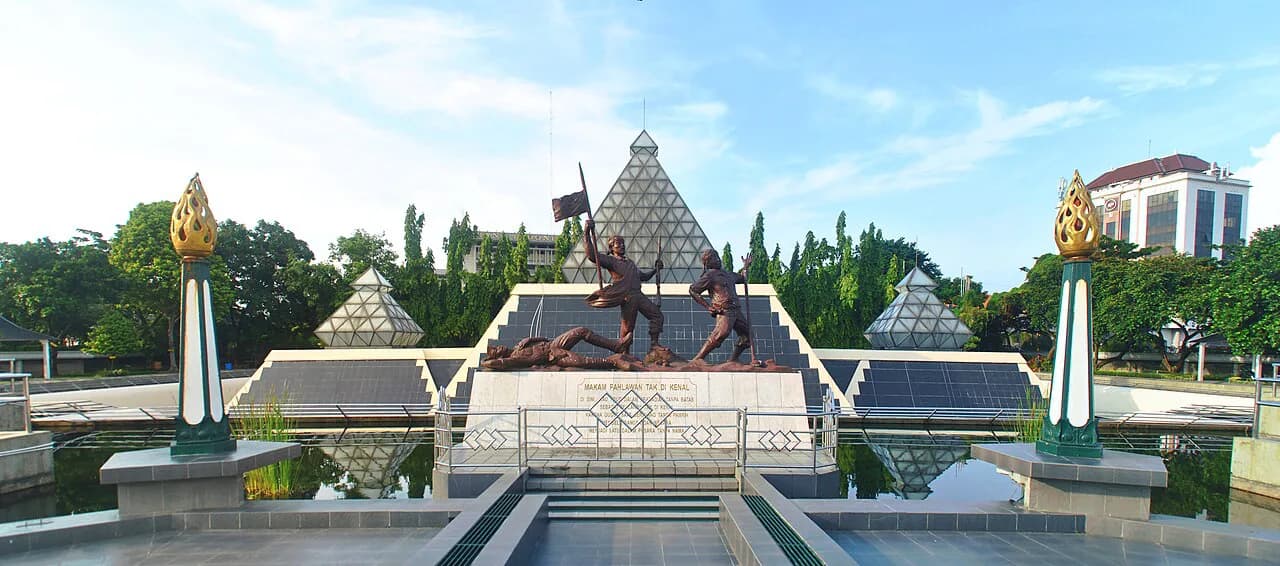
Tugu Pahlawan in Surabaya: What to See at the Heroes Monument

Tugu Pahlawan is worth 45 to 90 minutes of your Surabaya day, and the monument and its open plaza are the part you can visit without a ticket. The tall obelisk on Jalan Pahlawan anchors the city's identity as Kota Pahlawan, and the small museum beside it holds the story you cannot read from the plaza alone. This page covers what the monument means, how to reach it, what to look for in its proportions, and how to pair it with the old town. For the wider city, start with Surabaya Attractions: 15 Visitor Guides.
What Tugu Pahlawan is and why it defines Surabaya
Surabaya calls itself Kota Pahlawan, the City of Heroes, and Tugu Pahlawan is the physical expression of that name. The monument commemorates the 10 November 1945 battle in which Surabaya's residents, many of them barely armed, fought Allied and Dutch forces. Locals know 10 November as Heroes Day, and the obelisk becomes the focus of city attention each year on that date. If you see only one historical marker in Surabaya, this is the one that explains the rest of the city's self-image.
Where it sits: Jalan Pahlawan, central Surabaya
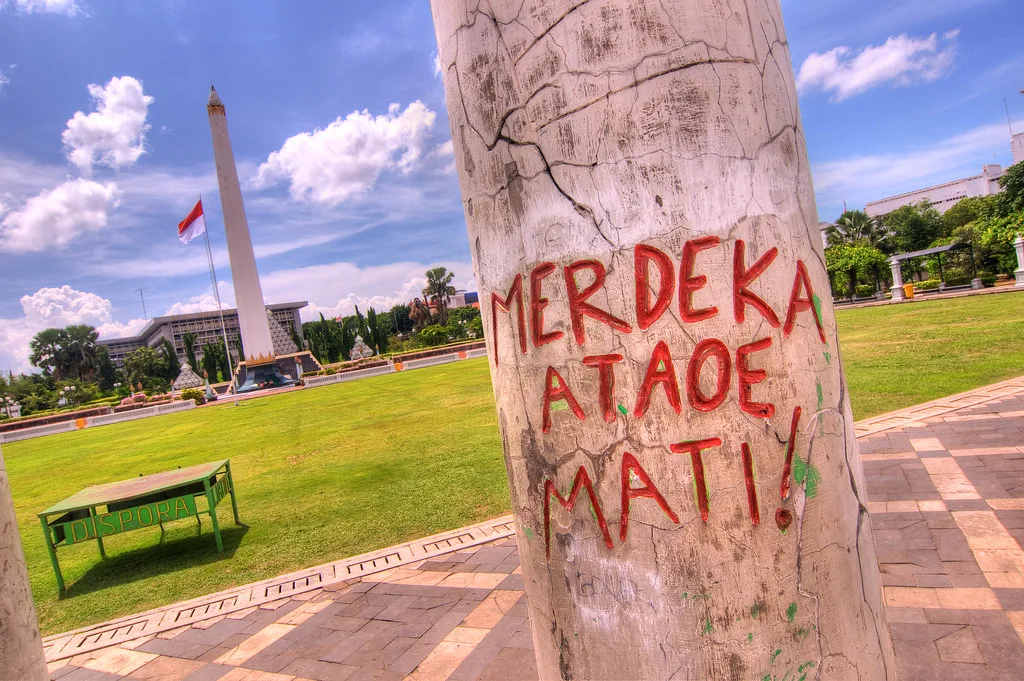
The monument stands in an open plaza on Jalan Pahlawan in central Surabaya, in the city's central core. The eastjava.com entry lists coordinates of roughly 7.245808° south, 112.737785° east, useful if you want to drop a pin before you arrive. Reports of the grounds' size differ between sources, so treat the plaza as large enough for a slow loop rather than a fixed measurement. The site occupies the former grounds of the Dutch colonial Raad van Justitie courthouse, a fact the eastjava.com entry also records.
How to get there without burning the morning
Ride-hailing is the simplest approach: set your Grab or Gojek drop-off to Jalan Pahlawan and walk in from the road rather than expecting a dedicated tourist entrance. If you are already exploring the old town around the Kalimas river, the monument makes a natural next stop, and a car is the usual way to cover the distance. Central Surabaya traffic is heavy, so build a buffer around any timed appointment. For the broader set of stops in the city, see Kota Lama Surabaya and the rest of the central sights.
Reading the monument: 41.15 meters, 10 curves, 11 segments
The obelisk rises 41.15 meters and is shaped like an upside-down nail or lingga, wider at the base and tapering upward. Its body carries 10 curves, called canalures, and is divided into 11 sections, so the numbers spell out 10, 11, 1945. The base runs about 3.1 meters across and the top about 1.3 meters. Knowing this before you arrive turns a plain monolith into a legible statement about the date it memorializes.
The battle, and when the monument was built
Tugu Pahlawan was established on 10 November 1951 and inaugurated on 10 November 1952 by Indonesia's first president, Ir. Soekarno, on the site of the old Raad van Justitie building, according to the eastjava.com heritage summary. Under Japanese occupation that building had served as a Kempetai base, and the site carries that layered history beneath its patriotic purpose. Battle casualty numbers appear in secondary accounts and vary, so treat specific figures as contested rather than settled fact. The dates above come from a regional heritage summary, not a posted official plaque, so read any on-site signage as the confirming source.
Museum Sepuluh Nopember next door
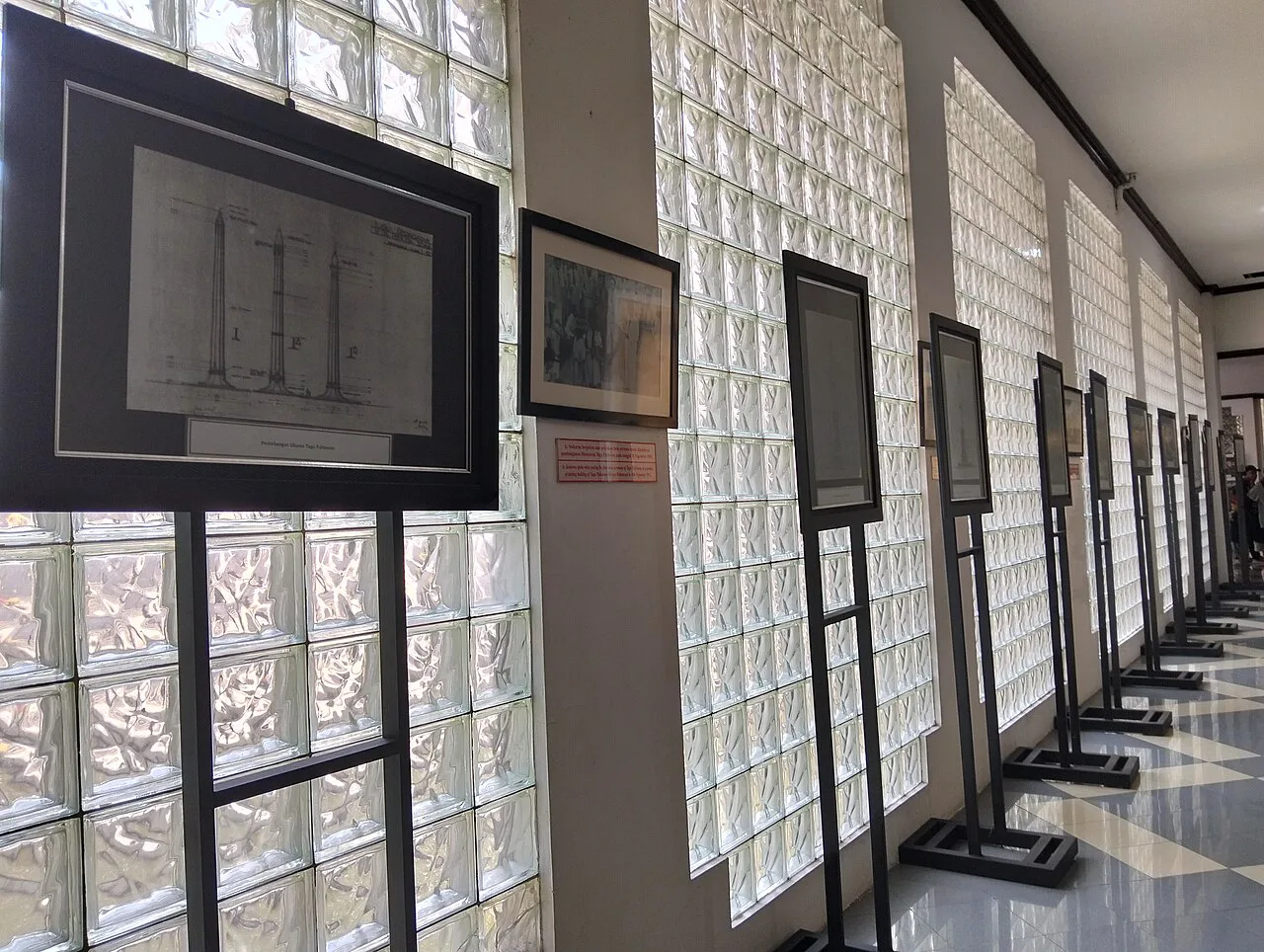
The 10 November Museum beside the monument is the reason to linger rather than photograph and leave. Inside you find dioramas of the 1945 battle, a mini theater showing the fighting, and personal belongings of freedom fighters, with Bung Tomo material among the displays. The museum sits directly next to the obelisk, so you can move between the two on foot in minutes. For a standalone look at that building, see the museum Sepuluh Nopember Surabaya page.

The grounds: broken pillars, statues, and open plaza
Around the obelisk, broken columns from the Raad van Justitie building stand as a deliberate symbol of collapsed colonialism. A statue of Soekarno and Hatta, Indonesia's first president and vice president, occupies the yard. The open plaza is where the annual 10 November commemoration concentrates attention, and you should expect more people and more ceremony activity around that date; published sources do not list closures, so check locally if your visit coincides with it. Plan on the plaza as the open, no-ticket part of your stop and the museum as a separate indoor visit whose access you confirm on arrival.
How much time to allow, and pairing with the old town
Budget about 30 minutes for the monument and plaza, then another 30 to 45 minutes inside the museum if you read the panels and watch the theater program. That puts a comfortable visit at 45 to 90 minutes. From here you can head to the old town, where the Dutch-era warehouses and the riverfront give the colonial story a physical setting. That area, also known as Surabaya Utara, rewards a separate block of time rather than a quick tag-on.
Hours, tickets, and museum access
Published details on opening hours and museum entry fees are not reliably available in the sources consulted, and the plaza's status as an open public space does not settle whether the museum is open on a given day. Confirm current hours and any ticket price at the museum entrance or through the city's tourism information before you build your day around it. If the museum is closed, the monument and grounds still justify the trip. Do not rely on a tour blog for hours or prices.
A central-Surabaya break to round out the trip
After the monument, head south for a breather at Taman Bungkul, a park on Jalan Raya Darmo that works well as a midpoint between central sights. It is a local gathering place rather than a tourist set piece, so it fits naturally after a history-heavy stop. If you are staying in the south of the city, Taman Bungkul Surabaya is also an easy evening stop on its own.
Is Tugu Pahlawan worth a stop in Surabaya?
Yes, if you give it the museum as well as the obelisk. The plaza alone takes half an hour and you can walk through it without a ticket, but the dioramas, theater, and Bung Tomo material next door are what turn a photo stop into context for the whole city. Go in the morning, confirm museum hours at the entrance, and pair it with the old town while you are in this part of Surabaya.