Gili Air Beaches: Best Side for Swimming & Sunset
Which Gili Air beach fits you? Compare the north, east, south and west sides for swimming, sunrise, sunsets, tides and crowds, plus what to know first.
On this page
Last updated November 2026: Gili Air beaches have no single standout sunbathing strip, because sand rings the island and each side does a different job. North suits swimming, east suits sunrise, west suits sunset, and the south is the harbour strip. Plan around thin sand, dead coral and tide-dependent entry, and use our wider Gili Air itinerary for the rest of your days.
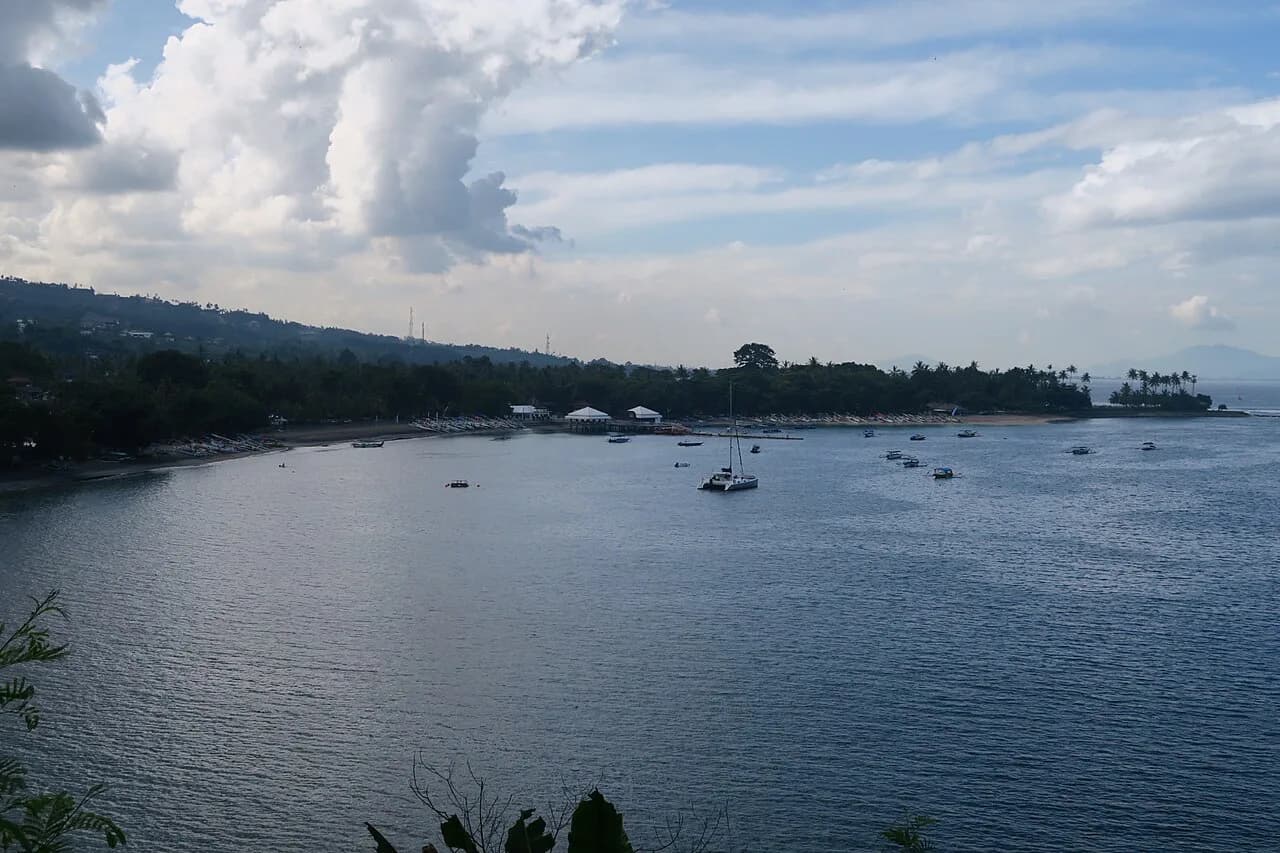
Featured image: Felix Dance, CC BY 2.0, via Wikimedia Commons.
Gili Air Beaches at a Glance
Our verdict, in our editorial assessment: Gili Air rewards people who pick a side by purpose. Competing guides split on the beaches. One calls them the island's best asset, while another calls them a mild disappointment because of thin sand, dead coral and privatized frontage. Both are partly right. Use the quick-pick table below, then read each side in order.
| Goal | Side of Gili Air | Why | Main caveat |
|---|---|---|---|
| Long swim | North | Reported as a long swimming beach with few people | Snorkeling reportedly works best at high tide |
| Sunrise | East | Sun reportedly rises behind Mount Rinjani on Lombok | Busiest side, with sunbed rentals and boats |
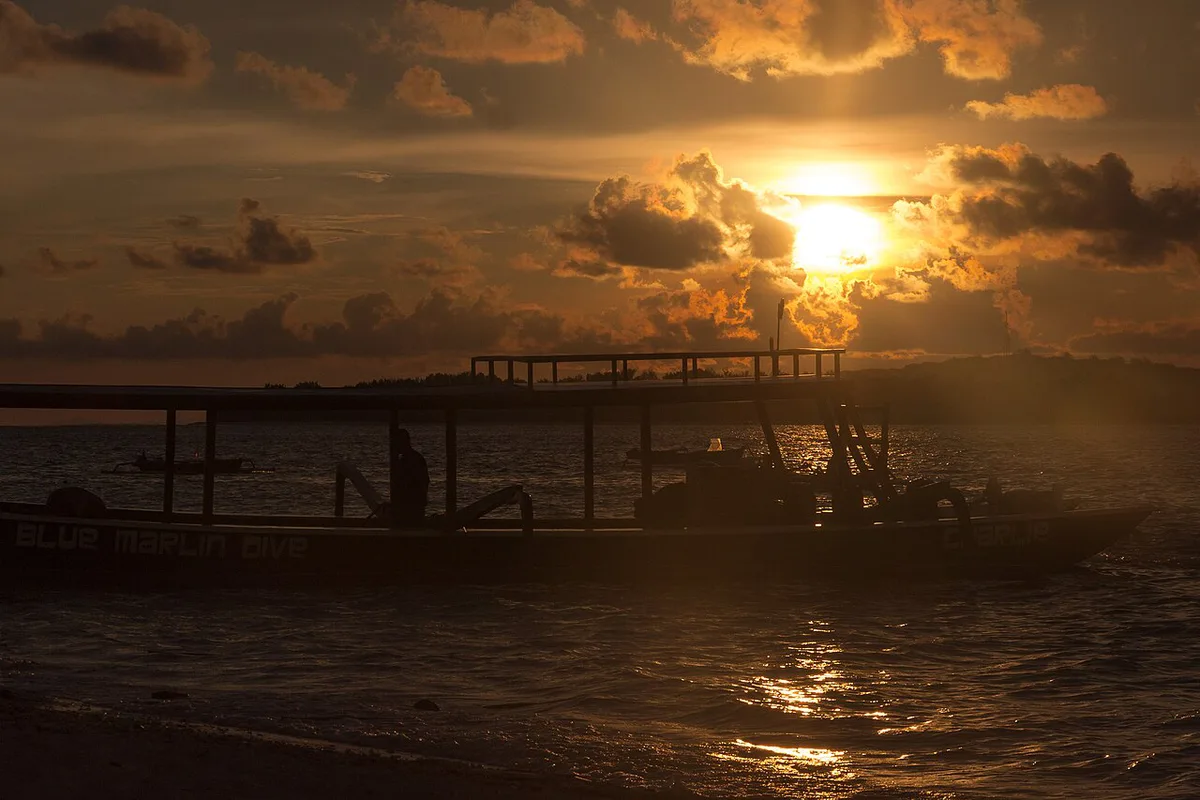
| Sunset and bars | West | Sunset Point, beach bars, swings, live music | Frontage is café-controlled in places |
| Quiet sand | North and south | Fewer hotels reported on the quieter stretches | Still thin sand with dead coral |
| Snorkel | By boat, not shore | Shore reef is reported dead near the beach | Group or private boat needed |
| Harbour and cafés | Harbour strip | Boats, tour operators, shops and bars | Crowded and busy with foot traffic |
Gili Air Beaches by Side: North, East, South, West
Walk the coastline in order and the character changes every few minutes. Reports put a full lap at under 1.5 hours, so a slow loop with swim stops fits in half a day. Sources disagree on whether the harbour strip counts as east or south, so we treat the harbour as the hinge between the two. Everything below is directional and drawn from competitor reports, so confirm it on the sand.
Walking the full coast takes under 1.5 hours, and a bed within a 5-minute walk of sand keeps the loop close to home.
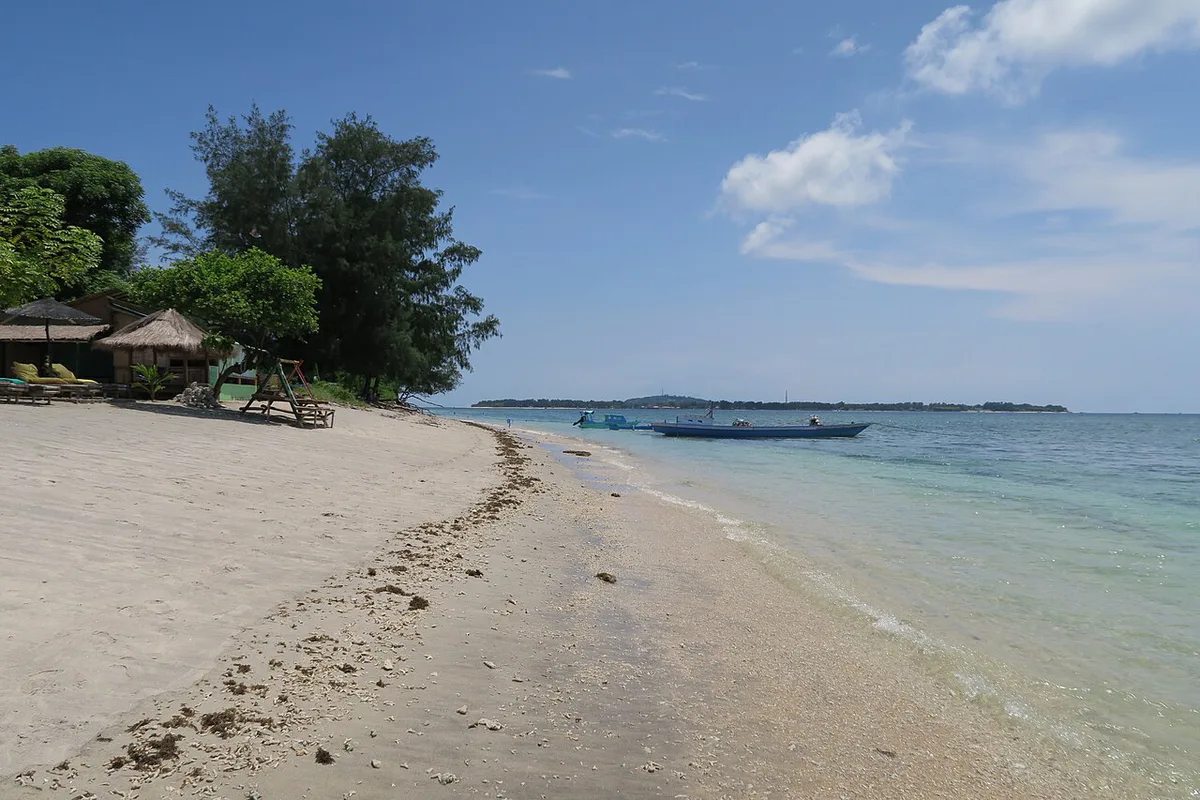
- East and harbour: sunrise side with Lombok and Rinjani views, sunbed rentals, cafés and the busiest foot traffic. Shore snorkeling here is reportedly hindered by dead, broken coral.
- North: the calmer shore, described as a long swimming beach with small restaurants and beach bars. A turtle point is reported on the northeast corner.
- West: Sunset Point, bean bags on the sand, swings over the water and live music. Most hotels reportedly cluster here, so frontage is the most contested.
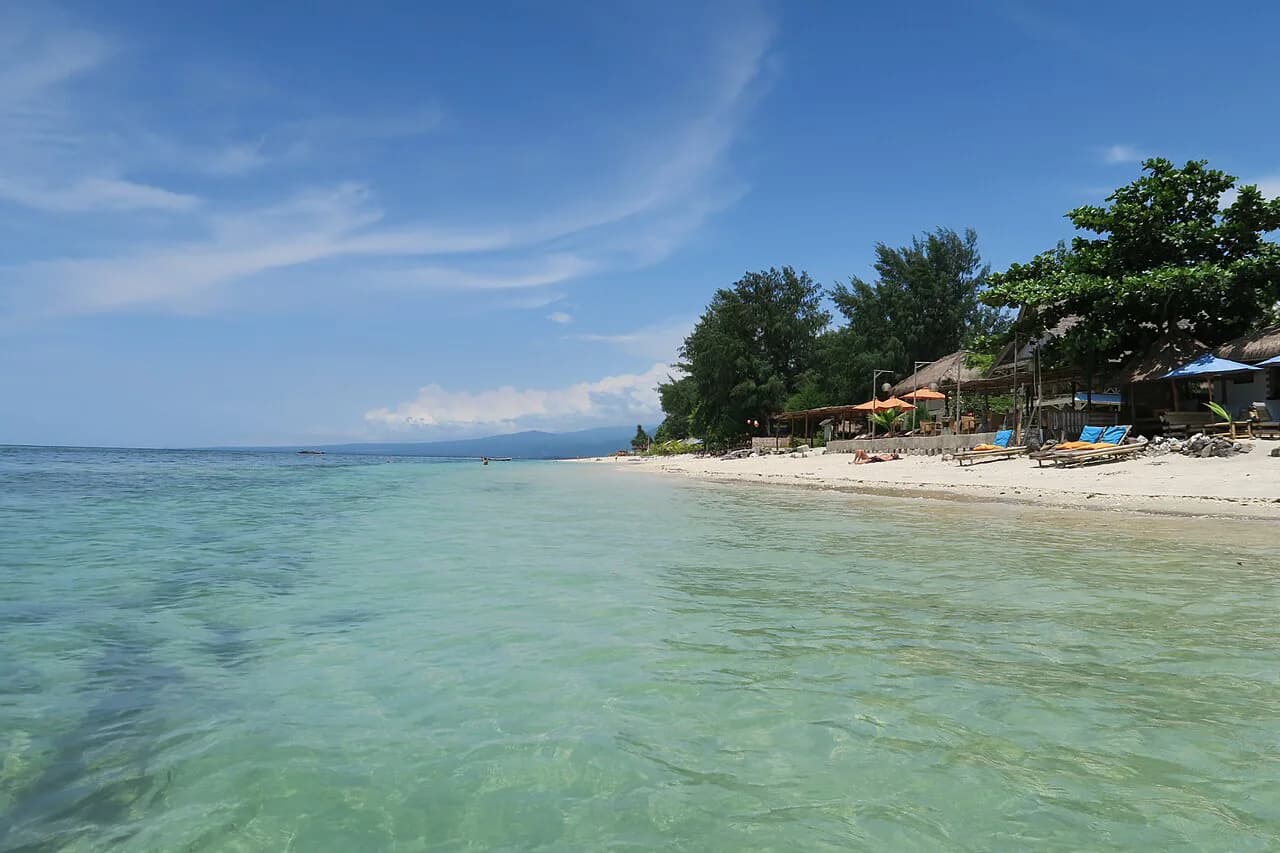
- South: quieter stretches away from the harbour, with fewer hotels reported. Expect the same thin sand and coral underfoot as everywhere else.
Best Gili Air Beach for Swimming (and When Tide Matters)
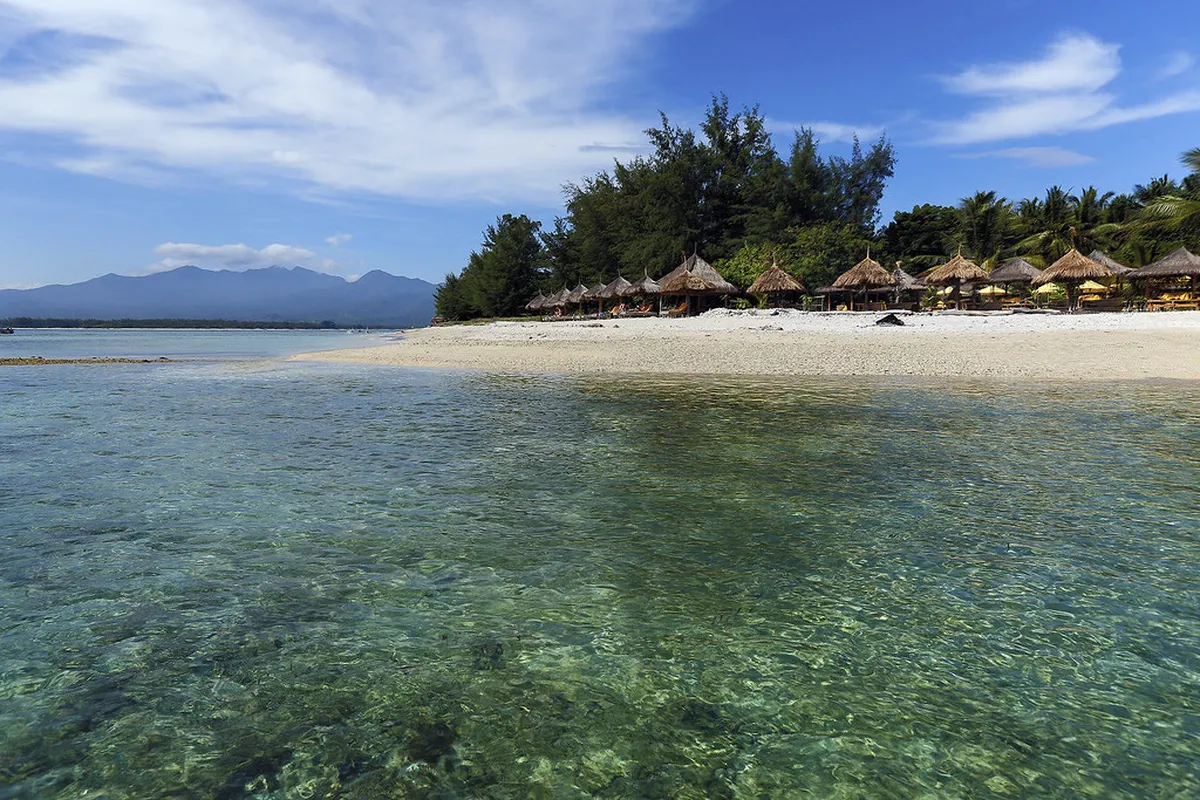
North is our first stop for a proper swim. Reports describe a long swimming beach there, and one adds that snorkeling works best at high tide. Expect deeper water and fewer broken-coral steps on the way in at high tide. Low tide leaves coral closer to the surface, so wear reef shoes for the walk out. Sand is thin and often scattered with dead coral, per one report, so shoes matter on every side. We could not verify tide times, so check a recognized tide-table service for your dates. Here is our decision rule: if low tide lands in your swim window, take a pool day or move the swim later.
| Tide | Swimming entry | Snorkel entry | Overwater swing |
|---|---|---|---|
| High | Deeper water close to shore (unverified) | Reportedly easier on the north side | Swim out, per reports |
| Low | Coral closer to the surface; reef shoes needed | Broken coral to cross before the drop | Reportedly walkable |
Best Gili Air Beach for Sunrise and Sunset
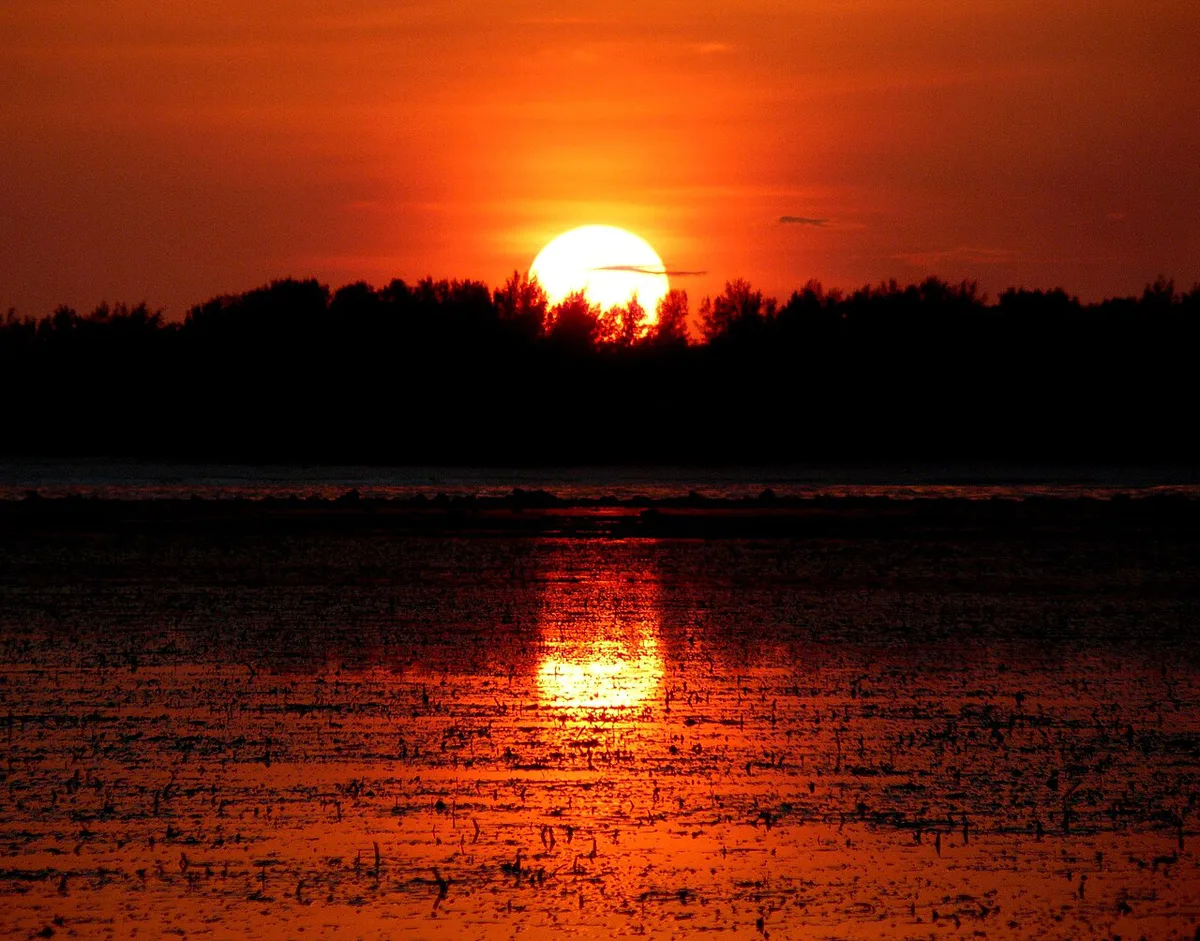
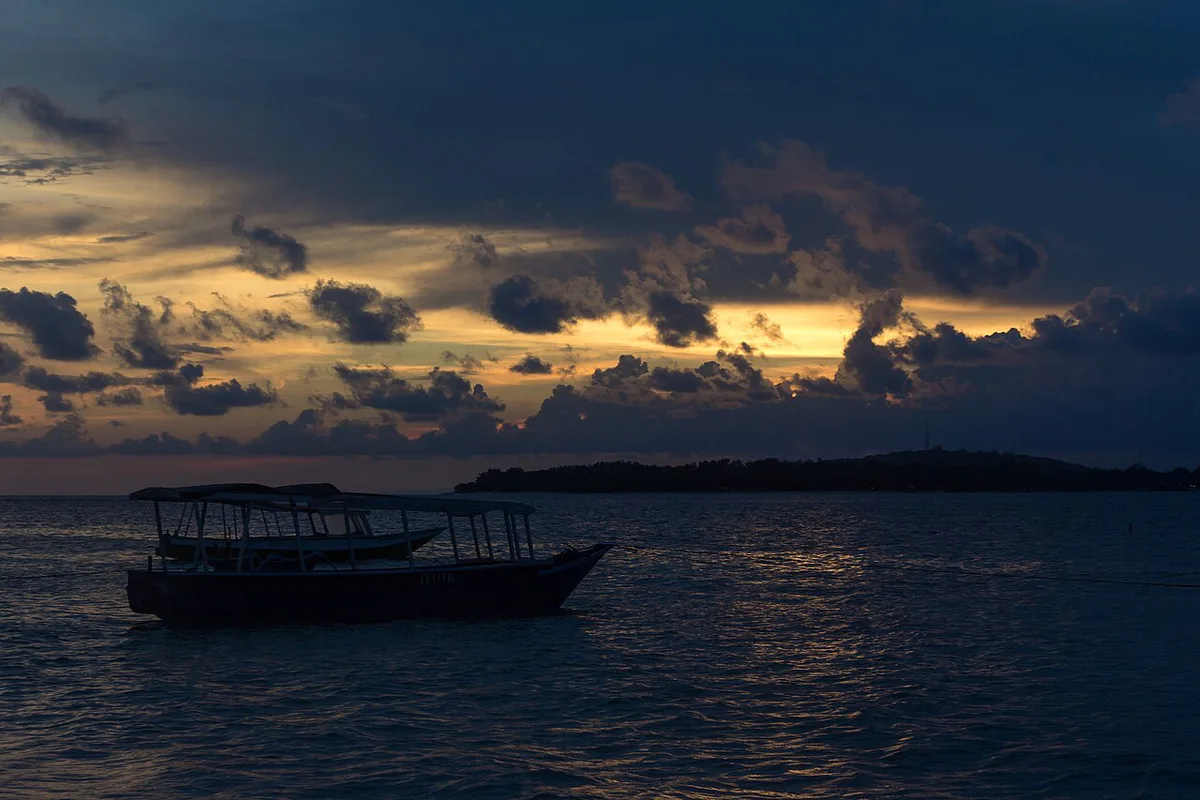
Sunrise belongs to the east side, where reports place the sun behind Mount Rinjani on Lombok. Sunset belongs to the west, where Sunset Point sits beside beach bars with bean bags, swings and live music. What sits on the western horizon is disputed: one source names a volcano on Bali, another names Lombok and Gili Meno, so check the view yourself. Tide decides how you reach the overwater swing: walkable at low tide, a swim at high tide, per reports. Verify depth and safety locally before you swim out. For dinner after the colour fades, browse sunset dinner options. Bars and live music get their own nightlife guide. Later in the evening, the night market is another stop.
- Sunrise: start on the east side, facing Lombok and Rinjani.
- Midday: swim at the north shore, tide permitting.
- Sunset: walk to the west side near Sunset Point.
- Wrong tide or rain: swap the swim for a pool, café or indoor stop.
- No fixed times here, because sunrise and sunset shift through the year.
Snorkeling From Gili Air Beaches vs. By Boat
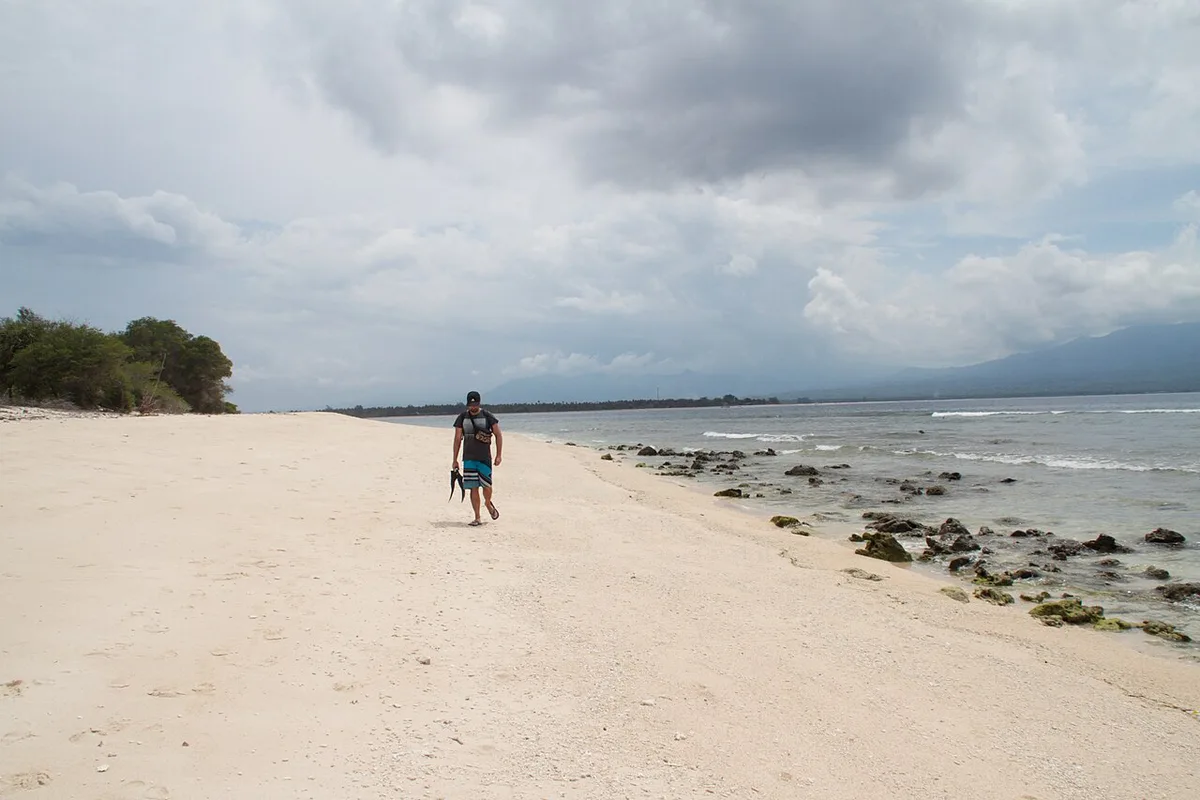
Shore snorkeling is limited by dead coral. One report says the reef near the beach is dead, with broken coral to cross before the drop where sea life appears. Turtle point is reported on the northeast, though another source places boat-tour turtle spots between Gili Air and Gili Meno. Elsewhere in the archipelago, one report puts turtles within 50 m of the beach. Group boats and private boats trade cost against control. A private boat lets you start at sunrise and reach Gili Meno's underwater statues before the crowds, per one source. Ask your accommodation to arrange either option. Compare choices on our boat day trips page. Never touch turtles or coral, and read reef guidance from the Gili Eco Trust. For paddleboards and other water sports, remember there is no real surf here.
Free Beach vs. Beach Club on Gili Air
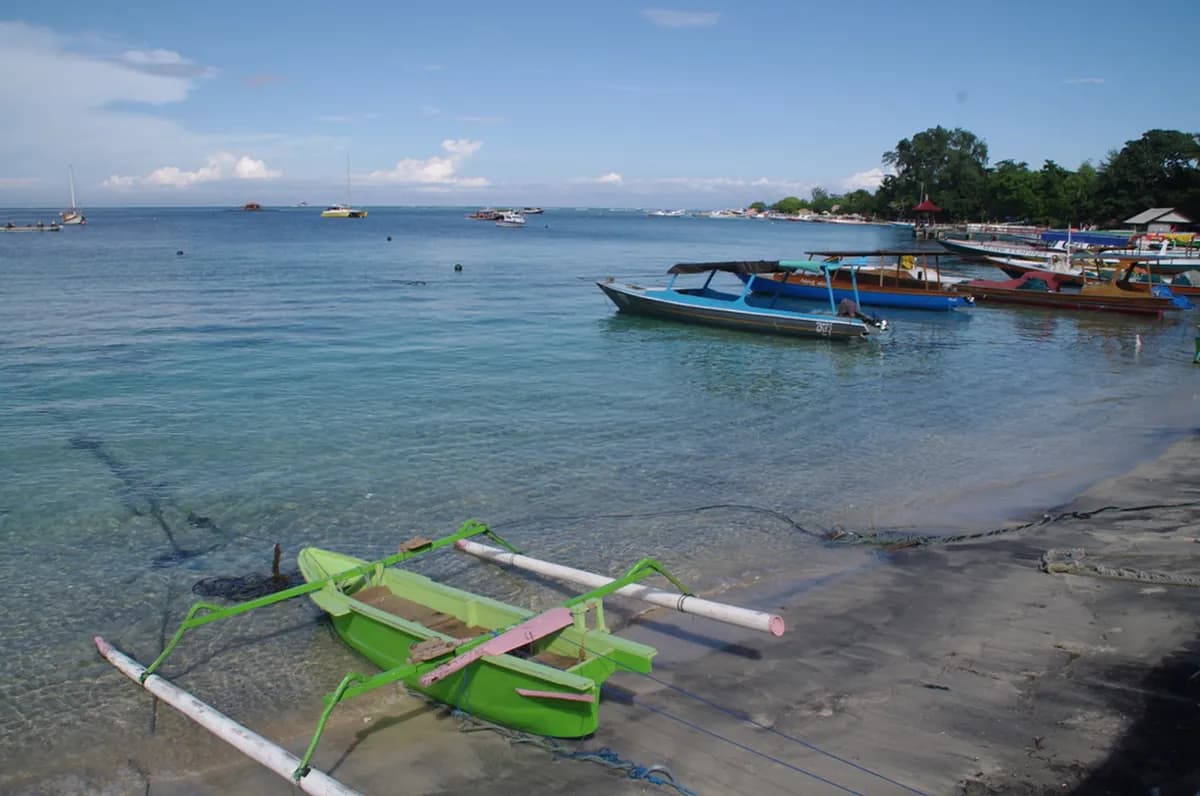
Free sand exists, but you share it with café and hotel frontage. Competitors describe narrow strips, with one side of the island more heavily privatized by cafés and hotels. We found no sourced sunbed fee, so we will not quote one. Expect to buy a drink or pay for a lounger on busy frontage. Before unrolling a towel, ask staff where you may sit. If staff say no, walk on, because sand rings the whole island.
| Option | What to expect | How to ask |
|---|---|---|
| Open sand | Thin strip, often with dead coral | Confirm the spot is not café frontage |
| Café frontage | Sunbeds or bean bags; a drink or fee may apply | Ask what is expected before sitting |
| Hotel frontage | May be reserved for guests | Ask politely, then move on if declined |
Getting Around Gili Air's Beaches
Motorized vehicles are banned, so you walk or cycle. Bikes struggle in sand on the west and north sides, per one report. Inland roads are unpaved in places but quicker than sand. Cut-throughs are available if you skip the beach walk. Carry a headlamp for the return, since phone torches fail in the dark. Cidomo horse carriages exist, but several sources raise animal-welfare concerns. We would walk or cycle instead. From Lombok, the crossing is reported at about 15 to 20 minutes from Bangsal. Bali crossings run roughly 2 hours via Padang Bai. Prices conflict between sources, so check the ferry page for current fares. Full route details sit in our guide to getting to the island. Our Bali crossing guide covers the longer sea leg.
Where to Stay on Gili Air for Beach Access
Island size keeps beach access easy. Gili Air covers about 1.9 km², per one competitor, and a source puts any bed within a 5-minute walk of sand. Beachfront suits sunsets on the west, where hotels reportedly cluster. Inland rooms still reach sand quickly. North rooms trade nightlife for calm. A pool is optional because swim spots are plentiful, per one competitor, but handy at low tide. Book your preferred room, then cycle to whichever beach has the right tide. After sand days, a post-beach massage is an easy recovery stop.
Best Time for Gili Air Beaches
Dry season runs roughly May to September, and the wetter months run October to April, per one competitor. Confirm current patterns with the BMKG weather agency. Seasonal trade-offs show up on the beach. A September visit reportedly brought clear sunsets and crowds. March reportedly brought near-empty sand and good sunrises, but cloudy afternoons cost the sunset. Another source says hotels fill between July and September. Today's date falls in the wetter window by that pattern, so keep a fallback. Our seasonal planning guide goes deeper.
Gili Air Beaches vs. Gili Meno and Gili Trawangan
Gili Meno is smaller at 1.5 km², versus 1.9 km² for Gili Air, per one competitor. That source recommends Meno over Air for sunbathing, though we have not verified it. Trawangan draws the party crowd and has the most development. Beach-first travelers who want empty sand should test Meno, a short hop by boat. Swimmers and sunset chasers fit Gili Air better. For the wider verdict, read whether Gili Air is worth visiting.
Mistakes to Avoid on Gili Air Beaches
Five mistakes cause most beach disappointment. Pack out plastic, since a source notes no waste system on the island.
- Swimming over coral without footwear.
- Ignoring tides when planning swims or snorkel entry.
- Assuming wide sand on every side.
- Touching turtles or coral.
- Leaving waste behind.
- Walking back unlit, without a headlamp.
Frequently Asked Questions
Which side of Gili Air is the best?
It depends on the job. North suits swimming, east suits sunrise, and west suits sunset. In our editorial assessment, west plus north covers most beach days.
Is it safe to swim in Gili Air?
Wear reef shoes, since dead coral and broken edges near shore are the main hazard in reports. Check tide tables before you plan a swim. Verify depth locally before swimming out to the overwater swing.
Is Gili Air very touristy?
It is busier than Gili Meno but calmer than Gili Trawangan, per competitor descriptions. Expect most crowding near the harbour strip and the west-side bars. The north stays quieter.
Notes for your Indonesia trip
Optional updates when we add or change a town or island guide.
You might also like
Continue reading
More guides you'll find useful