Indonesian Desserts to Try: Klepon, Lapis & More
Klepon, kue lapis, dadar gulung, es cendol and Balinese jaje: the Indonesian desserts worth trying, what they taste like, and where to find them.
On this page
Last updated November 2026: Indonesian desserts are built on coconut milk, palm sugar (gula Merah), pandan and glutinous rice. Start with klepon, kue lapis, dadar gulung, es cendol and pisang goreng. In Bali, add laklak and other jaje from a morning market, and use this guide to pick by texture, sweetness and setting.
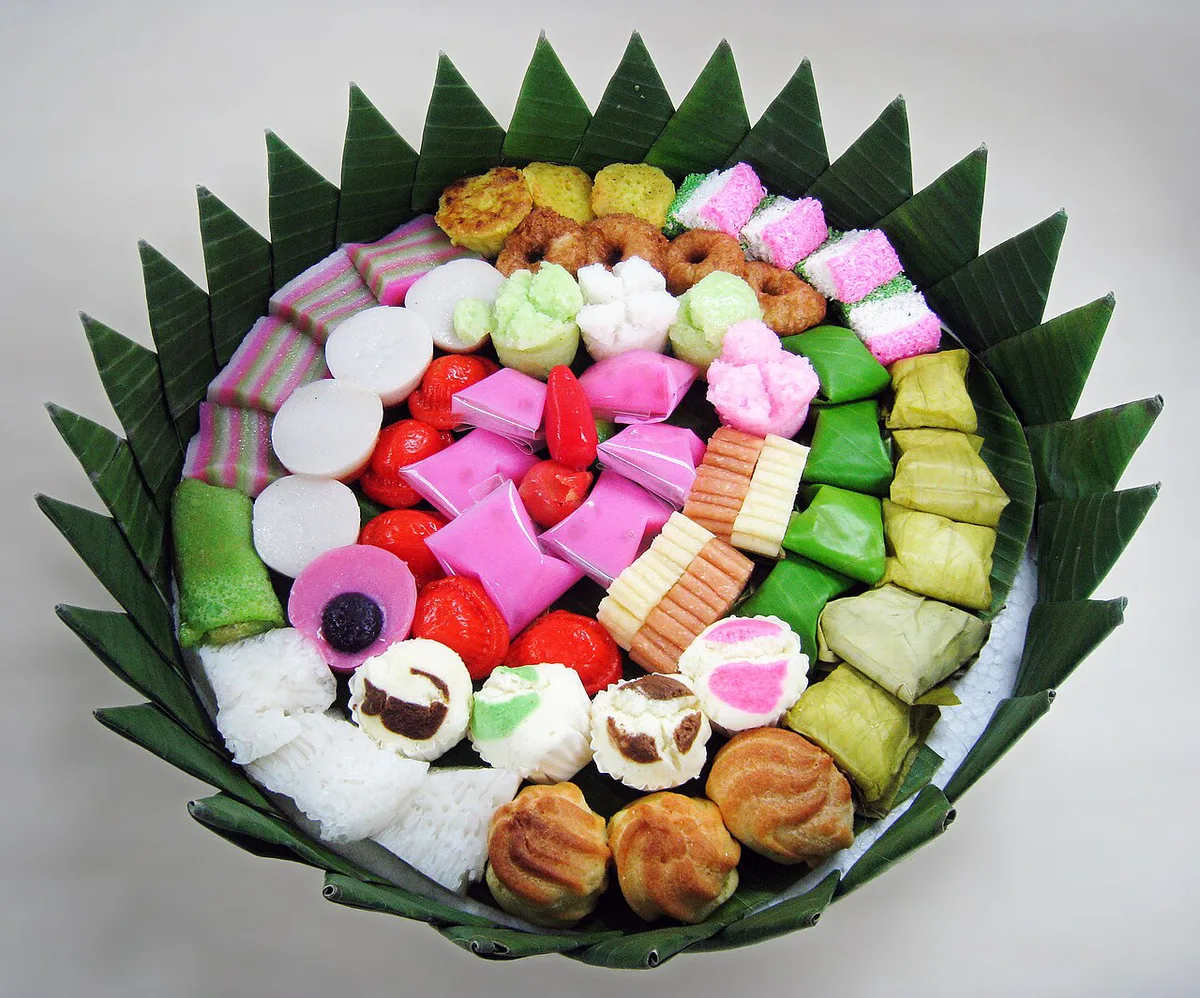
Featured image: CEphoto, Uwe Aranas, CC BY-SA 3.0, via Wikimedia Commons.
Indonesian desserts at a glance
Use this table to match a sweet to your mood. Prices are left out on purpose: they vary by vendor and city, so ask before you order. Items are grouped by how they are made, and the sections below add detail for each.
| Dessert | What it is | Texture | Where to look | Dietary notes |
|---|---|---|---|---|
| Klepon | Glutinous rice ball with palm sugar center, rolled in grated coconut | Chewy, bursts when bitten | Pasar stalls, street carts | Usually no dairy; confirm any egg or wheat |
| Kue putu | Steamed rice-flour cake with palm sugar center and coconut | Soft, crumbly | Street vendors, markets | Usually no dairy |
| Kue lapis | Steamed layered cake with coconut milk | Springy, peels by layer | Markets, bakeries | Coconut milk based; check colorings |
| Lapis legit | Baked spiced layer cake, Dutch-era spekkoek | Dense, buttery | Bakeries, gift shops | Contains butter and eggs |
| Dadar gulung | Pandan crepe rolled around coconut and palm sugar | Soft, moist | Markets, snack stalls | Crepe often includes egg; ask |
| Pisang goreng | Banana fried in batter | Crisp outside, soft inside | Street carts, warung | Fried; toppings vary |
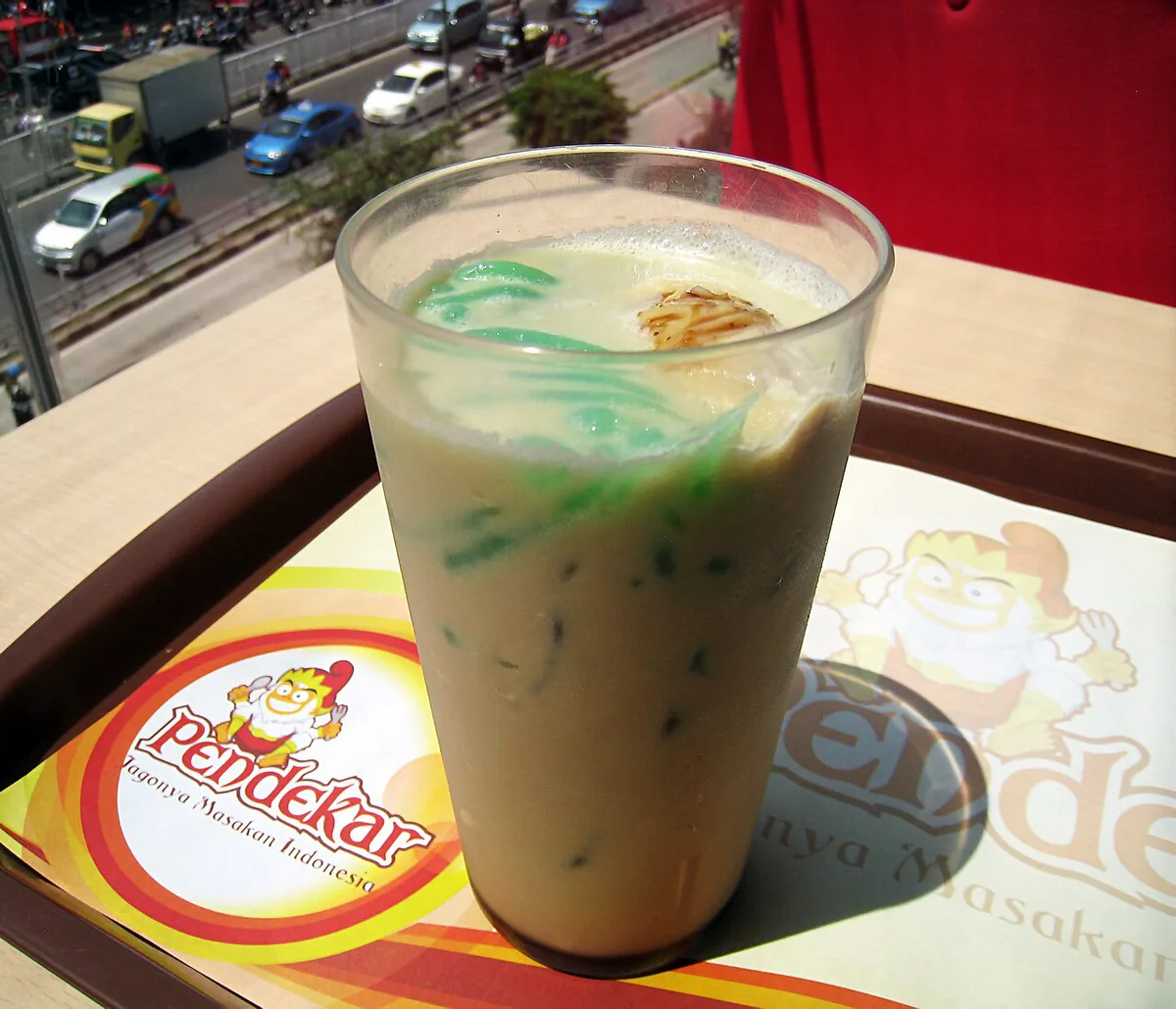
| Es cendol | Iced drink with green jellies, coconut milk, palm sugar syrup | Cold, slippery, creamy | Street vendors, cafes | Coconut milk based; ask about added milk |
| Es campur | Mixed iced dessert with assorted toppings | Cold, varied | Warung, restaurants | Toppings differ by vendor |
| Laklak | Small Balinese rice-flour pancake with coconut and palm sugar syrup | Soft, light | Balinese morning markets | Usually no dairy |
The flavor logic behind Indonesian sweets
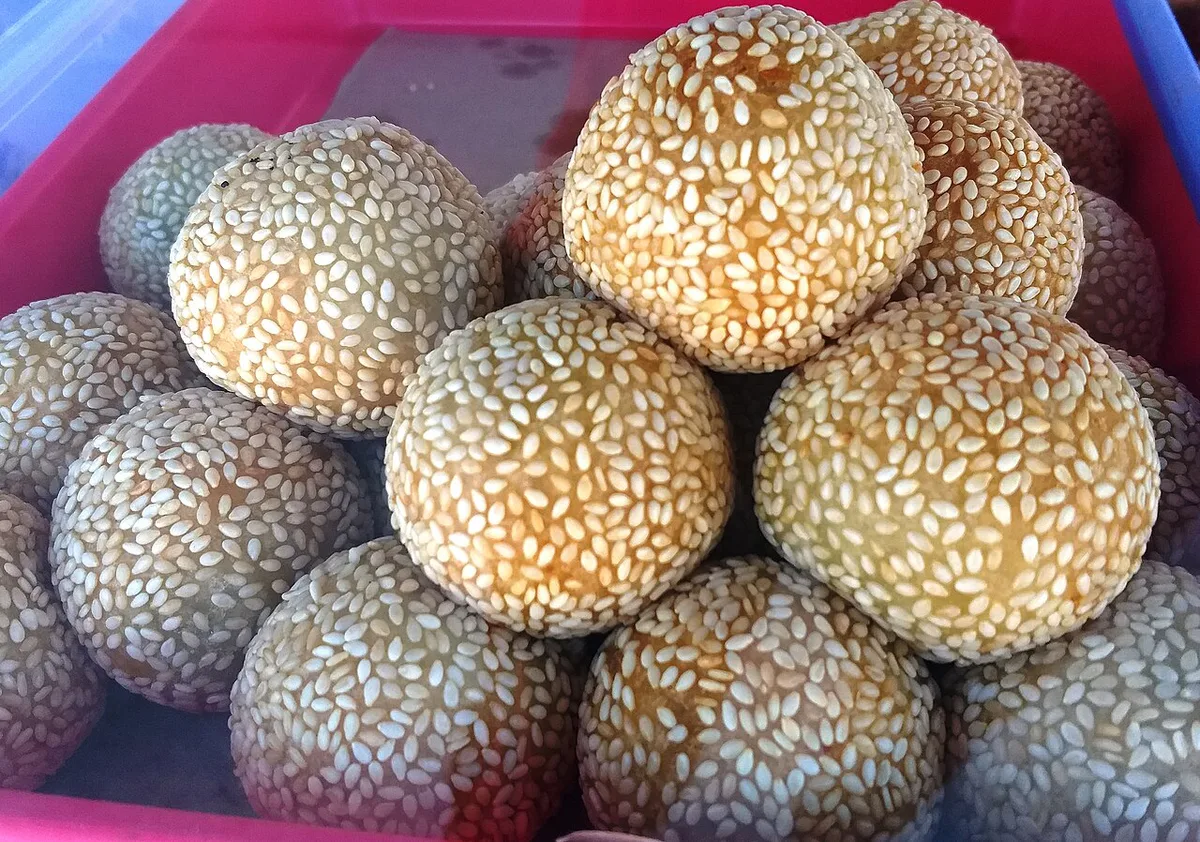
Palm sugar gives most traditional sweets a caramel, slightly smoky depth that white sugar does not. Coconut milk adds richness without dairy. Pandan supplies the grassy green color and a vanilla-like aroma. Glutinous rice and rice flour supply the chew. Once you spot these four ingredients, you can read almost any dessert counter. For regional context beyond Bali, Indonesia's official tourism site is a good starting point. Savory dishes follow the same coconut-and-spice logic, which you can explore in our guide to savory Indonesian dishes.
Steamed and sticky rice sweets
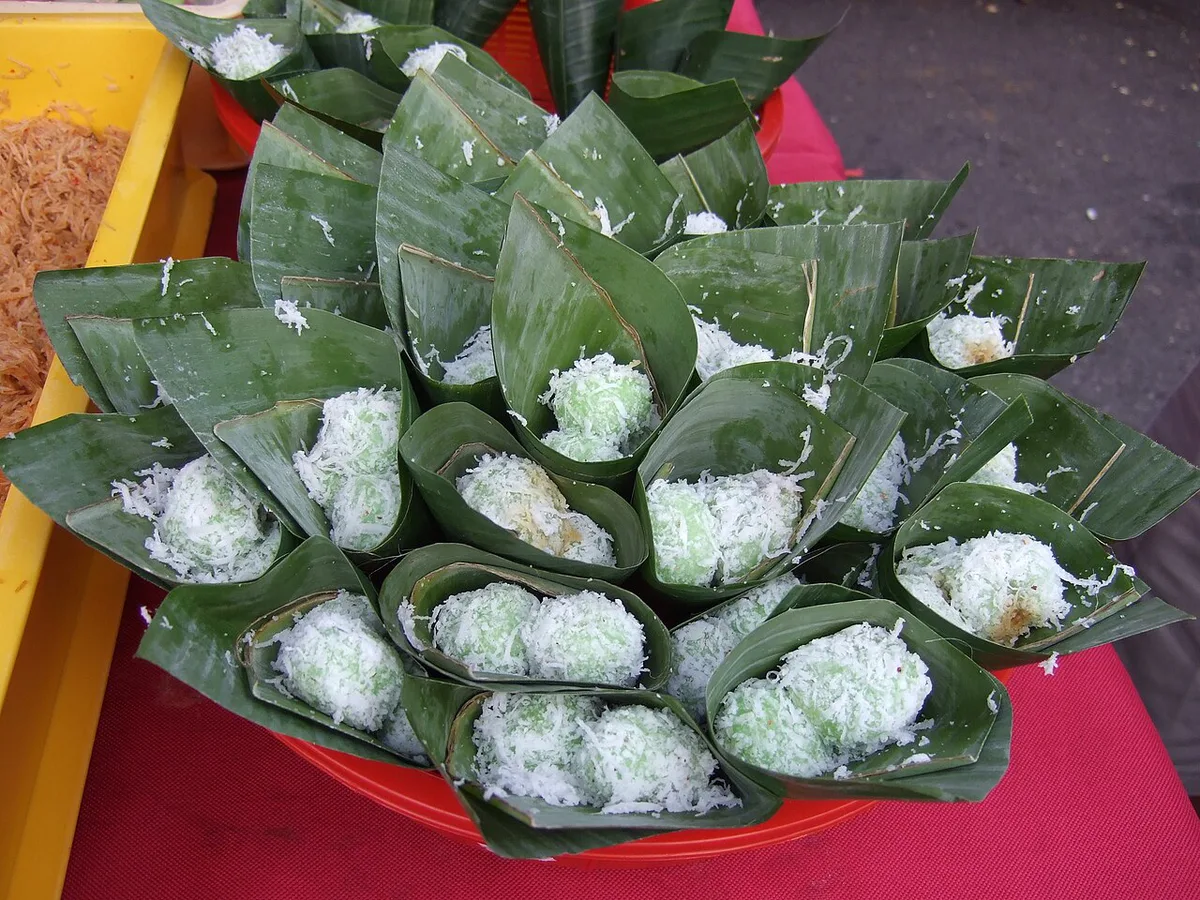
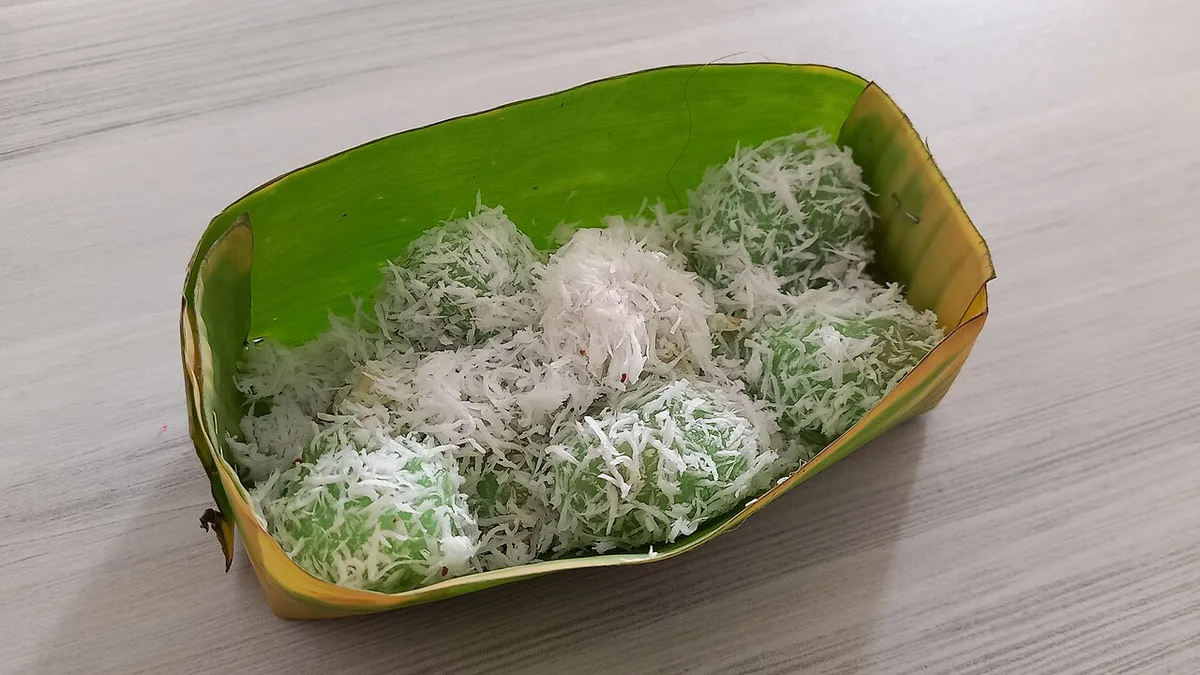
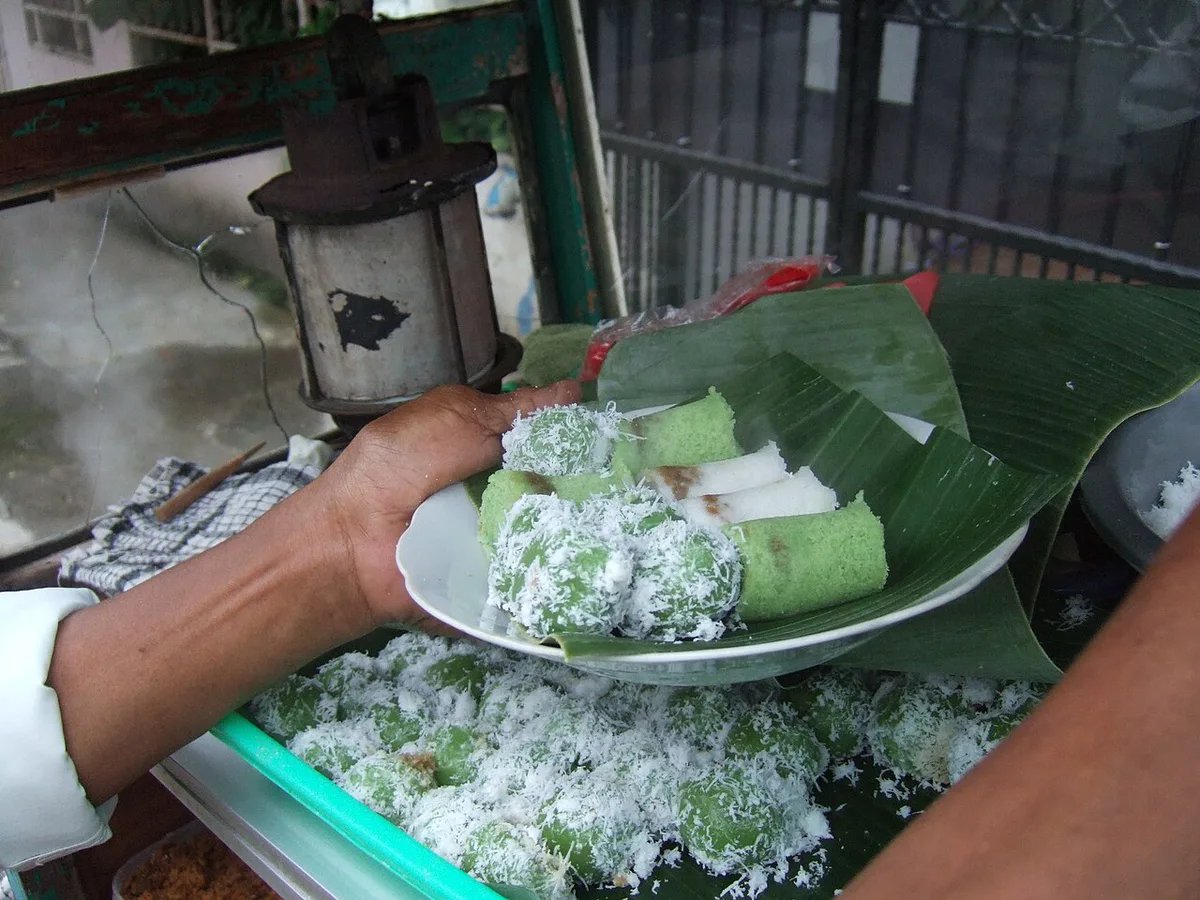
Klepon is the first one to try. Each green ball hides liquid palm sugar, so bite gently or the center runs down your chin. Grated coconut coats the outside and balances the sweetness. Kue putu is a steamed rice-flour cake, flavored with pandan and filled with palm sugar. Vendors often serve it warm with coconut on top. Both are made from rice, so they suit anyone avoiding wheat, though you should confirm with the vendor. These are among the easiest sweets to find at street-food stalls, and they taste best fresh.
- Klepon: chewy, with a molten palm sugar center.
- Kue putu: soft and crumbly, best eaten warm.
- Getuk, lupis and wajik: other sticky rice or cassava sweets that appear at Pasar stalls. Ask the vendor what is inside.
Layered cakes and Dutch-era influence
Kue lapis is a steamed layered cake made with coconut milk. You can peel it layer by layer, which makes it fun for kids. Lapis legit is a different cake. It is baked layer by layer with butter, eggs and spices, and it is also called spekkoek, a name that points to its Dutch colonial history. Expect dense, rich slices rather than something light. Because lapis legit keeps better than fresh kue, it is the usual choice for gifts, and bakeries and oleh-oleh shops sell it. Pair a slice with a cup of Indonesian Coffee Guide: Regions, Flavors & What to Buy to cut the richness.
Fried, griddled and street sweets
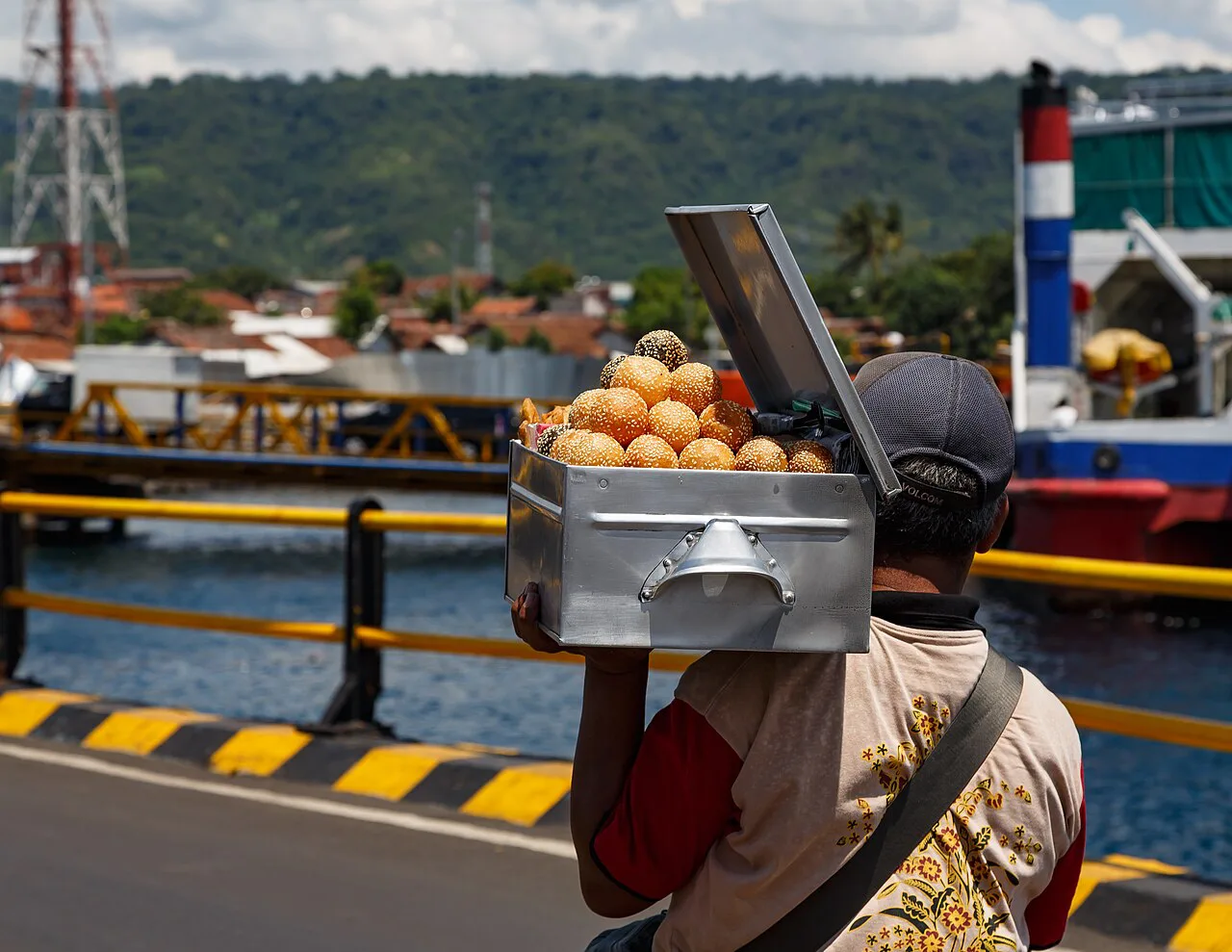
Pisang goreng is banana fried in batter until crisp. Vendors may top it with chocolate sprinkles, cheese or sugar, so look at the cart before you point. Eat it hot, because it turns greasy once cold. Dadar gulung is a pandan-green crepe rolled around grated coconut and palm sugar. It is soft, moist and less heavy than fried snacks. Both are cheap and easy to eat while walking. A neighborhood warung often has pisang goreng ready in the afternoon.
Cold desserts: es cendol and es campur
Es cendol is the one to order when the heat peaks. Green rice-flour jellies sit in ice with coconut milk and palm sugar syrup. Es campur means mixed ice, and toppings change by vendor. Expect a sweet, cold bowl with several textures. Both are sugary, so share one between two people on a first try. Ask for less syrup if you prefer a gentler sweetness. For a savory counterpoint before dessert, a plate of Nasi Campur in Bali: What's on the Plate & How to Order works well.
Balinese jaje and Pasar sweets
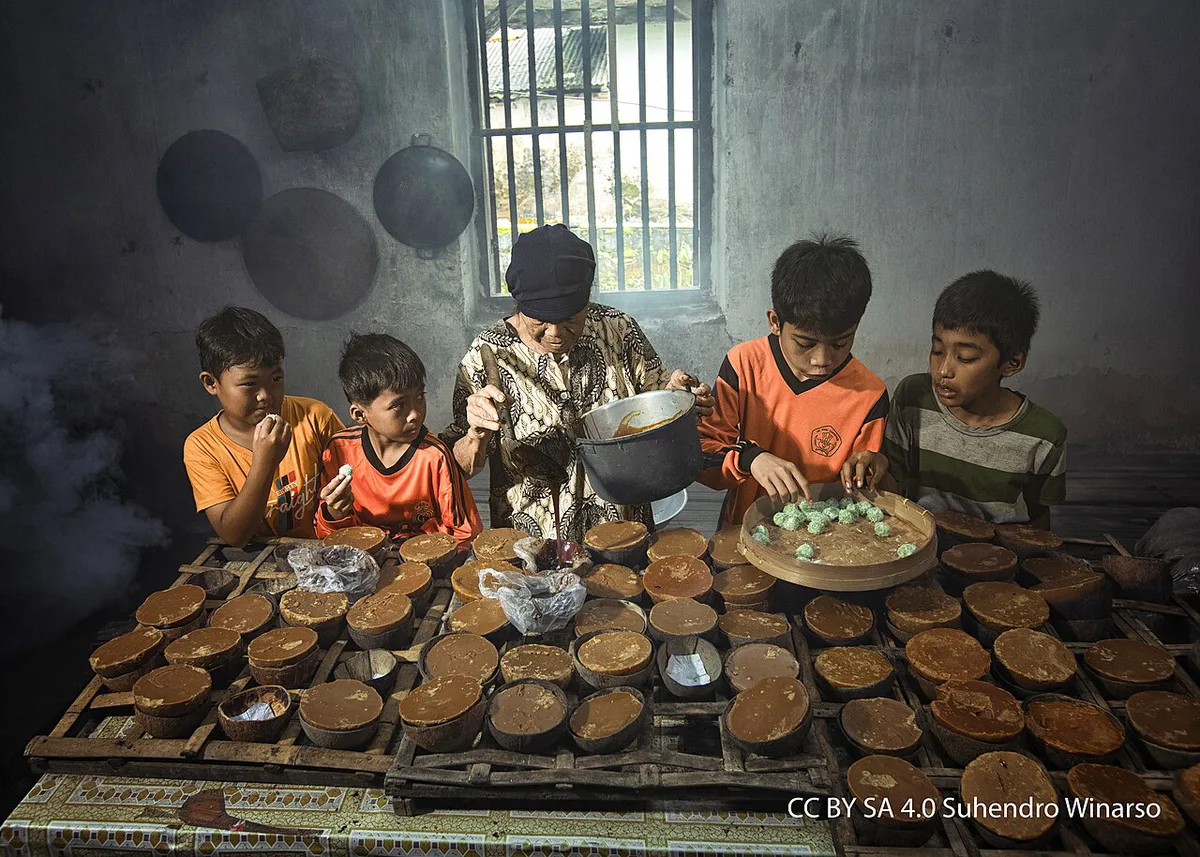
Balinese snacks are called jaje (also written jajan or jaja Bali). Laklak is a small rice-flour pancake served with coconut and palm sugar syrup. Look for it in morning markets, where women sell jaje wrapped in banana leaf. Variety changes from stall to stall, so ask what is freshly made. Offerings and ceremonies also drive demand for these sweets, which is why markets stock them early. Our guide to Balinese meals covers savory staples, and our Bali eating overview adds more places to start. If you want to learn how traditional sweets are made, check whether a Balinese Cooking Class: How to Choose the Right One in Bali includes them, since menus vary.
Where to buy and eat Indonesian desserts
Each setting has trade-offs. Morning markets offer the freshest jajan, but cash is the norm and English is rare. Street carts are quick and cheap, though you should choose carts that are busy and cooking in front of you. A warung gives you a seat and a hot drink. Bakeries and oleh-oleh shops sell packaged cakes that travel well. Restaurants offer English menus and clearer ingredient answers, which helps if you have allergies. For a Bali-specific starting point, see our Bali street food guide.
- Morning market: freshest, cash only, little English.
- Street cart: fast, check turnover.
- Warung: seating, coffee or tea, simple menus.
- Bakery or gift shop: best for lapis legit to carry home.
- Restaurant: easiest for dietary questions.
Pick by situation
Match the sweet to your need instead of ordering at random.
- First-timer sampler: klepon, dadar gulung and a slice of kue lapis.
- Kid-friendly: kue lapis, because the layers peel apart.
- Not too sweet: plain steamed rice sweets with coconut, such as kue putu.
- Gift to carry home: lapis legit from a bakery.
- Rainy-day warm option: fresh pisang goreng with tea.
- Vegan or gluten-free leaning: coconut and rice-based sweets, after confirming eggs, butter and wheat with the vendor.
Mistakes to avoid with Indonesian desserts
Do not assume every sweet is vegan. Coconut milk is common, but eggs and butter appear in crepes and cakes. Do not expect dairy-style desserts such as custard or ice cream as the default. Skip sweets that have sat in direct sun, since fresh kue spoils quickly in tropical heat. Do not carry fresh kue in a hot bag for hours, and buy firmer cakes for gifts. Finally, underestimate sweetness at your peril, and start with small portions.
- Sun-exposed trays: pick vendors with covered displays.
- Hidden eggs and butter: ask before assuming.
- Fresh kue in heat: eat the same day.
- Over-ordering: share the first round.
Frequently Asked Questions
What are popular Indonesian snacks?
Pisang goreng (fried banana), klepon and dadar gulung are popular sweet snacks. You will find them at markets, street carts and neighborhood warung. Many savory fried snacks sit alongside them, so look at what locals queue for.
Notes for your Indonesia trip
Optional updates when we add or change a town or island guide.
You might also like



Continue reading
More guides you'll find useful