
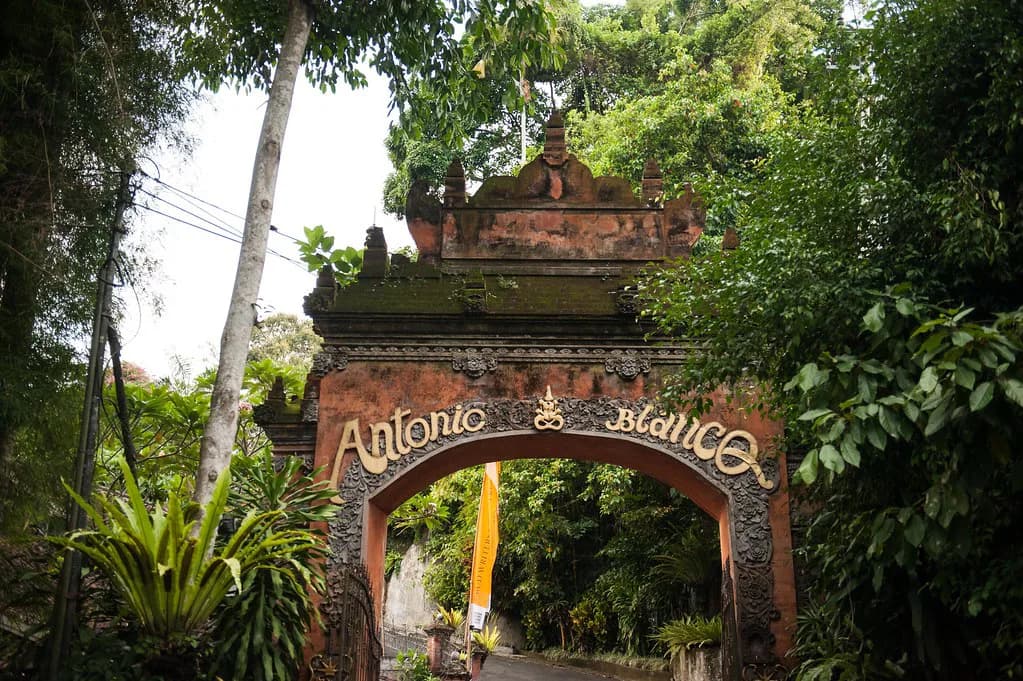
Blanco Renaissance Museum in Ubud: A Visitor's Guide to Don Antonio Blanco's Hilltop Home
The Blanco Renaissance Museum needs about an hour, and it rewards travelers who want one artist's story told in the house where he made the work rather than a survey of Balinese painting. It occupies Don Antonio Blanco's former home and studio on a hilltop above the Campuhan valley in Ubud, and it remains family-run. This guide covers what is inside, how to get there, and how to slot it into a Ubud day.
What the Blanco Renaissance Museum actually is
Don Antonio Blanco was an American artist of Spanish descent, born in the Philippines, who settled in Bali in the 1950s and built a hilltop house and studio with help from the surrounding Balinese community. The estate opened as a museum after his death in 1999, and his family maintains it. That origin explains the place's character: it reads like a walk through one artist's life rather than a conventional gallery.
Expect an unashamedly personal collection. Blanco's expressive, color-heavy paintings and portraits of Balinese women sit alongside collages and illustrated poetry, and the displays extend to photographs, memorabilia and the surroundings he shared with his wife, the dancer Ni Ronji, and their son Mario. The museum describes the visit as a tour of the museum, studio, gallery, family temple, gardens and bird park, which is a fair picture of its scope.
Where it is in Ubud and how to reach it
The museum sits in Campuhan, on the western edge of Ubud's center, roughly five minutes from Puri Saren (Ubud Palace) by vehicle. Because it is on a hilltop, the final approach involves a climb or a short driveway, which matters if you are walking in the heat. Treat it as a stop on the western side of town rather than a detour into the countryside.
From central Ubud, walking is realistic if you are already near Jalan Raya Ubud or the Campuhan ridge area; from guesthouses further east or south, a Grab or Gojek car is the easy call. Both apps work in Ubud, and a metered ride of this length is inexpensive. If your driver cannot enter the lane, you will finish on foot.
From south Bali, plan on a private driver or a booked car rather than a scooter for a first visit. Traffic around Canggu, Seminyak and Kuta can turn a short distance into a slow crawl, so build slack into the morning. Coming from Canggu or Seminyak is a half-day commitment once you include Ubud's own congestion.
Inside the galleries
The core of the visit is Blanco's own output: large romantic paintings, portraits built around dramatic color, sketches that show his process, and pieces tied to his wife and muse. You also see his working environment, the studio where the paintings took shape, and family photographs that fill in the biography. Reading the labels in order gives the collection a narrative that a mixed museum rarely manages.
One room holds a collection of old and antique cameras attributed to his son Mario, whose photography was a parallel hobby to painting. The museum displays no other artists' work, so set expectations accordingly: if you want a broad survey of Balinese art, this is not that stop. Go for the single-artist immersion and the setting.
The grounds beyond the galleries
The building itself mixes Balinese and European elements, with a traditional gate, grand staircases, open balconies and outlooks over the river valley. Tropical gardens and a lawn courtyard wrap the house, and the family temple and bird park are part of the estate as the museum describes it. Budget time to wander outside the galleries, since much of the appeal is the setting.
Because the site sits above the Campuhan valley, the balconies and garden edges give you valley views without a separate hike. Late morning light is generally better for the interiors than late afternoon, and the grounds are quieter on weekdays than on busy weekends. Ask at the desk whether photography is permitted in the galleries before you start shooting.
How long to allow, and who enjoys it most
Allow 45 to 90 minutes: the galleries take about half an hour if you read the labels, and the gardens, temple and views add the rest. Art-focused travelers who like biography and atmosphere tend to linger; anyone hoping for a large encyclopedic collection may feel it is short. The museum's own materials suggest some visitors stay considerably longer, so let your interest set the pace.
It suits couples, solo travelers and small groups looking for a calm cultural stop between the busier Ubud sights, and children usually manage the scale fine. If your Ubud time is limited and you want depth on Balinese art history, compare it with the town's other museums before committing. The [Puri Lukisan museum](/attractions/ubud/puri-lukisan-museum) covers the broader Balinese painting tradition, while the [Neka Art Museum in Ubud](/attractions/ubud/neka-art-museum) ranges wider still.
Tickets and opening hours: what the sources say
Published figures conflict, so confirm the current entry fee in Indonesian rupiah at the desk or on the museum's own channels before you go. One travel site lists adult admission at IDR 100,000 and children at IDR 50,000, including gallery and garden access and often a welcome drink, with hours of 9am to 5pm daily. An older blog post records a much lower fee of IDR 50,000, which shows how quickly this information ages.
The welcome drink appears across several descriptions, and a gift shop and cafe have been part of the estate, but treat drinks and shop hours as variable rather than guaranteed. Ticket resellers also list the museum for online booking, which can be useful if you want to lock in a date, though you will still pay in rupiah locally. Check whether your ticket includes the gardens and bird park before you assume it does.
Pairing it with the rest of Ubud
Its Campuhan position makes the museum a natural add-on to a central Ubud walk rather than a trip in itself. Pair it with the Ubud Palace and the [Ubud market](/attractions/ubud/ubud-market) on Jalan Raya Ubud, both a short ride east, and finish with a coffee along the Campuhan ridge side of town. That fills a relaxed half day without rushing between far-flung sights.
If you are building a longer Ubud stay, the [Ubud Attractions: 12 Visitor Guides](/attractions/ubud) hub lays out the town's temples, museums and markets so you can group stops by neighborhood. Keep the Blanco visit on the same side of town as your other Campuhan plans to avoid doubling back through traffic. A guide or driver can also fold it into a wider Ubud loop if you prefer not to navigate the lanes yourself.
Is the Blanco Museum worth an hour of your Ubud trip?
Yes, if you want one artist's world rather than a survey collection: the hilltop house, the personal paintings and the Campuhan views make a distinctive hour in Ubud. Skip it if your priority is breadth, and put the time into Puri Lukisan or Neka instead. Either way, confirm the current entry fee and hours directly with the museum before you set out.
Explore more Ubud guides
Frequently Asked Questions
How long does a visit to the Blanco Renaissance Museum take?
Most visitors need 45 to 90 minutes: roughly half an hour for the galleries if you read the labels, plus time in the gardens, at the family temple and on the balconies overlooking the Campuhan valley. Art lovers who want to study the paintings tend to stay longer.
Is the Blanco Renaissance Museum suitable for children?
The museum is small and walkable, so children generally handle it well, and the gardens and bird park give them something to move through after the galleries. The paintings are figurative and romantic in style, and parents should judge whether the subject matter suits their family.
Can I take photographs inside the Blanco Renaissance Museum?
Photography rules inside the galleries vary and the museum has not published a consistent policy, so ask at the ticket desk before you start taking pictures. The gardens and exterior views are usually the easiest places to photograph.
Who was Don Antonio Blanco?
He was an American artist of Spanish descent, born in the Philippines, who moved to Bali in the 1950s and built a hilltop home and studio in Campuhan with help from local Balinese. His paintings, collages and illustrated poetry draw on Balinese life and his family, and the estate became a museum after his death in 1999.