

Setia Darma House of Masks and Puppets: What to See in Sukawati

Setia Darma House of Masks and Puppets is worth roughly 45 minutes to two hours, depending on how many puppet cases you actually stop at. It is not in central Ubud: the museum sits in Sukawati, Gianyar Regency, a few miles from town, and its mask and puppet collection has been open to the public since 2006. This guide covers where the grounds are, how to reach them, how the galleries are arranged, and what to see first — see also Ubud Attractions: 12 Visitor Guides for the wider town.
The collection is large enough to reward browsing rather than a checklist. The museum's own site describes more than a hectare of land surrounded by traditional buildings, and independent photo documentation puts the holdings at over 1,300 masks and 5,700 puppets. That scale is the reason to budget more than a quick photo stop.
What the museum actually is
This is a private collection, assembled from the holdings of Hadi Sunyoto, rather than a government-run ethnographic museum. The pieces span Balinese, Javanese and Lombok traditions and reach beyond Indonesia, and many were made for performance rather than display. Approach it as a cabinet of characters, not a chronological history of Indonesian theater.
Because the collection was gathered privately, the labels and arrangement reflect one collector's taste. Some visitors find that intimate; others want more context panels than are on offer. Knowing which type of museum-goer you are is the fastest way to decide whether to give it 45 minutes or a full morning.

Where it sits in Sukawati
The museum is in Sukawati, in Gianyar Regency, a few miles from the center of Ubud rather than on its main tourist streets. That makes it a short detour on the road toward the coast rather than a walk from the palace or the market. The surrounding village is quieter than Ubud town, and the grounds themselves feel removed from traffic.
If you are browsing the cluster of central Ubud sights, treat Setia Darma as a separate outing. Ubud Palace (Puri Saren Agung) and Ubud Market (Pasar Seni Ubud) sit within walking distance of each other in town, while the mask museum needs wheels.

How to get there from Ubud and south Bali
From central Ubud, a private driver or a Grab or Gojek car is the simplest option, and the ride is short but traffic-dependent. The Sukawati road carries a steady flow of shoppers heading to the art market, so a mid-morning run can take noticeably longer than the same trip at dawn. Ask your driver to wait on site rather than summon a new car afterward, since pickups in this area can be slow.
From south Bali the museum works as a stop en route between the airport corridor and Ubud, which saves a separate round trip. Build in slack for the Gianyar stretch, where the road narrows and slows around market hours.
The layout: six joglo houses in gardens
The galleries occupy six traditional Javanese joglo buildings, built from teak and other natural materials and set among tropical gardens. That arrangement matters more than it sounds: you move between buildings rather than down one corridor, and the gardens between houses are part of the visit.
The practical implication is to move slowly and in order. Rushing between houses leaves you with impressions of wood and glass cases rather than individual faces. If you only have half an hour, pick two houses and give them your attention.
What to look at first: masks
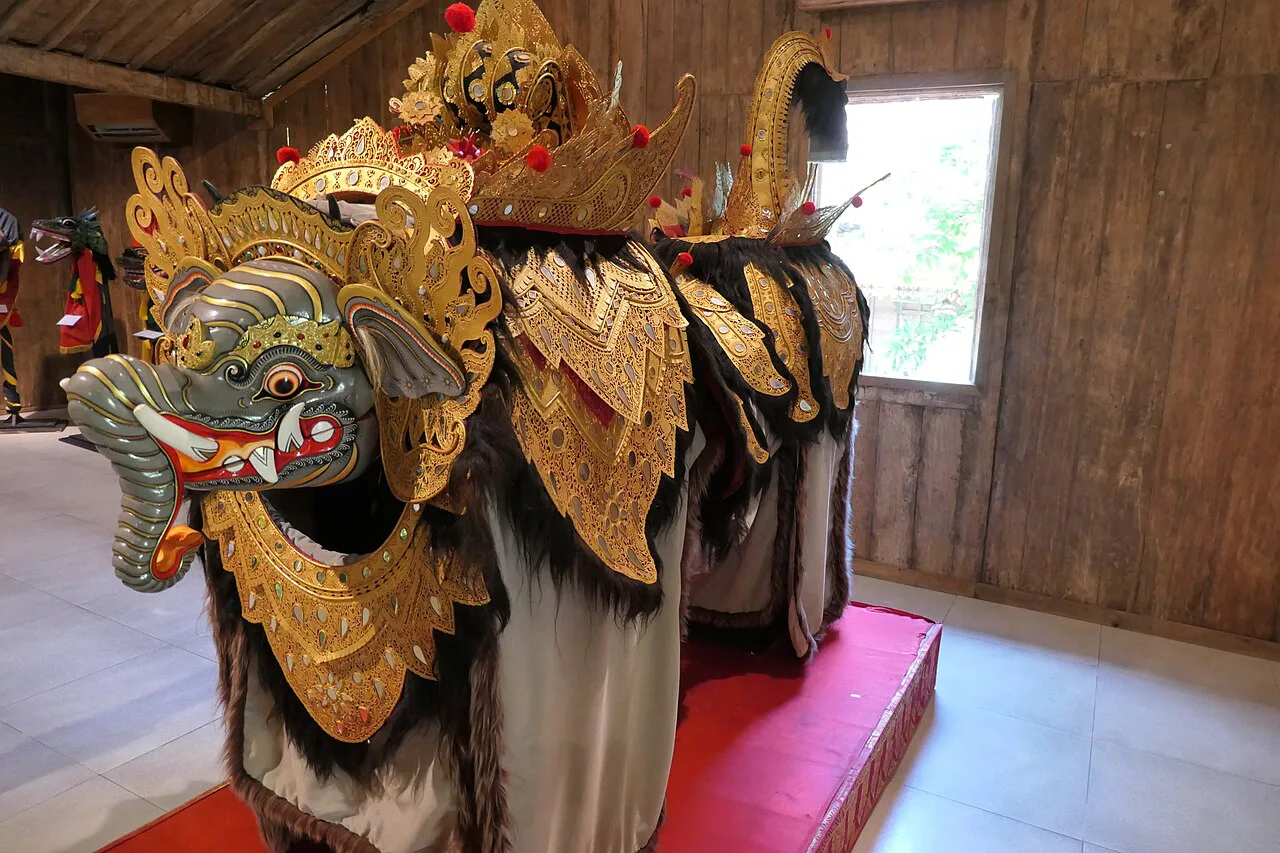
Start with the character masks drawn from the Ramayana and Mahabharata, which give you a reading key for everything else. The first house holds recognizable figures such as Hanoman, Rahwana, Sugriwa and Jatayu, alongside a hall displaying Barong. Once you can identify a few recurring characters, the other rooms become far easier to follow.
Rangda masks are displayed alongside Barong pieces, and the contrast between the two is one of the collection's clearest lessons in Balinese performance tradition. Also watch for the Topeng Dayak masks from Kalimantan, which look visibly different from the Balinese carving style and break up a room of familiar faces.
Visitors consistently describe the variety of expressions as the memorable part, with smiling, frightening and stylized faces sharing a single room. Give yourself permission to pick favorites rather than trying to absorb every label.
The puppet galleries
The Indonesian shadow puppet tradition is called wayang kulit, and the museum holds flat leather figures from Bali, Lombok and Java, including versions carrying Ramayana and Mahabharata cycles. Because the same stories appear across islands, comparing the silhouettes region by region is the most rewarding way through these cases.
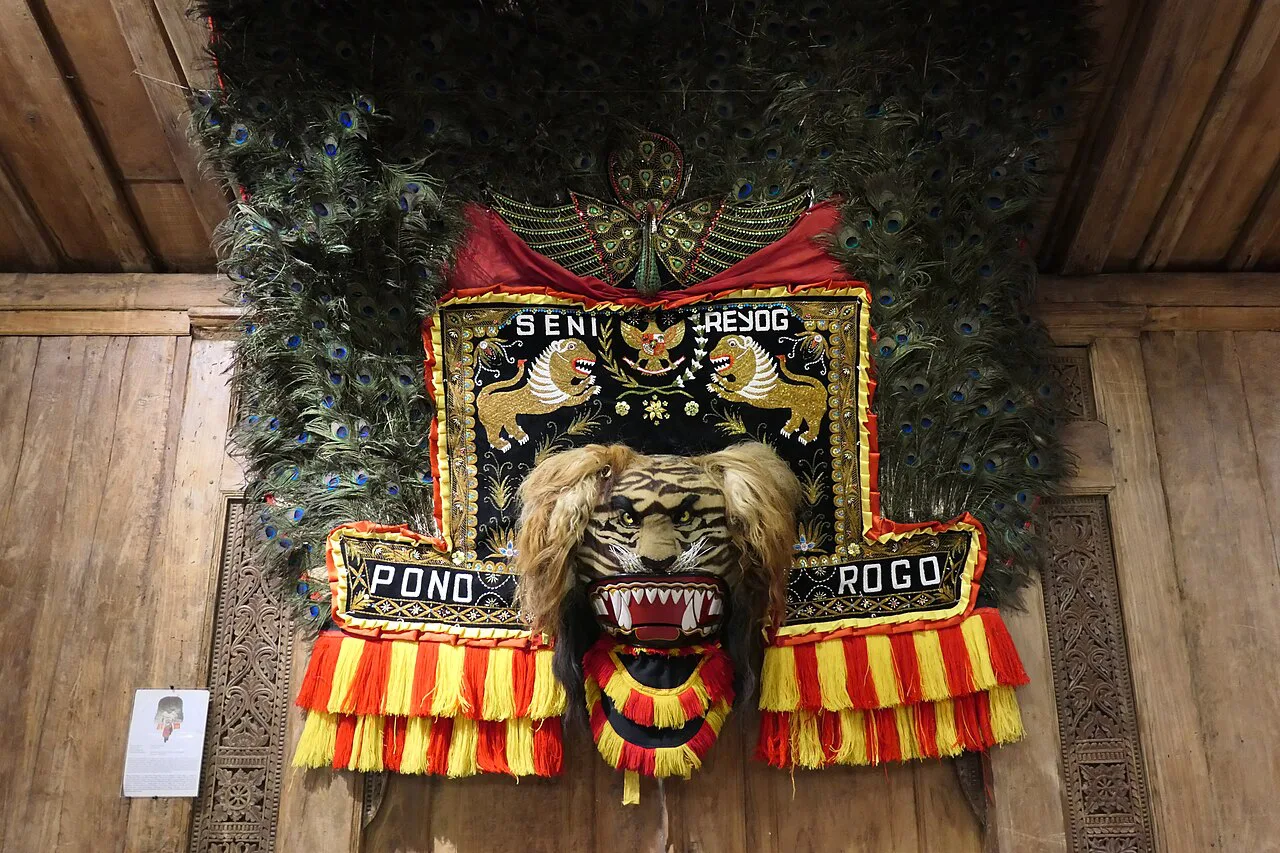
Beyond wayang kulit, the collection includes rarer forms such as wayang suket, figures woven from grass. Larger-than-life pieces, including Reog Ponorogo figures from East Java, fill the taller spaces. These are the displays that slow most visitors down, so factor them into your time budget.
How much time to allow
A brisk walk-through takes about 45 minutes: two or three houses, a glance at the Barong hall and out. A slower visit of roughly two hours lets you read labels, compare regional carving styles and work through the puppet cases properly. Photography is the usual culprit when a short visit stretches longer, since the figures sit behind glass and reward careful angles.
If you are pairing the museum with the Sukawati art market, give each stop its own hour and avoid stacking them at the end of a long driving day. The gardens also make a natural pause point midway through, so plan the visit as two halves rather than one continuous push.
Tickets and opening hours
Current entry charges and daily opening hours should be confirmed directly before you set out. A recent traveler post lists an 8:00 AM to 5:00 PM window with free entry, but that is a user-generated note rather than an official schedule, and such details can change. Check the museum's own site before you go.
Treat any closure notice you hear about locally as provisional unless the museum publishes it. The collection has been open to the public since 2006, so a short-notice closure is more likely to be a private event than a permanent change.
Nearby in the Sukawati area
Sukawati's art market is the obvious companion stop, and it is the reason traffic thickens on the approach road. Pair the two if you want shopping and culture in one outing, and go early to beat the tour groups.
If you would rather keep the day in town, Ubud's museum cluster rewards a separate half day. The Puri Lukisan Museum in Ubud covers Balinese painting, while the Neka Art Museum and ARMA Museum broaden the picture.
What this museum is not
Do not arrive expecting a scheduled performance or a guaranteed guided tour. The museum publishes no regular show times, and staff-led explanations are not something to count on. Read the labels and bring your own context if the characters are unfamiliar.
Nor is it a large modern facility with cafes and shops attached. It is a garden site with six houses of objects, and the appeal lies in looking closely. Set expectations accordingly and the visit delivers.
Should you add Setia Darma to your Ubud days?
Add it if you want one collection that explains Balinese and Javanese performance characters through objects rather than text. Skip it if your Ubud time is short and you would rather stay in town among the temples and markets.
Book a driver for a half day, confirm hours before leaving, and pair the visit with the Sukawati market. Two hours on site is enough to see the masks and puppet cases without rushing.