
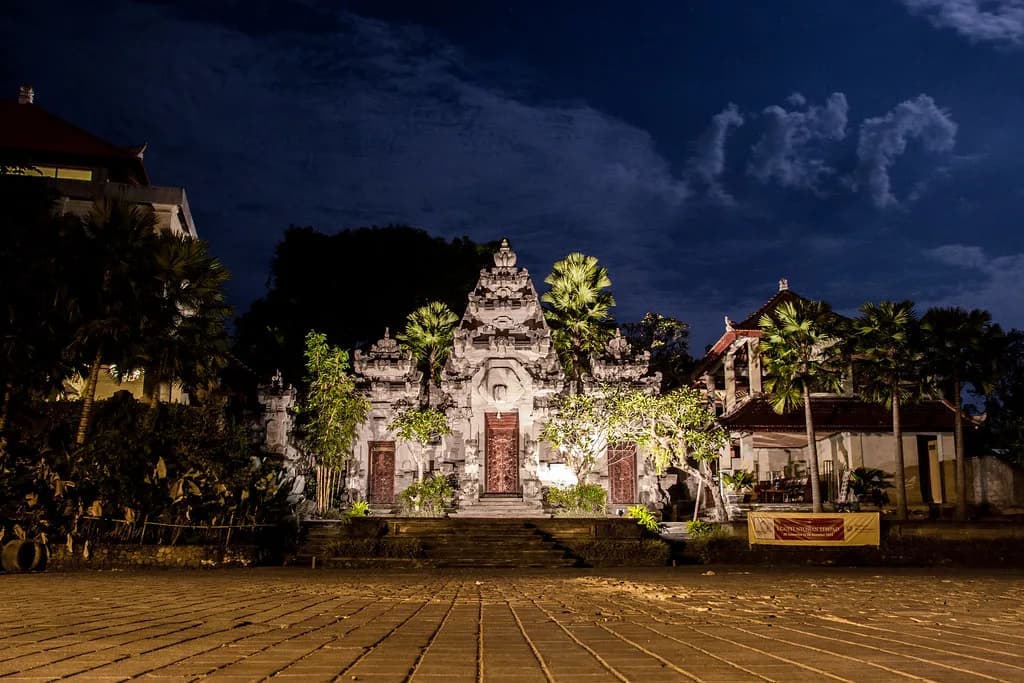
Puri Lukisan Museum (Museum Puri Lukisan), Ubud: A Practical Visitor Guide
Museum Puri Lukisan is a small, calm art museum in the middle of Ubud, and 45 to 90 minutes is usually enough to see it properly. It rewards travelers who want to look closely at Balinese painting and woodcarving for an hour rather than tick off a major attraction, and it sits on the same walk as several other central stops. This guide covers where the museum is, how to reach it on foot, what the galleries hold, how long to budget, and how to confirm tickets and hours before you set out.
Where Puri Lukisan Museum sits on Jalan Raya Ubud
The museum's address is Jalan Raya Ubud in Gianyar, the main street that runs through the center of Ubud. Its official site lists the full address and a telephone contact, which is useful if you want to confirm details directly before a visit. Because it faces the main road, you will pass it on almost any walk between the palace end of town and the junctions further east.
Think of the location as a midpoint rather than a destination in itself. The museum sits within the dense, walkable core where shops, cafés, temples and the palace cluster, so it slots naturally into a half-day on foot. If you are mapping out the town first, our overview of Ubud Attractions is a sensible starting point before you fix an order of stops.
Getting there on foot and where vehicles can stop
Walking is the practical way to arrive. From the Ubud palace area, the museum is a short stroll along Jalan Raya Ubud, and from the Campuhan side it is a similar walk in the opposite direction. Traffic on this road is slow and constant, so a five-to-fifteen-minute walk often beats being dropped off by car.
If you come by car or ride-hailing app, expect the driver to stop at the roadside rather than in a dedicated lot, since the entrance opens straight onto the main street. Agree on a clear landmark with your driver before you set off, and keep the museum's own contact details handy if the pickup point needs confirming. The official site publishes the street address and phone number for exactly this kind of check.
What you'll see inside: buildings, collections and the Pita Maha story
The museum grew out of the Pita Maha artists' association, formed by Balinese artists with the Dutch painter Rudolf Bonnet, and it opened in 1956 as a home for work that was otherwise leaving the island. The official site frames the founding around that fear of losing Bali's best art and around artists wanting to sharpen their skills without abandoning their own style. That context is the reason to read the labels rather than just scan the walls.
Collections are spread across several pavilions set in a garden, and accounts differ on how many buildings you will walk through, so treat any building count as approximate. What is consistent is the mix: traditional paintings, wayang-style works, and a large holding of sculpture and carvings. A travel write-up from a local hotel describes pre-war paintings from the Leo Haks collection and masterworks by I Gusti Nyoman Lempad among the notable pieces.
For background on the wider art scene, the museum's official site is the most reliable single source on its own history and mission. If you want to compare it against Ubud's other art collections before committing an afternoon, the Neka Art Museum and the ARMA Museum are the usual reference points.
The highlights worth slowing down for
Give the painting galleries the most time. The pre-war works and the Lempad pieces are the ones most often singled out, and they reward a slower read than the carved panels, which you can take in at a glance. If your interest is woodcarving, look for the sculpture sets rather than just the framed art.
The Founders Gallery, described as the museum's fourth building, covers the institution's own history and stages temporary shows by local artists. Check the museum's exhibitions page before you go, since temporary programming changes what you will actually find hanging. That is also where the museum posts workshops and events, which can shift the quiet character of a visit.
A café operates on site under the name The Chowk, but opening arrangements and any inclusions tied to admission are best confirmed with the museum rather than assumed. If you were planning to eat there, ask at the ticket desk on arrival.
How long to allow for a visit
Budget 45 to 90 minutes. A brisk pass through the pavilions takes well under an hour, while reading labels and sitting with the pre-war paintings comfortably fills an hour and a half. Travelers who expect a large museum often describe it as small, so calibrate downward rather than planning a half day here.
The garden setting makes it a reasonable stop in the heat of the day, when you want shade and quiet rather than another street walk. Pair it with one nearby sight rather than three, and leave the rest of the afternoon loose.
Tickets and opening hours: what's published and what to confirm
The museum's official site carries dedicated pages for address, opening hours and entrance fee, which is where to look for current figures. A secondary review cites an entry fee of IDR 100,000 with a complimentary drink or meal at the café, but that figure comes from a third-party write-up and should be treated as indicative rather than guaranteed. Confirm the price and what it includes at the ticket desk or on the official page before you rely on it.
Opening hours change, and the museum has not published a ceremony-closure or holiday schedule in the sources reviewed here. Check the official site or its Instagram account on the day, especially around major Balinese holidays when Ubud's institutions often adjust.
The honest trade-offs: size, quiet and photography
The main complaint in reviews is scale: some visitors expect a grand gallery and find a modest one, and a few feel the entry fee sits high for the size of the collection. Set expectations accordingly, and treat the museum as a focused hour rather than a full cultural afternoon. The Tripadvisor listing, with its review counts as of the date of that page, is a reasonable place to sample the range of opinions.
The flip side of the low traffic is that you can often stand in front of a painting without a crowd. Some sections reportedly restrict photography, so ask at the entrance if photographing specific works matters to you. Visitors wanting a livelier, more interactive museum may find the atmosphere too still.
Nearby stops on the same walk
The Ubud palace, Puri Saren Agung, is a short walk west along Jalan Raya Ubud and is the obvious next stop, with its own courtyards and evening programming. Our guide to Ubud Palace (Puri Saren Agung) covers its layout and what to look for.
Ubud Market (Pasar Seni Ubud) sits next to the palace, so the museum, the palace and the market form a natural short circuit on foot. The market is where many travelers end up browsing paintings and crafts, which pairs well with a museum visit earlier in the day.
If you are building a small art-and-temple morning, the Saraswati Temple near the center of town adds a lotus pond and carved gate without much extra walking. The Blanco Renaissance Museum, toward Campuhan, suits travelers who want a second, very different artist's house.
Further afield, the Museum Rudana south of town and the Setia Darma House of Masks and Puppets near Mas reward a vehicle rather than a walk. Both are better paired with a driver for the morning than squeezed into the same foot-based loop as Puri Lukisan.
Should Puri Lukisan make your Ubud shortlist?
Include it if you want one quiet, well-labeled hour of Balinese painting and carving in the middle of town, and skip it if you are after a blockbuster museum. Walk in from central Ubud, budget 45 to 90 minutes, and confirm the current fee and opening hours on the museum's own site before you go.
Explore more Ubud guides
Frequently Asked Questions
Is Museum Puri Lukisan worth visiting in Ubud?
It is worth it if you want a short, calm look at traditional Balinese painting and woodcarving in a garden setting on Jalan Raya Ubud. Travelers expecting a large museum often find it modest, so treat it as an hour-long stop rather than a main attraction.
How do I check the entrance fee before I go?
The museum publishes an entrance-fee page on its official site, and you can also ask at the ticket desk on arrival. Third-party write-ups quote figures that may be out of date, so confirm with the museum rather than relying on a review.
Can I walk to Puri Lukisan from the Ubud palace?
Yes. The museum is a short walk along Jalan Raya Ubud from Puri Saren Agung, and the market sits next to the palace, so all three fit into one easy loop on foot.
Is photography allowed inside the museum?
Photography is generally permitted, though some sections reportedly restrict it. Ask at the entrance if specific works matter to you, since rules can vary by gallery.