
Yeh Pulu: A Quiet Rock Relief in Bedulu, Near Ubud

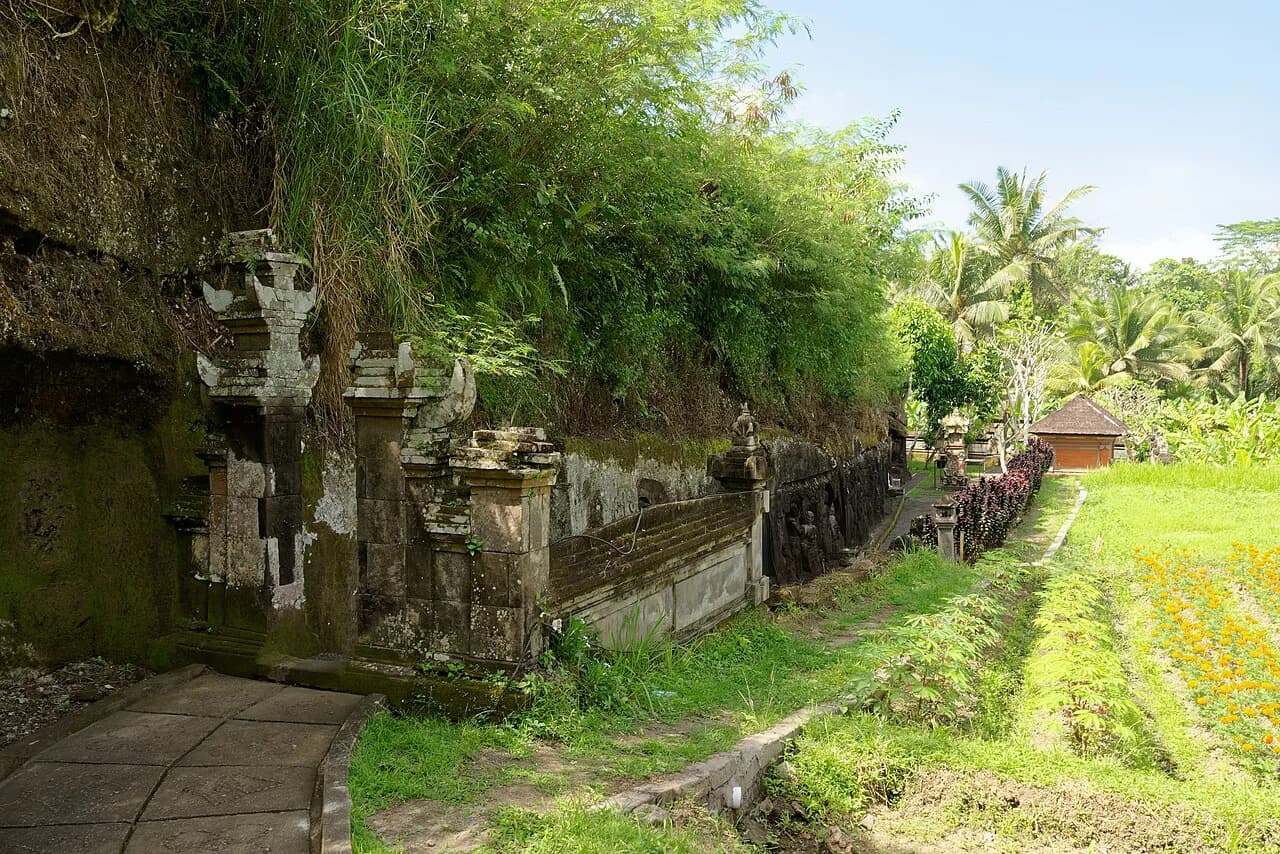
Yeh Pulu is a carved rock panel in Bedulu village, Gianyar Regency, and it needs about 30 to 45 minutes of your day, not a half day. It is an archaeological site beside a rice field and a ravine, not a busy temple complex, so the visit is short, quiet and mostly about looking closely at the stone. This guide covers where the site sits, how the approach works, which scenes to pick out, and how it fits with nearby stops.
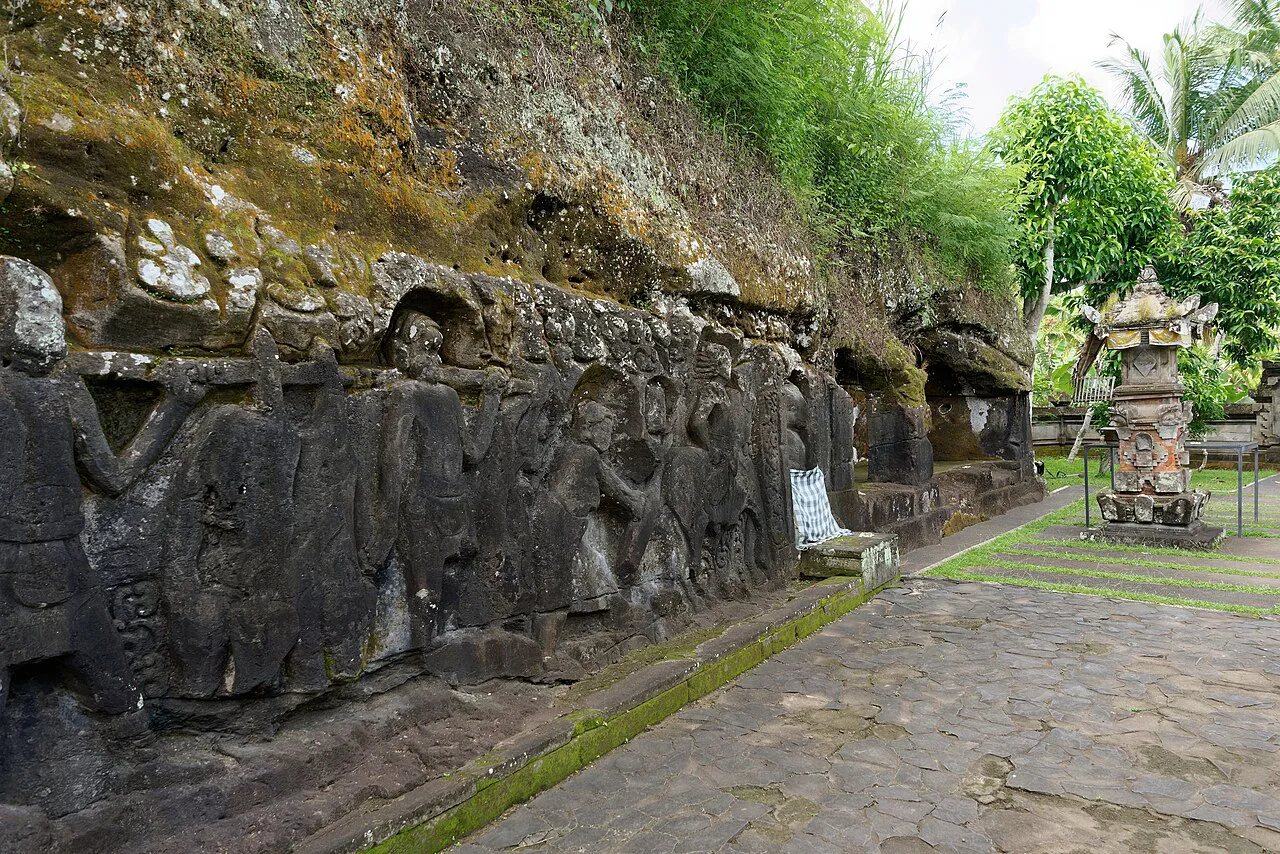
The panel runs along a cliff face rather than standing free, which is why descriptions of its length vary. One Bali reference gives the carved panel as about 25 meters long and 2 meters high, while an operator's visitor listing puts it at about 26.5 meters long and 3 meters high. Treat both as estimates and judge the scale once you are in front of it.
What Yeh Pulu actually is
Yeh Pulu is a cliff-carved relief in Bedulu, on the road east of Ubud, near the Petanu River between rice fields and a small ravine. It is cared for locally rather than run as a large tourism complex, so expect a path, a wall and a modest welcome rather than galleries or heavy signage.
Many visitors arrive expecting an active temple, because the name Pura Yeh Pulu appears on some listings and the path ends at a sacred spring. A visitor guide describes the site as an ancient relief with a holy area at the end of the trail, not a place of daily worship, though local people still take water from the spring for ceremonies and adat use. Keep your voice down near the spring and do not treat the panel like a photo backdrop.
The Ministry of Tourism page for Yeh Pulu describes a tidy, well-kept site where the rice fields show working agriculture and guides can explain how the carvings connect to farming life. It also notes a small coffee bar serving local fruit drinks and snacks, which can stretch the visit a little beyond the wall alone.

Where it sits and how to get there
Bedulu is roughly 6 to 7 kilometers east of central Ubud, and one visitor listing puts the drive at 15 to 20 minutes by private vehicle. Another Bali reference estimates about 10 minutes from Ubud, 50 minutes from Sanur and 70 minutes from Kuta. These are estimates, not timetables, so add margin if you are coming from south Bali in traffic.
The approach is the part people miss. From the Bedulu crossroads, turn south following the Yeh Pulu signs, and the car can continue about 300 meters toward the site before you walk the rest. If you use a driver, give the village name Bedulu rather than just Ubud, since the site is outside the town center.
For the wider day, this is one stop among many in the area, and our Ubud Attractions: 12 Visitor Guides lays out the surrounding sights by neighborhood so you can order them sensibly. A private car or a ride-hailing drop-off works well because the site is a short walk-in rather than a place you circulate through for hours. If you are building a town day instead, Ubud Palace (Puri Saren Agung) and Ubud Market (Pasar Seni Ubud) sit close to each other in the center and pair naturally for an afternoon.

Reading the carvings on the panel
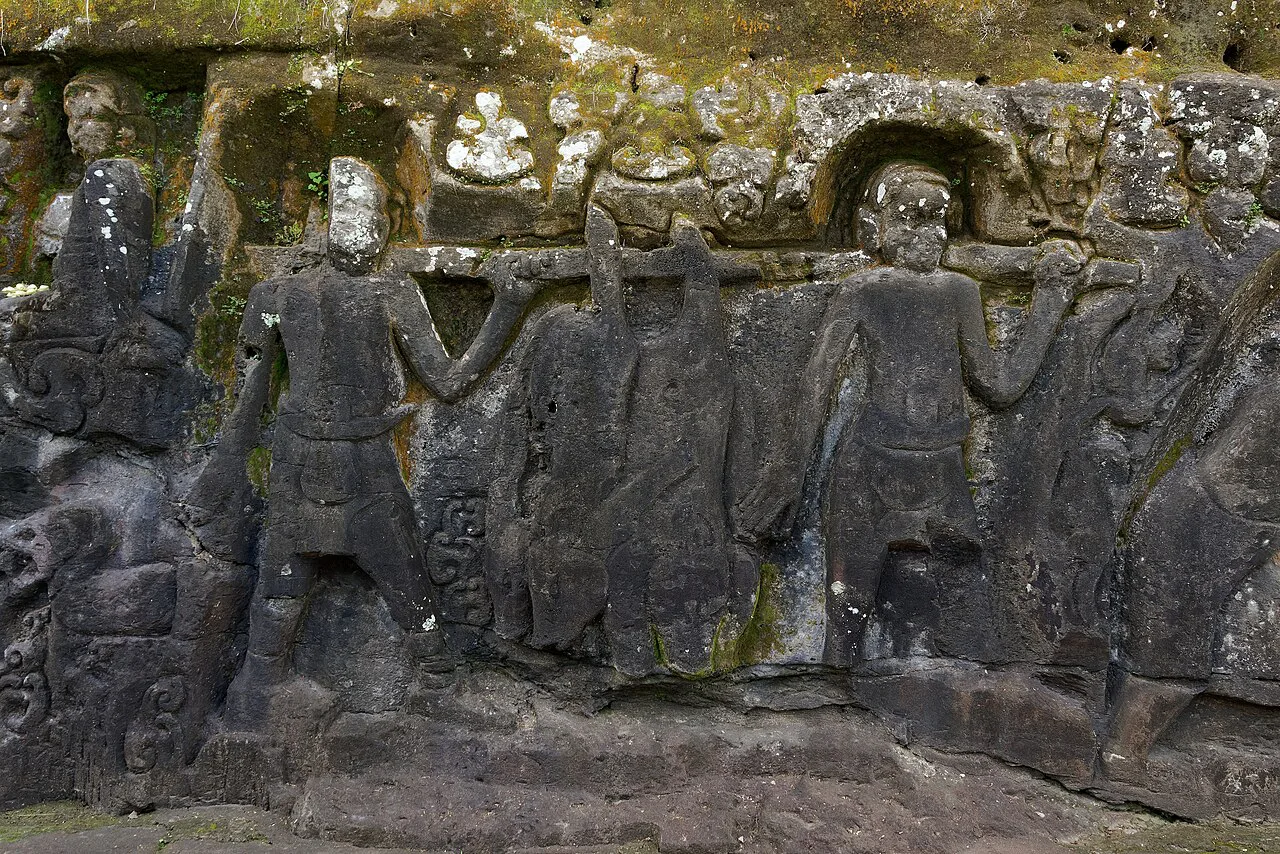
The relief is usually divided into five episodes, and knowing that helps you read left to right instead of staring at a wall of figures. One scene shows a man carrying a container on a pole across his shoulder, which a Bali reference identifies as an urn of the kind used for palm wine, or tuak. Another figure wears an ascetic's headdress described as a prototype of the crown worn by Balinese priests today.
Further along, the panel shows bear hunters attacking a bear, a man on a horse, two men carrying the bear on a pole, and a woman holding the horse's tail. The style mixes wayang puppet-like figures with ordinary people, which is what makes Yeh Pulu unusual among Bali's older carvings. Look for that shift from stylized to naturalistic bodies as you move along the wall.
No one has pinned the carving to a single date. The same reference notes that iconographic comparison with Candi Penataran in East Java suggests a typological date around 1400 AD, while links to wayang chronicles point to the 16th century. Traveler descriptions commonly place it in the 14th or 15th century, so treat the date as unsettled.
A guide is not required, but the scene-by-scene reading is not obvious from the stone alone, and the Ministry of Tourism page credits guides with explaining the carvings and their link to agriculture. If you want that context, ask at the entrance whether a guide is available and settle the arrangement before you walk in.
The spring at the end of the path
The path finishes at a spring that local people still use, drawing water for ceremonies and customary needs rather than for a daily temple routine. That is why the site feels sacred without functioning as an active temple. Keep to the path, avoid standing in the water channel, and step aside if someone has come to collect water.
Because the sacred area is small and in use, the etiquette is simple rather than elaborate: quiet voices, no climbing on the carvings, and no blocking the spring. If a ceremony happens to be under way, wait or come back rather than walking through it.
How long to allow
Budget 30 to 45 minutes at the site, which covers the walk in, the panel and the spring. One operator listing gives that range and suggests mornings around 8 to 9 am for the best light on the relief, or late afternoon around 4 to 5 pm for softer light and fewer people. Midday is hotter and busier.
Add time if you stop at the coffee bar for a local fruit drink or snack, as the Ministry of Tourism page recommends. That turns a quick look into a comfortable hour without padding the visit with anything you would not otherwise do.
Crowds are part of the appeal here. A visitor listing describes the site as quiet even in peak holiday periods such as July and December, in contrast to busier Ubud stops. If you want a short break between more popular sights, this is the kind of place that rewards a low-key approach.
Tickets, hours and what to confirm
Opening hours and ticket prices are set by the site's local managers and are not published on an official Yeh Pulu page. One car-rental operator's listing, updated in January 2026, gives daily hours of 7 am to 6 pm and quotes separate ticket prices for Indonesian and foreign adult and child visitors, plus motorbike and car parking fees. Treat those figures as that operator's listing rather than an official tariff and confirm at the gate before you pay.
The Ministry of Tourism page confirms the site is organized and clean but does not list hours or prices, so the gate is the reliable source. Bring cash in small rupiah notes, since small sites may not handle cards.
Nearby stops on the same road
Goa Gajah, the Elephant Cave, is the obvious pairing, about 2 kilometers east of Ubud on the same route and overlooking the Petanu River. A Bali reference groups it with Yeh Pulu as an easy combination. Because both are short visits, they work well as one half-day loop from Ubud rather than two separate trips.
Further out, the Ubud Monkey Forest and Mas village, known for woodcarving, appear on the same reference's list of nearby sights. If you continue toward Mas, the Pura Taman Pule in Mas, Ubud is worth a look as a working village temple and a contrast to the archaeological site.
Back in central Ubud, the Saraswati temple Ubud and the Puri Lukisan museum give you a temple and a museum in one walkable area, useful if you want a fuller day after a short Bedulu stop. Both are town sights, not substitutes for Yeh Pulu's carved panel.
Is Yeh Pulu worth it for you
Yeh Pulu suits travelers who want one quiet, specific thing to look at and are happy with a modest site. It does not suit anyone expecting a large temple complex, a museum, or hours of activities. The trade-off is clear: you get an uncrowded carving in a working rice landscape, and in exchange you get limited facilities and no officially published hours to plan around.
The best fit is a short stop bundled with Goa Gajah on the way back from east Bali, or a low-key morning before the busier Ubud sights. If you want the museum side of Balinese art instead, the Neka Art Museum in Ubud or the Blanco museum Ubud make a fuller indoor alternative on a hot or wet day.
Should you add Yeh Pulu to your Ubud day?
Add Yeh Pulu if you can give it 30 to 45 minutes on the way to or from Goa Gajah, and if seeing an old carving in a quiet rice-field setting appeals more than another busy stop. Skip it if you need guaranteed opening hours and posted prices before you go, since those are not published officially and must be confirmed at the gate.
Pair it with a central Ubud afternoon at Ubud Palace (Puri Saren Agung) and Ubud Market (Pasar Seni Ubud), and use the Ubud Attractions guide to slot the rest of the day around it. Carry small rupiah notes, keep your voice low near the spring, and consider asking for a guide at the entrance if you want the scenes explained.
Explore more Ubud guides
Frequently Asked Questions
Do you need a guide at Yeh Pulu?
No guide is required, and the site is small enough to walk alone. A guide helps because the scenes on the panel are not self-explanatory, and the Ministry of Tourism page notes that guides explain the carvings and the link between the relief and local agriculture.
Is Yeh Pulu crowded?
It is generally quiet, including during peak holiday periods, according to a visitor listing. That makes it a useful low-key stop between busier Ubud sights, though mornings and late afternoons are the most comfortable times for light and heat.