
Gedung Sate: What to See at Bandung's Satay Building

Gedung Sate is a 45-minute-to-two-hour stop, not a half-day attraction. The building is Bandung's signature colonial landmark and still functions as the office of the Governor of West Java, so most visitors see the exterior, the front garden, and whatever interior space is currently open rather than touring offices. This page covers where the building stands, how to reach it, what the architecture is worth pointing out, and which nearby sights pair naturally with a visit.
A working government office, not a museum first
Gedung Sate is the administrative seat of West Java province and the governor's office, which shapes what a visit actually looks like. Sources describe well-kept lawns and gardens around the building that visitors can walk, plus a museum space inside, but they do not confirm which interior areas are open on any given day. Treat the grounds and facade as the guaranteed experience and the interior as a bonus.
Because it is an active office, access can shift with official events and ceremonies that are not announced in visitor listings. Before you build a morning around the museum, check the current status with official West Java provincial channels rather than relying on older travel write-ups. That one check prevents the most common disappointment here.

Where Gedung Sate is in Bandung
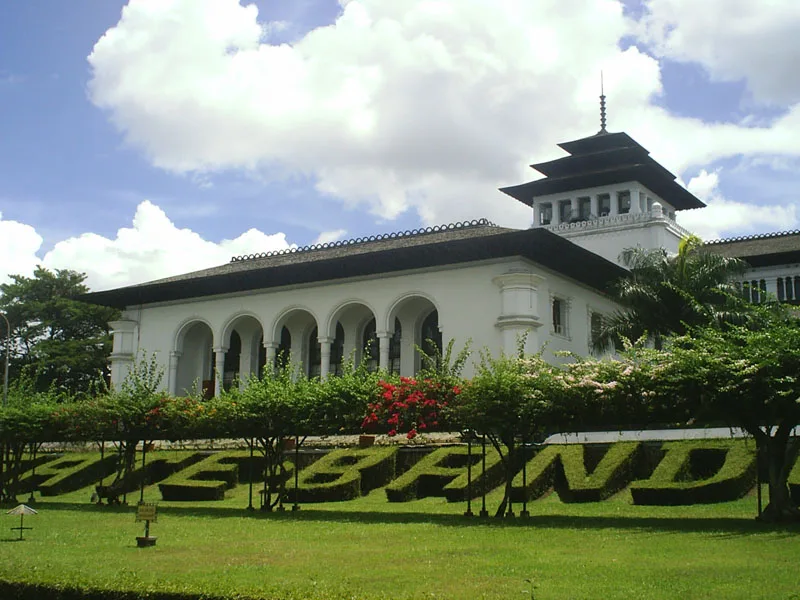
The address is Jalan Diponegoro No. 22 in Citarum, Bandung Wetan, posted as postal code 40115. That places it in the northern part of central Bandung, on the same broad axis as the Gasibu open field, which most drivers and ride-hailing apps recognize instantly.
Getting there and getting around
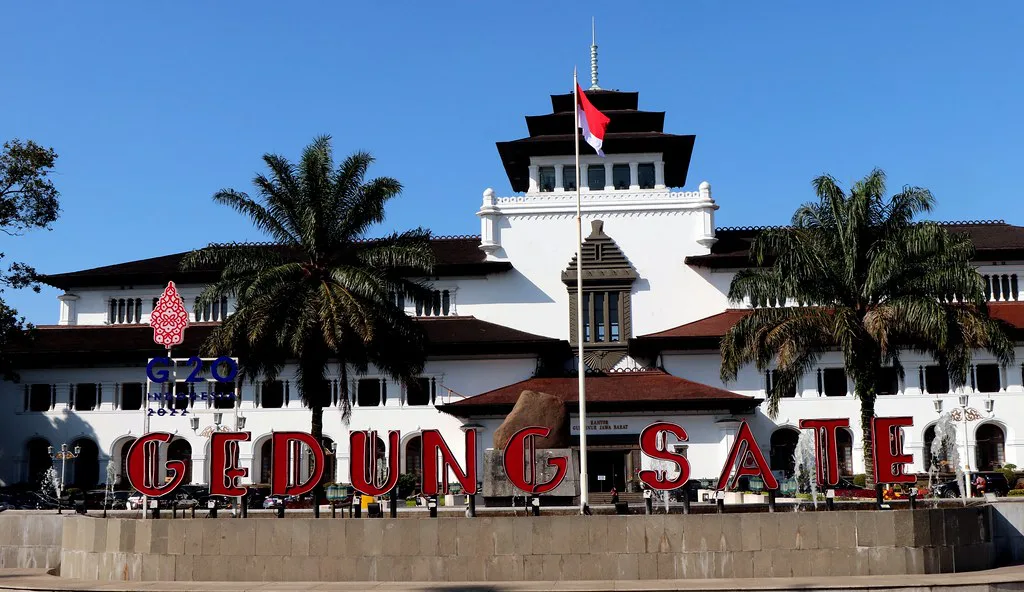
Gedung Sate sits in the center of Bandung and the roads around it are easy to reach, which is why it appears on most short city itineraries. Ride-hailing through Grab or Gojek is the simplest option for a first-time visitor, since drivers know the landmark by name and the drop-off is obvious. Metered taxis work the same way.
Public minivans known as angkot pass through the area, but routes change and are hard to map from a hotel lobby. Ask your accommodation which angkot line currently serves Jalan Diponegoro, or simply walk if you are staying in the central Bandung hotel belt. Traffic in Bandung is heavy at peak hours, so a short distance can take longer than the map suggests.
Why it is called the satay building
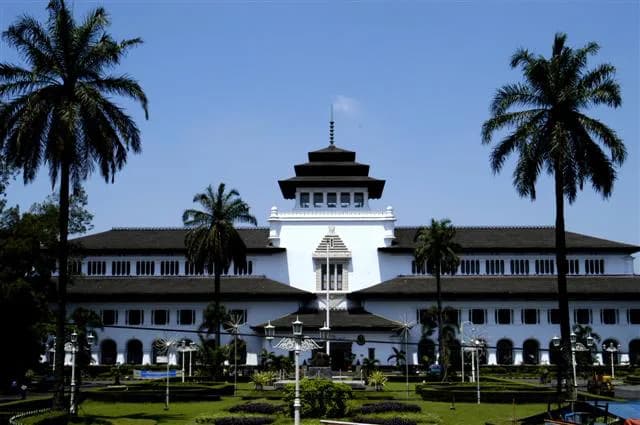
The name comes from the roof, not from food. Six ornamented spikes sit atop the central tower and resemble skewers of satay, a detail visible from the street and readable from the front lawn.
The six spikes are said to stand for the roughly six million gulden the building was reported to cost, a figure that appears in popular accounts rather than official records. The building was designed by J. Gerber and housed colonial government administrative functions in the Dutch East Indies era before becoming the symbol of West Java's administration.
Architecture to look for from the lawn
Gedung Sate is a hybrid: a European colonial frame with Indonesian detailing layered on top. Look for the symmetrical facade, the tiered roofline, and ornament that echoes temple forms, all details a casual glance misses. Sources also describe Renaissance-influenced structure and natural-stone walls that have held up for a century.
Construction dates differ between accounts, with a 1920 start commonly cited and completion given variously as 1924 or later. Worker counts also vary, from roughly two thousand local laborers to larger figures. Treat these numbers as historical estimates rather than verified facts, and enjoy the building itself rather than the statistics.
What you can actually see and do
Realistically, your visit is the facade, the front garden, and photos from the lawn. Sources describe a modern, interactive museum on the ground floor covering the building's history and construction, which is where you get the substance if it is open. Whether that museum is currently admitting visitors is not confirmed in visitor listings, so verify first.
The grounds are also used as public open space, and locals come for walks and photos in front of the building. That makes Gedung Sate an easy, low-commitment stop that fits between two other sights rather than a destination in itself.
How much time to allow
Budget about 30 to 45 minutes for the exterior and grounds, and up to two hours if the ground-floor museum is open and you read the displays. If you are mainly after the photo of the facade, a 15-minute stop is enough.
Early morning is the calmest window for photos, before the lawn fills with school groups and office traffic builds on Jalan Diponegoro. Late afternoon light hits the front facade nicely but coincides with the worst traffic around Gasibu.
Nearby after your visit
The Gasibu field is directly in front of the building and is a natural place to stretch the stop. A short ride south brings you to Gedung Merdeka and the Museum Konferensi Asia Afrika in the Babakan Ciamis area, where the 1955 Asia-Africa Conference is documented. Both are covered in more depth in our guide to Bandung attractions and its individual pages.
If natural history appeals more, the museum Geologi Bandung sits nearby on Jalan Diponegoro and makes a logical second stop on the same street. Farther south, the colonial-era shopping strip of Braga street offers a different view of the same period of Bandung history.
Checking hours, tickets and interior access
Public listings do not give reliable opening hours or ticket prices for Gedung Sate, and sources advise confirming current visiting information through official Bandung or West Java tourism channels. Do not assume the museum is free or that the building is open on a weekday morning; ask before you go.
If your trip depends on the interior, message your hotel or a local contact the day before and ask whether the museum is currently admitting visitors. The address is Jalan Diponegoro No. 22, which you can use to confirm the location.
Is Gedung Sate worth the stop?
Yes, as a short architectural stop rather than a full attraction. Come for the satay-spike roof, the symmetrical colonial facade, and the easy lawn access, and pair it with the Geological Museum or the Asia-Africa Conference Museum to fill a half-day. Skip the visit if you want a guaranteed interior tour, unless you have first confirmed the museum is open.
Explore more Bandung guides
Frequently Asked Questions
Is Gedung Sate open to the public?
The grounds and exterior are the part visitors reliably see. The building itself is the working office of the Governor of West Java, and sources describe a ground-floor museum, but interior access is not confirmed in public listings. Check with official West Java or Bandung tourism channels before counting on going inside.
How many satay skewers are on Gedung Sate?
Six ornamented spikes sit on the central tower, which is where the name comes from. Popular accounts link the six to the reported six-million-gulden construction cost, though that figure is not officially verified.
Which district is Gedung Sate in?
Gedung Sate is on Jalan Diponegoro No. 22 in Citarum, Bandung Wetan, Bandung, West Java, posted as 40115. It sits near the Gasibu open field in the northern part of central Bandung.