
Masjid Raya Bandung: What to See at Bandung's Grand Mosque

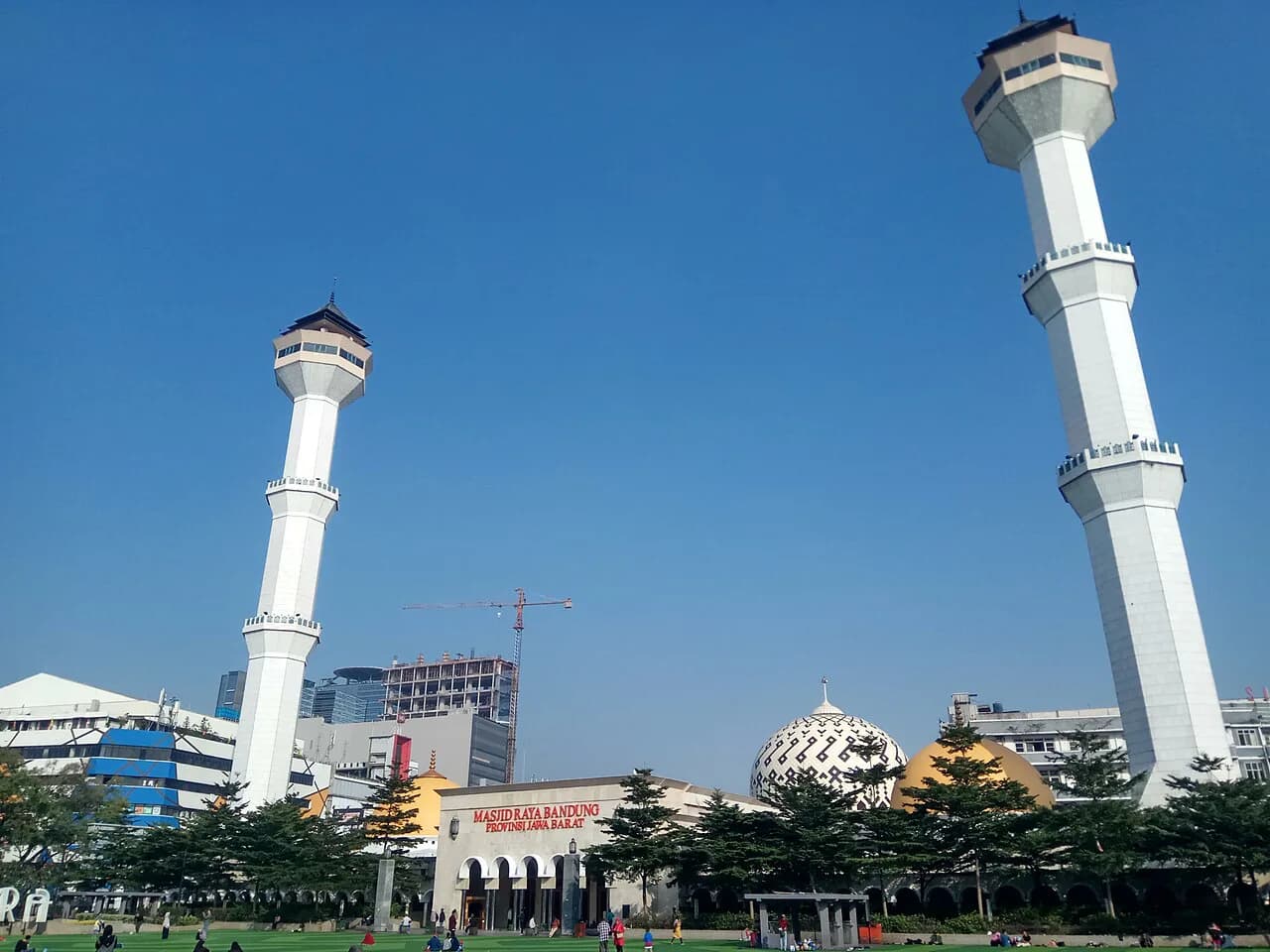
Budget about an hour for Masjid Raya Bandung, the landmark mosque that anchors the Alun-alun in the middle of Bandung. It is worth the stop less as a checklist sight than as the civic heart of the city, where a paved public square, two slender minarets and a tiered roof frame the busiest stretch of Jalan Asia Afrika.
One practical wrinkle first: since January 2026 the grand name has changed back, and signage and locals may use either label. This page covers where the mosque sits, how to walk in from the surrounding streets, what you actually see on site, how long to allow, and which nearby sights pair with it on the same loop through central Bandung.
What the mosque is, and why it is called Masjid Agung again
The mosque has stood in Bandung since 1812, when it was founded as Masjid Agung Bandung, and the building you see today is the product of a long series of additions rather than a single construction date. A 1900 renovation added the mihrab and the pawestren areas on the left and right sides of the prayer hall, according to a history published by Kompas.
For more than two decades the mosque carried the title Masjid Raya Provinsi Jawa Barat, conferred by a 2002 gubernatorial decree. On 7 January 2026 the provincial government revoked that status through a new decree, so the official name returned to Masjid Agung Bandung and the mosque is no longer styled the province's grand mosque.
For a visitor the change is mostly a naming matter: the building, its position on the Alun-alun and its role in daily worship are unchanged. Expect maps, signs and taxi drivers to keep using both names for a while, and treat "Masjid Raya" and "Masjid Agung" as the same address.

Where the mosque sits on the Alun-alun
The address is Jalan Dalem Kaum No. 14 in Balonggede, Regol, on the western edge of the Alun-alun, the large open square at the center of Bandung. The Indonesia.travel listing places it right beside Jalan Asia Afrika, the city's best-known avenue, which makes it easy to find on foot rather than by hunting an exact pin.
Use the square itself as your landmark: the mosque faces the Alun-alun across a wide paved area, so you approach it from the open side rather than from a side lane. If you are dropped off on Jalan Asia Afrika, walk toward the grass and paving of the square and the minarets will orient you immediately.

How to get there from Jalan Asia Afrika and central Bandung
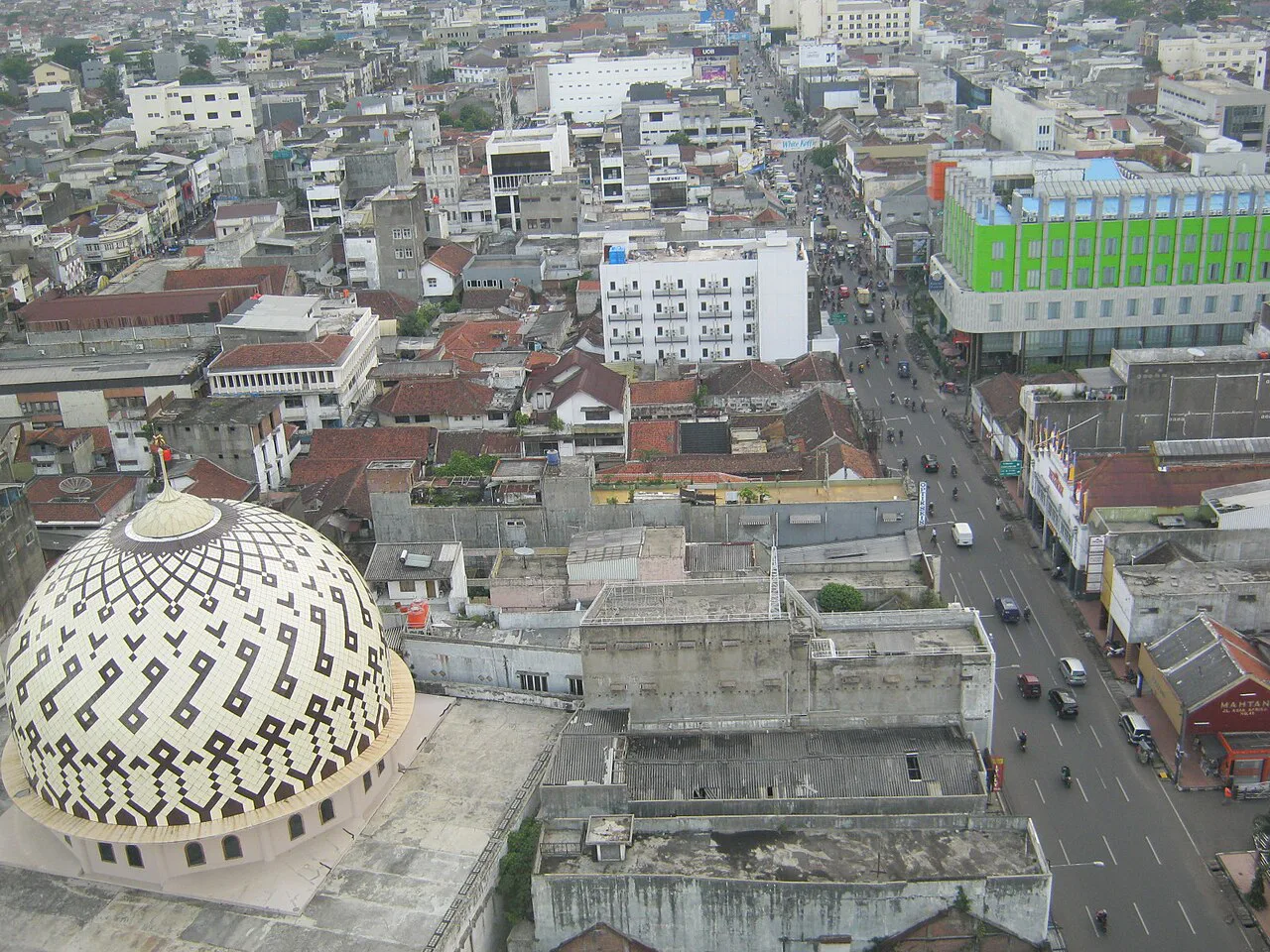
Central Bandung is compact enough that the mosque works best as a walking stop. From the Jalan Asia Afrika corridor, aim for the Alun-alun and cross toward the mosque's frontage; ride-hailing apps such as Grab and Gojek, or a Bluebird taxi, are the simplest way to close the last stretch if your hotel is outside the core.
Traffic in the center can be slow at busy times, so allow slack if you are combining the mosque with a timed stop elsewhere in the city. Ask the driver for the Alun-alun rather than the mosque by name, since the square is the more reliable drop-off reference while the naming settles.
The exterior: twin minarets, the square and the tiered roof
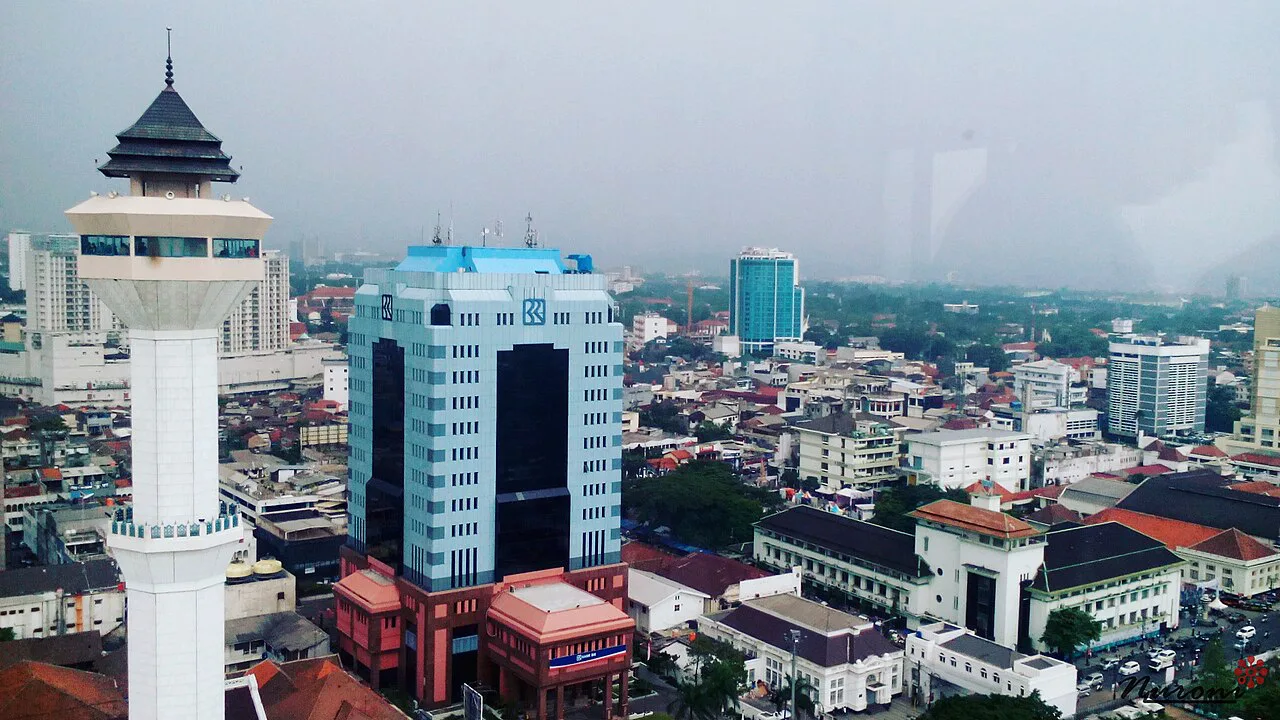
The mosque's most photographed feature is its pair of tall twin minarets, which the Indonesia.travel listing describes as giving panoramic views over the city. That is a description of the silhouette rather than confirmation of public access, so do not plan on climbing them without checking with the mosque directly.
The building itself is modern and expansive, with a tiered roof that reads as a landmark from across the open square. Give the exterior ten or fifteen minutes: the frontage, the roofline against the sky, and the sweep of the Alun-alun in front of it are the experience most visitors come for.
Inside the prayer hall
The prayer hall is large enough to hold up to roughly 12,000 worshippers, which tells you something about the scale of the space before you step in. The 1812 founding and the 1900 additions to the mihrab and pawestren also explain why the interior reads as layers of work rather than one clean period.
This is an active place of worship at the center of the city, so time your look inside around services rather than treating it as a museum hall. Neither entry rules nor visitor hours are published in the sources used here, so confirm access with the mosque's own channels before you plan the stop around going in.
The name question and the 2026 funding change
The revocation also ended provincial operational funding from early January 2026, on the reasoning that the mosque sits on waqf land rather than on provincial assets. The mosque's nadzir, Roedy Wiranatakusumah, said the building is around 215 years old and had inherited at least 135 points of damage needing attention.
Bandung mayor Muhammad Farhan said at the time that he needed to confirm the mosque's status and budget before acting, and offered to rally support for its upkeep. None of this changes what a visitor sees on the day, but it explains why you may encounter news coverage, petitions or fundraising appeals tied to the mosque while you are in the city.
News coverage has centred on the decree and the funding dispute rather than on any change to the building itself. Even so, it is worth a quick online check for announcements before you set out, in case an event or maintenance work affects the prayer hall.
How long to allow and how it fits a Jalan Asia Afrika walk
An hour is a fair budget: fifteen minutes for the square and the exterior, twenty to thirty for a look inside if access allows, and the rest for lingering on the Alun-alun where residents gather in the evening. If you only want the photograph of the minarets, twenty minutes is enough, though the mosque sits beside Jalan Asia Afrika rather than directly on it, so add a short walk between the two if you are following the avenue.
The mosque sits a few minutes' walk from Jalan Asia Afrika, so it slots naturally into a downtown loop that also takes in the Museum Konferensi Asia Afrika, the legacy site of the 1955 conference that gave the street its fame. Pair the two if you want one coherent walk rather than separate taxi hops.
For a longer architecture-and-street day, continue north toward Braga Street (Jalan Braga) in Bandung, whose colonial-era shopfronts sit within walking range of the Asia Afrika corridor. That makes the mosque a natural first or last stop instead of a destination in itself.
Nearby sights within a few minutes of the Alun-alun
Beyond the conference museum, the colonial-era government buildings along Jalan Diponegoro are a short ride away, with Gedung Sate, Bandung, the city's signature piece of 1920s official architecture, as the headline stop. The museum Geologi Bandung sits in the same northern quarter, so a single driver loop can cover both.
If you would rather stay on foot, the Alun-alun and its immediate streets reward a slow hour: the square, the mosque frontage and the older commercial lanes around Dalem Kaum. For a broader menu of what to do across the city, see our guide to Bandung Attractions: 13 Visitor Guides.
Where to confirm hours and access before you go
No source here publishes visiting hours, ticket rules or a specific visitor entrance for the mosque, so check before you build a day around it. The Indonesia.travel attraction listing gives the address and setting, and the mosque's presence on social media is the better place to look for current access news.
Two practical checks are worth doing the day before: that the prayer hall is open to non-worshipping visitors in the hours you plan, and that no large event has taken over the Alun-alun. A quick look at the mosque's latest public posts or a phone call answers both faster than any guide.
Is the mosque worth folding into your Bandung day?
Yes, if you are already downtown: the mosque is a one-hour stop with a strong sense of place, and it costs you little beyond the walk. It is not a reason to cross the city on its own, so build it into a Jalan Asia Afrika route with the conference museum or extend north to Braga.
Go with the right expectation: expect a working city mosque with a dramatic roofline and a busy square, not a curated heritage site. Confirm access and hours directly with the mosque, and let the two names on the signs be a curiosity rather than a confusion.
Explore more Bandung guides
Frequently Asked Questions
Do I need a ticket to visit Masjid Raya Bandung?
No ticket information is published for the mosque, and it functions as an active place of worship beside a public square, so you can always see the exterior and the Alun-alun. For entering the prayer hall, ask on site or contact the mosque before your visit, since visitor access is not documented in the sources used here.
Is the mosque the same place as Masjid Agung Bandung?
Yes. The building on the Alun-alun was founded in 1812 as Masjid Agung Bandung, took the title Masjid Raya Provinsi Jawa Barat in 2002, and returned to the Masjid Agung name after the provincial status was revoked in January 2026. Maps and drivers may still use either name.
How long should I spend at the mosque?
Plan on about an hour if you want the square, the exterior and a look inside when access allows. If you only want photographs of the twin minarets and the tiered roof, twenty minutes is plenty, which makes it easy to slot into a walk along Jalan Asia Afrika.