
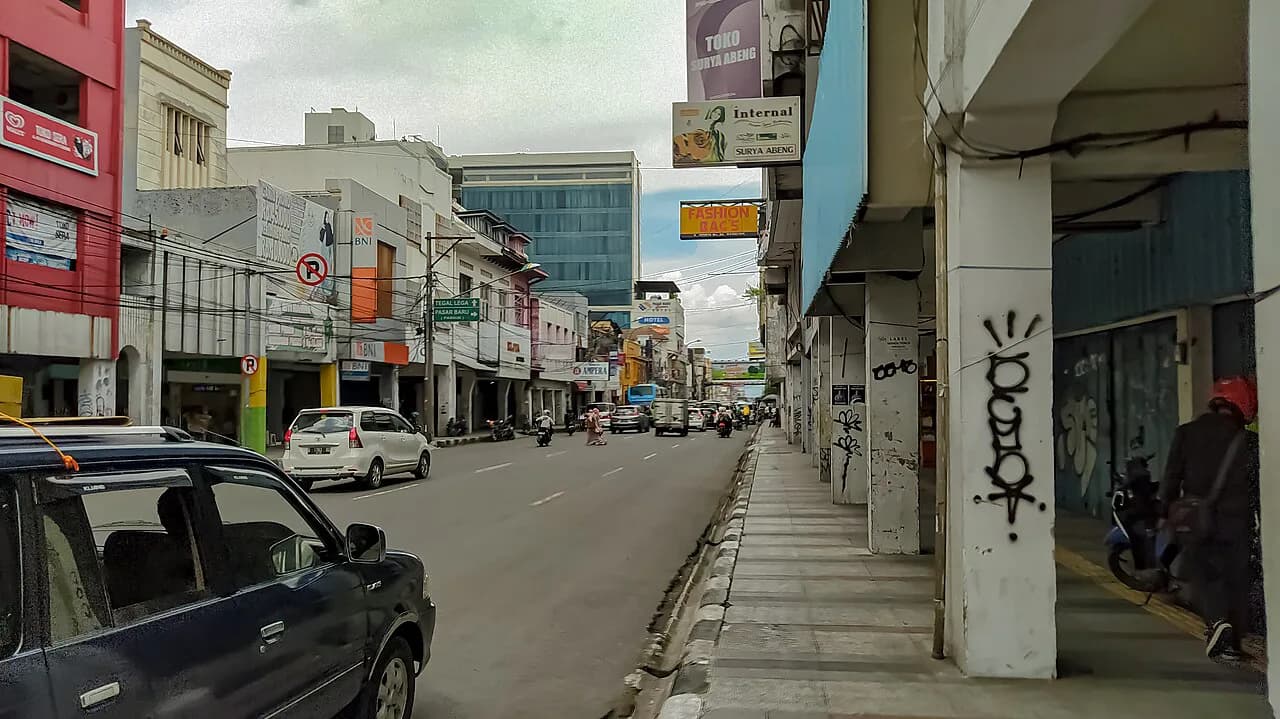
Pasar Baru Bandung: What to Expect Inside the Otista Trade Center

Pasar Baru Bandung is a four-story trade center on Jalan Oto Iskandar Dinata, known locally as Otista, in the heart of the city, and it is a short walk from Bandung's old train station. Plan on roughly one to two hours if you are browsing, and closer to half a day if you are buying fabric by quantity or having clothes tailored. This guide covers what the building actually is, how to reach it, which floors hold what, and how to time a visit around the Otista traffic.
What Pasar Baru Bandung actually is
Despite the name, which means "new market," this is primarily a textile and clothing trade center rather than a place to buy groceries. The Bandung city government's own history of the market describes its evolution into a popular destination for hunting clothes, and the official Instagram account of Pasar Baru Trade Center Bandung posts ongoing activity from inside the building. Expect fabric bolts, ready-made garments, muslim wear, bags, shoes and bedding spread across multiple levels rather than a single hall.
The building's current form is a modern four-story structure, rebuilt and renovated after a fire at the older traditional market on the site. The Bandung trade and industry agency treats Pasar Baru as one of the city's long-standing shopping icons, noting fashion, fabric, muslim dress, accessories and souvenirs among what visitors come for. That framing is useful: think of a vertical wholesale-and-retail bazaar, with narrow stalls and dense merchandise, not a museum-like market hall.
Where it sits: Jalan Oto Iskandar Dinata
Pasar Baru occupies a stretch of Jalan Oto Iskandar Dinata in central Bandung, within walking distance of the old train station, which today sits alongside the station's newer entrance. Otista is one of the busiest streets in the city, and traffic is heaviest during the hours the stores trade. If you are coming from elsewhere in Bandung, treat the street itself as the landmark and let a driver drop you at the market entrance rather than circling.
The market also anchors a wider shopping district: the block across the street preserves the Pecinan Lama, or old Chinatown, name, and ABC street next to it is lined with electronics and household appliance shops. Footpath sellers set up in front of the stores, so the last few hundred yards on foot can be slower than the map suggests. Read the market's neighborhood as one continuous commercial zone rather than a single building to tick off.
How to get there and around
Walking from Bandung station is the simplest approach if you are arriving by KAI train, since the market sits close to the old station entrance. For a direct drop-off, a Grab or Gojek car works well; ask for Pasar Baru on Otista and get out at the frontage rather than asking the driver to park. Bringing your own vehicle means negotiating congested Otista traffic and very limited parking, which is the main practical argument against driving.
Once inside, you move between the basement and the upper trading floors by stairs and escalators, and the layout rewards wandering rather than a fixed route. Because stalls cluster by type, a lap of each level before you commit to a purchase saves backtracking. If you want a wider look at how this stop fits with the rest of the city, our Bandung Attractions: 13 Visitor Guides covers the surrounding sights.
What you'll find on the trading floors
The upstairs floors are where the clothing and textile trade concentrates. Fabric stalls carry cotton, silk, embroidered cloth, brocade, satin and tulle for party and wedding dresses, along with wool for suits and batik in cotton, silk or rayon. Ready-to-wear ranges from baby and children's clothes to men's and women's casual wear, muslim clothing, praying veils and sarongs, and you will also find leather jackets, bags, shoes and bedding.
A few boutiques inside sell finished party dresses and kebaya, the traditional Sundanese women's attire, which makes the market useful if you need something made or fitted rather than off the rack. Wedding accessories for both Sundanese and European ceremonies, plus souvenirs brought back from Mecca such as prayer beads, raisins and dates, also appear among the stalls. Quality varies widely between sellers, so compare several before deciding.
The basement is a different market entirely: it still sells fresh meat and vegetables, and cooked meals are available there too. That separation matters when planning, because the food level and the clothing levels keep different rhythms through the day. If you came for fabric, head up to the main trading floors first and save the basement for a break.
Bargaining and bulk pricing
Prices here are generally lower than at conventional shops, particularly when you buy in quantity, and bargaining is possible in some stores. The wholesale convention uses a dozen, twelve pieces, or a score, twenty pieces, and a dozen usually means the same item and size in three or four colorways. In practice, buying three, four or six pieces across the available colors can be enough to trigger a wholesale price, so ask the seller what quantity their rate applies to before you commit.
Not every stall negotiates, and the ones that do may hold firm on already-discounted stock. Ask politely what the best price is for the quantity you want, and be ready to walk to the next stall if the answer does not suit you. Because there are many small kiosks plus larger stores inside, you have room to compare.
Food stalls and snack sellers
Beyond the basement cooked meals, snack sellers around the edges of Pasar Baru sell traditional Sundanese items such as fried tempe and fried oncom, along with chips. Oncom is a fermented peanut product associated with Sunda cooking, and it is the kind of thing worth trying if you have not met it before. These are informal counters rather than sit-down restaurants, so treat them as a quick stop between floors.
Behind the market there is also a long-established herb store, Babah Kuya, known as a supplier of traditional herbs well beyond Bandung. It is a specific reason to walk the back lanes rather than staying inside the building. Opening times for individual stalls are not published in one place, so check on arrival.
The surrounding block: Pecinan Lama and ABC street
The streets around Pasar Baru carry much of the shopping experience, since many independent specialty stores line Otista and its surroundings. Pecinan Lama, the old Chinatown lane across from the market, is part of that history, and ABC street beside it is given over to electronics and household appliances. Pedestrian-walk hawkers fill the frontage, which is why the pavement feels packed even when the building itself is calm.
That crowding has a practical downside: the walk in front of the stores is difficult to navigate and pickpocketing is a known risk in the throng. Keep bags zipped and in front of you, and do not count cash in the open. It is a normal busy-market precaution rather than a reason to skip the block.
Timing your visit
Upstairs stores typically open around 9am and close around 5pm, while basement kiosks open early in the morning and close around noon, according to one long-standing visitor account. Those are described patterns rather than an official timetable, so confirm on the day through the Pasar Baru Trade Center Instagram profile. Arriving near opening is the better experience: the stalls are set up and the corridors are not yet hot and crowded.
Weekends and Indonesian holiday periods tend to bring more out-of-town shoppers, and no single source publishes a full closure calendar for the building, so individual sellers' choices still rule. If your trip hinges on a specific stall, message ahead rather than assuming it will be open; the Pasar Baru Trade Center Instagram profile is the most current public channel to check. Checking before you travel is a reasonable second reminder alongside opening times.
How long to allow, and rainy afternoons
Budget about an hour for a browse and two to three hours if you are sourcing fabric, comparing prices and possibly arranging alterations. The building is covered throughout, which makes it a sensible option when Bandung rain rules out outdoor sightseeing. Morning arrivals beat the 9am-to-5pm crush in both comfort and negotiating attention.
Nearby after your visit
Braga Street (Jalan Braga) in Bandung is a short ride away and pairs naturally with a market morning, since both sit in the old commercial core. If you want colonial-era architecture instead of shopping, Gedung Sate, Bandung is a reasonable next stop by car or ride-hail. Museum Konferensi Asia Afrika in Bandung is another central option for an afternoon indoors.
Other central Bandung stops within easy reach include the museum Geologi Bandung and museum Mandala Wangsit Siliwangi, both useful when you want a quieter counterpoint to the market floors. Villa Isola in Bandung works better as a separate outing than a same-morning add-on.
Is Pasar Baru worth the stop on your Bandung trip?
Pasar Baru earns its place on a Bandung itinerary if you want fabric, tailoring, muslim wear or bulk clothing at wholesale-style prices, and it fits neatly into a morning near the old station. Skip it if you are after air-conditioned mall browsing or a food-focused market, since the basement food level is modest and the upper floors are all merchandise. Go early, carry a small bag in front of you, and confirm opening details on the market's Instagram before you set out.
Explore more Bandung guides
Frequently Asked Questions
Is Pasar Baru Bandung still open?
The market is an active trade center with a maintained Instagram presence and city government coverage, but individual stalls set their own schedules and no single source publishes a full closure calendar. Check the official Instagram profile or ask your hotel on the day you plan to go, especially around Indonesian public holidays.
Which kecamatan is Pasar Baru Bandung in?
Pasar Baru sits in central Bandung on Jalan Oto Iskandar Dinata, close to the old train station. If you need the administrative district for an address form or a ride-hail pin, use the street name and the Pasar Baru Trade Center landmark rather than guessing the kecamatan.
Do I need a ticket to enter Pasar Baru Bandung?
Entry to the trade center is not sold as a ticketed attraction in the way a museum is, so you simply walk in during trading hours. Individual stalls and any tailoring services set their own prices, and no entry fee or parking rate is published centrally, so confirm costs on site.