
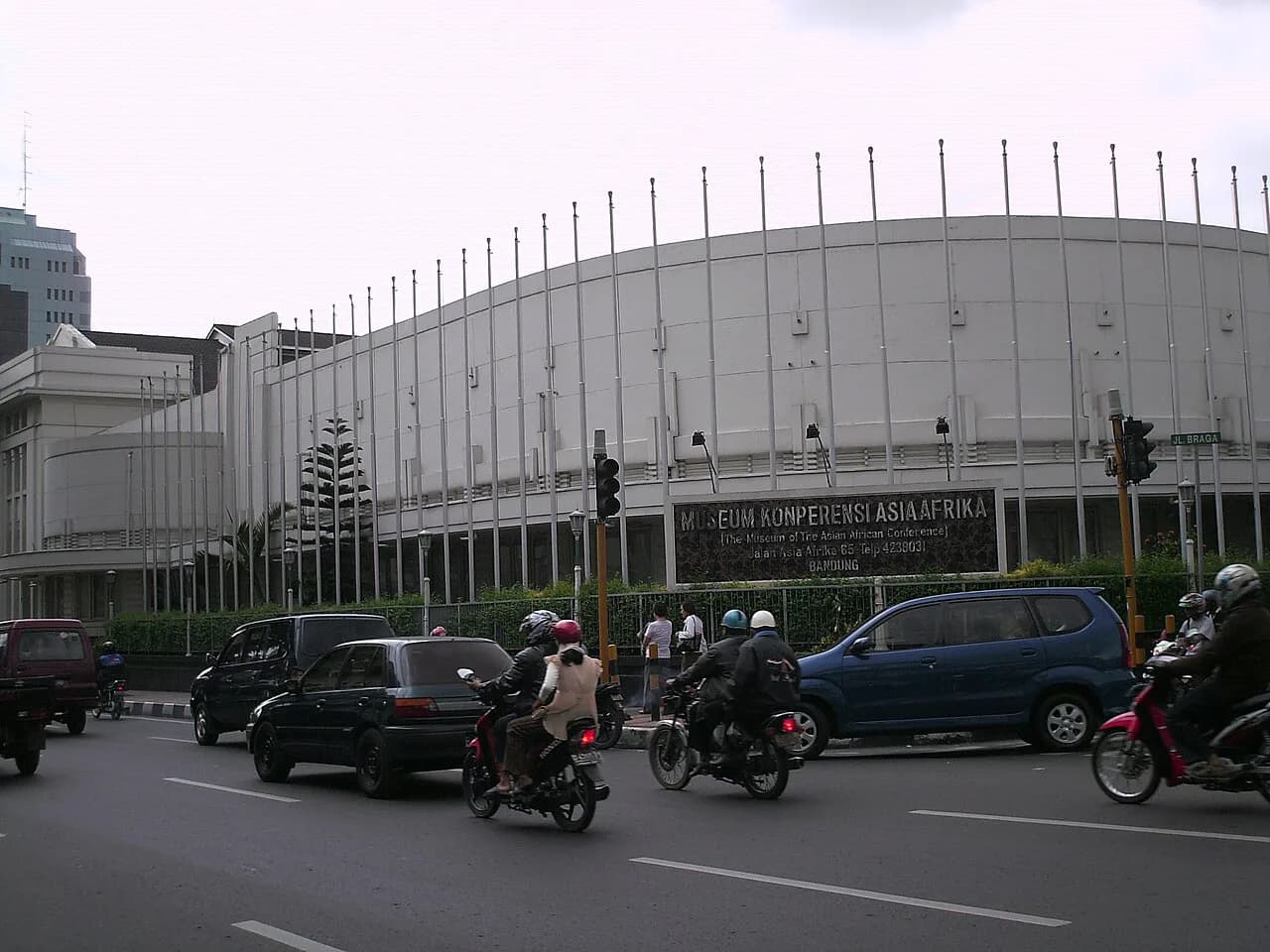
Museum Konferensi Asia Afrika in Bandung: What to See in Gedung Merdeka

The Museum Konferensi Asia Afrika is a compact museum inside Gedung Merdeka, the building on Jalan Asia Afrika in Bandung where the 1955 Asian-African Conference took place. Allow roughly thirty minutes for the core rooms, or closer to an hour if you watch the documentary. This guide covers the address and setting, how to arrive by ride-hailing or angkot, the operator's posted days and midday break, registration for individuals and groups, and what to see once you are inside.
What the Museum Konferensi Asia Afrika actually is
Visitors often treat the museum and Gedung Merdeka as two separate sights, but they are one address. Gedung Merdeka is the historic building; the museum is the exhibition and visitor experience housed within it, so your visit covers the same complex. That matters when you plan a morning, because you are not choosing between two stops on Jalan Asia Afrika.
The museum commemorates the 1955 conference and opened on 24 April 1980, the twenty-fifth anniversary of the meeting. It is run under Indonesia's Ministry of Foreign Affairs and holds a Type A museum rating, a designation the operator reports on its own site. Temporary exhibitions also rotate through the building, so the displays beyond the permanent collection change across the year.
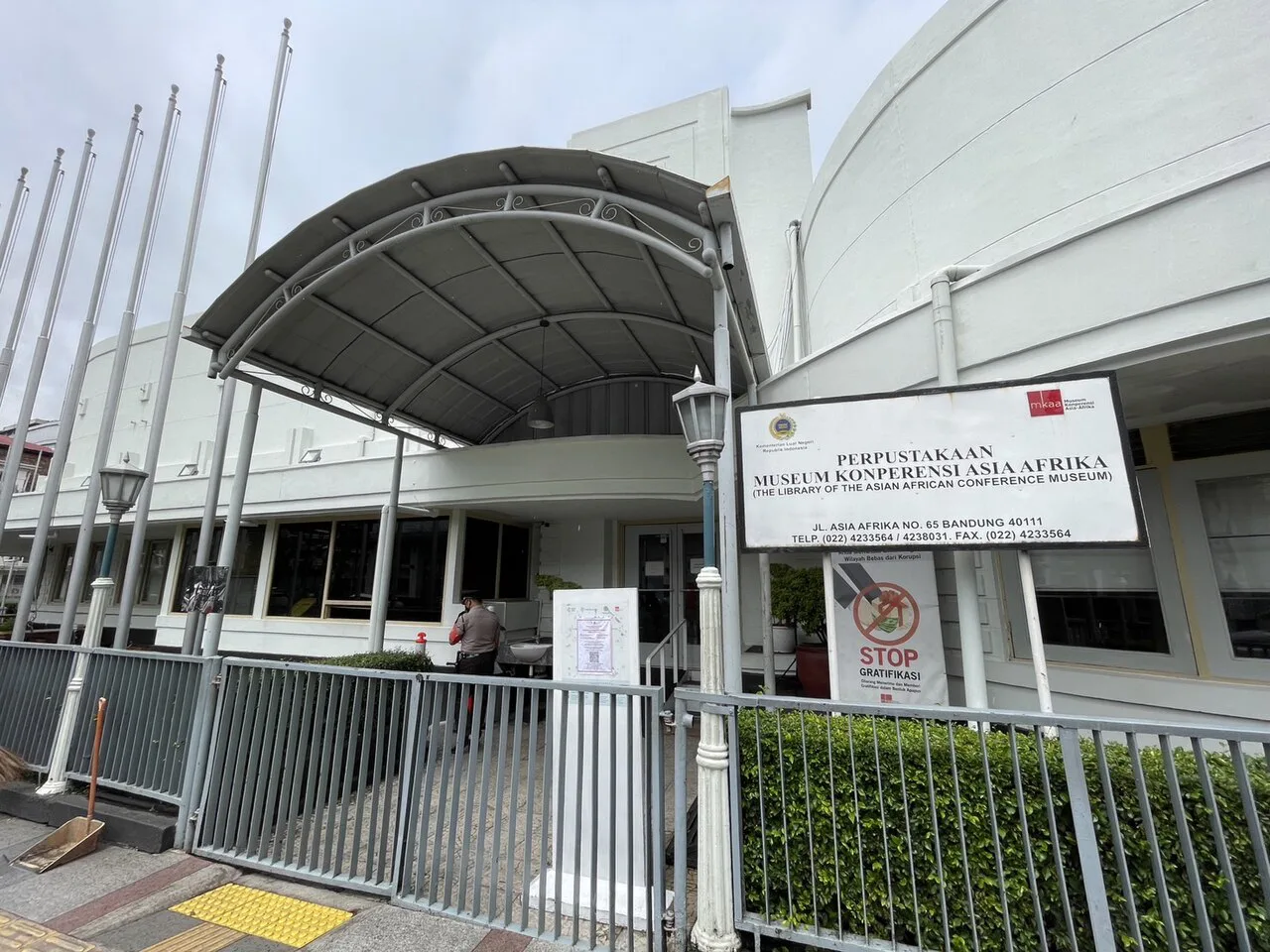
The address is Jalan Asia Afrika No. 65, Bandung 40111, Jawa Barat, and the museum publishes that address along with phone and email contacts on its site. Use the number rather than a landmark name when you order a ride, because Jalan Asia Afrika is a long street with several destinations along it.

Where it sits in Bandung and how to get there
Jalan Asia Afrika runs through the older commercial heart of Bandung, and the museum sits among the colonial-era buildings that make this stretch worth walking. The Bandung KM 0 marker, which anchors the city's road distances, is nearby on the same street, making it a simple orientation point before or after your visit. The Pikiran Rakyat newspaper office is also on the street, another easy reference if you are meeting someone.
If you are not driving, ride-hailing apps such as Grab and Gojek are the most straightforward way to reach the door, and angkot minivans serve the surrounding streets for anyone comfortable navigating local routes. A traveler's account of reaching the museum on public transport describes using an angkot navigation app to plan the ride, a sensible workaround since route information is not posted at the museum itself. Ask to be dropped on Jalan Asia Afrika near number 65.
Driving yourself means hunting for parking on a busy one-way grid, so most visitors are better off being dropped off. If you are basing a day around this part of town, the wider collection of Bandung Attractions: 13 Visitor Guides shows what else clusters near the old center.

Opening days, hours, and the midday break
The museum's posted schedule is the one to trust, and it is not a standard all-day opening. According to the operator's registration page, the museum serves visitors on Wednesday, Thursday and Saturday from 09.00 to 12.00 and again from 13.00 to 15.00, and on Friday from 09.00 to 11.30 and 13.30 to 15.30. It is closed on Sunday, Monday, Tuesday and national holidays.
Those two windows mean a lunchtime gap, so an arrival at midday can leave you waiting on the street for an hour or more. Plan to be inside before 12.00 on Wednesday, Thursday or Saturday, or before 11.30 on Friday, and treat the early afternoon as a second chance rather than a safe bet. Late arrivals near closing time will be hurried through the conference room and archive.
Third-party listings circulate different hours, including Monday openings and later Friday afternoons, and those no longer match what the museum publishes. Check the museum's own site on the morning of your visit rather than relying on an old blog post. Temporary exhibitions, holiday closures and operational changes appear there first, including the rotating shows announced on the site.
The museum does not post an entry charge on its visitor information, so confirm at registration or with customer care whether there is a fee. Older accounts of free entry should not be treated as current policy.
Registration and reservations for individuals and groups
Individual visitors register through the museum's online form, which asks for your name, email, phone number and origin, and the operator caps individual reservations at 25 people every 15 minutes. Groups are defined as 20 or more people, with a quota of 50 per 30 minutes and session caps by day, and the form requires group bookings at least seven days ahead while capacity remains. Bring the confirmation, because the reservation is valid only for the date and time you booked and staff check it at the entrance.
Cancellations have their own rule: contact customer care by WhatsApp message at least three days before your reserved date. That same channel handles availability and access questions, and it is message-only rather than a phone line for calls. The museum also reserves the right to cancel for operational or emergency reasons, so keep your plans flexible.
Group visits come with a guided tour led by the museum's educators, a meaningful difference from walking the rooms alone. If you are organizing a school or organization trip, build the seven-day booking window into your planning and confirm the session cap for your day of the week before you commit a group.
What to see inside
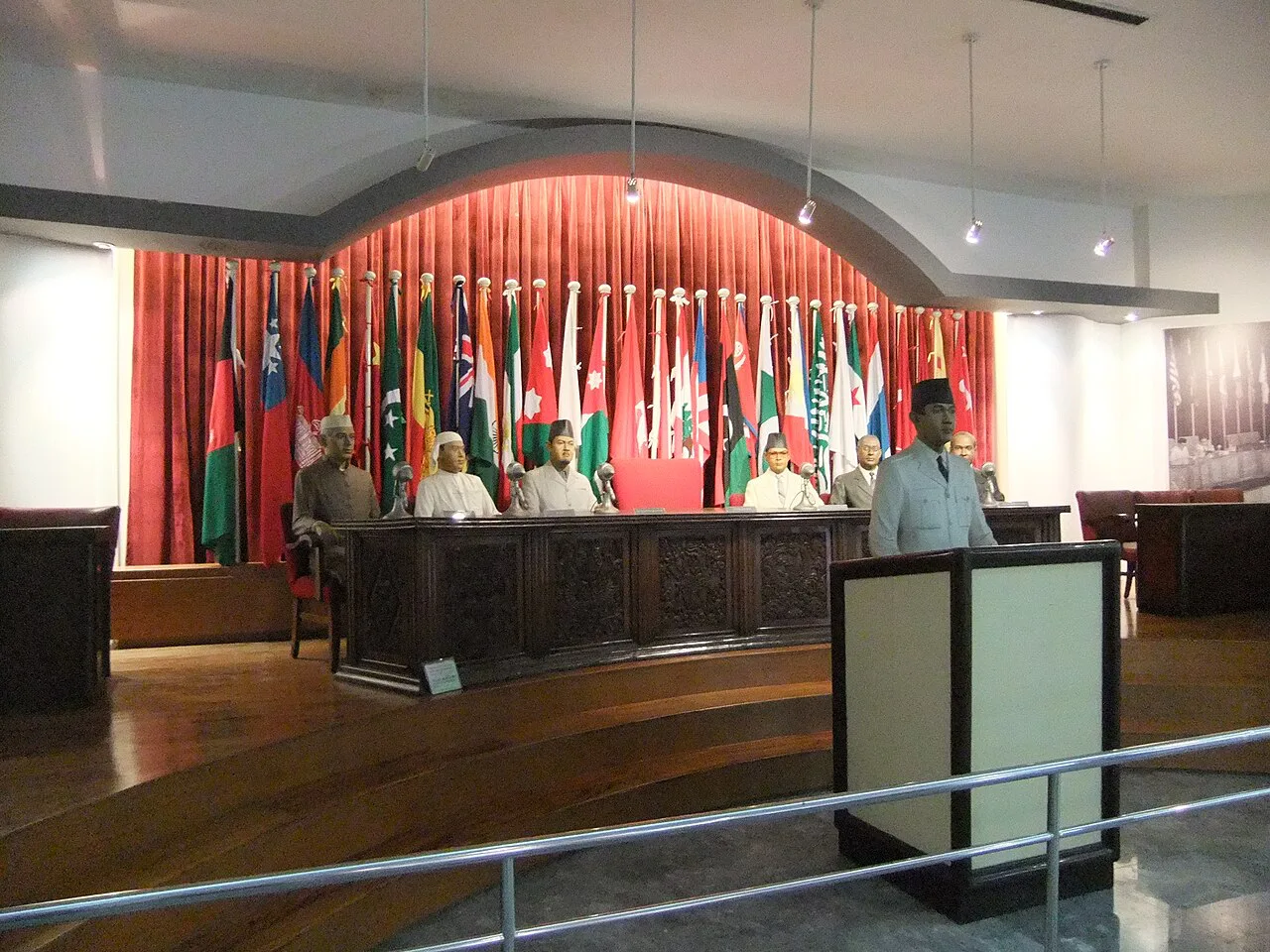
The centerpiece is the historic conference room itself, preserved as the space where the opening, plenary sessions and closing of the 1955 conference took place. Standing in it is the reason many visitors come, so linger there rather than pass through. Surrounding displays explain the conference's origins and the figures who drove it.
The collection includes photographic archives, newspaper clippings about the conference, objects left from the event, and translations of the Dasa Sila Bandung, the ten principles adopted at the meeting. A diorama of Soekarno's oration places him among the delegations, and an audio-visual room screens documentaries about the conference. Expect a dense, text-heavy presentation rather than interactive exhibits.
Photography and video without flash are allowed, so the archive displays and the conference room can be photographed. Professional camera work for publication needs an official letter sent ahead of the visit, and commercial filming or politically themed content is not permitted in the museum areas. If that applies to you, sort out permission before you travel rather than at the door.
There is no locker storage on site, so keep bags with you and travel light if you plan to read the displays at length. Eating, drinking and chewing gum are not allowed inside the museum areas. A traveler's short visit moved through the independence-era pictures and dioramas in about half an hour, a fair benchmark for the permanent rooms alone.
How long to allow
Budget thirty to forty minutes if you want the conference room, the dioramas and a pass through the archive. Add another twenty to thirty minutes if you sit through a documentary screening in the audio-visual room. Reading the translated Dasa Sila Bandung panels and the press clippings carefully is what stretches a visit beyond an hour.
The two-window schedule makes a short visit more practical than a long one, since you have a defined block before midday or in the early afternoon. A quick stop fits neatly between other stops on Jalan Asia Afrika, while a fuller visit works best as the anchor of a morning. With entry by reservation, an unhurried slot booked ahead beats a rushed walk-in attempt.
What is nearby on and around Jalan Asia Afrika
The colonial streetscape around the museum rewards a walk, and Braga Street (Jalan Braga) is the natural next stop for anyone continuing on foot through the old center. Its cafes and older facades suit a slow hour after the museum, and the stretch connects easily to the Jalan Asia Afrika area. Pairing the two gives you a coherent half-day without another ride.
Further afield, Gedung Sate, Bandung's landmark government building on Jalan Diponegoro, is a separate trip north of the center rather than a walk from the museum. It works as an afternoon counterpart to a morning at Gedung Merdeka, with grounds open to visitors. Plan transport between the two rather than assuming a stroll.
If you want another museum rather than architecture, Museum Mandala Wangsit Siliwangi covers West Java's military history and sits within the same central district. Museum Geologi Bandung, in Cihaur Geulis, is farther out but a common pairing for museum-minded visitors. Both keep their own schedules, so check each before building a route.
Is the museum worth building a Bandung morning around?
Yes, if you care about the 1955 conference or the building itself, and especially if you book ahead for one of the four open days. The museum is small and the schedule is narrow, so it works best as a focused stop combined with a walk along Jalan Asia Afrika and Braga Street. Treat the reservation, the midday gap and the closed days as the three things that decide whether the visit happens at all.
Confirm your slot and the current hours through the museum's customer care before you go, and check the news page for temporary exhibitions running during your dates. With those settled, Gedung Merdeka is an easy, compact addition to a Bandung itinerary rather than a destination that needs a whole day.
Explore more Bandung guides
Frequently Asked Questions
Is the Museum Konferensi Asia Afrika inside Gedung Merdeka?
Yes. Gedung Merdeka is the historic building on Jalan Asia Afrika, and the museum is the exhibition and visitor experience inside it. You visit them as one address rather than as two separate attractions.
Is Museum Konferensi Asia Afrika free to enter?
The museum does not publish an entry charge in its visitor information, so confirm any fee when you register or message customer care before your visit. Do not rely on older accounts that describe free entry, because policy can change.
How far is Museum Konferensi Asia Afrika from Bandung train station?
The museum does not publish a distance or walking time from the station. Use a ride-hailing app to compare routes on the day, and give the driver Jalan Asia Afrika No. 65 rather than the museum name alone.