
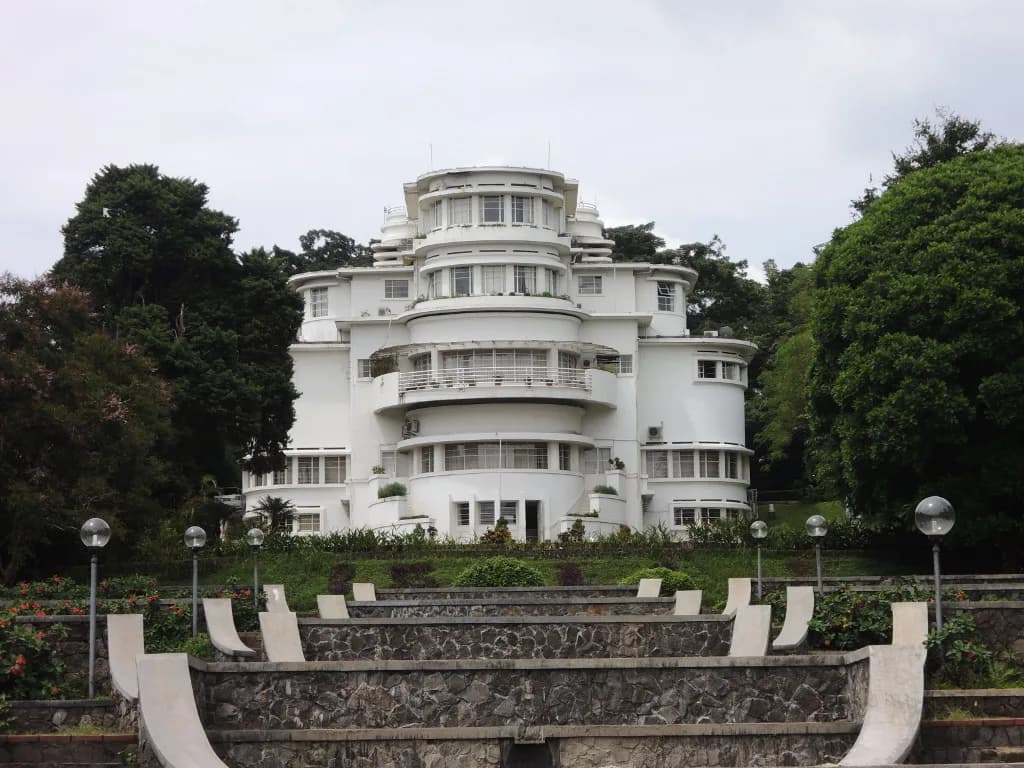
Villa Isola in Bandung: What to See at the Art Deco Landmark on Jalan Setiabudi
Villa Isola is worth a short stop, not an afternoon: it is a 1932-33 Art Deco villa in north Bandung that now serves as the rectorate and secretariat building of Universitas Pendidikan Indonesia, so you come for the exterior and the setting rather than a museum interior. This guide covers where it sits on Jalan Dr. Setiabudi, how to approach it from central Bandung, which architectural details to look for, how long to allow, and what to check with the university before you go.
What Villa Isola Is Today: A Working University Office
The building you see on the hill is also called Gedung Bumi Siliwangi, and it functions as the campus office and rectorate of Universitas Pendidikan Indonesia in Sukasari, north Bandung. That administrative role is the key planning fact: this is an active institutional building, not a ticketed heritage attraction with a visitor desk, cafe, or guided route through the rooms. Treat it as an architectural viewpoint and photograph stop, and expect the campus to set its own rules about where outsiders may walk.
Because the villa belongs to a university, access can change with the academic calendar, events, or maintenance, and no source in this packet publishes visitor hours, ticket prices, or a booking process. Contact UPI directly or ask at the gate before you build your day around going inside. If you only want to see the facade and the view, that is a far simpler ask than a tour of the interior.

Where Villa Isola Sits in North Bandung
Villa Isola stands at Jalan Dr. Setiabudi No. 229 in the Sukasari district of north Bandung, on the road that continues up toward Lembang. Sources spell the street several ways, including Jalan Dr. Setiabudhi and Jalan Setia Budi, so give a driver the full address and the Bumi Siliwangi name rather than relying on the spelling alone.
The position explains the name: the site was once isolated in the Cidadap area, with a valley view that stretched down toward the city, and the original name M'Isola E Vivo referred to standing alone. North Bandung has filled in around it since, but the elevated setting and the outlook remain the reason the spot feels different from the dense center.
For orientation within the city, the villa is well north of the colonial core around Gedung Sate and Jalan Braga, so it does not pair easily with a walking loop downtown. It fits better as a first or last stop on a Setiabudi corridor run, before or after you head further uphill.

How to Get to Villa Isola from Central Bandung
The practical approach is a private driver or a ride-hailing app: ask to be dropped at the Villa Isola or Bumi Siliwangi entrance on Jalan Dr. Setiabudi, then agree on a pickup point, because a campus gate is not always a convenient place for a car to wait. Traffic on the Setiabudi climb can be slow at busy times, so allow slack if you have a Lembang booking later in the day.
If you are stringing together several heritage stops, a hired car for the day usually beats chaining separate app rides, since the villa sits away from the main downtown cluster of museums and colonial buildings. Confirm the fare and waiting arrangement with the driver before you set off, and keep the campus address written down for the return leg.
The Architecture: What to Look For
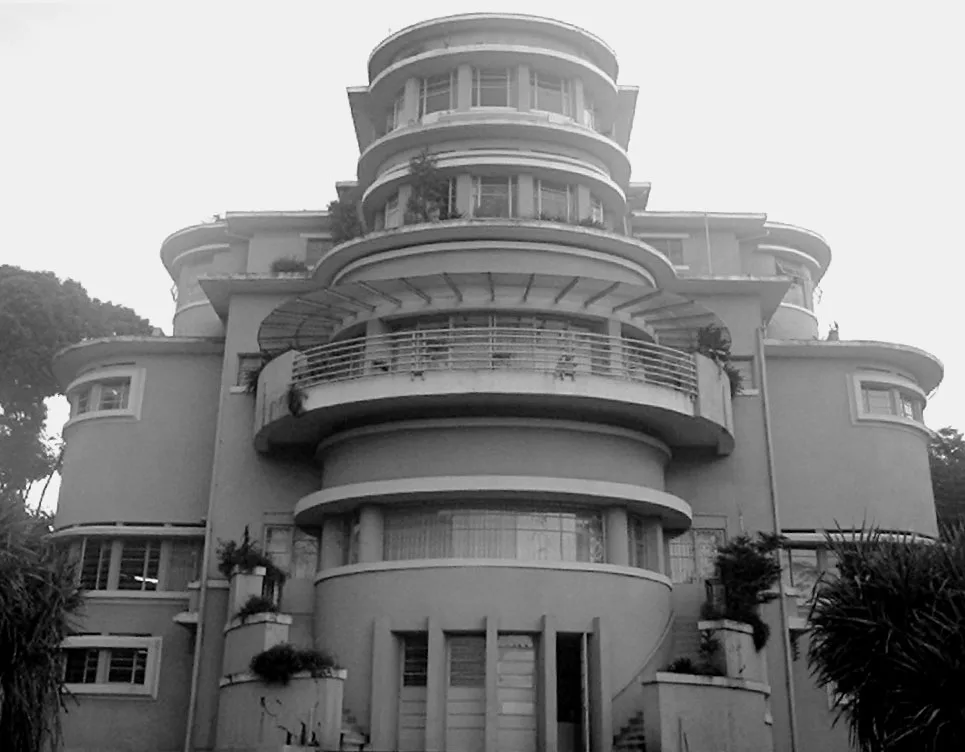
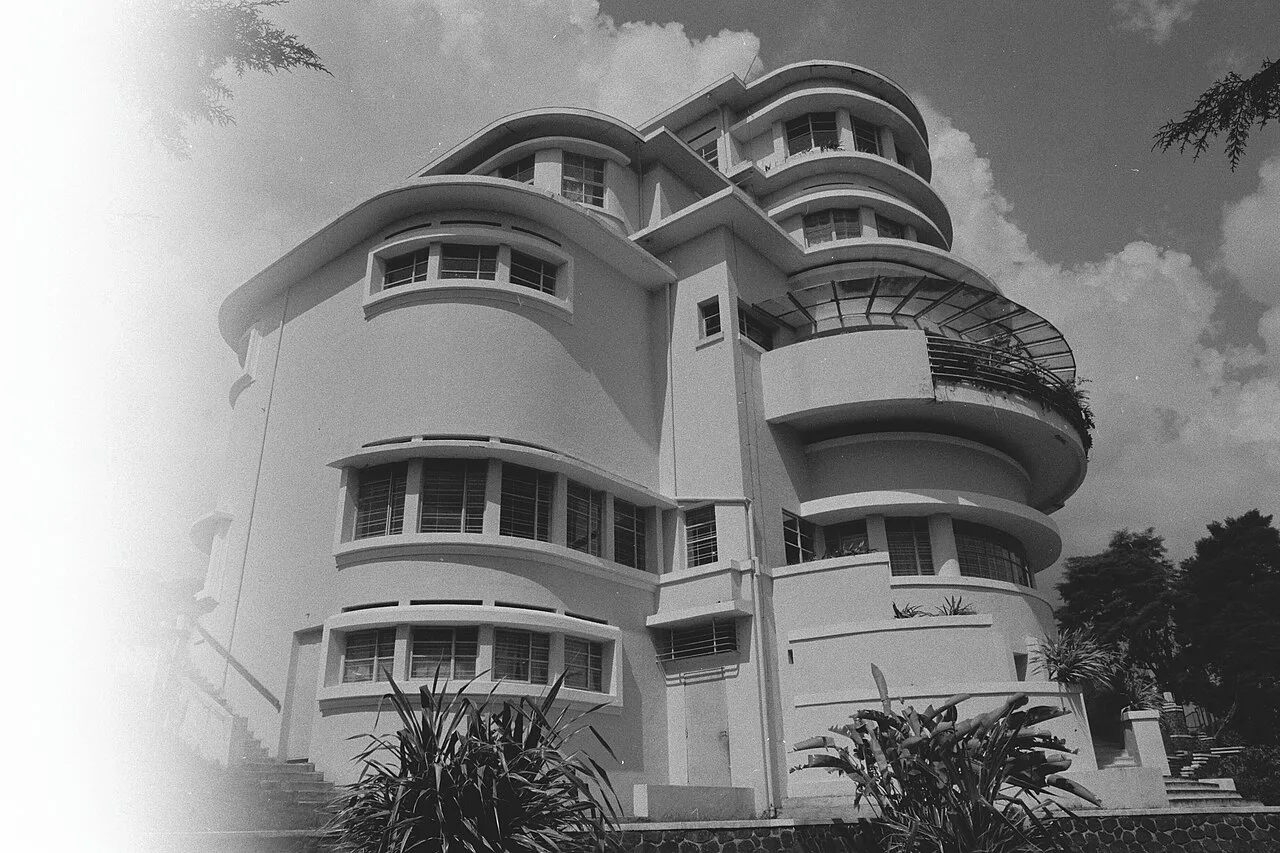
Villa Isola was designed by Dutch architect Wolff Schoemaker and completed in 1933 for the media owner Dominique William Beretty, blending Art Deco geometry with local architectural influences. Look for the circular motifs on the facade and the clean, machine-age lines that characterize the style, then step back to read the whole composition against the hillside behind it.
The building's documented history gives you a way to read the exterior: construction ran from October 1932 to March 1933, and the villa was formally inaugurated on 17 December 1933, roughly eight months after completion. One account attributes a construction cost of 500 thousand gulden to the owner, a figure repeated in local reporting rather than confirmed by the university, so treat it as an anecdote rather than a hard fact.
Photographers do best in soft morning or late-afternoon light, when the facade's curves and shadows read clearly rather than flattening out under harsh midday sun. The approach and the garden side between the street and the building are what the hilltop setting offers, so if access allows, take a few minutes there instead of stopping only for the front elevation.
From Private Villa to Bumi Siliwangi
The building passed through several lives before it became a campus landmark: it changed hands as the Japanese forces arrived in Java, was used by Dutch colonial commanders as a residence and office, and later served as a Japanese military headquarters and equipment store. A monument at the site marks the 1954 opening of the teacher-training college that grew into today's university.
Knowing that sequence helps you understand why the villa looks like a grand private house but behaves like an administrative building today. It was never converted into a museum, so the interpretive material you would expect at a heritage site is largely absent; the architecture and the historical record do the explaining.
How Much Time to Allow and What Access to Expect
Budget roughly 20 to 40 minutes for the exterior, the approach, and a few photographs, and treat any interior look as a bonus rather than the plan. There is no published ticket desk, opening time, or tour schedule for Villa Isola, so whether you get beyond the gate depends on the campus on the day you visit.
Do not plan a half-day here. If architecture is your main interest in Bandung, the villa works best as one stop among several, with the bulk of your time spent where interiors and exhibits are actually open to the public.
What's Nearby on the Same Run North
Because Villa Isola sits on the Setiabudi road toward Lembang, it slots naturally into a morning heading uphill rather than a downtown walking day. Pair it with a longer stop elsewhere in the city, then use the villa as a scenic pause on the way out.
Downtown, the museum cluster around Jalan Braga and the Asia Afrika area gives you the indoor, curated heritage that Villa Isola lacks. The Museum Konferensi Asia Afrika in Bandung is a sensible pairing if you want a full day of history with actual exhibits and set hours to plan around.
If you are working through Bandung's colonial-era landmarks, Gedung Indonesia Menggugat and Gedung Pakuan in the city center reward a dedicated stop, while the museum Geologi Bandung on Jalan Diponegoro suits anyone combining architecture with natural history. Group these by neighborhood so you are not crossing the city repeatedly in heavy traffic.
Where to Confirm Visiting Rules Before You Go
Check with Universitas Pendidikan Indonesia, or ask at the entrance when you arrive, about whether non-students may enter the grounds and where photography is permitted. Campus offices often close on weekends and public holidays, and ceremonies or events can shut an area with little notice, so a quick message or call saves a wasted trip.
Do not rely on old travel posts for hours or prices: the villa's status as a university building is what governs access, and only the institution can confirm it. Local reporting is useful for the history and the address, but it does not publish a visitor timetable.
Is Villa Isola Worth the Stop?
Yes, if you are already heading north on Jalan Dr. Setiabudi and care about architecture: the villa delivers a striking 1933 facade and a hilltop setting for a short, low-cost pause. No, if you expect a museum with rooms to explore, because it is an active university office with no published visitor hours or ticket price.
Build your Bandung day around sites with confirmed opening times, slot Villa Isola in as a scenic stop, and confirm access with the university before you go. That way the landmark adds to the day instead of becoming the day.
Explore more Bandung guides
Frequently Asked Questions
Can you go inside Villa Isola?
The villa is the rectorate and secretariat office of Universitas Pendidikan Indonesia, so interior access is not a given and there is no published tour. Ask the university or the gate staff on arrival; the exterior and grounds are the realistic target for most visitors.
Is there an entrance fee for Villa Isola?
No official source lists a ticket price or booking process for Villa Isola. It is a working campus building rather than a ticketed attraction, so confirm any entry conditions with Universitas Pendidikan Indonesia before you travel.
Who designed Villa Isola?
Dutch architect Wolff Schoemaker designed the villa, which was built between October 1932 and March 1933 for media owner Dominique William Beretty and inaugurated on 17 December 1933.