
Museum Geologi Bandung: A Practical Visitor Guide

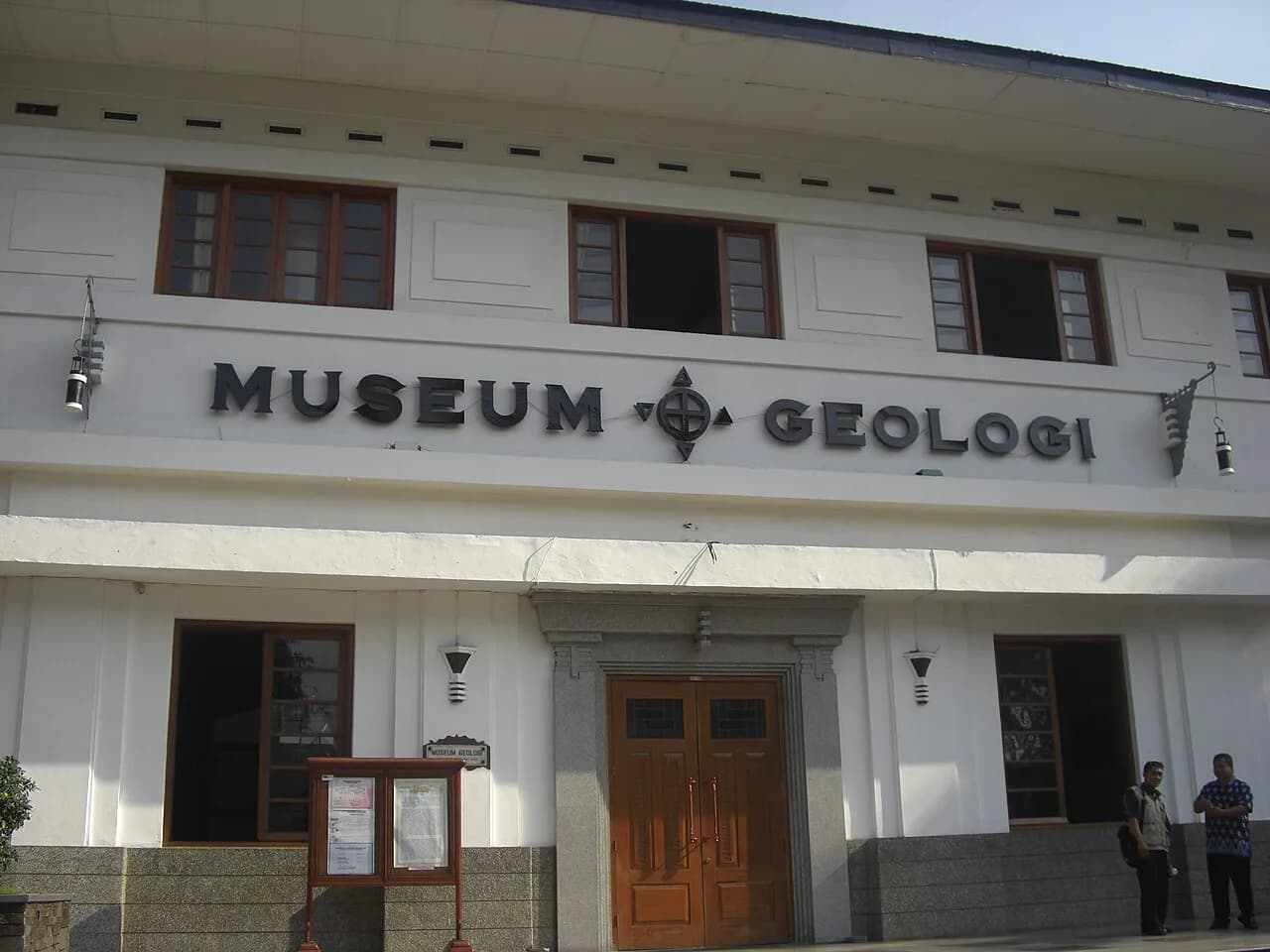
Museum Geologi Bandung is worth roughly two to three hours, and it suits travelers who want one substantial indoor stop on the Diponegoro corridor rather than a full day out. The building sits at Jalan Diponegoro No. 57 in Cihaur Geulis, Cibeunying Kaler, a short walk from Gedung Sate and the Gasibu open space. This guide covers the room order, how to arrive without a car, reported ticket and hour details, and what to pair with the visit.
Treat every price and time on this page as a reported figure, not a confirmed one. Published listings disagree on both, so the museum itself is the only reliable place to confirm what you will pay and when the doors open on your date. That caution matters more in school-holiday periods, when groups can fill the halls.
Where the museum sits on Jalan Diponegoro
The address is Jalan Diponegoro No. 57, in the Cihaur Geulis neighborhood of Cibeunying Kaler, Bandung, West Java. The street runs north from the city center through a cluster of civic and institutional buildings, so the museum is easy to fold into a walking loop rather than a separate trip across town.
Four landmarks tell you that you have arrived: Gedung Sate with its distinctive roof spire, the tree-shaded Taman Lansia (also called Cilaki), the broad Gasibu square, and the Pusdai Jawa Barat Islamic center. A travel account of the area names all four as the places locals use around the museum. If you can see the Gedung Sate spire, you are within a few minutes of the entrance.

Getting there from central Bandung
Public transport directions in published guides rely on Bandung's angkot minivans. One guide describes taking a yellow-green angkot number 10 on the Stasiun Hall to Sadang Serang route, getting off at the Pusdai mosque junction, then switching to a green-black angkot number 05 on the Cicaheum to Ledeng route, which passes the museum. Route numbering and liveries change, so confirm with your hotel or the driver before relying on that sequence.
For most visitors with limited time, a Grab or Gojek car set to the Jalan Diponegoro address is the simpler choice, since it drops you at the gate without transfers. Traffic in this part of Bandung builds through the morning, so leave buffer time if you are connecting to another stop. Ask the driver to wait or arrange a pickup point near Gedung Sate if you plan to continue on foot.

Ground floor: orientation room, west wing and volcanology
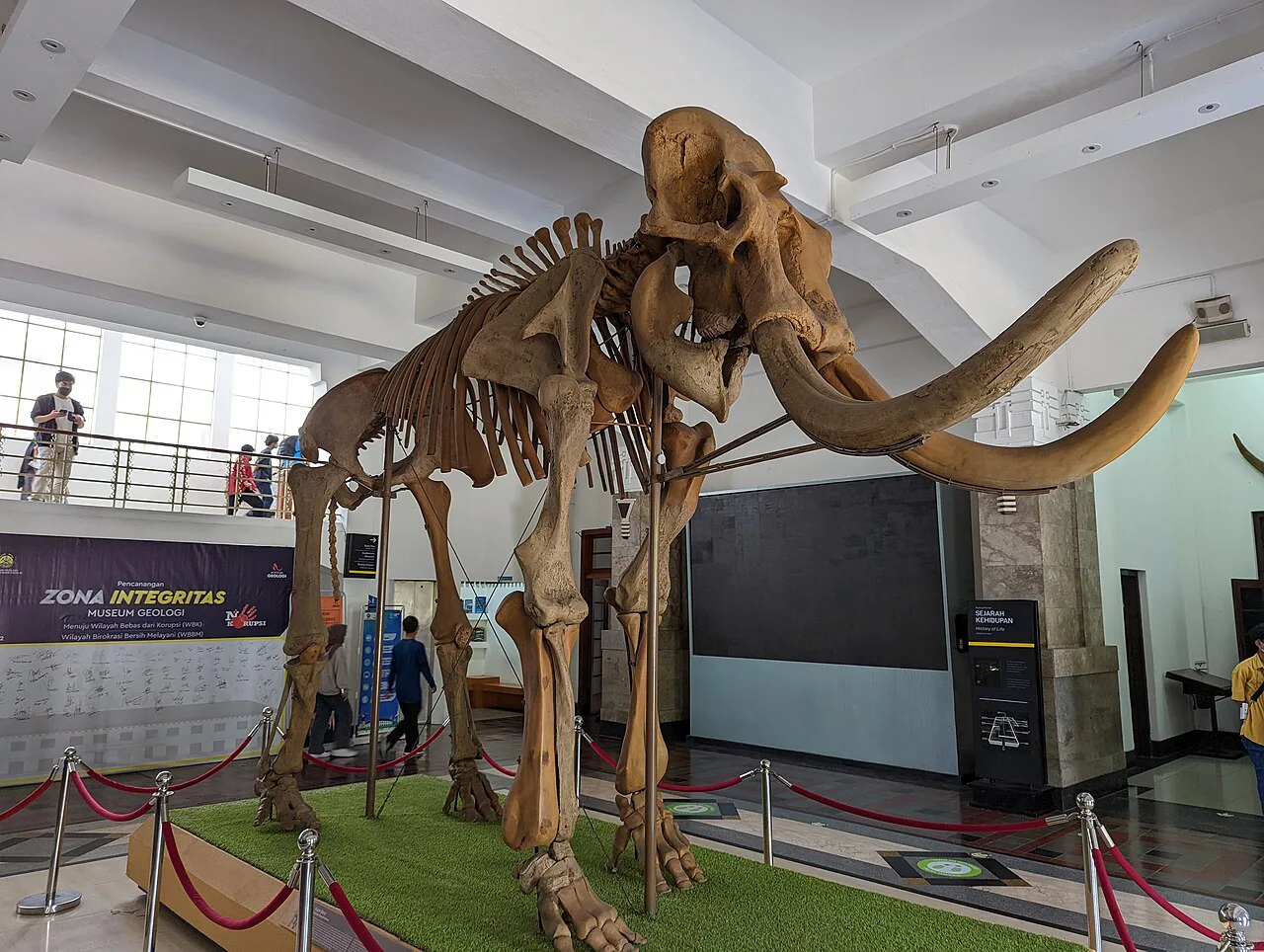
The ground floor splits into three parts: a central orientation room, a west wing on Indonesian geology, and a volcanology room at the far end. Start in the orientation room, where a wide relief map of Indonesia runs as an animated display showing geological activity, and an information desk sits alongside it. Walk the map first so the rock and mineral cases that follow have a geographic frame.
The west wing, sometimes called the Indonesian geology room, covers hypotheses about how the earth formed within the solar system, then moves into igneous, sedimentary and metamorphic rocks and the mineral resources of different regions. Cases also show field equipment, mapping tools and survey maps from geological research. Read the regional labels rather than every specimen card, or you will spend your whole visit in one wing.
At the end of that wing, the volcanology room is the most immediately legible stop for a general visitor. Displays cover active Indonesian volcanoes including Tangkuban Perahu, Krakatau, Galunggung and Merapi, which is useful context if you are heading into the highlands around Bandung later in your trip. Budget the most time here if you are traveling with children.
East wing: the hall of the history of life
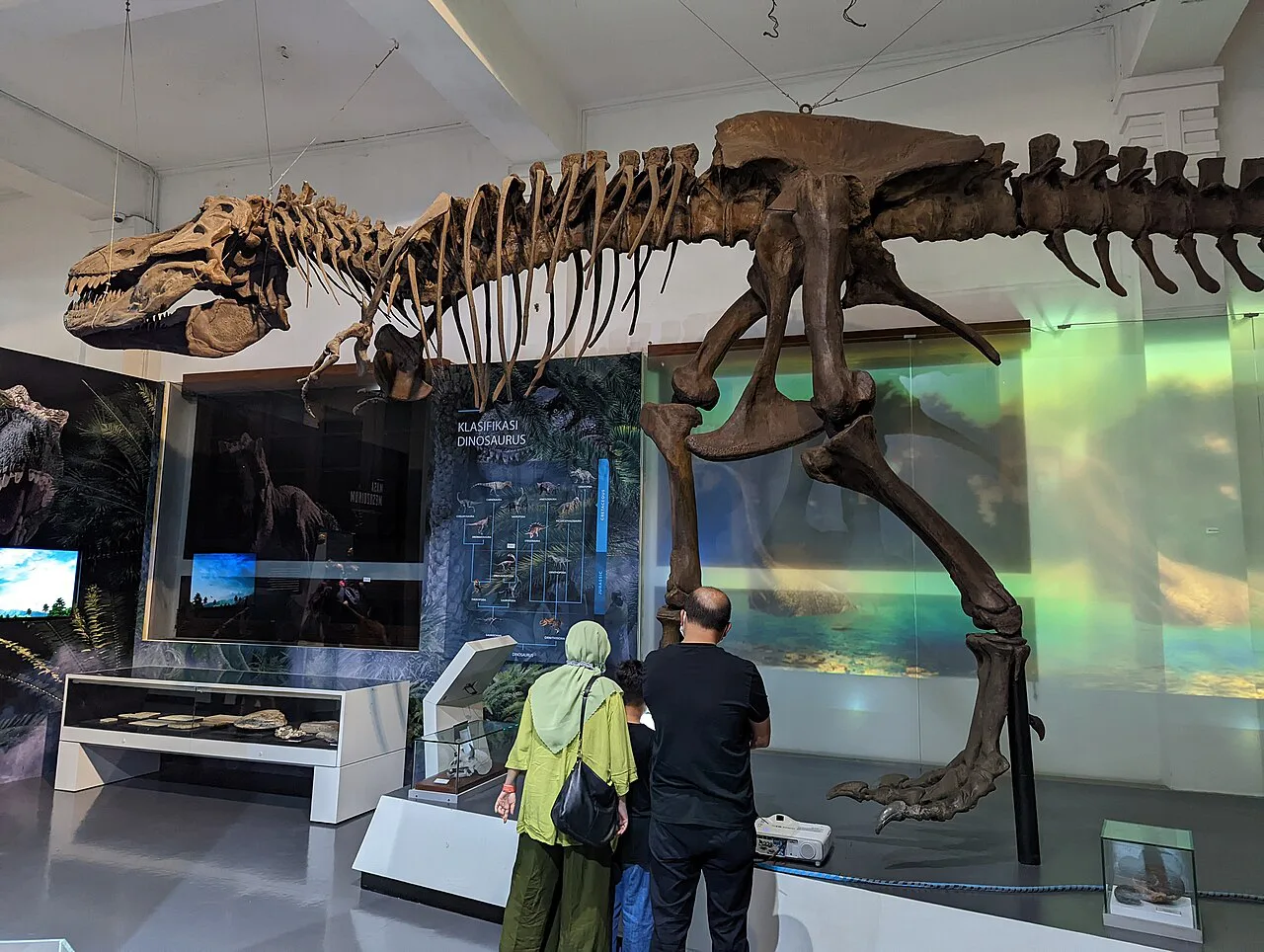
The east wing is laid out as a hall of the history of life, tracing living things from single-celled organisms to modern species. The room is staged to evoke prehistoric conditions, and it holds a Tyrannosaurus Rex fossil display along with replicas of early-human fossils found in Indonesia. This wing is the reason many families come, and it is where a dinosaur-obsessed child will want to linger.
Because the east wing is compact, it rarely takes more than twenty or thirty minutes unless you read the panels in full. Pair it with the ground-floor geology rooms to make a coherent route, then move upstairs. Note that school groups often pass through this section first, so reversing the order can buy you a quieter few minutes.
Second floor and the Rock Cycle Park outside
The upper floor continues the collection, and it is worth climbing to even on a short visit because the building is not large enough for the upper level to be fatiguing. One visitor account calls the museum the most complete geological display in Indonesia, a claim worth weighing against the modest scale of the rooms and against the fact that it comes from a personal blog rather than the museum.
Outside, a small garden called the Rock Cycle Park was added in 2011, according to the same visitor account, and gives children somewhere to move between rooms. The museum's own programming has included evening events, such as a night-at-the-museum edition reported by the city government, though you should not assume one is running during your dates.
How long to allow
Plan on two to three hours, which is the recommended visit window on a ticketing listing for the museum. That fits the room count comfortably: about an hour on the ground floor, thirty minutes in the east wing, and the rest upstairs and outside.
With young children, add time for the dinosaur hall and the outdoor garden and expect a slower pace through the rock displays. On a school-holiday day, coverage of the museum during a busy school-visit period shows halls filled with children, which can compress how much you actually read. If quiet viewing matters, arrive at opening rather than late morning.
Tickets: reported prices and how to confirm them
Published figures conflict, so treat them as a range to plan around rather than a fixed cost. A 2022 visitor post lists Rp2,000 for students, Rp5,000 for general visitors and Rp10,000 for foreign nationals, while a separate guide lists Rp2,000 for students, Rp3,000 for local tourists and Rp10,000 for foreign tourists. The pattern is consistent: students pay least, foreign visitors pay most, and every figure is small by US standards.
Bring cash in small rupiah notes and confirm the current foreign-visitor rate at the counter before you pay. The ticketing listing shows contact numbers for ticket questions, but those numbers appear only on a third-party page, so verify them independently before calling. If you are a couple or family, the total will be modest either way, and the difference between published figures will not change your plans.
Opening days and hours to verify
Hours are the least settled detail. A ticketing listing shows a 9:00 to 15:00 window, while a July 2022 guide gives 09:00 to 15:30 on weekdays and 09:00 to 13:30 on weekends, adding that the museum closes on Fridays and on national holidays. Given the gap, check the day and time directly with the museum the day before you go, and avoid building a tight connection around a late-afternoon arrival.
Nearby after your visit
Gedung Sate, the landmark government building with the spire, is the obvious next stop and is close enough to walk. The Gasibu square in front of it is a broad open space, and Taman Lansia on Jalan Diponegoro is a shaded park suited to a slow ten minutes after the museum rooms. This is the one reminder worth repeating: confirm the Gedung Sate visitor arrangements separately, since they are run by a different operator.
If you want a second museum in the same day, Bandung has several others across the city, including the Museum Konferensi Asia Afrika and the Museum Sri Baduga, each with its own hours and ticket rules. For a broader shortlist of what to pair with this stop, work from the Bandung Attractions guides rather than trying to chain too many sights on foot; if you head downtown later, the Braga Street (Jalan Braga) in Bandung guide covers that historic street separately.
Who should visit and who can skip it
Go if you have a half-day in the Diponegoro corridor, if you are traveling with children who like dinosaurs and rocks, or if you want a low-cost indoor stop that is genuinely specific to Indonesia's geology. The building's history as a Dutch-era geological laboratory, with a founding date of 1928 cited in visitor accounts, adds context for anyone interested in colonial-era Bandung.
Skip it, or keep the visit to an hour, if your Bandung time is short and you would rather spend it outdoors, or if museum displays do not hold your interest. Travelers who have seen large natural-history museums elsewhere may find the rooms modest. In that case, walk the corridor for Gedung Sate and the parks and leave the interior for a return trip.
Is the museum worth a half-day in Bandung?
Yes, for most first-time visitors with a free half-day, provided you pair it with the Diponegoro corridor rather than crossing town for it alone. The museum gives you a compact, inexpensive look at Indonesian geology and prehistory, and the walk to Gedung Sate, Gasibu and Taman Lansia makes the trip feel complete.
Before you go, reconfirm the day's opening hours and the foreign-visitor ticket rate, since published sources disagree on both. Arrive early to beat school groups, allow two to three hours, and carry small rupiah notes for the counter.
Explore more Bandung guides
Frequently Asked Questions
Was Museum Geologi Bandung built in 1928?
Visitor accounts state the museum was inaugurated on 16 May 1928, after starting life as a geological laboratory, and that its collections date from the 1850s. Those dates come from a personal blog rather than the museum, so treat them as reported history and look for an official plaque or staff confirmation when you visit.
What does Museum Geologi Bandung actually display?
Displays center on Indonesian geology and the history of life: rock and mineral specimens, survey maps and field equipment, a volcanology room covering active volcanoes such as Tangkuban Perahu and Merapi, and an east wing with a Tyrannosaurus Rex fossil display and replicas of early-human fossils found in Indonesia.
Is the museum suitable for young children?
Many families visit for the dinosaur and fossil displays, and the outdoor Rock Cycle Park gives children space between rooms. Expect the halls to be busier during school-visit periods, when groups can dominate the east wing, so an early arrival helps if you want a calmer walk-through.
Sources
- Harga Tiket Museum Geologi Bandung [2026] - Promo, Waktu Operasi & Ulasan
- Berkunjung ke Museum Geologi Bandung - Kompasiana.com
- Museum Geologi Bandung, Wisata Edukasi yang Menyenangkan untuk Si Kecil | Orami
- Geological Museum Bustling with Children During School ...
- https://www.bandung.go.id/citizen/detail/1237/rasa...