
Museum Mandala Wangsit Siliwangi: What to See in Bandung

Museum Mandala Wangsit Siliwangi is a small, specialized military museum in central Bandung, good for a focused 45 to 90 minute stop rather than a half day. It tells the story of the Siliwangi Division and Indonesia's independence struggle through weapons, uniforms, photographs and dioramas rather than polished interactive displays. This guide covers where the museum sits on Jalan Mayor Lembong, how to reach it, what you are actually looking at inside, and which nearby sights fit the same trip.
What Museum Mandala Wangsit Siliwangi actually is
This is a specialized museum focused on military history, officially listed in the national Museum Indonesia registry under registration number 32.73.K.02.0229. It is owned by the Indonesian Army and managed by Kodam III/Siliwangi, the regional military command, so it reads as an institutional collection rather than a privately curated attraction. The name is explained as a place that holds the mandates and messages of past fighters, with Siliwangi pointing to the legendary Sundanese king of Pajajaran.
The same official listing dates the museum's establishment to May 23, 1966, when Colonel Ibrahim Adjie inaugurated it, and describes the building as an early twentieth-century Dutch military residence. A renovation in 1979 expanded the exhibition space, and it reopened in 1980. Treat those dates as useful context rather than a reason to expect a large modern complex: the physical footprint is modest.

Where it is on Jalan Mayor Lembong
The address is Jalan Mayor Lembong No. 38 in the Sumur area of central Bandung, a street named for a lieutenant colonel. The association listing for the museum gives the same address, so you can hand it to a driver without further explanation. Expect the museum to sit within a small military compound rather than on an open tourist street, which shapes the entry routine more than the address does.
Because the site is inside an active military area, reviewers describe arriving at a gate in a working compound rather than a visitor entrance with ticketing desks and signage. Have your passport or a photo ID with you, state clearly that you are visiting the museum, and follow whatever the guard at the gate directs. If the gate staff turn you away on a given day, that is a real possibility at an operational facility, so keep a backup plan in the same part of town.

How to get there from central Bandung
For most visitors, a ride-hailing car through Grab or Gojek, or a metered Bluebird taxi, is the simplest way to reach Jalan Lembong. Ask to be dropped at the museum entrance on Jalan Mayor Lembong rather than on a larger cross street, since the compound gate is easy to miss from a moving car. Traffic in central Bandung can be dense in the late afternoon, so a morning or early midday arrival usually means a shorter ride.
If you are already staying near the Braga and Merdeka corridor, the museum is reachable on foot or with a very short ride, which makes it easy to combine with other central stops. Motorcycle taxis are the fastest option in heavy traffic but leave you on the street rather than at the gate. Either way, confirm the drop-off point with your driver before you set off.
What to see inside the collection
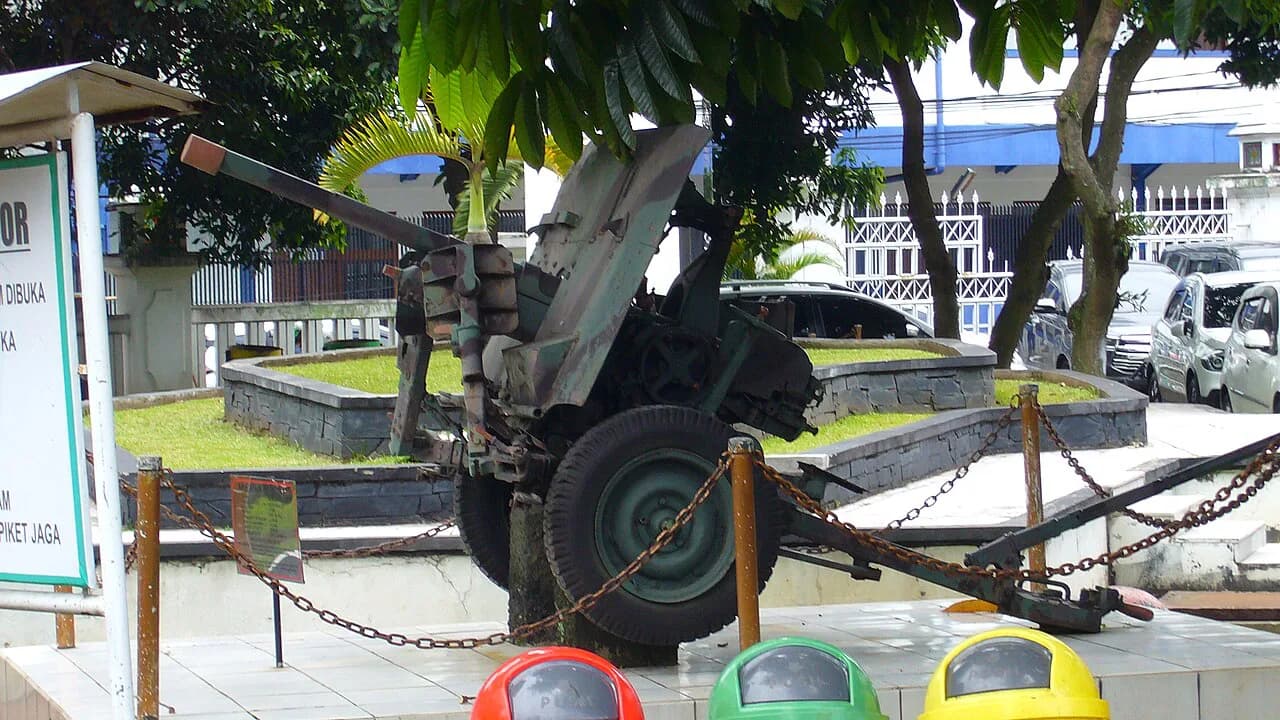
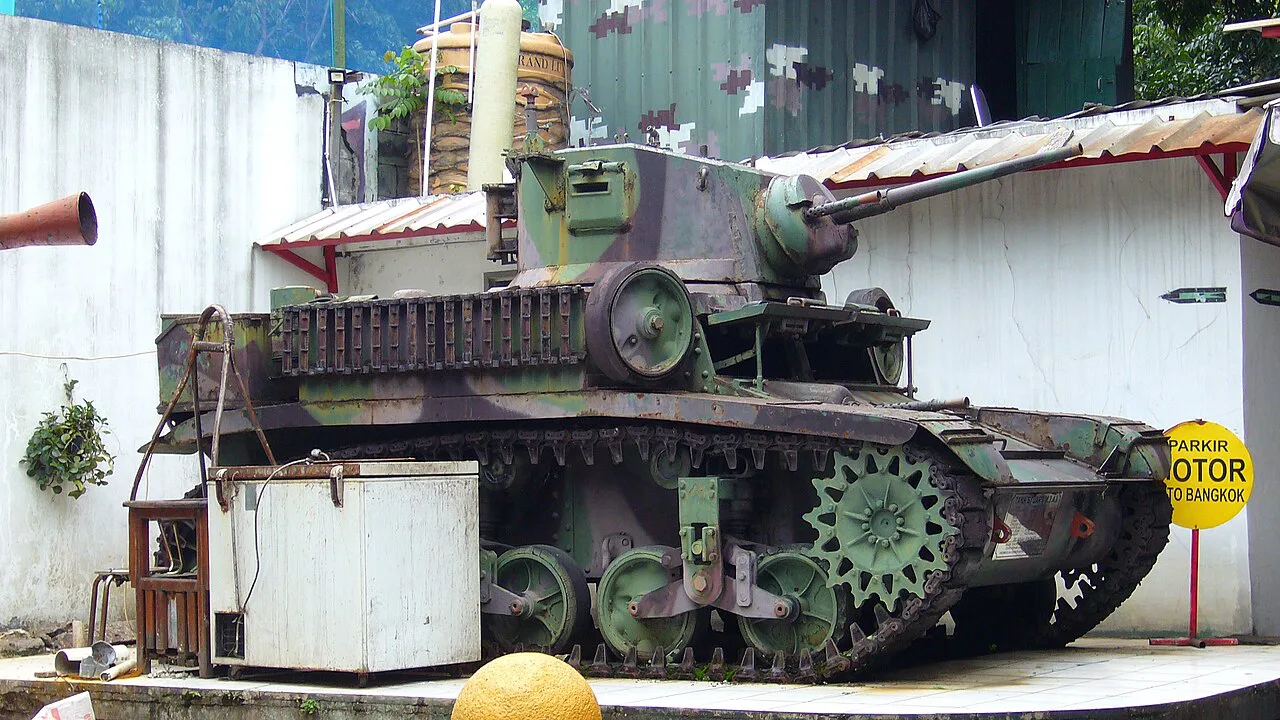
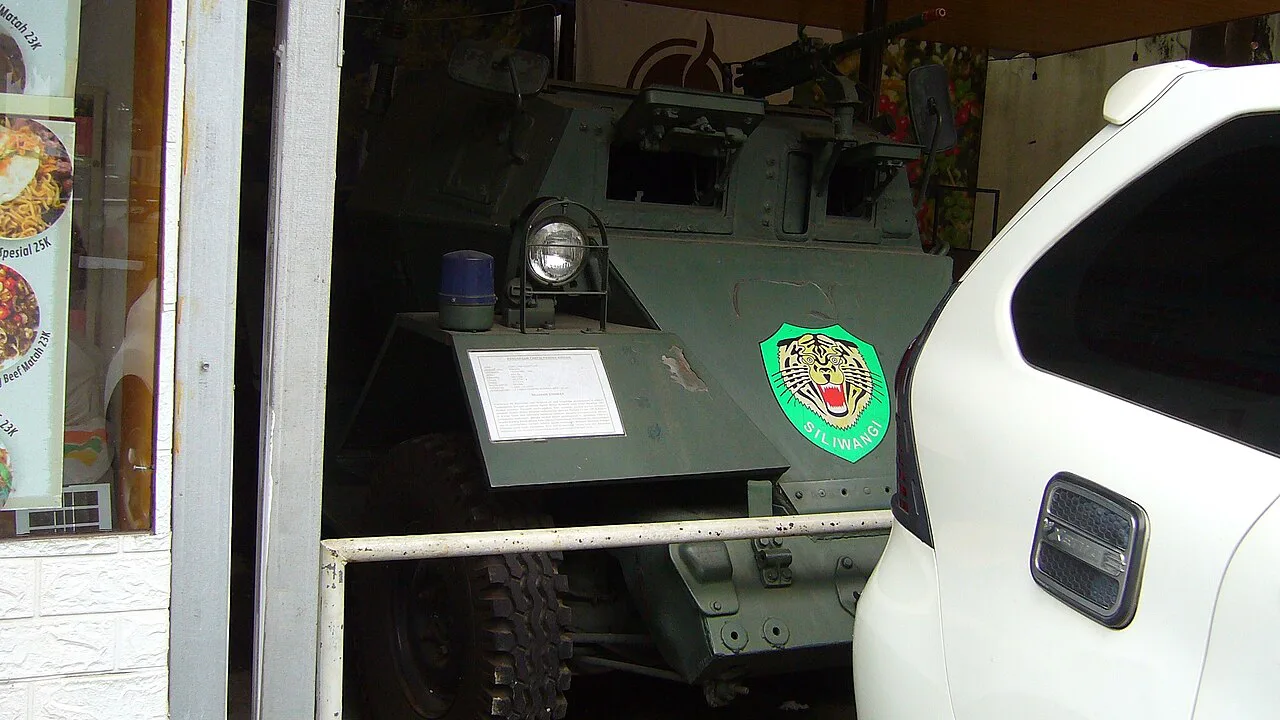
The collection spans the Siliwangi Division's equipment from improvised to conventional: bamboo spears, arrows, keris and kujang blades, and molotov cocktails sit alongside modern pieces such as an Indonesian-built rail armored vehicle, artillery, and armored vehicles. Read that progression as the point of the museum, since it shows how a guerrilla force evolved into a formal army unit. Knowing what a kujang is, a curved Sundanese blade rather than a generic dagger, makes the display cases considerably more legible.
Beyond weapons, expect uniforms, historical photographs, battle dioramas, and documentation of various military operations and rebellions, plus coins and colonial-era objects. Labels are primarily in Indonesian, so plan to read slowly or bring a translation app for the longer panels. The dioramas do much of the storytelling work, which helps if your Indonesian is limited.
This is the kind of collection that rewards a visitor who arrives with some context about the Indonesian independence period and the role of regional military commands. Expect a quiet, old-fashioned museum atmosphere rather than curated multimedia, and expect the best material to be objects and photographs rather than explanatory text in English. Photograph the display labels you want to look up later instead of trying to absorb everything in one pass.
How much time to allow
Allow 45 to 90 minutes. Reviewers consistently describe the museum as not too big, and the displays are concentrated rather than spread across multiple wings. A visitor who reads Indonesian and lingers over the dioramas will land closer to the upper end; someone skimming the showcases can be out in well under an hour.
Build in extra time for the gate, since entry into a military compound can involve a short wait or a check with a duty officer. If you are on a tight schedule, treat the museum as a single stop rather than pairing it with a long list of sights the same morning. The visit works best as a deliberate, small piece of a Bandung day rather than a headline attraction.
Tickets and opening hours
No ticket price or opening hours are published in the sources available for this museum, so do not plan around a figure or a schedule you saw elsewhere. Check the museum's official Instagram account, which posts announcements, and confirm with your hotel or a local driver before making the trip. This is the one detail worth verifying the day before rather than assuming.
If you want a second confirmation, the Museum Indonesia listing maintained by the Ministry of Tourism records the museum's registration and management details, which is useful for verifying that it is still operating under Kodam III/Siliwangi. Neither channel is a live booking system, so treat online information as a starting point and confirm the day's access on arrival. Entry conditions on a military site can change for reasons the museum does not publish in advance.
What to pair with it nearby
The location in the Sumur district puts you close to several other central Bandung stops. Museum Konferensi Asia Afrika, which covers the 1955 conference, is the most natural thematic companion for a visitor interested in twentieth-century Indonesian history. Museum Sri Baduga, the provincial museum for West Java, is a larger option if you want more collections after a short visit here.
Architecture-minded visitors can add Gedung Sate, the landmark government building on Jalan Diponegoro, or walk Braga Street for the colonial streetscape and cafes. Both are short rides from Jalan Lembong and work well as an afternoon after a morning museum stop. Katedral Santo Petrus near Jalan Merdeka is another central option if you are already walking the area.
If you have a wider Bandung itinerary, it helps to see where this museum sits among the city's other attractions before you commit a morning to it, starting with our Bandung Attractions: 13 Visitor Guides overview. The trade-off is straightforward: this stop suits history-focused travelers, while anyone with limited time in Bandung may get more from the city's larger and better-documented sights.
Who should visit and who should skip it
This museum suits travelers interested in Indonesian military history, the independence period, or the regional identity of the Siliwangi Division, and it suits anyone who enjoys small, unpolished collections with real objects. It also works for visitors who have already covered Bandung's headline sights and want something quieter in the city center. Families with young children may find the weapons the main draw and the text panels less engaging.
Skip it if you want polished exhibits with English interpretation throughout, or if your Bandung time is short enough that the gate routine and uncertain hours would cost you a bigger sight. Travelers who prefer art, geology, or colonial architecture have stronger single-purpose options elsewhere in the city. Either way, the museum is a specific taste rather than a compulsory stop.
Is the Siliwangi museum worth the detour?
Worth it if you want an honest, small-scale look at how the Siliwangi Division is remembered, and you are comfortable confirming access at a military gate. Skip it if you need guaranteed opening hours, English labels throughout, or a big-museum experience in a short Bandung trip. For everyone else, it is a 45 to 90 minute stop that pairs naturally with central Bandung's other historical sights.
Before you go, check the museum's Instagram account and ask your hotel to confirm current access, since ticket prices and opening hours are not published in the sources reviewed here. Then plan the rest of your day around the Jalan Lembong location rather than crisscrossing the city.
Explore more Bandung guides
Frequently Asked Questions
Is Museum Mandala Wangsit Siliwangi free to enter?
No entry price is published in the sources reviewed here, so check the museum's official Instagram account or ask your hotel before you go. Do not assume it is free or paid based on older blog posts, since neither confirms current practice.
How do you pronounce Mandala Wangsit Siliwangi?
Say it roughly as mahn-DAH-lah wahng-SEET see-lee-WAHNG-ee, with even stress and short vowels. Drivers and gate staff will recognize the museum name even if your pronunciation is approximate, and you can also simply give the address, Jalan Mayor Lembong No. 38.